


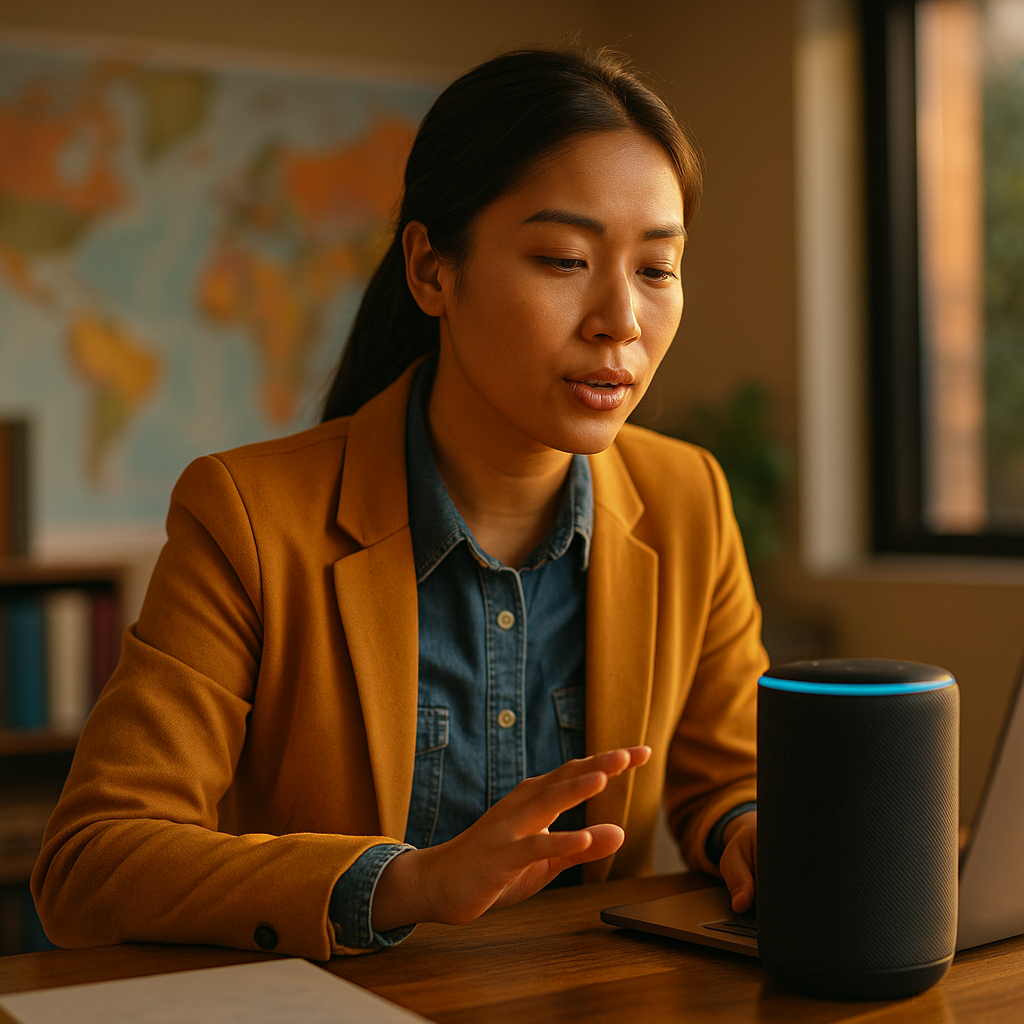
In 2025, voice assistants are often the first “human” a customer meets, and their personality shapes trust as much as accuracy. Using AI To Personalize Voice Assistant Brand Personalities For Regions lets organizations match language, humor, formality, and service style to local expectations without fragmenting their brand. Done well, it improves adoption, satisfaction, and safety—so what does “done well” actually require?
Regional voice personalization
Regional voice personalization means tailoring a voice assistant’s tone, vocabulary, pacing, and interaction style to fit local cultural norms and language variants while preserving the brand’s core identity. The goal is not to create a different brand in every country; it is to express the same brand consistently through locally natural communication.
In practice, regional differences show up in:
- Language variety: vocabulary, idioms, honorifics, and dialect-specific grammar.
- Politeness strategies: directness vs. indirectness, use of titles, formality levels, and turn-taking.
- Conversational expectations: whether users prefer concise commands or brief context and confirmations.
- Humor and warmth: what feels friendly in one region can feel unprofessional in another.
- Pronunciation and prosody: local place names, brand terms, speech rate, and emphasis patterns.
AI enables these adaptations at scale by learning patterns from regional data and generating responses that fit the context. But personalization only works if you define what cannot change. Establish a global “voice constitution” first: brand values, safety boundaries, inclusivity rules, and customer-service principles. Then let AI localize within that frame.
Readers often ask whether this is only for multilingual deployments. It is not. Even within one language, regional preferences vary dramatically—think of service interactions across different English-speaking markets. AI helps you make those shifts deliberate, measured, and repeatable.
AI voice assistant localization
AI voice assistant localization is the technical and operational process of adapting the assistant for a target region. It blends language technology, content design, and governance. A reliable localization workflow typically includes:
- Regional intent modeling: training or tuning NLU to recognize local phrasing, abbreviations, and entities.
- Localized NLG: generating responses that reflect regional norms, not just translated text.
- Speech layer tuning: text-to-speech voices, pronunciation lexicons, and prosody rules for local names and products.
- Knowledge and policy alignment: region-specific availability, legal constraints, and support procedures.
- Evaluation loops: automated tests plus human review to prevent drift and bias.
From an EEAT perspective, localization should be evidence-driven. Use a combination of:
- First-party data: anonymized transcripts, error reports, and satisfaction feedback from the region.
- Expert input: local linguists, cultural consultants, and customer support leaders.
- Controlled experiments: A/B testing different tone variants and confirmation strategies.
Teams also worry about “brand fragmentation.” Avoid this by modularizing personality into components: greeting style, apology style, confirmation style, and escalation style. Keep the brand’s purpose constant (helpful, respectful, efficient), and vary the expression (more formal, more concise, more playful) based on region and use case.
A practical rule: localize what users feel (tone, politeness, rhythm) and standardize what users depend on (accuracy, transparency, safety, and the ability to reach a human).
Brand voice consistency
Brand voice consistency matters because users interpret a voice assistant’s behavior as the company’s behavior. When an assistant sounds overly casual in a market that expects formality, the brand can seem careless. When it sounds too rigid in a market that prefers warmth, it can feel cold and unhelpful.
To keep a consistent brand while personalizing regionally, define a “personality system” instead of a single persona. Build it with:
- Non-negotiable principles: honesty about limitations, respectful language, and user-first outcomes.
- Personality sliders: formality, brevity, empathy, and proactivity, each with approved ranges by region and scenario.
- Scenario rules: billing disputes require calm, neutral tone; order tracking can be friendlier; safety topics must be direct and unambiguous.
- Vocabulary lists: preferred terms, forbidden phrases, and region-specific equivalents for brand-critical wording.
AI then becomes a controlled generator rather than an improviser. Use system prompts and style guides to constrain outputs, and apply automated checks for disallowed content, brand terminology, and reading level. For higher-risk flows (payments, medical guidance, regulated claims), route responses through stricter templates or retrieval-based generation that cites approved knowledge.
Follow-up question: “Will this make the assistant sound robotic?” Not if you separate structure from expression. Keep key information structured (steps, dates, costs), but allow regional expression in openings, closings, and short confirmations. Users feel personality most in those micro-moments.
Multilingual conversational AI
Multilingual conversational AI is no longer only about translation; it is about building culturally competent interactions. The highest-impact improvements usually come from reducing misunderstanding and making repairs feel natural. In 2025, the best deployments focus on three layers:
- Understanding: robust intent recognition across dialects, code-switching, and local product names.
- Response generation: locally appropriate tone plus precise information.
- Conversation repair: graceful fallbacks, clarifying questions, and escalation options that match regional expectations.
Concrete AI techniques that help:
- Dialect-aware training data: include regional variants and paraphrases for key intents.
- Entity normalization: map local terms to canonical entities (e.g., regional nicknames for locations or services).
- Pronunciation dictionaries: for place names, surnames, and brand terms; update continuously from user feedback.
- Retrieval-augmented generation: ground responses in region-specific policies, pricing, and availability to reduce hallucinations.
- Local QA harnesses: curated test suites with “gotchas” unique to the region, such as homophones or honorifics.
Make inclusivity part of multilingual design. Ensure the assistant handles different accents, speech rates, and accessibility needs. Provide alternatives to voice-only interactions where required, and avoid stereotypes in regional humor or idioms. Cultural competence means knowing what not to assume.
Another common follow-up: “Should we support multiple voices per region?” Often yes, but tie choices to user needs. For example, offer a more formal voice for financial tasks and a more relaxed voice for entertainment, while keeping both within your brand’s approved personality system.
Cultural adaptation in UX
Cultural adaptation in UX goes beyond words. It includes how the assistant asks questions, confirms actions, handles errors, and presents options. AI personalization should improve clarity and trust, not just make conversations sound “local.”
Design the regional UX around these high-impact moments:
- First-run onboarding: explain capabilities and limitations in culturally appropriate terms; set expectations about privacy and data use.
- Consent and transparency: present data permissions plainly; confirm sensitive actions; offer easy opt-outs.
- Escalation: provide region-appropriate contact methods and hours; avoid dead ends when the assistant cannot help.
- Error handling: use locally natural repair strategies (repeat-back, rephrase suggestions, or guided options).
- Service recovery: apologies and compensation language must align with regional norms and legal requirements.
AI can predict when a user is confused and adapt. For example, if the user repeats a request, the assistant can shift from open-ended conversation to a guided flow with explicit choices. If the user expresses frustration, it can lower verbosity, increase directness, and offer escalation sooner—while keeping to the brand’s rules.
To keep this ethical and trustworthy, apply strong governance:
- Privacy by design: minimize data, anonymize transcripts, and restrict access by role.
- Safety boundaries: avoid generating sensitive advice outside policy; hand off to vetted resources.
- Bias monitoring: audit outputs for differential treatment across accents, dialects, and demographics.
- Human review: local reviewers should approve high-visibility personality changes and sensitive content.
Regional personalization succeeds when it is measurable. Track task completion, escalation rate, re-contact rate, speech recognition errors, and user satisfaction by region and by scenario. Treat “personality” as a product surface you can test, not a creative one-off.
FAQs
What is the fastest way to start regional personality personalization for a voice assistant?
Begin with a global brand voice charter, then localize 10–20 high-volume intents (account, order status, payments, troubleshooting). Use regional linguists to define tone rules and vocabulary, and run A/B tests on confirmation and apology styles. Expand only after you see improved task completion and satisfaction.
How do we keep the assistant consistent across regions while still feeling local?
Separate brand principles (what never changes) from expression (what can vary). Implement “personality sliders” for formality, brevity, empathy, and proactivity with approved ranges per region and scenario. Enforce them with prompts, templates for high-risk tasks, and automated style checks.
Does AI personalization increase the risk of hallucinations or policy mistakes?
It can if you rely on free-form generation for factual or regulated content. Reduce risk with retrieval-augmented generation grounded in approved regional knowledge, strict templates for sensitive flows, and automated policy filters. Add human review for changes that affect legal claims, pricing, or safety guidance.
What data do we need to personalize safely and effectively?
Use anonymized interaction transcripts, intent logs, speech recognition errors, and customer satisfaction feedback—segmented by region. Combine this with curated regional test sets and expert input from local support teams. Minimize collection, document retention, and provide clear consent choices.
How do we measure whether a regional personality is working?
Track task success rate, time-to-completion, fallback frequency, escalation rate, re-contact rate, and satisfaction by region and by intent. Also monitor qualitative feedback on tone and trust. If metrics improve but complaints rise about “rudeness” or “coldness,” adjust formality and empathy settings rather than rewriting everything.
Should we use the same synthetic voice in every region?
Not always. A single voice can support consistency, but pronunciation and prosody may suffer. Many brands use a consistent “voice family” with region-tuned variants, plus pronunciation dictionaries for names and brand terms. Choose voices based on comprehension, accessibility, and user preference—not novelty.
AI-driven regional personalization works when it is designed like a system: clear brand rules, local expertise, grounded responses, and continuous measurement. In 2025, teams that treat voice personality as governed UX—rather than a one-time creative exercise—earn higher trust and smoother task completion across markets. Build the global foundation, localize the moments that matter, and let data validate every change.
Top Influencer Marketing Agencies
The leading agencies shaping influencer marketing in 2026
Agencies ranked by campaign performance, client diversity, platform expertise, proven ROI, industry recognition, and client satisfaction. Assessed through verified case studies, reviews, and industry consultations.
Moburst

-
2

The Shelf
Boutique Beauty & Lifestyle Influencer AgencyA data-driven boutique agency specializing exclusively in beauty, wellness, and lifestyle influencer campaigns on Instagram and TikTok. Best for brands already focused on the beauty/personal care space that need curated, aesthetic-driven content.Clients: Pepsi, The Honest Company, Hims, Elf Cosmetics, Pure LeafVisit The Shelf → -
3

Audiencly
Niche Gaming & Esports Influencer AgencyA specialized agency focused exclusively on gaming and esports creators on YouTube, Twitch, and TikTok. Ideal if your campaign is 100% gaming-focused — from game launches to hardware and esports events.Clients: Epic Games, NordVPN, Ubisoft, Wargaming, Tencent GamesVisit Audiencly → -
4

Viral Nation
Global Influencer Marketing & Talent AgencyA dual talent management and marketing agency with proprietary brand safety tools and a global creator network spanning nano-influencers to celebrities across all major platforms.Clients: Meta, Activision Blizzard, Energizer, Aston Martin, WalmartVisit Viral Nation → -
5

The Influencer Marketing Factory
TikTok, Instagram & YouTube CampaignsA full-service agency with strong TikTok expertise, offering end-to-end campaign management from influencer discovery through performance reporting with a focus on platform-native content.Clients: Google, Snapchat, Universal Music, Bumble, YelpVisit TIMF → -
6

NeoReach
Enterprise Analytics & Influencer CampaignsAn enterprise-focused agency combining managed campaigns with a powerful self-service data platform for influencer search, audience analytics, and attribution modeling.Clients: Amazon, Airbnb, Netflix, Honda, The New York TimesVisit NeoReach → -
7

Ubiquitous
Creator-First Marketing PlatformA tech-driven platform combining self-service tools with managed campaign options, emphasizing speed and scalability for brands managing multiple influencer relationships.Clients: Lyft, Disney, Target, American Eagle, NetflixVisit Ubiquitous → -
8

Obviously
Scalable Enterprise Influencer CampaignsA tech-enabled agency built for high-volume campaigns, coordinating hundreds of creators simultaneously with end-to-end logistics, content rights management, and product seeding.Clients: Google, Ulta Beauty, Converse, AmazonVisit Obviously →