


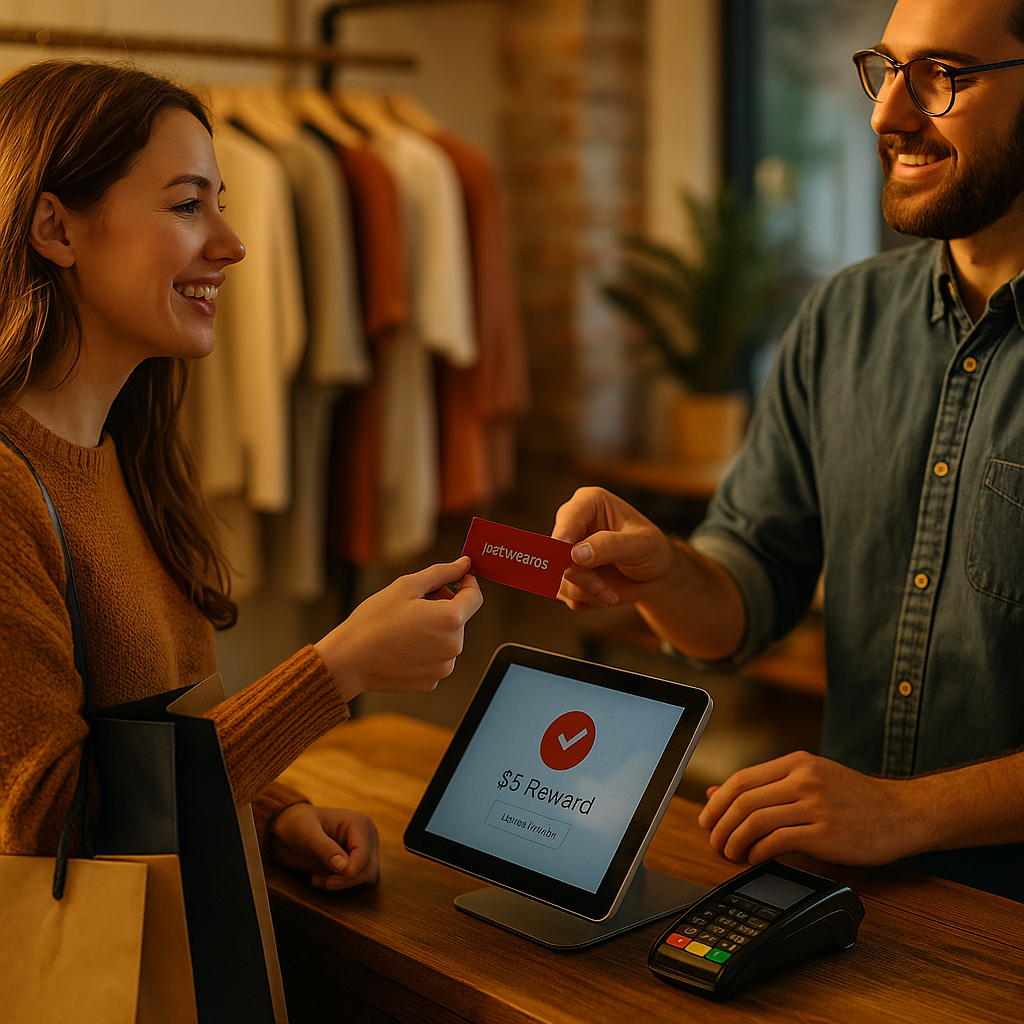
In 2025, loyalty is less about discounts and more about relevance, ease, and trust. This case study shows how a legacy retailer redesigned retention using Inchstone Rewards, turning routine purchases into measurable progress and re-engaging customers who had drifted away. You’ll see the strategy, the rollout decisions, the metrics that mattered, and the missteps they avoided—because the details are where retention is won.
Customer retention strategy: why the retailer needed a new model
The retailer in this case study—“Harbor & Main,” a 40+ year omnichannel general merchandise chain with 180 stores—had a familiar problem: revenue looked stable, but retention was eroding underneath. Store traffic had recovered unevenly, digital acquisition costs were rising, and customers were increasingly “promotion trained.” The existing points program was easy to copy and hard to feel. It produced transactions, not loyalty.
Internal analysis showed three issues:
- Low emotional value: Customers couldn’t explain what points were “for,” or how close they were to anything meaningful.
- Weak reactivation: Lapsed customers didn’t respond to blanket win-back coupons; many returned once, then disappeared again.
- Fragmented experience: Store associates couldn’t easily see loyalty context, and the app only surfaced points after checkout—too late to influence behavior.
Leadership set a clear retention objective: increase repeat purchase frequency and reduce churn without escalating discount depth. The team also wanted a program that store associates could explain in under 20 seconds, and that customers could understand at a glance.
Loyalty program design: how “Inchstone” rewards reframed progress
Harbor & Main adopted Inchstone Rewards with a different philosophy: make progress visible and attainable. Instead of abstract points, customers earned “Inchstones” for actions that signaled long-term value—repeat purchases, cross-category shopping, and engagement that reduced service friction (such as opting into digital receipts).
The design centered on three practical principles:
- Progress over perks: Customers saw a progress bar toward the next reward in the app, on email receipts, and on POS screens. The next milestone was always within reach—typically one to three purchases away for active members.
- Small, frequent reinforcement: Rather than one large annual payout, rewards arrived steadily. This reduced the “why bother?” effect that often hits low-frequency shoppers.
- Behavior-based earning: Inchstones were weighted to encourage retention-friendly behaviors (e.g., second purchase within 30 days, or trying a new category), not just spend.
To keep the program credible, the retailer avoided gimmicks. They limited bonus earning to actions customers already understood, and they ensured every milestone had a clear monetary value. Terms were written in plain language, with a one-screen summary inside the app and a printable version at customer service.
What customers actually earned: the first milestone was designed to be achievable quickly after signup, converting new members into “earners” before enthusiasm faded. Subsequent milestones scaled gently, so high-value customers still felt momentum instead of plateau.
Omnichannel rewards: integrating stores, app, and email without friction
Retention programs fail when the experience breaks across channels. Harbor & Main treated omnichannel integration as a product requirement, not an IT afterthought. They implemented Inchstone Rewards across:
- In-store POS: Associates could see member status, the next milestone, and eligible offers in a compact view. Receipts printed the next-best action (“One more visit this month unlocks your next reward”).
- Mobile app: The home screen showed progress, recent earning events, and a simple redemption toggle at checkout. Redemption did not require coupons or codes.
- Email and SMS: Messages were triggered by milestones and inactivity windows, not by generic promo calendars. Each message answered: “What did I earn?” “What can I do next?” “How do I redeem?”
Two integration choices made a measurable difference:
1) Real-time earning and redemption. Customers saw Inchstones post within minutes. That immediacy built trust and reduced service contacts. When redemption is delayed, customers assume it is “not real” and disengage.
2) Associate-guided enrollment. The chain trained associates to enroll customers in under a minute using phone number capture and a text-based verification. This improved data accuracy and ensured customers received the first progress message the same day.
To protect the experience, the retailer added simple guardrails: redemptions could not be blocked by minor exclusions; if an item was excluded, the system suggested an alternative redemption path at checkout. The goal was to prevent “I tried to use it and it didn’t work,” a common loyalty killer.
First-party data and personalization: using Inchstones to earn trust
In 2025, retention depends on responsible personalization. Harbor & Main used Inchstone Rewards to strengthen first-party data while staying transparent about how data improved the customer experience.
They collected only what they could explain:
- Purchase signals: frequency, categories, basket patterns.
- Preference inputs: size ranges, favorite departments, communication choices.
- Service-friction reducers: digital receipts, preferred store, delivery options.
Personalization focused on helpfulness instead of hyper-targeting. Examples included:
- Next-best milestone prompts: If a customer was one visit away from a reward, the message highlighted convenient items aligned with past purchases rather than pushing unrelated clearance.
- Category discovery offers: Customers who routinely bought household basics received Inchstone accelerators for adjacent categories (e.g., home organization), designed to expand share-of-wallet without discounting core staples.
- Win-back sequences with context: Lapsed customers received a “resume your progress” reminder, showing their last milestone and a clear, small step to restart—rather than a one-time coupon that trains future waiting behavior.
To support EEAT expectations, the retailer added a loyalty privacy center with clear explanations, opt-out controls, and a short FAQ. Customer service and store managers were briefed with the same language so answers stayed consistent. This reduced complaints and improved opt-in durability.
Retention metrics and results: what changed after rollout
Harbor & Main evaluated Inchstone Rewards with a controlled rollout. They launched in 30 pilot stores plus a matched digital cohort, then expanded after meeting predefined thresholds. Measurement focused on retention, not vanity engagement.
Primary metrics:
- Repeat purchase rate by cohort (new members, existing members, lapsed reactivated).
- Time to second purchase after enrollment.
- 30/60/90-day retention compared with pre-launch baselines.
- Redemption rate and “failed redemption” incidents.
- Incremental margin impact versus coupon-driven promotions.
Observed outcomes from the pilot (internal reporting):
- Faster second purchase: New enrollees reached their second purchase sooner, driven by near-term milestones and clearer next steps.
- Higher repeat frequency: Active members purchased more often without a proportional increase in discount depth because earning was tied to behaviors, not blanket markdowns.
- Improved lapsed reactivation: Win-back improved when messages showed “progress you’ve already earned” and a small milestone to regain momentum.
- Lower service load: Real-time posting and simplified redemption reduced “where are my points?” contacts.
Two factors made the results durable rather than temporary:
Milestone economics were predictable. Finance could model liability and breakage with more confidence than a loosely managed points currency. This allowed the retailer to invest in meaningful rewards while keeping profitability stable.
Store execution matched the promise. Associates could explain the value quickly, and the POS reinforced it at the moment of decision. When loyalty is only visible in marketing, it fades at checkout.
Implementation lessons: pitfalls avoided and what to copy
Harbor & Main’s team documented what worked and what nearly derailed the rollout. These lessons answer the questions most retailers ask when considering Inchstone Rewards for retention.
- Don’t overcomplicate earning rules. The first version included too many bonus paths. Customers ignored them. The team simplified to a small set of behaviors, then used personalized nudges to guide members.
- Guard against reward “dead ends.” Exclusions and complicated redemption flows destroy trust. Harbor & Main tested redemption in real shopping scenarios with associates and customers before the pilot.
- Train for consistency, not scripts. Associates were given a 15-second explanation plus two optional clarifiers. Mystery shops showed that short, consistent explanations outperformed long pitches.
- Design win-back around progress. A generic coupon gets a transaction. Progress gets a relationship. Their best-performing win-back message reminded members of what they’d already earned and how close they were to the next milestone.
- Measure incrementality carefully. The team compared pilot versus control cohorts and tracked margin impact. They avoided counting “reward-funded” purchases as pure uplift.
What to copy if you want similar retention gains:
- Make the next milestone visible everywhere (app, receipt, email, POS).
- Keep milestones close enough to feel achievable for average shoppers, not just your top tier.
- Use first-party data to reduce friction and improve relevance, and be explicit about privacy controls.
FAQs about Inchstone Rewards for retention
-
What makes Inchstone Rewards different from a standard points program?
Inchstone Rewards emphasizes visible progress toward milestones and ties earning to retention-friendly behaviors (like repeat visits or category expansion), not just spend. That makes the program easier to understand and harder to ignore at the moment customers decide where to shop next. -
How quickly should customers earn their first reward?
For most retailers, the first milestone should be achievable within one to three typical shopping occasions. If it takes too long, new members disengage before they experience the program’s value. -
Can a legacy retailer integrate Inchstone Rewards without replacing POS systems?
Often, yes. The key is enabling real-time earning and redemption signals at checkout and making the next milestone visible to associates. Many implementations use middleware or loyalty APIs layered onto existing POS, but the exact approach depends on your stack. -
Will this reduce margin because customers redeem more often?
Not necessarily. Harbor & Main controlled margin by keeping rewards predictable, limiting blanket discounting, and using milestones to influence behavior rather than simply subsidizing purchases that would have happened anyway. Incrementality testing is essential. -
How do you prevent loyalty fatigue and opt-outs?
Limit messages to milestone and inactivity triggers, keep content specific (“you’re one step away”), and honor communication preferences. Clear privacy controls and transparent explanations also improve long-term opt-in rates. -
What should you track in the first 90 days after launch?
Focus on time to second purchase, repeat purchase rate, redemption success rate, and cohort-based retention. Also monitor operational indicators like associate adoption and customer service contacts related to loyalty.
Harbor & Main’s experience shows that retention improves when loyalty feels like steady progress, not a confusing currency. By rolling out Inchstone milestones across store, app, and messaging—and by using first-party data in a transparent, helpful way—the retailer reactivated lapsed shoppers and increased repeat behavior without training customers to wait for deeper discounts. The takeaway: build loyalty people can see, use, and trust.
Top Influencer Marketing Agencies
The leading agencies shaping influencer marketing in 2026
Agencies ranked by campaign performance, client diversity, platform expertise, proven ROI, industry recognition, and client satisfaction. Assessed through verified case studies, reviews, and industry consultations.
Moburst

-
2

The Shelf
Boutique Beauty & Lifestyle Influencer AgencyA data-driven boutique agency specializing exclusively in beauty, wellness, and lifestyle influencer campaigns on Instagram and TikTok. Best for brands already focused on the beauty/personal care space that need curated, aesthetic-driven content.Clients: Pepsi, The Honest Company, Hims, Elf Cosmetics, Pure LeafVisit The Shelf → -
3

Audiencly
Niche Gaming & Esports Influencer AgencyA specialized agency focused exclusively on gaming and esports creators on YouTube, Twitch, and TikTok. Ideal if your campaign is 100% gaming-focused — from game launches to hardware and esports events.Clients: Epic Games, NordVPN, Ubisoft, Wargaming, Tencent GamesVisit Audiencly → -
4

Viral Nation
Global Influencer Marketing & Talent AgencyA dual talent management and marketing agency with proprietary brand safety tools and a global creator network spanning nano-influencers to celebrities across all major platforms.Clients: Meta, Activision Blizzard, Energizer, Aston Martin, WalmartVisit Viral Nation → -
5

The Influencer Marketing Factory
TikTok, Instagram & YouTube CampaignsA full-service agency with strong TikTok expertise, offering end-to-end campaign management from influencer discovery through performance reporting with a focus on platform-native content.Clients: Google, Snapchat, Universal Music, Bumble, YelpVisit TIMF → -
6

NeoReach
Enterprise Analytics & Influencer CampaignsAn enterprise-focused agency combining managed campaigns with a powerful self-service data platform for influencer search, audience analytics, and attribution modeling.Clients: Amazon, Airbnb, Netflix, Honda, The New York TimesVisit NeoReach → -
7

Ubiquitous
Creator-First Marketing PlatformA tech-driven platform combining self-service tools with managed campaign options, emphasizing speed and scalability for brands managing multiple influencer relationships.Clients: Lyft, Disney, Target, American Eagle, NetflixVisit Ubiquitous → -
8

Obviously
Scalable Enterprise Influencer CampaignsA tech-enabled agency built for high-volume campaigns, coordinating hundreds of creators simultaneously with end-to-end logistics, content rights management, and product seeding.Clients: Google, Ulta Beauty, Converse, AmazonVisit Obviously →