


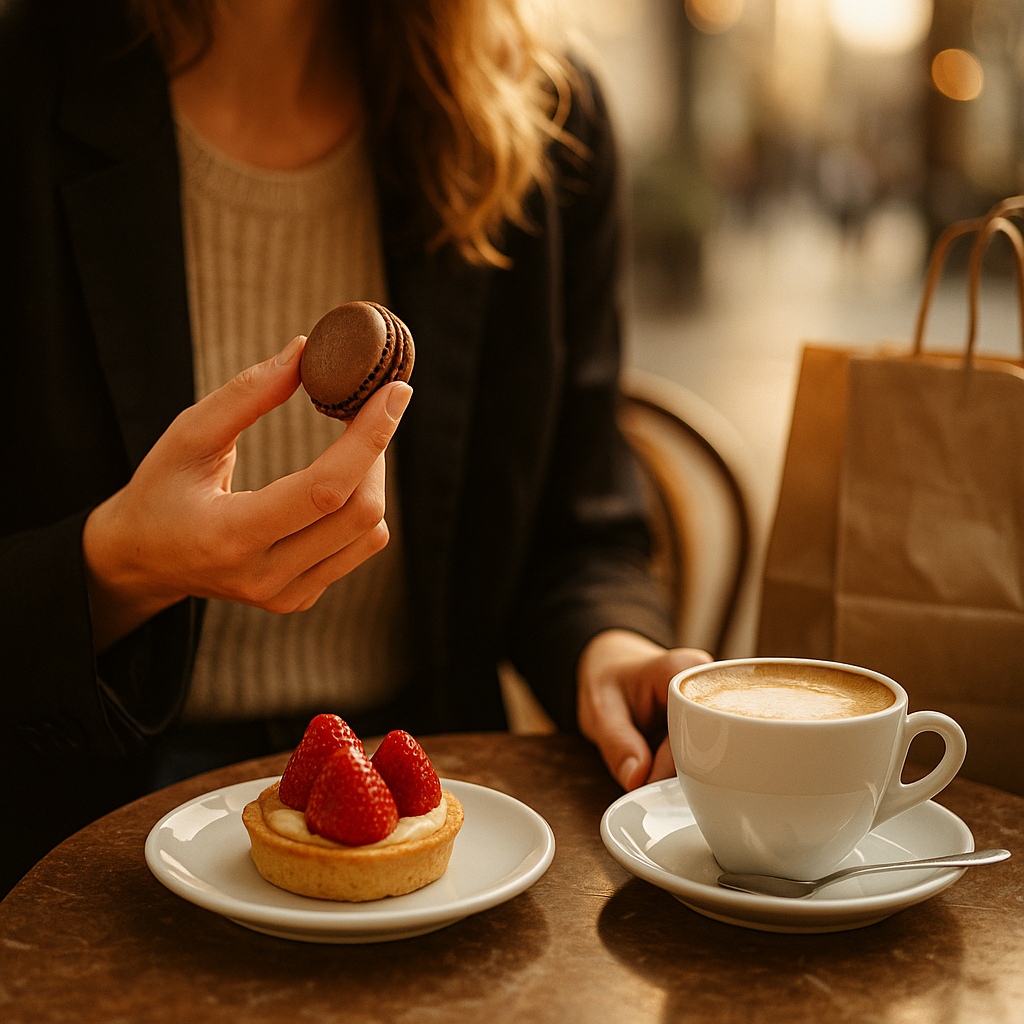
In 2025, shoppers are rethinking what “value” means, choosing fewer big-ticket splurges and more frequent, mood-boosting indulgences. This shift—often called Treatonomics—shows up in everything from premium coffee runs to mini skincare upgrades. It’s not about reckless spending; it’s about controlled comfort, identity, and small wins. So what’s driving it, and how should brands respond?
Small luxury consumer shift: why “little treats” are winning
The small luxury consumer shift describes a move away from major discretionary purchases (like expensive electronics or high-end travel add-ons) toward affordable upgrades that feel premium. Consumers aren’t necessarily spending more overall; many are simply reallocating discretionary budgets to items that deliver an immediate emotional return.
Three forces explain why small luxuries are outperforming bigger splurges:
- Budget uncertainty: When households feel pressure from everyday costs, a $12 “upgrade” feels manageable while a $1,200 purchase feels risky. Small luxuries preserve a sense of choice without long-term financial commitment.
- Stress management and micro-rewards: People use treats as mood regulation. A small indulgence provides a quick, tangible payoff that bigger purchases often delay.
- Experience compression: Consumers want premium cues—craftsmanship, personalization, aesthetics—in compact formats. A mini fragrance, a specialty pastry, or a deluxe sample can deliver the “premium signal” without the premium price.
If you’re wondering whether this is “just impulse buying,” the behavior is more structured than it looks. Many shoppers set informal rules: one treat per week, only when running errands, or only if it replaces a larger purchase. In practice, treatonomics often functions as a self-imposed budgeting system that keeps morale up.
Affordable indulgence trends: what consumers are buying in 2025
Across categories, affordable indulgence trends share a common pattern: elevated sensory details, strong branding, and a feeling of personal care. The point isn’t status in the traditional sense; it’s the feeling of “I chose this for me.”
Common treat categories include:
- Food and beverage upgrades: Craft coffee, functional drinks, premium chocolate, and “one good pastry” purchases. Portion-controlled indulgence aligns with both budget and wellness goals.
- Beauty and personal care minis: Travel sizes, discovery sets, single-use masks, and refill-friendly formats. These allow experimentation without committing to full-price products.
- At-home comfort: Scented candles, room sprays, luxe hand soaps, and small décor pieces that refresh a space quickly.
- Accessible fashion: Elevated basics, limited-run accessories, and “one hero piece” outfits built around a statement item.
- Digital micro-spends: Paid creator content, game add-ons, and subscription tiers. These satisfy the same “small reward” logic, often with a stronger personalization angle.
Readers often ask whether sustainability conflicts with treat purchases. It can—if treats rely on excessive packaging or fast churn. But the trend also creates room for durable, refillable, or “buy less, buy better” options, especially when brands position the treat as a small ritual rather than a disposable thrill.
Trading down and premiumization: the psychology behind treat purchases
The treat economy is powered by the seemingly contradictory mix of trading down and premiumization. Consumers cut costs in some areas (generic groceries, fewer large purchases, delayed upgrades) so they can spend intentionally in others. This isn’t irrational; it’s a coping strategy that preserves control and identity.
Several psychological drivers show up consistently:
- Immediate feedback: Small luxuries deliver a fast reward loop. That speed matters when people feel stretched or time-poor.
- Identity reinforcement: A treat can signal “I’m the kind of person who values quality,” even if the total spend is modest.
- Predictability: Small, repeatable treats offer structure. Think of it as a personal “subscription” without the subscription.
- Controlled escapism: A mini indulgence provides a mental break without the guilt associated with larger, more conspicuous spending.
From an EEAT standpoint, it’s important to separate observation from exaggeration: treatonomics does not mean all consumers are splurging constantly. Many are selective and value-focused. The key insight is that “value” increasingly includes emotional utility, not just price per unit.
If you’re a consumer, a useful follow-up question is: Am I using treats to replace rest, connection, or long-term planning? Treats can be healthy rituals, but they shouldn’t become the only tool for stress relief. A simple rule helps: if a treat regularly causes regret, reduce frequency or set a specific monthly “joy budget.”
Small luxuries marketing strategy: how brands can win without feeling exploitative
A smart small luxuries marketing strategy respects the consumer’s intelligence and financial reality. In 2025, shoppers quickly detect manipulative “little treat” messaging that pressures them to spend. The brands that earn trust do three things well: they make the product genuinely better, they price transparently, and they help customers choose the right cadence of purchase.
Practical, consumer-respectful tactics:
- Design for ritual: Create a clear moment of use—morning reset, post-work decompression, weekend reward. Ritual framing improves satisfaction and reduces churn.
- Offer tiered entry points: Minis, refills, bundles, and limited “try me” kits let customers participate without overcommitting.
- Be explicit about value: Specify what makes it premium—ingredients, craftsmanship, sourcing, performance testing, or longevity. Avoid vague claims.
- Reduce buyer’s remorse: Provide usage guidance, pairing ideas, care instructions, and realistic expectations. Make returns and customer support straightforward.
- Balance scarcity with trust: Limited drops can work, but chronic artificial scarcity erodes credibility. Use scarcity only when supply truly is constrained.
Brands also need to answer an unspoken follow-up: Is this indulgence compatible with my goals? You can help by offering “better, not bigger” options—smaller sizes with higher quality, refill programs, and products engineered to last. In content, explain how to integrate the product into a routine without encouraging overconsumption.
To align with EEAT, cite sources when you use numbers, use qualified experts when making health or finance claims, and separate opinion from evidence. If you’re publishing a treatonomics report, include methodology: sample size, geography, and how you define “small luxury.” That transparency builds authority.
Consumer behavior 2025: what treatonomics means for retail, pricing, and product design
Understanding consumer behavior 2025 means recognizing that “affordable premium” is no longer a niche—it’s a core strategy. Retailers and brands are adapting across assortment, merchandising, and loyalty programs.
Key implications:
- Assortment shifts toward “premium minis”: Expect more travel sizes, single-serve premium, and discovery formats. These lower the barrier to trial and keep purchase frequency healthy.
- Merchandising built around moments: Retail displays increasingly group items by occasion—“reset,” “treat night,” “focus,” “recovery”—instead of by category alone.
- Pricing architecture gets tighter: Brands need clear price ladders: entry treat, core product, and occasional upgrade. Confusing tiers reduce trust.
- Loyalty evolves into “permission-based” rewards: Points that push constant buying can backfire. Better: benefits that add value without requiring more spend—refill credits, early access to restocks, or free personalization.
- Product design prioritizes sensorial cues: Texture, scent, sound (packaging), and visual appeal matter because they deliver the “luxury feeling” quickly.
Retail leaders should also plan for volatility. Treat purchases can be resilient, but they are still discretionary. The strongest portfolios diversify across:
- Everyday treats (high frequency, low price)
- Occasional upgrades (mid frequency, mid price)
- Giftable small luxuries (seasonal spikes, high margin)
If you’re a founder or product manager, a useful follow-up is: What is my product’s “permission slip”? In treatonomics, the winning offer gives customers a reason that feels responsible—longer-lasting, healthier ingredients, fewer but better items, or a clear functional benefit alongside pleasure.
Ethical premiumization: trust, sustainability, and long-term loyalty
Treatonomics will not build durable brands unless it’s paired with ethical premiumization. Consumers increasingly expect proof: not perfection, but honesty about sourcing, labor, and environmental impact. In 2025, “premium” without integrity reads as performative.
What ethical premiumization looks like in practice:
- Transparent sourcing: Share where key materials come from, what standards you apply, and what you’re still improving.
- Responsible packaging: Right-size packaging, offer refills, and avoid wasteful layers. If you must use protective materials, explain why.
- Quality that reduces consumption: A treat that lasts longer or performs better can be more sustainable than repeated low-quality purchases.
- Inclusive accessibility: Avoid “luxury” language that implies exclusion. Focus on craft, care, and experience rather than elitism.
For readers wondering how to spot a trustworthy small-luxury brand: look for specifics (materials, testing, warranty, refill details), consistent product reviews, and customer support that resolves problems quickly. For businesses, the takeaway is simple: your treat product should create delight and reduce friction—buyers want comfort, not complications.
FAQs: Treatonomics and the small luxury consumer shift
What does “treatonomics” mean?
Treatonomics describes a consumer spending pattern where people prioritize small, frequent indulgences—premium but affordable purchases—especially when larger discretionary spending feels less attainable or less appealing.
Is treatonomics only driven by inflation?
No. Cost pressure can amplify it, but treatonomics also reflects emotional needs, identity signaling, and the desire for quick, controllable rewards. It’s a mix of economics and psychology.
Which industries benefit most from the small luxury shift?
Food and beverage, beauty/personal care, fragrance, home comfort, affordable accessories, and subscription-style digital products often benefit because they can deliver premium cues at low-to-mid price points.
How can brands price small luxuries without alienating customers?
Use transparent value messaging and clear price tiers. Offer entry sizes, refills, and bundles, and avoid stealth price hikes that reduce quantity or quality without explanation.
Is treatonomics sustainable long term?
It can be, if consumers keep treats intentional and brands design products that minimize waste and maximize durability. The trend becomes unhealthy when it relies on constant novelty, heavy packaging, or manipulative scarcity.
How can consumers enjoy small luxuries responsibly?
Set a monthly “joy budget,” choose treats with lasting utility, and favor refillable or durable options. If you feel regret after purchases, lower frequency and focus on rituals that don’t require spending.
In 2025, treatonomics reflects a practical compromise: consumers protect their budgets while still seeking moments of quality and relief. The small luxury consumer shift favors products that feel premium, fit real routines, and justify their price with clear value. Brands that build trust through transparency and ethical design will win repeat purchases. The real takeaway: make treats intentional, not automatic, and they’ll stay satisfying.
Top Influencer Marketing Agencies
The leading agencies shaping influencer marketing in 2026
Agencies ranked by campaign performance, client diversity, platform expertise, proven ROI, industry recognition, and client satisfaction. Assessed through verified case studies, reviews, and industry consultations.
Moburst

-
2

The Shelf
Boutique Beauty & Lifestyle Influencer AgencyA data-driven boutique agency specializing exclusively in beauty, wellness, and lifestyle influencer campaigns on Instagram and TikTok. Best for brands already focused on the beauty/personal care space that need curated, aesthetic-driven content.Clients: Pepsi, The Honest Company, Hims, Elf Cosmetics, Pure LeafVisit The Shelf → -
3

Audiencly
Niche Gaming & Esports Influencer AgencyA specialized agency focused exclusively on gaming and esports creators on YouTube, Twitch, and TikTok. Ideal if your campaign is 100% gaming-focused — from game launches to hardware and esports events.Clients: Epic Games, NordVPN, Ubisoft, Wargaming, Tencent GamesVisit Audiencly → -
4

Viral Nation
Global Influencer Marketing & Talent AgencyA dual talent management and marketing agency with proprietary brand safety tools and a global creator network spanning nano-influencers to celebrities across all major platforms.Clients: Meta, Activision Blizzard, Energizer, Aston Martin, WalmartVisit Viral Nation → -
5

The Influencer Marketing Factory
TikTok, Instagram & YouTube CampaignsA full-service agency with strong TikTok expertise, offering end-to-end campaign management from influencer discovery through performance reporting with a focus on platform-native content.Clients: Google, Snapchat, Universal Music, Bumble, YelpVisit TIMF → -
6

NeoReach
Enterprise Analytics & Influencer CampaignsAn enterprise-focused agency combining managed campaigns with a powerful self-service data platform for influencer search, audience analytics, and attribution modeling.Clients: Amazon, Airbnb, Netflix, Honda, The New York TimesVisit NeoReach → -
7

Ubiquitous
Creator-First Marketing PlatformA tech-driven platform combining self-service tools with managed campaign options, emphasizing speed and scalability for brands managing multiple influencer relationships.Clients: Lyft, Disney, Target, American Eagle, NetflixVisit Ubiquitous → -
8

Obviously
Scalable Enterprise Influencer CampaignsA tech-enabled agency built for high-volume campaigns, coordinating hundreds of creators simultaneously with end-to-end logistics, content rights management, and product seeding.Clients: Google, Ulta Beauty, Converse, AmazonVisit Obviously →