


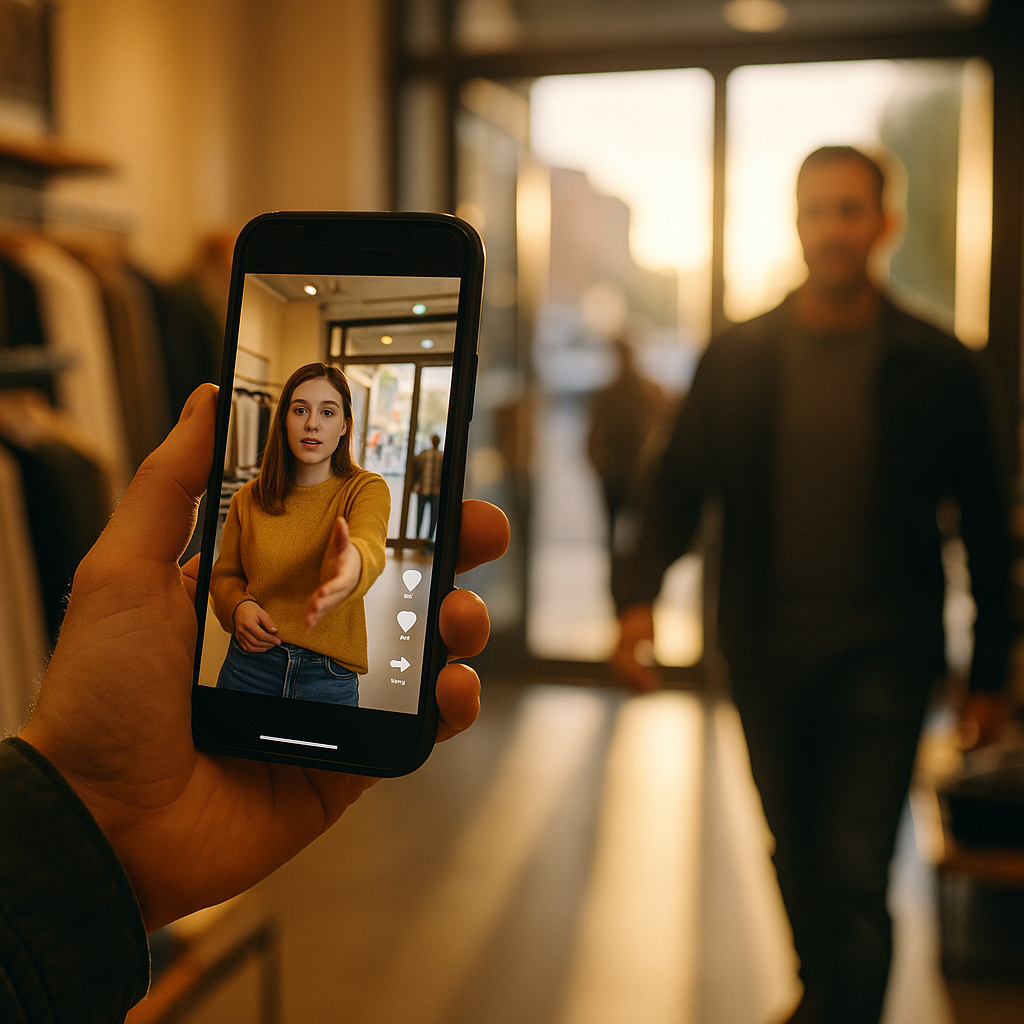
In 2025, many retailers face rising print costs and shrinking attention spans. This case study shows how one mid-sized brand replaced weekly circulars with Social video marketing that drives measurable store traffic, stronger loyalty, and faster creative testing. You’ll see the strategy, the numbers, and the operational changes that made it work, plus what to avoid when you make the same shift—ready?
Print advertising decline: The starting point and why change became urgent
Company profile: Northline Home + Market (pseudonym), a 42-store regional retailer selling home goods, seasonal décor, and everyday essentials across suburban and small-city markets. For a decade, its promotional engine was a weekly print circular supported by local newspaper inserts and direct mail.
By early 2025, the team saw three clear signals that the old mix couldn’t scale:
- Unit economics worsened. Paper, printing, and distribution costs climbed while response rates softened. The marketing team could forecast spend, but not results.
- Attribution gaps grew. They relied on coupon codes and “how did you hear about us?” surveys, which undercounted influence and overcounted last-touch behaviors.
- Creative speed lagged retail reality. Print required long lead times, making it hard to react to weather-driven demand, competitor pricing, or inventory spikes.
Leadership didn’t decide to “go digital” as a trend move. They set a specific business goal: maintain promotional reach while improving incremental revenue and reducing waste. That led to a pilot plan: replace 60% of circular distribution within two quarters and shift the freed budget into short-form social video optimized for store visits and ecommerce add-to-carts.
Key baseline metrics (print-heavy period): weekly circular reach (estimated), coupon redemption rate, average basket size during promo weeks, and cost per incremental visit (modeled). The team also documented operational constraints—creative turnaround time, merchandising approvals, and store capacity—because those would make or break the transition.
Social video strategy: Turning weekly circulars into a video-first playbook
Northline’s first strategic decision was to treat social video as a performance channel with brand lift, not as “content.” That meant every video had a defined job: drive a store visit, move specific inventory, or increase repeat purchase.
Channel mix: Instagram Reels, TikTok, YouTube Shorts, and paid placements within the same platforms. The retailer avoided spreading thin across every network and instead prioritized where short-form discovery and local targeting were strongest.
Creative framework (built to replace the circular’s functions):
- Deal clarity in the first 2 seconds. The circular headline became an on-screen offer: “3 for $10 pantry favorites” or “Weekend patio refresh under $50.”
- Merchandising storytelling. Instead of listing items, videos showed how products solve a problem: “5-minute entryway reset,” “small-space storage,” “rainy-day snack drawer.”
- Local relevance. Creatives referenced regionally relevant moments (storms, school events, seasonal shifts) without needing weeks of lead time.
- Clear next step. Each video ended with one action: “Tap for directions,” “Save this list,” or “Shop the bundle.” The team avoided multiple CTAs that dilute intent.
Cadence: The circular’s weekly rhythm became a daily lightweight video cadence. Northline posted 6–9 organic short videos per week and ran paid support behind the top performers. The paid budget didn’t spread evenly; it followed results.
Answering the obvious question—does short video work for in-store? Yes, when it connects the offer to a frictionless action. Northline used store-locator links, “available today” inventory messaging for hero items, and limited-time bundles that created a reason to visit. They also trained store associates to recognize featured bundles so the in-store experience matched the promise of the video.
Retail video content production: Building a lean workflow that stores can sustain
The biggest risk wasn’t platform performance—it was production bottlenecks. Print had a stable process; video can become chaotic without a system. Northline created a lean content engine designed for retail speed.
Team roles (small, realistic headcount):
- Creative lead to manage brand standards, templates, and approvals.
- Two “shooter-editors” trained to film on phones and edit quickly in native tools or lightweight software.
- Merchandising partner to select weekly hero SKUs and validate pricing.
- Store liaison to coordinate filming windows and ensure shelf readiness.
Production system:
- Template library: 12 reusable formats (price pop, before/after, bundle build, aisle tour, staff pick, seasonal countdown). Templates kept branding consistent and reduced review cycles.
- Two-day content sprint: One day to plan and pull product, one day to film 15–20 clips across two stores. Editors then repackaged clips into multiple platform cuts.
- UGC-style authenticity with guardrails: The videos looked native, but the team standardized lighting, caption placement, and offer display so nothing felt sloppy.
Compliance and trust: The retailer added a simple checklist: verify price and dates, confirm disclaimers for limited quantities, and ensure product claims were factual. This reduced customer service issues and protected credibility—an EEAT win because accuracy matters as much as creativity.
Common follow-up: “Do we need influencers?” Northline tested creators, but they didn’t start there. They first proved unit economics with in-house content. Later, they used local micro-creators for specific categories (seasonal décor, pantry organization) with clear deliverables and usage rights, turning creator videos into paid ads when performance justified it.
Omnichannel measurement: Proving lift without relying on guesswork
To replace print, Northline had to convince finance and operations with more than views and likes. The measurement plan was built around incrementality and repeatable reporting.
Measurement stack (practical, not overengineered):
- Platform conversion tools: store-visit and direction-click optimization where available, plus ecommerce events for add-to-cart and purchases.
- Geo lift testing: matched-market experiments comparing stores with paid social video support vs. control stores keeping heavier print distribution.
- Offer-level tracking: unique bundles and in-app “save this deal” prompts tied to weekly POS reporting. Not every sale is trackable, but directional lift is.
- Customer feedback signals: short post-purchase survey prompts at checkout and in receipts asking what influenced the visit, with “saw a short video” as an option.
Key results from the 12-week transition period:
- Reduced print distribution by 62% while maintaining overall promotional reach through a mix of paid and organic video.
- Improved speed-to-market from a multi-week print lead time to 48–72 hours for new offers and seasonal pushes.
- Lowered cost per incremental visit (modeled via geo tests) compared with print-heavy weeks, especially on weekend “bundle” campaigns.
- Increased basket size on video-promoted bundles, driven by multi-item value framing rather than single-item discounting.
Why these results were believable: The team avoided vanity metrics and reported three numbers every week: incremental visits (modeled), incremental gross margin (estimated using POS + test design), and creative learnings (what themes drove action). This made the program legible to non-marketers and prevented “social” from becoming a black box.
Reader’s likely concern: “What about older customers who rely on print?” Northline didn’t eliminate print overnight. They kept a smaller, targeted print run for select ZIP codes with higher print responsiveness and used store signage to connect the offer experience across channels. The goal was not to abandon loyal shoppers—it was to stop overspending where print no longer paid back.
Customer engagement on social: What actually made shoppers act
Northline’s best-performing videos shared a few traits that are replicable across retail categories.
1) Specificity beats polish. “Stock-up snacks under $15” outperformed generic “New arrivals” videos because shoppers instantly understood the value. The team leaned into concrete constraints: price caps, time limits, and use cases.
2) Bundles beat single-item discounts. The circular used to list many items. Social video worked better when it packaged a story: “Weekend cleaning reset kit,” “Dorm essentials bundle,” “Game-night cart.” Bundles also improved gross margin and reduced inventory fragmentation.
3) Staff credibility increased trust. A rotating cast of store associates introduced picks and demonstrated simple product uses. This created a consistent, human presence and reduced the “ad feeling.” To keep it authentic, associates spoke in their own words while the on-screen text carried the exact offer details.
4) Community feedback became a free research channel. Comments revealed what shoppers wanted next: different sizes, alternate colors, aisle locations, and whether deals were available in every store. The team treated comments as qualitative data. They responded with store-specific info and turned common questions into new videos.
5) Creative learning loops replaced “set and forget.” Each week, the team documented:
- Top 3 hooks that held attention in the first two seconds
- Top 3 product categories by incremental lift
- Top objections in comments and how to pre-empt them
This created an internal knowledge base so success didn’t depend on one talented editor. It also supported EEAT: a clear process, consistent accuracy, and evidence-based decisions.
Retail marketing transformation: How the organization adapted and scaled
The transition worked because Northline treated it as an operational change, not just a channel swap.
Budget reallocation: Print savings funded video production, paid amplification, and measurement. Leadership approved a rule: spend followed performance, but a baseline always supported testing to avoid stagnation.
Merchandising alignment: The merchandising team shifted from “finalize a weekly ad” to “publish a weekly offer slate” designed for video. That slate included hero items, bundle options, and inventory constraints. If inventory was tight, the offer became “limited drop” messaging rather than a broad promotion.
Store operations readiness: Store managers received a simple weekly brief: top promoted items, bundle components, and where they would be merchandised. This reduced the risk of customers arriving and not finding what the video promised—one of the fastest ways to lose trust.
Brand safety and accuracy: The company documented standards for music use, claim language, and pricing disclaimers. They also created a lightweight approval chain so accuracy didn’t slow speed.
Scaling beyond the pilot: After the initial 12 weeks, Northline expanded filming to four “content hub” stores with reliable lighting, clean endcaps, and cooperative teams. They also built a quarterly planning rhythm around retail moments (seasonal transitions, holidays, weather phases) while keeping room for rapid-response content.
What they would do differently:
- Start measurement sooner. Early weeks leaned too heavily on platform indicators. Geo testing clarified what truly drove incremental visits.
- Standardize SKU availability checks. A few early videos promoted items that sold out fast, triggering negative comments. The fix: minimum inventory thresholds for broad promotion.
- Train more store spokespeople. Videos with staff performed well, but relying on two charismatic associates created capacity risk.
FAQs
How long does it take a retailer to shift from print to social video?
Most retailers can run a meaningful pilot in 8–12 weeks if they have clear offers, a small production team, and a measurement plan. A full transition typically takes longer because it requires budget cycles, store training, and a tested creative library.
What types of products work best in short-form retail video?
Bundles, seasonal items, and “problem-solver” categories perform best because the value is easy to demonstrate. Commodity products can still work when framed as a list, a stock-up, or a price cap (for example, “five essentials under $20”).
How do you measure in-store impact from social video?
Use a mix: platform store-visit or direction-click optimization where available, matched-market geo lift tests, and POS reporting tied to bundles or featured SKUs. No single method is perfect; triangulating results produces a more trustworthy view of incrementality.
Should we keep any print at all?
Often, yes—at least temporarily. Keep a smaller, targeted print program for areas and customer segments where print still drives profitable response. Reduce broad distribution first, then reallocate spend to video based on measured lift.
Do we need professional cameras and a studio?
No. Phone-shot video can outperform studio creative because it feels native to social platforms. Invest in consistency—good lighting, clear on-screen pricing, steady framing, and fast editing—before spending on high-end gear.
How many videos per week do we need to see results?
A practical target is 6–10 short videos per week across organic and paid, using a few repeatable templates. The key is not volume alone; it’s structured testing, fast iteration, and putting paid support behind proven winners.
Northline’s transition succeeded because it replaced print’s core job—clear offers at scale—with a faster, more measurable system. In 2025, social video works when you pair tight merchandising with a lean production workflow and incrementality-focused measurement. The takeaway is simple: don’t “post more.” Build a repeatable video engine that matches inventory realities, proves lift, and earns trust with accurate, useful creative.
Top Influencer Marketing Agencies
The leading agencies shaping influencer marketing in 2026
Agencies ranked by campaign performance, client diversity, platform expertise, proven ROI, industry recognition, and client satisfaction. Assessed through verified case studies, reviews, and industry consultations.
Moburst

-
2

The Shelf
Boutique Beauty & Lifestyle Influencer AgencyA data-driven boutique agency specializing exclusively in beauty, wellness, and lifestyle influencer campaigns on Instagram and TikTok. Best for brands already focused on the beauty/personal care space that need curated, aesthetic-driven content.Clients: Pepsi, The Honest Company, Hims, Elf Cosmetics, Pure LeafVisit The Shelf → -
3

Audiencly
Niche Gaming & Esports Influencer AgencyA specialized agency focused exclusively on gaming and esports creators on YouTube, Twitch, and TikTok. Ideal if your campaign is 100% gaming-focused — from game launches to hardware and esports events.Clients: Epic Games, NordVPN, Ubisoft, Wargaming, Tencent GamesVisit Audiencly → -
4

Viral Nation
Global Influencer Marketing & Talent AgencyA dual talent management and marketing agency with proprietary brand safety tools and a global creator network spanning nano-influencers to celebrities across all major platforms.Clients: Meta, Activision Blizzard, Energizer, Aston Martin, WalmartVisit Viral Nation → -
5

The Influencer Marketing Factory
TikTok, Instagram & YouTube CampaignsA full-service agency with strong TikTok expertise, offering end-to-end campaign management from influencer discovery through performance reporting with a focus on platform-native content.Clients: Google, Snapchat, Universal Music, Bumble, YelpVisit TIMF → -
6

NeoReach
Enterprise Analytics & Influencer CampaignsAn enterprise-focused agency combining managed campaigns with a powerful self-service data platform for influencer search, audience analytics, and attribution modeling.Clients: Amazon, Airbnb, Netflix, Honda, The New York TimesVisit NeoReach → -
7

Ubiquitous
Creator-First Marketing PlatformA tech-driven platform combining self-service tools with managed campaign options, emphasizing speed and scalability for brands managing multiple influencer relationships.Clients: Lyft, Disney, Target, American Eagle, NetflixVisit Ubiquitous → -
8

Obviously
Scalable Enterprise Influencer CampaignsA tech-enabled agency built for high-volume campaigns, coordinating hundreds of creators simultaneously with end-to-end logistics, content rights management, and product seeding.Clients: Google, Ulta Beauty, Converse, AmazonVisit Obviously →