


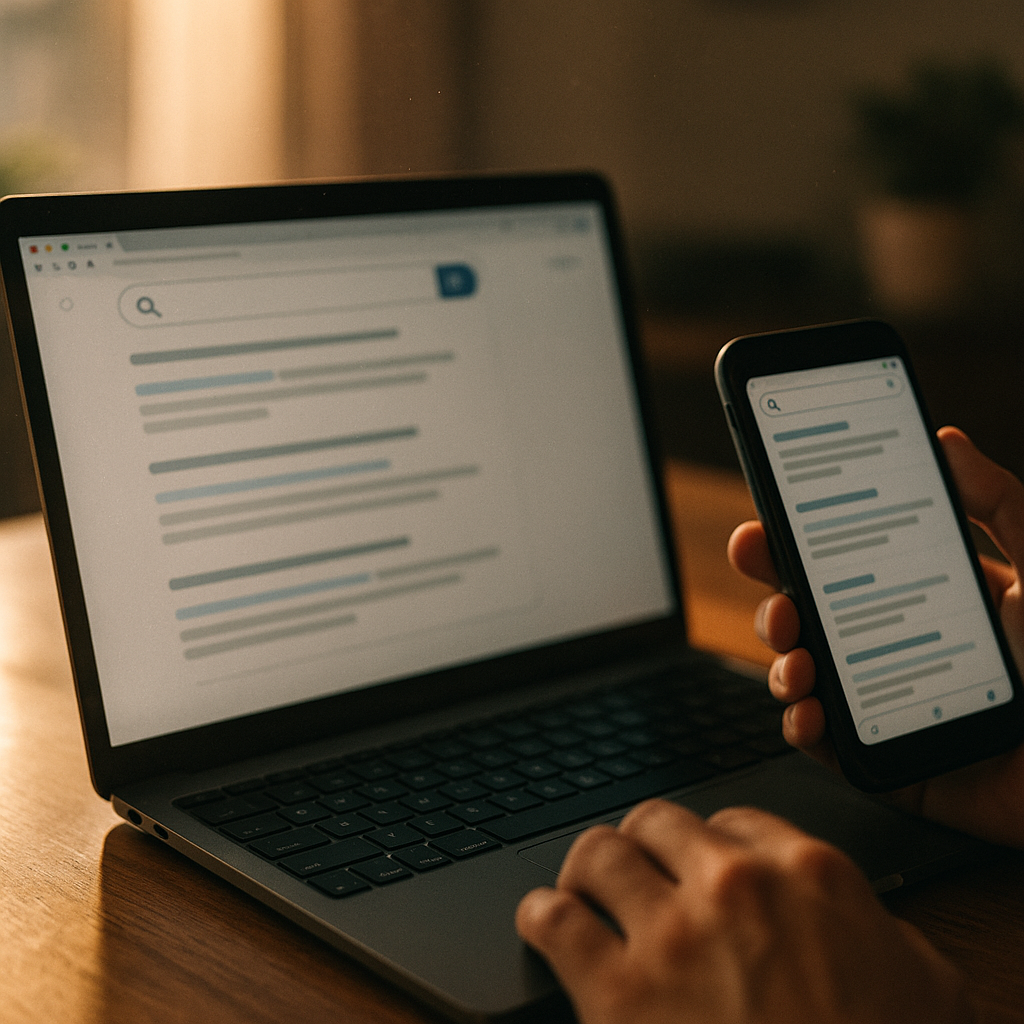
In 2025, search results often answer users before they ever reach your site, making Designing Scannable Content For The Zero-Click Search Era a core skill for modern marketers. Winning now means structuring pages so people and search engines grasp value in seconds. This article shows practical formats, markup choices, and writing patterns that earn visibility and clicks when they matter most—ready to rethink your layout?
Zero-click search results: what they are and why they changed content
Zero-click search results happen when a user’s question is answered directly on the search results page through elements like featured snippets, AI overviews, knowledge panels, “People also ask,” map packs, and rich results. In these cases, the user may complete the task without clicking any listing. This shift does not mean SEO is dead; it means SEO must serve two outcomes at once: visibility without a click and conversion when a click is earned.
To design for this environment, treat the search results page as the first “screen” of your content. Your page must provide:
- Extractable answers that search engines can quote accurately.
- Skimmable structure that users can validate fast once they land.
- Clear next steps that justify the click: tools, templates, deeper guidance, pricing, or proof.
Zero-click outcomes are not always bad. If your brand is cited in an overview or snippet, you can earn trust and demand even when traffic is lower. The goal is to become the source Google wants to reference and the page users choose when they need depth, nuance, or action.
Scannable web content: structure that earns attention in seconds
Scannable web content is written and formatted so a busy reader can understand the key message by skimming. In the zero-click era, scannability also helps search engines identify discrete answers. Start with an information architecture that mirrors how people search: quick definition, steps, options, and decision criteria.
Use these layout patterns consistently:
- Answer-first paragraphs: lead with the conclusion, then add context. This supports snippet extraction and reduces bounce.
- One idea per paragraph with plain language and minimal filler.
- Short lists to summarize steps, requirements, or comparisons.
- Strategic emphasis using bold for key terms and italics for clarifying nuance, without overdoing either.
Write for skim paths, not just linear reading. Many users scan headings, then the first sentence under each section. Make those sentences self-contained and precise. If you claim something, immediately support it with the “why,” the “how,” or the “when it doesn’t apply,” because that’s what readers look for next.
Also design your page to satisfy two different intents that often appear in the same query:
- Informational intent: “What is it?” “How does it work?”
- Commercial intent: “Which tool?” “Is it worth it?” “What should I choose?”
When you address both, you reduce the chance that the searcher returns to Google for a second click.
Featured snippet optimization: write answers Google can quote accurately
Featured snippet optimization is less about “tricks” and more about reducing ambiguity. Google prefers answers that are easy to extract, factually grounded, and aligned with the query’s format. Your job is to provide clean, quotable blocks while keeping the full page valuable beyond the snippet.
Practical snippet-friendly formats include:
- Definition snippet: Start with a 1–2 sentence definition that uses the same nouns as the query.
- List snippet: Provide a clear sequence of steps or a checklist in an ordered or unordered list.
- Table-like comparison in text: If you cannot use a table, use consistent, parallel phrasing to compare options.
Use “query echo” carefully. If users search “how to design scannable content,” begin a relevant section with a sentence that mirrors the query and answers it directly. Then expand with constraints and edge cases, such as when scannability can reduce perceived expertise (for example, oversimplifying regulated topics).
To keep value when you win the snippet, add depth that cannot fit in a snippet:
- Decision guidance: what to do if you have multiple audiences or mixed intent.
- Examples: “before/after” rewrites, templates, or content outlines.
- Implementation details: how to brief writers, how to QA scannability, and how to measure impact.
Finally, make each page segmentable. If each section can stand alone as an answer, Google has more opportunities to cite you across variations of the query.
On-page SEO for AI overviews: improve extraction, attribution, and trust
On-page SEO for AI overviews depends on clarity, consistency, and trust signals. AI-generated summaries pull from sources that read as authoritative and unambiguous. That means your content must be easy to parse, conservative in claims, and explicit about who is speaking.
Apply these on-page practices:
- State the takeaway early, then support it with reasoning and actionable steps.
- Avoid unsupported absolutes like “always” and “never.” Use conditional language when appropriate.
- Define terms the first time you use them, especially jargon like “zero-click,” “SERP features,” and “entity.”
- Use consistent naming for products, frameworks, and concepts so systems do not treat them as separate entities.
Build attribution cues that help both users and systems trust the content:
- Show expertise in the writing: include constraints, trade-offs, and common failure points.
- Demonstrate experience: describe how you would apply the approach in a real workflow (briefing, drafting, editing, measurement).
- Be transparent: distinguish between best practice, opinion, and what depends on testing.
If your topic includes sensitive decisions, add guardrails. For example, if you advise on health, finance, or legal topics, you should clarify when professional advice is required. That improves trustworthiness and reduces the risk of misleading summaries.
Also anticipate the follow-up question users often ask after reading an overview: “What do I do next?” Provide a clear path: a checklist, a template outline, or a measurable plan. That is how you convert visibility into action.
EEAT content strategy: credibility signals that survive skimming
EEAT content strategy focuses on Experience, Expertise, Authoritativeness, and Trust. In scannable content, readers decide quickly whether you are worth their time. You need credibility signals that are visible even when someone only reads headings, bolded phrases, and the first line of each section.
Build EEAT into the page itself:
- Experience: include practical steps and “watch-outs” that only appear when you have implemented the tactic (for example, how over-formatting can create repetitive snippets that compete with each other).
- Expertise: explain the “why” behind each recommendation, not just the “what.”
- Authoritativeness: align with established terminology and industry standards; cite reputable sources when using statistics or claims that require verification.
- Trust: be clear about limitations, update processes, and what you recommend testing.
To make credibility scannable, use this writing pattern:
- Claim: a direct recommendation.
- Reason: why it matters in zero-click SERPs.
- How: a simple step the reader can implement today.
- Boundary: when the advice changes based on context.
For example, you can recommend answer-first formatting, explain it helps extraction and user validation, show how to write the first two sentences, and note that complex B2B or regulated topics may need additional nuance to avoid oversimplification.
EEAT is also operational. If you manage a content program, define who reviews what, how often you refresh key pages, and how you fact-check. Readers do not need every internal detail, but they benefit from the outcomes: fewer errors, clearer guidance, and trustworthy updates.
Content formatting checklist: templates for scannability and measurable impact
Designing scannable content works best when you standardize it. Use a checklist your writers and editors can apply across pages, then measure results in Search Console and analytics. You are aiming for better visibility in SERP features, stronger engagement when users do click, and clearer conversions.
Scannability checklist (page-level):
- One primary intent and up to two supporting intents addressed clearly.
- Intro that confirms relevance and states the benefit of reading.
- Headings that map to questions users actually ask.
- Answer blocks that can be quoted without losing meaning.
- Lists for steps, requirements, and comparisons.
- Internal next step: link or pathway to a deeper guide, tool, template, or product page.
Answer block template (copy and adapt):
- Direct answer in 1–2 sentences.
- Why it matters in 1 sentence.
- How to apply in 3–5 bullet points.
Measurement plan:
- Track query groups: informational vs commercial variations.
- Monitor SERP feature presence: impressions can rise even when clicks do not.
- Measure engagement quality: time to first interaction, scroll depth, and conversion rate by landing query intent.
- Run controlled updates: change one element at a time (intro, headings, answer blocks) and compare performance.
If clicks drop while impressions rise, you may be “feeding” zero-click answers. The fix is not to remove answers; it is to add irresistible value after the answer: interactive tools, downloadable assets, calculators, decision trees, or detailed examples that cannot fit on the results page.
FAQs about scannable content in the zero-click era
-
Does zero-click mean I should stop targeting informational keywords?
No. Informational queries can build brand trust, earn citations, and introduce your solution. The tactic is to provide a quotable answer while offering deeper assets that justify a click, such as templates, checklists, or product-led examples.
-
How long should an “answer paragraph” be for snippets and AI summaries?
Aim for 1–2 sentences that fully answer the question without pronouns that require extra context. Then add supporting detail immediately below. Clarity matters more than hitting a specific word count.
-
What is the fastest way to make existing content more scannable?
Rewrite the first sentence under each major heading so it answers a question directly, then convert dense sections into short lists. Remove repeated background text and keep one idea per paragraph.
-
How do I balance scannability with sounding credible?
Use concise structure but include boundaries, trade-offs, and implementation details. Credibility comes from precise language, practical constraints, and transparent reasoning, not from longer paragraphs.
-
What should I do if my impressions increase but clicks decrease?
Assume more SERP answers are satisfying the query. Add post-click value that cannot be summarized easily: step-by-step walkthroughs, downloadable templates, interactive tools, or real examples. Also refine titles and meta descriptions to emphasize what users only get by clicking.
Scannable design is no longer just a UX preference; it is how content earns visibility, trust, and action when search results answer more questions instantly. Build pages with answer-first sections, clean lists, and credible EEAT signals that hold up under skimming and machine extraction. In 2025, the winning move is simple: give the best quick answer, then offer the best next step.
Top Influencer Marketing Agencies
The leading agencies shaping influencer marketing in 2026
Agencies ranked by campaign performance, client diversity, platform expertise, proven ROI, industry recognition, and client satisfaction. Assessed through verified case studies, reviews, and industry consultations.
Moburst

-
2

The Shelf
Boutique Beauty & Lifestyle Influencer AgencyA data-driven boutique agency specializing exclusively in beauty, wellness, and lifestyle influencer campaigns on Instagram and TikTok. Best for brands already focused on the beauty/personal care space that need curated, aesthetic-driven content.Clients: Pepsi, The Honest Company, Hims, Elf Cosmetics, Pure LeafVisit The Shelf → -
3

Audiencly
Niche Gaming & Esports Influencer AgencyA specialized agency focused exclusively on gaming and esports creators on YouTube, Twitch, and TikTok. Ideal if your campaign is 100% gaming-focused — from game launches to hardware and esports events.Clients: Epic Games, NordVPN, Ubisoft, Wargaming, Tencent GamesVisit Audiencly → -
4

Viral Nation
Global Influencer Marketing & Talent AgencyA dual talent management and marketing agency with proprietary brand safety tools and a global creator network spanning nano-influencers to celebrities across all major platforms.Clients: Meta, Activision Blizzard, Energizer, Aston Martin, WalmartVisit Viral Nation → -
5

The Influencer Marketing Factory
TikTok, Instagram & YouTube CampaignsA full-service agency with strong TikTok expertise, offering end-to-end campaign management from influencer discovery through performance reporting with a focus on platform-native content.Clients: Google, Snapchat, Universal Music, Bumble, YelpVisit TIMF → -
6

NeoReach
Enterprise Analytics & Influencer CampaignsAn enterprise-focused agency combining managed campaigns with a powerful self-service data platform for influencer search, audience analytics, and attribution modeling.Clients: Amazon, Airbnb, Netflix, Honda, The New York TimesVisit NeoReach → -
7

Ubiquitous
Creator-First Marketing PlatformA tech-driven platform combining self-service tools with managed campaign options, emphasizing speed and scalability for brands managing multiple influencer relationships.Clients: Lyft, Disney, Target, American Eagle, NetflixVisit Ubiquitous → -
8

Obviously
Scalable Enterprise Influencer CampaignsA tech-enabled agency built for high-volume campaigns, coordinating hundreds of creators simultaneously with end-to-end logistics, content rights management, and product seeding.Clients: Google, Ulta Beauty, Converse, AmazonVisit Obviously →