


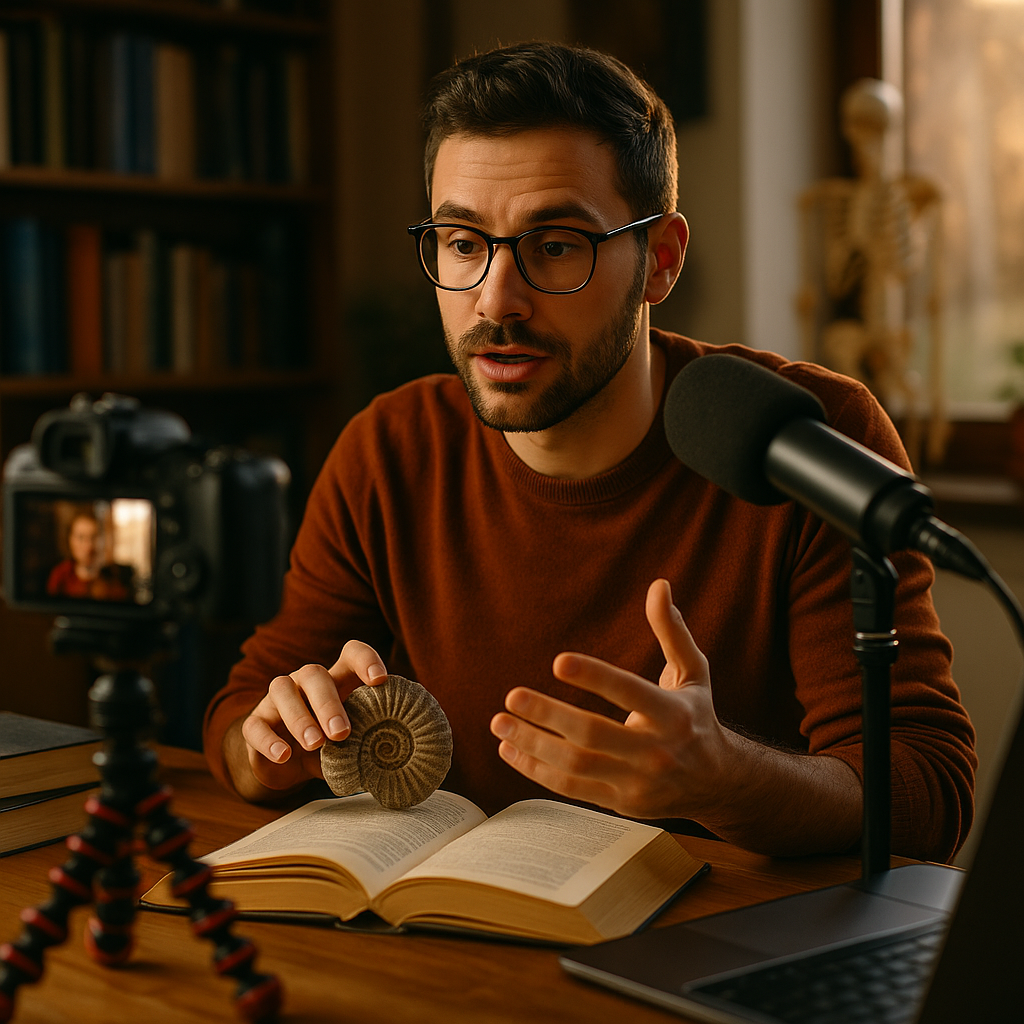
The creator economy in 2025 is rewarding depth over breadth. The Death Of The Generalist Influencer And The Rise Of The Domain Expert is not a slogan; it’s a measurable shift in how audiences evaluate trust, how platforms rank content, and how brands allocate budgets. Generalist reach still exists, but it converts less reliably. The question now is simple: what kind of expertise will win attention next?
Why the generalist influencer model is breaking down (secondary keyword: generalist influencer)
For most of the last decade, the generalist influencer thrived on wide appeal: trending topics, lifestyle roundups, “everything” recommendations, and fast pivots across niches. In 2025, that model is breaking for three reasons: audience skepticism, platform incentives, and buyer behavior.
Audience skepticism has matured. Viewers have seen too many sponsored posts, shallow product reviews, and contradictory opinions. When people feel a creator’s position changes with the next brand deal, they stop treating that creator as a guide and start treating them as entertainment. Entertainment can be valuable, but it rarely commands premium trust for purchase decisions, health guidance, or professional education.
Platforms now prize signals of expertise and satisfaction. Recommendation systems reward content that retains attention, earns saves, and sparks meaningful comments. “I tried this so you don’t have to” works only when the creator can explain tradeoffs, constraints, and context. The algorithm doesn’t explicitly grade credentials, but it does reward the downstream behaviors that expertise tends to generate: longer watch time, higher completion rates, repeat views, and shares within specific communities.
Purchasing has moved toward proof. Audiences want specifics: what worked, for whom, under which conditions, and with what limitations. Generalists often can’t go beyond surface-level claims. As a result, even large accounts can struggle to translate views into conversions unless they collaborate with specialists or build a documented testing process.
None of this means variety is dead. It means unanchored variety is losing value. A creator can cover multiple topics, but they must be anchored by a credible viewpoint, an evidence-based methodology, or demonstrated results.
Trust signals and Google EEAT in the creator economy (secondary keyword: EEAT)
EEAT—Experience, Expertise, Authoritativeness, and Trustworthiness—is not only relevant to websites. In 2025, it maps cleanly to what audiences expect from creators across video, newsletters, podcasts, and social channels. The creators rising fastest tend to operationalize EEAT instead of merely claiming it.
Experience: Show lived practice, not just opinions. A cybersecurity creator who demonstrates threat modeling, a fitness coach who documents client programming constraints, or a financial educator who explains decision frameworks builds “I’ve done this” credibility. In content, that looks like screen recordings, case studies, behind-the-scenes workflows, and before/after outcomes with clear caveats.
Expertise: Credentials help, but competence matters more. Expertise appears in specificity: correct terminology, nuanced tradeoffs, and accurate corrections when wrong. It also appears in how a creator handles uncertainty: using probabilities, referencing primary sources, and stating what they don’t know.
Authoritativeness: Authority is conferred. It shows up in citations by other respected creators, invitations to speak, guest appearances, and consistent community validation. For brands, authority often shows up in performance histories: stable conversion rates, low refund rates, and repeat collaborations.
Trustworthiness: The fastest trust-killer is hidden incentives. Domain experts tend to win because they disclose sponsorships clearly, distinguish ads from editorial judgment, and explain how they evaluate products. They also show their process: what they tested, what they excluded, and why.
Creators who align with EEAT create “compounding content.” A single deep guide can outperform dozens of trend posts because it gets bookmarked, referenced, and searched repeatedly. The follow-up question many creators ask—“Do I need formal credentials?”—has a practical answer: you need verifiable competence, which can come from documented outcomes, transparent methods, and peer recognition, even when you are self-taught.
Why domain experts outperform on reach, retention, and revenue (secondary keyword: domain expert)
Domain experts outperform because they match how people make decisions. When stakes rise—money, health, safety, career—people don’t want vibes; they want guidance they can defend. That creates three advantages for domain expert creators.
1) Higher-intent audiences. Expert content attracts viewers who are already motivated. A creator explaining “how to choose a CRM for a 10-person service business” may have fewer impressions than a general lifestyle reel, but the audience is closer to purchase and more likely to engage in meaningful questions.
2) Stronger retention through depth. Depth increases watch time and repeat viewing because expert content often requires pausing, saving, and revisiting. That produces the behavioral signals platforms reward. It also makes the creator’s library more evergreen, reducing dependence on daily posting.
3) Better monetization mechanics. Domain experts can productize knowledge in ways generalists struggle to defend: paid workshops, audits, templates, cohort courses, premium communities, and specialized consulting. Brands also pay more for expert-led campaigns because the messaging can be technical, the audience can be segmented by problem, and measurement can be tied to qualified leads rather than vanity metrics.
If you’re wondering whether this only applies to “serious” topics, it doesn’t. Even entertainment niches are fragmenting into subdomains: cinematography breakdowns, comedy writing analysis, production workflows, or fandom lore research. Expertise is simply the ability to go deeper than the average viewer and bring them with you.
How platforms and brands now evaluate niche authority (secondary keyword: niche authority)
In 2025, brands and platforms both use more sophisticated filters to identify credible partners. While the exact ranking formulas are private, the observable evaluation patterns have converged around niche authority.
Platforms look for repeatable satisfaction. Signals include saves, shares to DMs, long comments, follows after specific posts, and reduced “not interested” feedback. Niche authority content tends to produce these signals because it solves a defined problem and gives the viewer language to act on it.
Brands increasingly audit creator-business fit. A modern creator brief often includes: audience breakdown by role and intent, content formats that reliably drive clicks, historical conversion benchmarks, and brand safety considerations. Many brands also ask for proof of process: how you research, how you test, and how you handle claims.
Creators can meet this standard without corporate polish by building a simple credibility stack:
- Positioning: a clear “who I help” and “what I help them do.”
- Evidence: demonstrations, experiments, case studies, and outcomes with constraints stated.
- Consistency: a repeatable content series that teaches the audience what to expect.
- Transparency: disclosures, affiliate clarity, and corrections when needed.
- Community proof: testimonials, peer collaborations, and audience results.
Brands also care about risk. Generalist influencers can be harder to predict because their audience is diverse and their content swings across topics. A niche authority creator is easier to brief, easier to measure, and less likely to create messaging mismatches that hurt performance.
Building expertise-led content without becoming boring (secondary keyword: expertise-led content)
A common fear is that specialization will shrink creativity. In practice, expertise-led content can be more creative because constraints sharpen ideas. The goal is not to sound academic; the goal is to be useful while staying watchable.
Use these approaches to keep expert content engaging while maintaining credibility:
- Teach through decisions, not definitions. Viewers care about choices: “Which tool should I pick?” “What’s the risk?” “What’s the fastest path?” Build content around decision trees and tradeoffs.
- Show your work. Screen recordings, teardown analyses, audits, and walkthroughs hold attention because they are concrete. They also reduce the need for exaggerated claims.
- Document failures and constraints. Expert credibility increases when you explain what didn’t work and why. This also pre-answers skeptical comments.
- Build signature frameworks. A simple model (for example, a 3-step evaluation rubric) makes your expertise portable and memorable. It also helps brands understand how you will present their product without compromising your standards.
- Separate education from promotion. Make it obvious what is sponsored and what is your independent recommendation. If you use affiliates, explain your criteria and include non-affiliate alternatives.
Creators also ask, “How narrow is too narrow?” A practical guideline: specialize around a problem space rather than a single product. “Email deliverability for small ecommerce brands” is narrow enough to own and wide enough to monetize. If you only cover one tool, you risk becoming a marketing channel rather than an expert.
Practical transition plan: from broad influencer to trusted specialist (secondary keyword: creator specialization)
If you have built an audience as a generalist, you don’t need to start over. You need a structured specialization plan that keeps your existing followers while attracting higher-intent viewers. Creator specialization works best when it is gradual, measurable, and audience-informed.
Step 1: Audit your “earned expertise.” Identify where your content already performs above baseline: posts that get saves, longer comments, and repeat questions. Those are signals of demand for depth.
Step 2: Choose a specialty with three checks.
- Proof: you can demonstrate results, not just discuss theory.
- Pull: the audience already asks for it, or search demand is visible in recurring questions.
- Payoff: there is a clear monetization path (services, products, sponsorship fit).
Step 3: Create a flagship series. Commit to one repeatable format for 6–10 episodes: audits, breakdowns, case studies, experiments, or “from zero to outcome” builds. This trains the algorithm and your audience on what you do best.
Step 4: Publish your standards. State how you test products, how you disclose sponsorship, and how you handle corrections. This sounds small, but it is a major trust lever in 2025.
Step 5: Build one owned channel. A newsletter, community, or site reduces reliance on algorithm shifts. It also reinforces EEAT through longer-form explanations, citations, and resource libraries.
Step 6: Package your expertise. Offer one entry product (template, mini-course, paid workshop) and one premium offer (audit, implementation, consulting). This aligns your revenue with value delivered, not with constant posting.
This transition also answers a brand-side follow-up question: “Can you still do broad partnerships?” Yes, but your best deals will be those that fit your expertise and allow you to explain why a product is right for a specific audience segment.
FAQs (secondary keyword: influencer marketing trends)
Is the generalist influencer really “dead,” or just less effective?
Generalist influence still works for awareness and entertainment, but it is less reliable for trust-based outcomes like high-consideration purchases, B2B leads, and education. In 2025, the highest-performing creator businesses tend to anchor content in a domain and use variety inside that boundary.
Do domain experts need formal credentials to grow?
Not always. Credentials can accelerate trust, especially in regulated or high-risk topics, but audiences also respond to transparent methods, documented results, and clear disclaimers. If you lack credentials, strengthen your proof: case studies, demonstrations, and citations of primary sources.
What niches benefit most from domain-expert creators?
Any niche where decisions have consequences: personal finance, health and fitness, cybersecurity, AI workflows, legal education, parenting, career coaching, and technical hobbies. Even lifestyle categories reward micro-expertise, such as ingredient-level skincare analysis or camera-specific filmmaking.
How can brands evaluate whether a creator is a real expert?
Look for process transparency, consistent subject-matter depth, accurate handling of nuance, and audience quality indicators (saves, substantive comments, repeat questions). Ask for examples where the creator corrected an error, disclosed a conflict, or compared alternatives fairly.
Will specialization shrink my audience growth?
You may attract fewer casual viewers, but you typically gain higher-intent followers who convert better and stay longer. Specialization often increases retention, saves, and repeat engagement—metrics that can improve distribution and stabilize growth over time.
What content formats work best for expertise-led creators?
Audits, teardown reviews, “build with me” implementations, case studies, experiments, myth-busting with sources, and decision frameworks consistently perform well. These formats demonstrate experience and make expertise visible without relying on claims.
In 2025, audiences and algorithms reward creators who can prove what they know and explain how they know it. The generalist model fades when it can’t sustain trust, while domain experts grow through depth, transparency, and repeatable results. Specialize around a problem you can demonstrate, publish your standards, and productize your knowledge. The takeaway: expertise compounds—vagueness does not.
Top Influencer Marketing Agencies
The leading agencies shaping influencer marketing in 2026
Agencies ranked by campaign performance, client diversity, platform expertise, proven ROI, industry recognition, and client satisfaction. Assessed through verified case studies, reviews, and industry consultations.
Moburst

-
2

The Shelf
Boutique Beauty & Lifestyle Influencer AgencyA data-driven boutique agency specializing exclusively in beauty, wellness, and lifestyle influencer campaigns on Instagram and TikTok. Best for brands already focused on the beauty/personal care space that need curated, aesthetic-driven content.Clients: Pepsi, The Honest Company, Hims, Elf Cosmetics, Pure LeafVisit The Shelf → -
3

Audiencly
Niche Gaming & Esports Influencer AgencyA specialized agency focused exclusively on gaming and esports creators on YouTube, Twitch, and TikTok. Ideal if your campaign is 100% gaming-focused — from game launches to hardware and esports events.Clients: Epic Games, NordVPN, Ubisoft, Wargaming, Tencent GamesVisit Audiencly → -
4

Viral Nation
Global Influencer Marketing & Talent AgencyA dual talent management and marketing agency with proprietary brand safety tools and a global creator network spanning nano-influencers to celebrities across all major platforms.Clients: Meta, Activision Blizzard, Energizer, Aston Martin, WalmartVisit Viral Nation → -
5

The Influencer Marketing Factory
TikTok, Instagram & YouTube CampaignsA full-service agency with strong TikTok expertise, offering end-to-end campaign management from influencer discovery through performance reporting with a focus on platform-native content.Clients: Google, Snapchat, Universal Music, Bumble, YelpVisit TIMF → -
6

NeoReach
Enterprise Analytics & Influencer CampaignsAn enterprise-focused agency combining managed campaigns with a powerful self-service data platform for influencer search, audience analytics, and attribution modeling.Clients: Amazon, Airbnb, Netflix, Honda, The New York TimesVisit NeoReach → -
7

Ubiquitous
Creator-First Marketing PlatformA tech-driven platform combining self-service tools with managed campaign options, emphasizing speed and scalability for brands managing multiple influencer relationships.Clients: Lyft, Disney, Target, American Eagle, NetflixVisit Ubiquitous → -
8

Obviously
Scalable Enterprise Influencer CampaignsA tech-enabled agency built for high-volume campaigns, coordinating hundreds of creators simultaneously with end-to-end logistics, content rights management, and product seeding.Clients: Google, Ulta Beauty, Converse, AmazonVisit Obviously →