


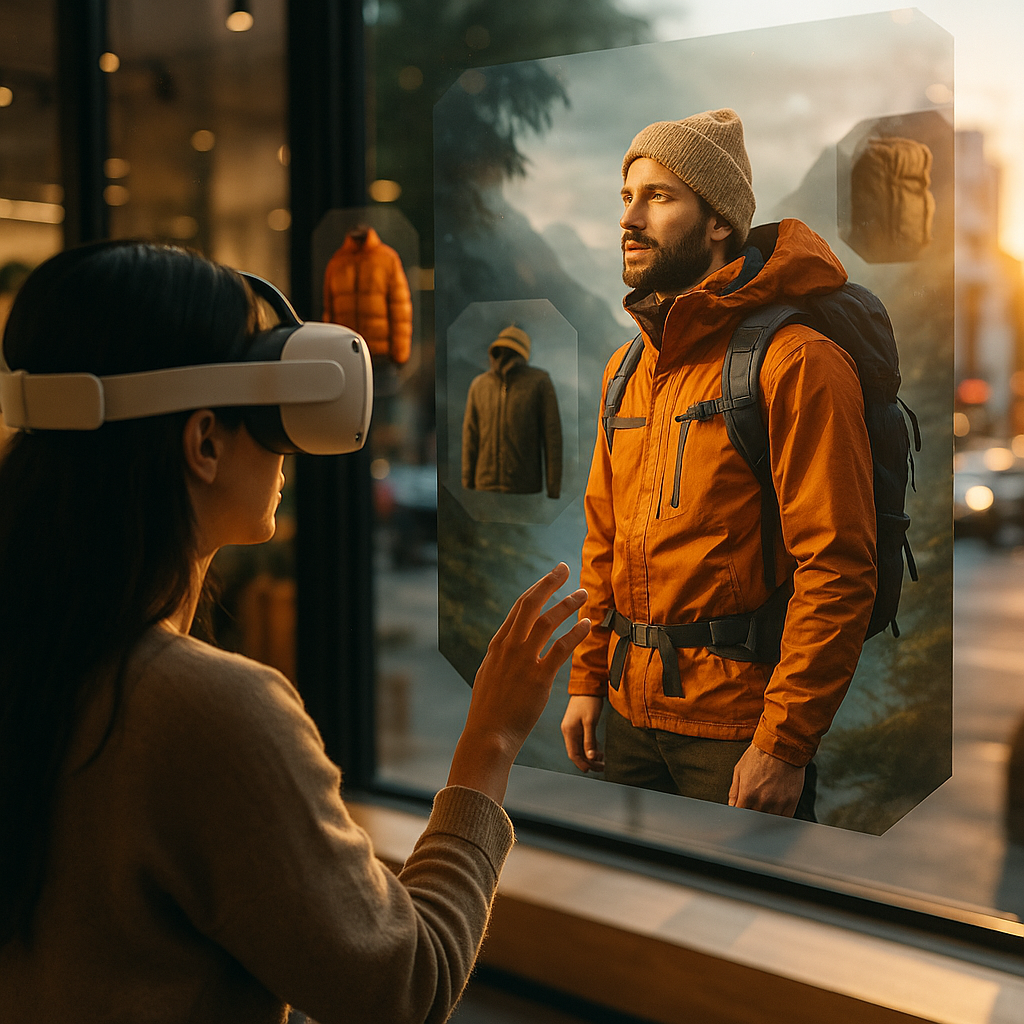
In 2025, spatial computing is moving from novelty to a practical interface that blends digital content with physical spaces. For brand leaders, that shift changes how stories are designed, delivered, and measured across touchpoints. This article explains the impact of spatial computing on future brand storytelling formats—what’s possible now, what’s risky, and how to build experiences audiences trust. Ready to rethink narrative?
Spatial computing and immersive storytelling
Spatial computing combines sensing, mapping, and real-time rendering so digital objects can anchor to the real world or fully envelop a user in a virtual environment. Unlike earlier “screen-first” media, it treats space as a medium: surfaces become canvases, movement becomes input, and context becomes part of the plot. That changes brand storytelling from linear messaging to situated experiences where meaning is shaped by where the person is, what they’re doing, and who they’re with.
Immersive storytelling in spatial computing tends to use three building blocks:
- Spatial anchoring: Content attaches to locations or objects (a product demo appears on your kitchen counter, not in a browser tab).
- Embodied interaction: Gestures, gaze, voice, and movement drive the narrative, which makes attention feel earned rather than extracted.
- Persistent context: Experiences remember layout, preferences, or progress, enabling serialized storytelling that continues across visits or devices.
For brands, the practical implication is clear: you’re no longer only writing copy or producing video. You’re designing environments that communicate. That requires narrative craft, UX discipline, and responsible data practices working together.
AR brand experiences across the full customer journey
Augmented reality is often discussed as a “campaign tactic,” but spatial computing pushes AR brand experiences into the customer journey end-to-end: discovery, evaluation, purchase, onboarding, and loyalty. Because AR can appear in the moment a consumer needs help, it supports storytelling that is useful—a key driver of trust and conversion.
Discovery: Spatial teasers can turn public spaces, retail windows, or packaging into narrative entry points. Instead of a generic scan-to-win, the experience can reveal a brand’s origin story or sustainability practices through interactive scenes tied to physical objects.
Evaluation: Product “try-on” and “try-in-room” formats evolve into guided comparisons. A shopper can place two variants side-by-side at true scale, see materials explained via hotspots, and explore scenarios (lighting, wear, maintenance) that answer objections without a sales pitch.
Purchase and onboarding: Spatial instructions reduce friction. A brand can deliver an onboarding story that unfolds around the product, teaching setup through overlays and short, contextual chapters. This format respects attention because it replaces manuals and support calls.
Loyalty: Membership can become a spatial layer. Limited releases, community challenges, or behind-the-scenes “maker notes” can be unlocked in specific locations or around owned products. The story becomes participatory while still anchored in brand purpose.
To make these experiences effective, connect every AR moment to a real user need: “help me choose,” “help me understand,” “help me succeed,” or “help me belong.” When AR is only spectacle, it gets tried once and forgotten.
Mixed reality marketing and new narrative structures
Mixed reality marketing blends the physical and digital so thoroughly that the story can shift between them without breaking flow. That opens formats that don’t fit into traditional campaign planning. Instead of a single hero film, brands can build narrative systems that adapt to context.
Several structures are emerging as durable:
- Branching micro-stories: Short episodes triggered by user actions (open a drawer, walk closer, rotate an object). This allows personalization without creating endless content.
- Layered scenes: A base environment plus optional layers for deeper learning—ideal for regulated industries because core claims remain consistent while details stay accessible.
- Co-present narratives: Two or more people see synchronized content, enabling “watch together” to become “experience together.” That supports word-of-mouth and shared decision-making.
- Story-as-a-tool: The narrative is embedded in a utility (designing a room, configuring a bike, planning a meal). The brand becomes the guide, not the interruption.
Mixed reality also changes the role of sound and spatial audio. Directional cues can guide attention without pop-ups, and ambient audio can signal progress or safety boundaries. Brands that treat audio as a first-class design layer often produce calmer, more premium experiences.
Expect brand teams to collaborate differently: creative, product, retail ops, and customer support must share a single narrative blueprint. Otherwise, the story fractures across touchpoints and the user feels it immediately.
3D content strategy for scalable brand storytelling formats
The biggest constraint on spatial storytelling is not imagination—it’s production and maintenance. A strong 3D content strategy turns spatial computing from one-off activations into an owned capability. In 2025, the brands winning here treat 3D as a content supply chain with governance, standards, and reuse.
Key elements to build:
- A 3D asset library: Product models, materials, animations, and environment modules that meet consistent quality standards. Store metadata such as version, approvals, and usage rights.
- Performance tiers: Create “good, better, best” variants for different devices so experiences stay smooth. Lag destroys trust faster than almost any other factor.
- Brand-safe lighting and materials: Define how surfaces should look across contexts (matte vs glossy, color fidelity, texture scale). This is the spatial equivalent of typography rules.
- Localization by design: Plan text, voice, and cultural cues early. Spatial experiences often require more than translation because symbols and personal-space norms vary.
Operationally, treat 3D assets like product photography: audited, updated, and linked to product lifecycle changes. If packaging updates, your spatial model must update too. If ingredients or components change, claims shown in overlays must refresh immediately. This is where EEAT becomes practical—accuracy is part of design.
To keep formats scalable, look for reusable “story components” such as an origin vignette, a materials explainer, a care tutorial, and a community invitation. These can be rearranged into different experiences without rewriting everything.
Spatial UX design, trust, and privacy in immersive media
Spatial computing can collect sensitive signals: room layouts, hand movements, gaze direction, and co-present interactions. In immersive media, trust is not a legal checkbox—it’s the difference between adoption and avoidance. Strong spatial UX design respects attention, personal space, and user control.
Practical trust principles brands should apply:
- Minimize data by default: Collect only what the experience needs to function. If a feature is optional, make the data optional too.
- Explain in-context: Use brief, plain-language prompts that appear at the moment data is required (for example, when mapping a room), not buried in settings.
- Design for comfort: Avoid aggressive pop-ins, excessive movement, or forced proximity of objects. Provide easy ways to pause, reposition, or exit.
- Make sponsorship obvious: If an object or scene is an ad placement, label it. Spatial ads that masquerade as utilities can trigger backlash.
- Protect bystanders: In shared spaces, ensure the experience doesn’t encourage recording or exposing others without clear consent.
EEAT in spatial experiences also means verifiable claims. If you present performance numbers, sustainability statements, or health guidance, link them to sources within the experience where appropriate, and keep those sources current. For sensitive categories, include escalation paths—live support, professional guidance, or clear disclaimers—without breaking immersion.
Finally, establish internal review: legal, privacy, accessibility, and brand safety should sign off on spatial experiences the way they sign off on broadcast ads. Spatial media is more intimate; the standards must be higher.
Measurement and ROI for interactive brand narratives
Spatial computing changes what “engagement” means. A tap or a view is less informative than behavior in space: how long users explore, which objects they inspect, whether they complete tasks, and how confidently they move toward purchase or advocacy. The goal is not to track everything, but to measure what proves value.
Build a measurement plan around three layers:
- Experience health: Load time, frame rate, crash rate, session completion, comfort exits. These metrics protect brand perception.
- Story performance: Chapter completion, interaction depth, repeat visits, share/co-experience rate, saved configurations, and “return to continue” behavior.
- Business outcomes: Assisted conversions, reduced returns, support deflection, increased attachment rate, higher confidence scores, and loyalty actions.
To answer the common follow-up question—“How do we attribute sales?”—use mixed methods. Combine privacy-safe analytics with controlled tests: compare locations or audiences that receive the spatial experience vs those that don’t, then evaluate lift. Also measure operational savings. In many categories, the best ROI comes from fewer returns and fewer support tickets because customers understand the product before buying.
Another practical question is budget sizing. Start with one high-impact use case (try-in-room, onboarding, or retail assistance), build a reusable asset pipeline, and expand. Spatial storytelling succeeds when it becomes a capability, not a seasonal experiment.
FAQs
What is spatial computing in simple terms?
Spatial computing lets digital content understand and interact with the physical world. Devices map your environment and place 3D objects that stay aligned with real surfaces, enabling experiences you can move around and manipulate naturally.
How does spatial computing change brand storytelling?
It shifts storytelling from linear messages to context-aware experiences. Brands can tell stories that respond to a user’s space, actions, and needs—turning narrative into something people explore rather than watch.
Do brands need AR, VR, or mixed reality first?
Most brands start with AR because it fits mobile and retail use cases. Mixed reality becomes valuable when you need deeper interaction, co-present experiences, or complex product understanding. The right choice depends on the customer problem you’re solving.
What industries benefit most from spatial storytelling?
Retail, home improvement, automotive, travel, entertainment, education, and B2B manufacturing often see strong results because spatial formats help customers visualize, configure, and learn in realistic contexts.
What are the biggest risks for spatial brand experiences?
The main risks are privacy missteps, discomfort from poor UX, misleading claims, and performance issues. Brands reduce risk by minimizing data, being transparent, validating claims, and optimizing experiences across device tiers.
How can small teams produce spatial content without huge budgets?
Focus on one reusable product category, build a lightweight 3D asset library, use modular scenes, and prioritize utility over spectacle. A single well-designed onboarding or try-in-room experience can outperform multiple flashy demos.
Spatial computing is reshaping brand storytelling formats by turning space into a channel and interaction into narrative. In 2025, the winners will treat immersive experiences as helpful tools, supported by a scalable 3D content strategy and rigorous privacy-first design. Build stories that earn attention through utility, accuracy, and comfort, then measure outcomes beyond clicks. The takeaway: design environments, not ads.
Top Influencer Marketing Agencies
The leading agencies shaping influencer marketing in 2026
Agencies ranked by campaign performance, client diversity, platform expertise, proven ROI, industry recognition, and client satisfaction. Assessed through verified case studies, reviews, and industry consultations.
Moburst

-
2

The Shelf
Boutique Beauty & Lifestyle Influencer AgencyA data-driven boutique agency specializing exclusively in beauty, wellness, and lifestyle influencer campaigns on Instagram and TikTok. Best for brands already focused on the beauty/personal care space that need curated, aesthetic-driven content.Clients: Pepsi, The Honest Company, Hims, Elf Cosmetics, Pure LeafVisit The Shelf → -
3

Audiencly
Niche Gaming & Esports Influencer AgencyA specialized agency focused exclusively on gaming and esports creators on YouTube, Twitch, and TikTok. Ideal if your campaign is 100% gaming-focused — from game launches to hardware and esports events.Clients: Epic Games, NordVPN, Ubisoft, Wargaming, Tencent GamesVisit Audiencly → -
4

Viral Nation
Global Influencer Marketing & Talent AgencyA dual talent management and marketing agency with proprietary brand safety tools and a global creator network spanning nano-influencers to celebrities across all major platforms.Clients: Meta, Activision Blizzard, Energizer, Aston Martin, WalmartVisit Viral Nation → -
5

The Influencer Marketing Factory
TikTok, Instagram & YouTube CampaignsA full-service agency with strong TikTok expertise, offering end-to-end campaign management from influencer discovery through performance reporting with a focus on platform-native content.Clients: Google, Snapchat, Universal Music, Bumble, YelpVisit TIMF → -
6

NeoReach
Enterprise Analytics & Influencer CampaignsAn enterprise-focused agency combining managed campaigns with a powerful self-service data platform for influencer search, audience analytics, and attribution modeling.Clients: Amazon, Airbnb, Netflix, Honda, The New York TimesVisit NeoReach → -
7

Ubiquitous
Creator-First Marketing PlatformA tech-driven platform combining self-service tools with managed campaign options, emphasizing speed and scalability for brands managing multiple influencer relationships.Clients: Lyft, Disney, Target, American Eagle, NetflixVisit Ubiquitous → -
8

Obviously
Scalable Enterprise Influencer CampaignsA tech-enabled agency built for high-volume campaigns, coordinating hundreds of creators simultaneously with end-to-end logistics, content rights management, and product seeding.Clients: Google, Ulta Beauty, Converse, AmazonVisit Obviously →