


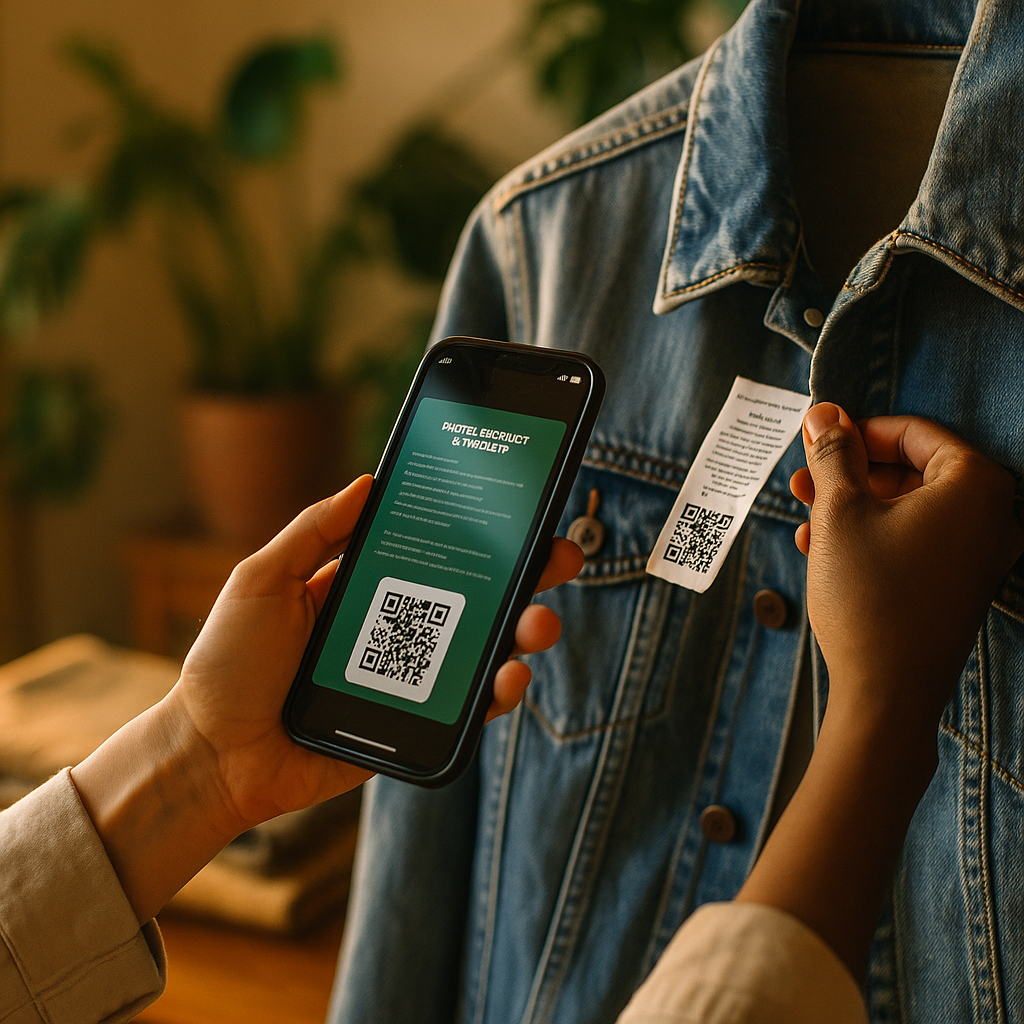
Navigating Digital Product Passport Regulations is now a practical requirement for sustainable brands that want continued access to key markets and credibility with customers. In 2025, expectations are shifting from marketing claims to verifiable, product-level evidence across the value chain. This guide explains what Digital Product Passports demand, how to comply efficiently, and how to turn compliance into advantage—before deadlines and audits make it painful.
Digital Product Passport regulations (DPP): what they are and why they matter
A Digital Product Passport (DPP) is a structured set of product information that is made accessible digitally—typically via a QR code, NFC tag, or web link—so regulators, supply-chain partners, and customers can retrieve reliable data about a product’s composition, origin, impacts, and end-of-life options.
In 2025, the policy direction in major markets is clear: sustainability must be demonstrated with traceable data, not broad claims. DPPs support that shift by standardizing how information is captured and shared across complex, multi-tier supply chains.
Why this matters for sustainable brands:
- Market access: DPP requirements are being embedded into product compliance expectations, especially in regulated categories and cross-border trade.
- Claim substantiation: DPP data helps back up environmental and social claims with auditable evidence.
- Operational efficiency: A single “source of truth” reduces repeated supplier questionnaires, customer data requests, and internal rework.
- Customer trust: Transparent, product-specific details help distinguish real sustainability performance from vague messaging.
If your brand is already investing in lower-impact materials, repairability, take-back, or ethical sourcing, DPPs can convert those efforts into structured proof. If your data is fragmented, DPPs will expose gaps quickly—making early preparation a competitive move.
EU Ecodesign for Sustainable Products Regulation (ESPR): scope, timelines, and who must comply
For many sustainable brands, the center of gravity is the European Union. Under the EU Ecodesign for Sustainable Products Regulation (ESPR), DPPs are expected to become a key mechanism for delivering product information requirements across multiple categories. While exact obligations depend on delegated acts by product group, the strategic implications in 2025 are already actionable.
What to assume in 2025 if you sell into the EU:
- Product-group specificity: Requirements will vary by category (for example, what is required for textiles will not match what is required for electronics or batteries).
- Lifecycle focus: DPPs are designed to enable circularity outcomes—repair, reuse, remanufacturing, recycling—and to improve transparency about substances and materials.
- Multiple audiences: Some information is intended for consumers, some for professional repairers, and some for regulators (with access controls).
- Interoperability expectations: Data must be machine-readable and compatible with emerging standards and systems, not locked in PDFs.
Who needs to act: brand owners, importers, manufacturers, and sometimes distributors—depending on how the supply chain is organized and who places products on the market. If you outsource manufacturing, you still own many compliance outcomes because your brand is the “face” of the product and the entity coordinating documentation.
Likely follow-up question: Does this only apply to EU-based companies? No. If you sell products into the EU, you should plan as if DPP obligations will apply to your products in scope, regardless of where you are headquartered.
Supply chain traceability data: what information goes into a compliant DPP
A DPP is only as strong as the underlying data model and governance. In 2025, sustainable brands should design DPP content to satisfy regulators while also supporting commercial and customer needs.
Common DPP data elements (category-dependent):
- Product identification: model/SKU, batch/serial, GTIN where relevant, and versioning for product updates.
- Material composition: fiber/material breakdowns, recycled content methodology, and key additives where required.
- Substances of concern: declarations aligned to applicable chemical regulations and restricted substance lists.
- Supply chain provenance: country-of-origin details and supplier/site identifiers, with appropriate confidentiality controls.
- Environmental performance: product footprint metrics where required, including system boundaries and calculation method references.
- Durability and repair: expected lifetime, repair instructions, spare-part availability, and repairability features.
- Circularity and end-of-life: take-back options, disassembly guidance, recycling instructions, and materials recovery notes.
- Compliance documentation pointers: test reports, certificates, audit summaries, and declarations—linked and access-controlled.
How to avoid common data traps:
- Be specific about methodologies: “Recycled content” must be paired with how it was calculated (mass balance vs. physical segregation, chain-of-custody type, and verification approach).
- Design for change: Suppliers, formulations, and factories change. Build version control and audit trails into your DPP so updates do not break compliance history.
- Balance transparency with IP protection: Use tiered access (public, business partner, regulator) rather than withholding everything.
Likely follow-up question: Do we need perfect data from every tier on day one? Aim for completeness, but start with the data most likely to be mandated in your category and the data you can verify. Create a structured gap plan with deadlines, owners, and verification steps so progress is defensible during audits.
DPP compliance strategy: step-by-step roadmap for sustainable brands
Brands that succeed treat DPP as a program, not a one-off IT project. The most effective approach in 2025 blends regulatory interpretation, data governance, supplier engagement, and technical implementation.
1) Confirm product scope and regulatory triggers
Map where you sell, which product categories you offer, and which regulatory frameworks apply. Then identify which internal teams own each requirement (legal/compliance, sustainability, product, QA, IT, procurement).
2) Build a minimum viable DPP (MVDPP)
Define the smallest data set that would satisfy likely mandatory fields plus your most important customer-facing proof points. Keep it structured and machine-readable from the start to avoid future rework.
3) Design data governance and accountability
- Data owners: assign owners for composition, supplier data, testing, and footprint metrics.
- Verification rules: decide what needs third-party certification vs. what can be supported by internal controls.
- Change management: define how product revisions trigger DPP updates and approvals.
4) Engage suppliers with clear requirements
Replace open-ended questionnaires with structured templates and required evidence. Include DPP data obligations in supplier contracts, including timelines, formats, and audit rights. Provide training so suppliers understand what “good” looks like.
5) Pilot, validate, then scale
Run a pilot on one product line that includes multiple material types and at least two manufacturing sites. Validate data accuracy, consumer experience (QR landing page), and regulator-ready export formats. Use lessons learned to scale.
Likely follow-up question: Who should lead the program? A cross-functional owner is essential. Many brands place leadership in compliance or sustainability with strong IT partnership, because DPP touches both regulatory interpretation and systems integration.
Digital product passport software and interoperability: choosing systems that won’t lock you in
Technology decisions determine whether DPP becomes a durable capability or a recurring fire drill. In 2025, brands should prioritize interoperability, data quality, and the ability to serve multiple stakeholders from one dataset.
Core capabilities to look for:
- Flexible data model: supports category-specific fields and future regulatory changes without rebuilding everything.
- Integration: connects to PLM, ERP, PIM, supplier portals, LCA tools, and testing databases via APIs.
- Access control: tiered visibility for consumers, repair networks, business partners, and regulators.
- Traceability and audit trails: immutable logs of updates, approvals, and evidence attachments.
- Standards alignment: export/import compatible with emerging DPP standards and identifiers.
- Scalable identity layer: supports serialization or batch-level passports depending on product type.
Interoperability questions to ask vendors:
- Can we export our passport data in a machine-readable format without vendor involvement?
- How do you handle product revisions, supplier changes, and evidence versioning?
- What happens if we switch providers—can we migrate data and maintain audit history?
- How do you support confidential supplier data while meeting regulator access needs?
Likely follow-up question: Do we need blockchain? Not necessarily. Many compliance-ready implementations rely on strong identity, access controls, and auditable logs without blockchain. Choose the simplest architecture that meets verification and interoperability needs.
Sustainable brand transparency and green claims: using DPP to build trust without increasing risk
DPPs can strengthen brand trust, but they also increase accountability. In 2025, sustainability marketing is under sharper scrutiny, and product-level disclosures can expose inconsistencies if governance is weak.
How to use DPP to reduce greenwashing risk:
- Link claims to evidence: if you state “recycled materials,” connect that statement to verified composition data and the method used.
- Use plain language for consumers: present a short, accurate summary and allow deeper drill-down for those who want details.
- Disclose boundaries: when sharing footprint metrics, clarify scope, what’s included, and what is not.
- Keep consistency across channels: ensure your website, product pages, packaging, and DPP show the same facts.
Turn compliance into customer value:
- Repair and care guidance: reduce returns and extend product life with clear instructions and spare-part access.
- Resale and authentication: use product identity to support secondhand markets and reduce counterfeits.
- Take-back participation: make end-of-life options easy to find and use, increasing circularity outcomes.
Likely follow-up question: Should we show everything to consumers? No. Show what helps customers make informed decisions and maintain products, while protecting sensitive supplier data. Build a layered experience: essential facts first, then expandable details, with regulator access handled separately.
FAQs
What is a Digital Product Passport in simple terms?
A Digital Product Passport is a digital record that provides standardized information about a product—such as what it’s made of, where key inputs come from, how to repair it, and how to dispose of it responsibly. It’s designed to support regulatory compliance, circularity, and credible sustainability claims.
Which products need a Digital Product Passport?
Requirements depend on product category and market. In the EU, DPP obligations are expected to be introduced by product group through delegated acts under ESPR and other relevant frameworks. If you sell into regulated categories, plan now by mapping your product portfolio and monitoring category-specific rules.
What data should we collect first?
Start with product identification, bill of materials, material composition, supplier/site provenance for key inputs, substances declarations where relevant, and repair/end-of-life instructions. Add footprint metrics and supporting evidence as required by your category and claim strategy.
How do we verify DPP data?
Use a tiered verification approach: internal controls for routine product data, supplier attestations with evidence for upstream data, and third-party certifications or lab tests for high-risk claims or regulated disclosures. Maintain audit trails and version control for every update.
How long does DPP implementation take?
A focused pilot can be completed in a few months if core data exists and systems integrate smoothly. Scaling across product lines typically takes longer because supplier onboarding, data cleansing, and governance are the main constraints—not QR code generation.
Will DPP increase costs?
There are upfront costs in data collection, systems, and supplier enablement. Many brands offset these by reducing duplicated data requests, improving product documentation, lowering returns through better care guidance, and protecting revenue through continued market access.
How do we protect confidential supplier information?
Use role-based access controls and data segmentation so consumers see summaries, business partners see operational details, and regulators can access compliance-critical data as required. Contracts should define what data is shared, how it’s used, and how updates are managed.
Do we need a QR code on every product?
Often, a scannable link (QR) or NFC is the simplest consumer-facing method, but implementation details depend on the product category and the required level of granularity (model-level, batch-level, or serial-level). Build your identity strategy around how products are tracked and serviced.
Digital Product Passports are reshaping how sustainable brands prove impact and maintain compliance in 2025. Treat DPP as a structured data and governance program: clarify scope, define a minimum viable passport, verify high-risk disclosures, and choose interoperable systems that integrate with existing workflows. Brands that act early reduce regulatory pressure, strengthen trust, and turn transparency into a measurable advantage—before requirements become urgent.
Top Influencer Marketing Agencies
The leading agencies shaping influencer marketing in 2026
Agencies ranked by campaign performance, client diversity, platform expertise, proven ROI, industry recognition, and client satisfaction. Assessed through verified case studies, reviews, and industry consultations.
Moburst

-
2

The Shelf
Boutique Beauty & Lifestyle Influencer AgencyA data-driven boutique agency specializing exclusively in beauty, wellness, and lifestyle influencer campaigns on Instagram and TikTok. Best for brands already focused on the beauty/personal care space that need curated, aesthetic-driven content.Clients: Pepsi, The Honest Company, Hims, Elf Cosmetics, Pure LeafVisit The Shelf → -
3

Audiencly
Niche Gaming & Esports Influencer AgencyA specialized agency focused exclusively on gaming and esports creators on YouTube, Twitch, and TikTok. Ideal if your campaign is 100% gaming-focused — from game launches to hardware and esports events.Clients: Epic Games, NordVPN, Ubisoft, Wargaming, Tencent GamesVisit Audiencly → -
4

Viral Nation
Global Influencer Marketing & Talent AgencyA dual talent management and marketing agency with proprietary brand safety tools and a global creator network spanning nano-influencers to celebrities across all major platforms.Clients: Meta, Activision Blizzard, Energizer, Aston Martin, WalmartVisit Viral Nation → -
5

The Influencer Marketing Factory
TikTok, Instagram & YouTube CampaignsA full-service agency with strong TikTok expertise, offering end-to-end campaign management from influencer discovery through performance reporting with a focus on platform-native content.Clients: Google, Snapchat, Universal Music, Bumble, YelpVisit TIMF → -
6

NeoReach
Enterprise Analytics & Influencer CampaignsAn enterprise-focused agency combining managed campaigns with a powerful self-service data platform for influencer search, audience analytics, and attribution modeling.Clients: Amazon, Airbnb, Netflix, Honda, The New York TimesVisit NeoReach → -
7

Ubiquitous
Creator-First Marketing PlatformA tech-driven platform combining self-service tools with managed campaign options, emphasizing speed and scalability for brands managing multiple influencer relationships.Clients: Lyft, Disney, Target, American Eagle, NetflixVisit Ubiquitous → -
8

Obviously
Scalable Enterprise Influencer CampaignsA tech-enabled agency built for high-volume campaigns, coordinating hundreds of creators simultaneously with end-to-end logistics, content rights management, and product seeding.Clients: Google, Ulta Beauty, Converse, AmazonVisit Obviously →