


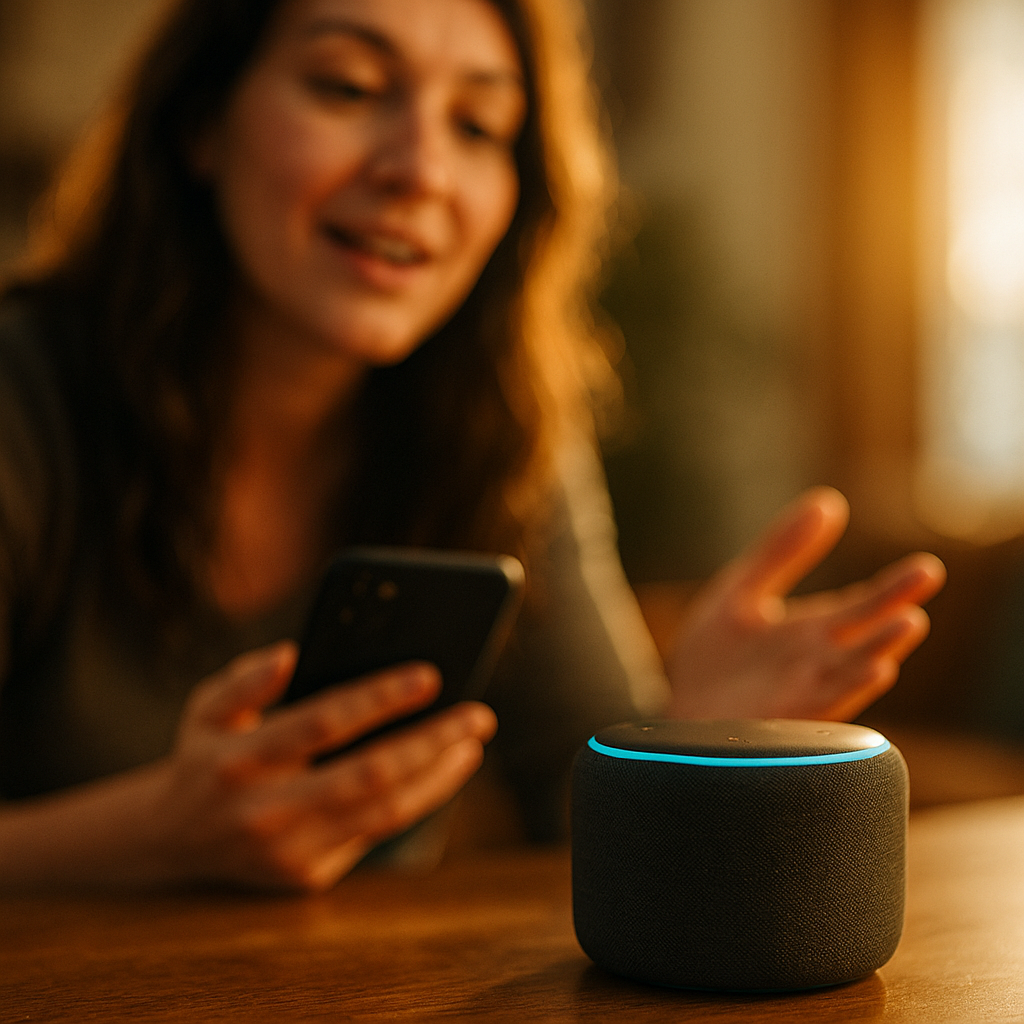
Using AI To Personalize Voice Assistant Brand Personas In Real Time is becoming a practical way to make voice experiences feel consistent, helpful, and distinctly “on brand” while still adapting to each customer’s needs. In 2025, customers expect faster resolution, fewer repeats, and more human pacing across devices and channels. The winners will be brands that personalize responsibly, measure impact, and keep control of identity—so what does that look like in practice?
What “real-time personalization” means for voice assistants
Real-time personalization is the ability of a voice assistant to adapt its responses, tone, pacing, and guidance during the live conversation, based on signals such as the user’s goal, context, history, and constraints. It is not just “remembering a name.” It is tailoring the experience while preserving a consistent brand persona.
In practice, this involves two layers working together:
- Brand persona layer: Stable identity rules that define voice, style, values, and boundaries (for example: concise, calm, never sarcastic, always confirm payment actions).
- Personalization layer: A dynamic policy that selects the best response strategy for the current user and moment (for example: slower for new users, more direct for experts, more reassurance for billing disputes).
To avoid confusion, treat personalization as “situational expression” of a persona, not a new persona per user. Customers should recognize the assistant as your brand, even when it adapts. That recognition is critical for trust, especially when the assistant handles payments, health guidance, travel changes, or account security.
Real-time also implies strict latency requirements. If your assistant takes too long, it feels broken. Most teams aim for sub-second perceived responsiveness through streaming speech recognition, incremental intent detection, and partial response generation, while still running safety and compliance checks in parallel.
AI-driven voice persona design: defining a brand that can adapt
Before you personalize, you need a persona that is both distinctive and controllable. In 2025, the most reliable approach is to formalize persona as a set of testable constraints rather than a loose “tone guideline.” This reduces drift and makes outcomes measurable.
Build a persona specification that includes:
- Voice principles: What the assistant optimizes for (speed, clarity, empathy, humor level, accessibility).
- Style rules: Sentence length, vocabulary complexity, allowed contractions, and how it handles uncertainty.
- Conversation behaviors: How it asks clarifying questions, when it summarizes, when it escalates to a human.
- Brand values in action: How it treats vulnerable users, disputes, or mistakes (for example: “apologize once, then solve”).
- Non-negotiables: Prohibited topics, regulated statements, and refusal templates.
Then validate persona with both brand stakeholders and operational teams. Contact center leaders often catch edge cases that marketing doesn’t see, such as chargeback scenarios, identity verification steps, and policy wording. This cross-functional review strengthens EEAT: it shows the voice experience is grounded in real operational expertise rather than purely creative preferences.
Finally, create a persona test suite: short prompts that represent the most common and most risky intents. Score outputs for brand fit, clarity, and compliance. Treat persona quality as an engineering artifact, not a one-time creative exercise.
Real-time customer context signals: what to use (and what to avoid)
Personalization depends on signals. The best signals are reliable, relevant to the task, and explainable. Over-collection of data creates risk without improving the experience.
High-value real-time signals commonly include:
- Session intent and entity confidence: How sure the system is about what the user wants and key details (order number, date, location).
- Conversation state: Whether the user has already provided information, encountered an error, or requested repetition.
- User proficiency cues: Short commands, jargon, or repeated interruptions can indicate an expert user; long pauses can indicate uncertainty.
- Device and environment: Car mode, smart speaker vs. phone, noisy background indicators, headset presence.
- Account context (when permitted): Preferred language, accessibility settings, membership tier, recent orders, open support tickets.
Signals to handle with extra care:
- Inferred sensitive attributes: Avoid personalization based on health status, financial distress, or protected characteristics unless you have explicit consent, a lawful basis, and clear user benefit.
- Emotion detection claims: If you use sentiment or stress indicators, keep them probabilistic and use them to improve clarity and de-escalation—not to label users.
- Cross-context tracking: Do not “surprise” users with what you know. If a memory affects behavior, make it transparent and editable.
Answering the likely follow-up question—how much context is enough?—start with the smallest set that measurably improves completion and satisfaction. Expand only when you can show value in controlled experiments and when your privacy and security teams approve the data flow.
LLM orchestration and streaming TTS for adaptive brand voice
Personalizing a voice persona in real time requires an architecture that can adapt content and delivery without losing control. Most successful implementations separate “what to say” from “how to say it,” then add a policy layer that selects the best strategy per moment.
A practical orchestration pattern in 2025 looks like this:
- ASR (speech-to-text) streaming: Produces partial transcripts quickly and updates intent as new words arrive.
- NLU + conversation manager: Tracks state, required slots, escalation rules, and business policy.
- Retrieval layer (RAG): Pulls only approved, current content (pricing, policies, help docs) to reduce hallucinations.
- Persona controller: A structured prompt or rules engine that enforces tone, format, and safety constraints.
- LLM response generator: Produces candidate responses and tool calls (check order, reset password, schedule appointment).
- Safety and compliance filter: Detects disallowed content, verifies regulated language, and sanitizes outputs.
- Streaming TTS (text-to-speech): Converts the response into speech with controllable prosody: pace, emphasis, pauses, and pronunciation.
The key to “brand persona in real time” is not just word choice—it is delivery. Streaming TTS lets you adjust:
- Pacing: Faster for simple confirmations, slower for instructions or legal disclosures.
- Prosody and warmth: Slightly more reassuring in dispute flows, more neutral in security flows.
- Turn-taking: Short confirmations (“Got it.”) to reduce cognitive load and avoid talking over the user.
To preserve consistency, keep a persona “style budget.” For example, you might allow only two levels of warmth (standard and supportive) and two levels of brevity (concise and guided). This prevents the system from improvising personality traits that don’t match your brand.
Another follow-up question is latency: personalization can increase response time if you over-stack models. Use caching for frequent intents, prefetch likely knowledge articles, and run safety checks concurrently. Also, consider hybrid generation: templates for high-risk flows (payments, cancellations) and LLM generation for low-risk, open-ended help.
Privacy, consent, and trust: safeguarding personalization
Personalization only works if users trust it. In 2025, trust is earned through clear consent, minimal data use, and predictable behavior. This is where EEAT matters: you must demonstrate operational competence and accountability, not just innovation.
Apply these safeguards:
- Explainable memory: If the assistant “remembers” preferences, provide a simple way to ask, “What do you remember about me?” and “Forget that.”
- Purpose limitation: Store only what improves the experience (for example: preferred language, accessibility settings), and avoid storing raw audio unless necessary and disclosed.
- Consent and controls: Offer opt-in for personalization beyond essential functionality. Make opt-out frictionless.
- Data minimization by design: Use session-only context when possible; tokenize or hash identifiers; separate identity from conversation logs where feasible.
- Security posture: Encrypt data in transit and at rest, restrict access by role, and maintain audit trails for tool calls and account actions.
Also set user expectations in the conversation. When context changes behavior, mention it naturally: “I can speak more slowly if you prefer—should I keep instructions brief or step-by-step?” This keeps personalization user-led and reduces the “creepy” factor.
For regulated domains, define a policy of when the assistant must switch to standardized language and when it must escalate. A confident persona can still say, “I can’t help with that,” as long as it offers the next best action.
Measurement and governance: keeping brand consistency at scale
Real-time persona personalization can degrade quietly: small tone shifts accumulate, policy updates get missed, and different teams ship changes that conflict. Governance and measurement keep the experience coherent.
Track performance with a balanced scorecard:
- Task success: Containment rate, first-contact resolution, time to completion, error recovery.
- Conversation quality: Re-prompt rate, interruptions, “repeat that” frequency, user corrections.
- Brand alignment: Human review scores for tone, clarity, and appropriateness; consistency checks across intents.
- Trust and safety: Policy violations, unsafe completions, escalation correctness, authentication failures.
- Business impact: Conversion, churn reduction, appointment completion, cost-to-serve.
Operationalize quality with:
- Pre-release evaluations: Automated tests plus human QA on the highest-risk intents.
- Post-release monitoring: Drift detection on language, refusal rates, and complaint categories.
- Red-teaming: Adversarial prompts to test jailbreaks, data leakage, and brand sabotage attempts.
- Change control: Versioned persona specs, approval workflows, and rollback plans.
To answer a common follow-up—how do we keep multiple channels aligned?—use the same persona specification across voice, chat, and email, but tune the expression. Voice should be shorter and more confirmatory; chat can be denser. The underlying identity stays constant.
FAQs about personalizing voice assistant brand personas
What’s the difference between a brand persona and a synthetic voice?
A brand persona is the assistant’s identity and behavior rules—what it prioritizes, how it speaks, and how it handles edge cases. A synthetic voice is the acoustic output. You can change the voice without changing persona, and you can keep the same voice while evolving persona guidelines.
Can personalization harm brand consistency?
Yes, if the system improvises personality traits per user. Prevent this by defining a stable persona layer and limiting personalization to approved dimensions (brevity, warmth level, guidance depth). Validate with a persona test suite and ongoing reviews.
Do we need user consent to personalize in real time?
For session-based adaptation (like speaking more slowly after repeated errors), consent is often handled through implied use because it directly supports the user’s request. For persistent memory and cross-session personalization, use clear opt-in and provide easy controls to view and delete stored preferences.
How do we reduce hallucinations while staying conversational?
Use retrieval from approved sources (RAG), restrict the model to those sources for factual answers, and route high-risk intents to templates or deterministic flows. Add a policy that the assistant must say “I’m not sure” and offer alternatives when confidence is low.
What’s the safest way to personalize for different customer types?
Personalize based on user-chosen settings (language, accessibility, verbosity) and observable interaction signals (repeats, corrections), not inferred sensitive attributes. Keep segmentation transparent and editable.
How quickly can teams implement this?
Many brands can pilot within weeks by starting with one or two high-volume intents, a simple persona controller, and limited personalization dimensions. The timeline depends on tool integrations, compliance review, and the maturity of your knowledge base and analytics.
AI-driven real-time personalization can make a voice assistant feel genuinely helpful without sacrificing brand identity—if you design the persona as a controllable system, personalize only with relevant signals, and enforce safety and privacy by default. In 2025, the most effective teams treat voice as a governed product: they measure brand alignment, test risky intents, and give users clear controls. Build for trust first, and personalization becomes a durable advantage.
Top Influencer Marketing Agencies
The leading agencies shaping influencer marketing in 2026
Agencies ranked by campaign performance, client diversity, platform expertise, proven ROI, industry recognition, and client satisfaction. Assessed through verified case studies, reviews, and industry consultations.
Moburst

-
2

The Shelf
Boutique Beauty & Lifestyle Influencer AgencyA data-driven boutique agency specializing exclusively in beauty, wellness, and lifestyle influencer campaigns on Instagram and TikTok. Best for brands already focused on the beauty/personal care space that need curated, aesthetic-driven content.Clients: Pepsi, The Honest Company, Hims, Elf Cosmetics, Pure LeafVisit The Shelf → -
3

Audiencly
Niche Gaming & Esports Influencer AgencyA specialized agency focused exclusively on gaming and esports creators on YouTube, Twitch, and TikTok. Ideal if your campaign is 100% gaming-focused — from game launches to hardware and esports events.Clients: Epic Games, NordVPN, Ubisoft, Wargaming, Tencent GamesVisit Audiencly → -
4

Viral Nation
Global Influencer Marketing & Talent AgencyA dual talent management and marketing agency with proprietary brand safety tools and a global creator network spanning nano-influencers to celebrities across all major platforms.Clients: Meta, Activision Blizzard, Energizer, Aston Martin, WalmartVisit Viral Nation → -
5

The Influencer Marketing Factory
TikTok, Instagram & YouTube CampaignsA full-service agency with strong TikTok expertise, offering end-to-end campaign management from influencer discovery through performance reporting with a focus on platform-native content.Clients: Google, Snapchat, Universal Music, Bumble, YelpVisit TIMF → -
6

NeoReach
Enterprise Analytics & Influencer CampaignsAn enterprise-focused agency combining managed campaigns with a powerful self-service data platform for influencer search, audience analytics, and attribution modeling.Clients: Amazon, Airbnb, Netflix, Honda, The New York TimesVisit NeoReach → -
7

Ubiquitous
Creator-First Marketing PlatformA tech-driven platform combining self-service tools with managed campaign options, emphasizing speed and scalability for brands managing multiple influencer relationships.Clients: Lyft, Disney, Target, American Eagle, NetflixVisit Ubiquitous → -
8

Obviously
Scalable Enterprise Influencer CampaignsA tech-enabled agency built for high-volume campaigns, coordinating hundreds of creators simultaneously with end-to-end logistics, content rights management, and product seeding.Clients: Google, Ulta Beauty, Converse, AmazonVisit Obviously →