


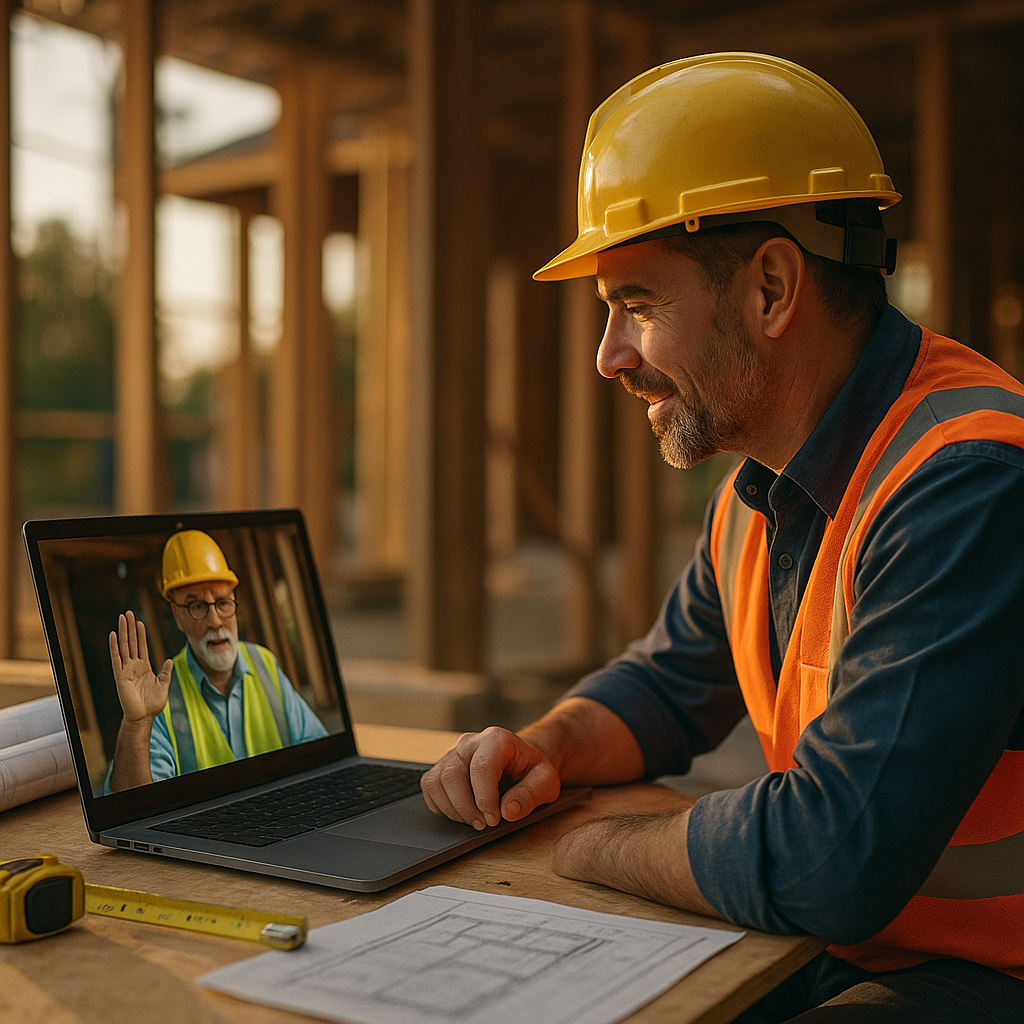
In 2025, construction buyers expect proof, not promises. This case study shows how a mid-market contractor built credibility by hosting Technical AMAs that invited scrutiny from engineers, owners, and procurement teams. By answering hard questions live—about safety, specs, scheduling, and warranties—the brand replaced polished claims with verifiable expertise. The results changed their pipeline, conversions, and referrals—here’s how it worked.
Technical AMAs for construction marketing: Why trust was the real growth lever
The brand—an established regional contractor with design-build capabilities—had a familiar problem: strong delivery record, weak digital trust signals. Their website listed certifications and project photos, but decision-makers still asked the same questions late in the sales cycle:
- “How do you prevent change orders from ballooning?”
- “What does your safety program look like in practice?”
- “Who actually stamps the drawings and takes liability?”
- “How do you manage subcontractor quality and schedule risk?”
These questions were not objections; they were due diligence. The team realized they were spending too much time repeating technical explanations in one-to-one calls. Meanwhile, competitors were publishing more content—but most of it sounded like marketing. The opportunity was to shift from “telling” to “showing” competence in public.
They chose a format that aligns with how technical buyers evaluate vendors: open Q&A with accountable experts. Technical AMAs (Ask Me Anything sessions) allowed stakeholders to challenge assumptions and see how the team reasoned under pressure—an underrated trust signal in construction procurement.
Construction brand trust building: The AMA format and topics that reduced risk perception
The team structured AMAs to mirror real procurement concerns. Instead of broad “company overview” webinars, each session focused on a single operational risk area. That focus did two things: it attracted the right attendees and made answers more specific, which increased perceived competence.
AMA cadence and length
- Monthly live AMA, 45 minutes total
- First 8 minutes: context and assumptions (no sales pitch)
- Next 30 minutes: moderated Q&A (live + pre-submitted)
- Final 7 minutes: “What we’d do differently next time” segment
Session topics that consistently drew qualified questions
- Change order control: scope clarity, allowances, RFI workflow, and owner decisions
- Schedule reliability: look-ahead planning, procurement lead times, constraint logs
- Safety systems: near-miss reporting, leading indicators, subcontractor onboarding
- Quality and commissioning: inspection test plans, punch process, turnover packages
- Preconstruction and estimating: how contingencies are set and communicated
- Sustainability: embodied carbon tradeoffs, material substitutions, documentation
Who hosted
- Project executive (accountable for outcomes)
- Senior superintendent (field reality)
- Estimator or precon manager (cost logic)
- Safety manager (program integrity)
- Occasional guest: structural engineer or commissioning agent
They also addressed a follow-up question buyers often have: “Are you willing to put this in writing?” Each AMA ended by pointing to documented standards—sample meeting templates, a redacted change order log, or a commissioning checklist—so the conversation didn’t vanish after the live session.
EEAT in construction content: How they proved experience, expertise, and accountability
Technical audiences judge credibility through specifics, constraints, and tradeoffs. The brand used EEAT principles to make answers verifiable and useful.
Experience: they grounded answers in real project conditions
Instead of “we always deliver on time,” they said, “On fast-track TI projects, the highest schedule risk is long-lead MEP equipment; we mitigate with early submittal packages and owner sign-offs by week two.” They referenced field constraints like access, inspections, and procurement, not generic claims.
Expertise: they explained “why,” not just “what”
When asked about preventing change orders, they broke it into controllables: scope definition, decision timing, RFI turnaround, and allowance management. They described the logic behind contingencies and how they separate owner-driven changes from unforeseen conditions.
Authoritativeness: they aligned with standards and third-party touchpoints
They cited recognized frameworks (without turning the session into a standards lecture) and explained how those standards appear on actual projects: safety audits, inspection test plans, and commissioning documentation. They also invited outside partners occasionally—engineers and specialty subs—so the audience could see alignment across the delivery team.
Trustworthiness: they made commitments and owned limitations
- They shared what they will not do (for example, “We won’t promise a date without a procurement plan signed off.”).
- They answered “What happens if something goes wrong?” with escalation paths, not excuses.
- They published follow-up notes: unanswered questions, clarifications, and any corrections.
This last point mattered. In construction, trust often hinges on how a contractor handles uncertainty. By acknowledging constraints and showing decision processes, they built confidence faster than any brochure could.
Construction procurement transparency: The live Q&A workflow that kept answers accurate
The brand treated AMAs as a technical deliverable, not a marketing event. That meant building a workflow that protected accuracy while keeping the tone human and direct.
Before the AMA: collect real questions and prepare evidence
- Pre-submitted questions required context: project type, delivery method, and schedule pressure.
- Internal prep included pulling redacted artifacts: a schedule look-ahead, an RFI log excerpt, a safety audit checklist.
- They created “answer boundaries” for legal and contractual topics (for example, warranties and indemnities) and clearly stated what must be reviewed case-by-case.
During the AMA: moderation designed for clarity
- A moderator (not a salesperson) ensured each answer included assumptions.
- Speakers used a consistent pattern: problem → risk → process → proof → typical timeline.
- When they couldn’t answer fully, they committed to a follow-up and captured it publicly.
After the AMA: publish and operationalize
- They posted a cleaned transcript with timestamps and a glossary of terms.
- They turned repeated questions into short internal playbooks used by PMs and estimators.
- They updated website service pages with the most-requested details, reducing future friction.
This workflow solved an unspoken concern: “Are these answers just talk?” Because each session produced tangible artifacts, procurement teams could share the content internally, and the brand’s claims became easier to verify.
Pipeline growth for contractors: Results, metrics, and what actually changed
Instead of chasing vanity metrics, the team tracked indicators tied to trust and sales efficiency. They compared performance before and after introducing AMAs and looked for changes in buyer behavior.
What improved
- Higher-quality inbound inquiries: More contacts arrived with defined scope, budget range, and timeline because the AMAs educated them on what information is needed to price responsibly.
- Shorter “trust-building” calls: Early meetings shifted from basic credibility checks to project-specific planning.
- Better stakeholder alignment: Owners, facilities managers, and sometimes architects watched together; fewer surprises surfaced late.
- More referrals: Past clients shared specific AMA episodes internally as proof of competence.
Metrics they tracked (and you can copy)
- Percentage of inquiries that include drawings or a clear scope narrative
- Time from first meeting to qualified opportunity
- Number of stakeholders attending discovery calls (a proxy for internal buy-in)
- Repeat questions by theme (to identify content gaps and operational weak spots)
- “Proof requests” (requests for logs, templates, safety stats) and how quickly they can respond
What changed inside the company
The unexpected win was operational discipline. Because experts would be answering live, teams improved how they documented decisions and tracked risk. The AMAs created a healthy pressure to standardize what “good” looks like in estimating, scheduling, and turnover. Trust-building became a byproduct of better operations—not a separate marketing layer.
Technical AMA best practices: Lessons learned and a repeatable playbook
After several sessions, the team identified what made AMAs work—and what made them risky.
1) Pick narrow topics with measurable outcomes
“Scheduling” is too broad. “Preventing schedule slip from long-lead items in occupied facilities” triggers precise questions and demonstrates real expertise.
2) Put field leaders on camera, not just executives
Buyers trust the person who has to solve the problem at 6 a.m. A superintendent explaining constraint planning beats a polished overview every time.
3) Use redacted artifacts to prove process without leaking confidential data
Show a template, a log structure, or a checklist. Explain what gets tracked, who owns it, and how often it’s reviewed.
4) Never dodge; reframe when needed
If asked, “How many incidents did you have?” and the number is sensitive or context-dependent, they answered with what they can share: leading indicators, program elements, third-party audits, and how incidents are investigated and prevented.
5) Build a “trust library” from each AMA
- Transcript and key takeaways
- Definitions of terms (RFI, submittal, VE, commissioning)
- Links to relevant service pages
- A short checklist: “What we need from owners to protect schedule/cost”
6) Train speakers to communicate tradeoffs
Construction is constant compromise—cost vs. time vs. quality vs. disruption. The brand earned trust by naming tradeoffs explicitly and stating how they help owners choose.
FAQs
What is a Technical AMA in construction?
A Technical AMA is a live, open Q&A session where construction experts answer project-specific questions about estimating, scheduling, safety, quality, and risk. Unlike a sales webinar, it prioritizes transparency, assumptions, and real-world constraints.
Who should host an AMA for a construction company?
Use accountable operators: a project executive, senior superintendent, preconstruction/estimating lead, and safety or quality manager. Add guest experts like engineers or commissioning agents when the topic requires third-party validation.
How do AMAs build trust with owners and procurement teams?
They let buyers test competence in real time, see how the team handles uncertainty, and review documented processes afterward. The combination of live reasoning and published artifacts reduces perceived risk.
What topics generate the most qualified leads?
Topics tied to risk: change order control, schedule reliability, safety systems, commissioning/turnover, and procurement of long-lead items. These attract serious stakeholders who are already evaluating vendors.
How do you prevent legal or contractual issues during a live AMA?
Set boundaries in advance, avoid project-specific confidential details, and answer contractual questions with principles and “depends on the contract” clarity. Capture complex questions for follow-up with written clarification.
How often should a construction brand run AMAs?
Monthly works well for consistency without overloading operations. If resources are limited, start quarterly and repurpose each session into transcripts, service-page updates, and short FAQ content.
Technical AMAs worked because they matched how construction decisions get made: through evidence, clarity, and accountable experts. By narrowing topics, showing real artifacts, and publishing transparent follow-ups, the brand turned repeated sales objections into public proof of process. The key takeaway is simple: if you can explain your methods under pressure, buyers will trust you before the bid—and choose you faster.
Top Influencer Marketing Agencies
The leading agencies shaping influencer marketing in 2026
Agencies ranked by campaign performance, client diversity, platform expertise, proven ROI, industry recognition, and client satisfaction. Assessed through verified case studies, reviews, and industry consultations.
Moburst

-
2

The Shelf
Boutique Beauty & Lifestyle Influencer AgencyA data-driven boutique agency specializing exclusively in beauty, wellness, and lifestyle influencer campaigns on Instagram and TikTok. Best for brands already focused on the beauty/personal care space that need curated, aesthetic-driven content.Clients: Pepsi, The Honest Company, Hims, Elf Cosmetics, Pure LeafVisit The Shelf → -
3

Audiencly
Niche Gaming & Esports Influencer AgencyA specialized agency focused exclusively on gaming and esports creators on YouTube, Twitch, and TikTok. Ideal if your campaign is 100% gaming-focused — from game launches to hardware and esports events.Clients: Epic Games, NordVPN, Ubisoft, Wargaming, Tencent GamesVisit Audiencly → -
4

Viral Nation
Global Influencer Marketing & Talent AgencyA dual talent management and marketing agency with proprietary brand safety tools and a global creator network spanning nano-influencers to celebrities across all major platforms.Clients: Meta, Activision Blizzard, Energizer, Aston Martin, WalmartVisit Viral Nation → -
5

The Influencer Marketing Factory
TikTok, Instagram & YouTube CampaignsA full-service agency with strong TikTok expertise, offering end-to-end campaign management from influencer discovery through performance reporting with a focus on platform-native content.Clients: Google, Snapchat, Universal Music, Bumble, YelpVisit TIMF → -
6

NeoReach
Enterprise Analytics & Influencer CampaignsAn enterprise-focused agency combining managed campaigns with a powerful self-service data platform for influencer search, audience analytics, and attribution modeling.Clients: Amazon, Airbnb, Netflix, Honda, The New York TimesVisit NeoReach → -
7

Ubiquitous
Creator-First Marketing PlatformA tech-driven platform combining self-service tools with managed campaign options, emphasizing speed and scalability for brands managing multiple influencer relationships.Clients: Lyft, Disney, Target, American Eagle, NetflixVisit Ubiquitous → -
8

Obviously
Scalable Enterprise Influencer CampaignsA tech-enabled agency built for high-volume campaigns, coordinating hundreds of creators simultaneously with end-to-end logistics, content rights management, and product seeding.Clients: Google, Ulta Beauty, Converse, AmazonVisit Obviously →