


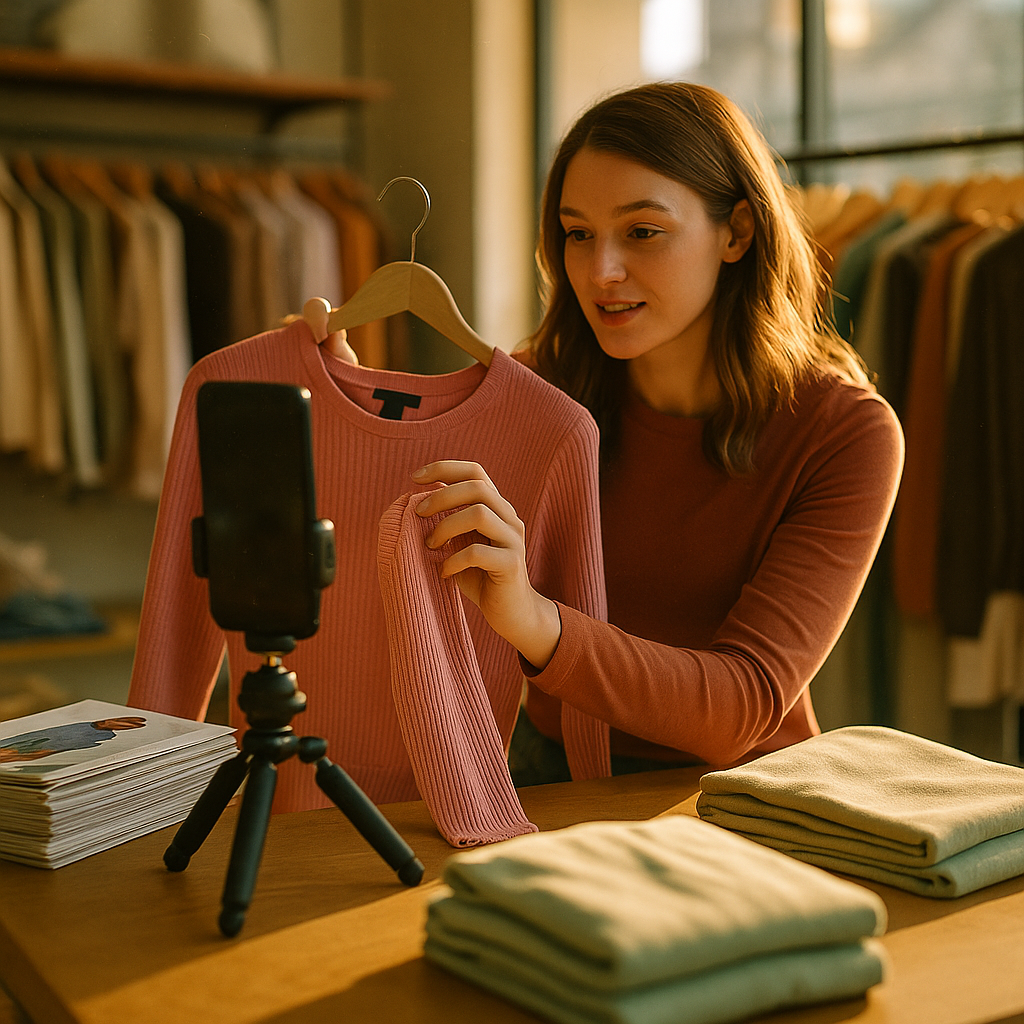
In 2025, many retailers are rethinking how they earn attention as print costs rise and audiences scroll. This case study shows a retailer’s successful transition from print to social video, built on clear goals, measurable experiments, and disciplined creative production. You’ll see what changed, what stayed, and what the team learned about modern buying behavior—plus the tactics you can copy to move faster.
Print advertising decline: Why the retailer changed course
The retailer in this case study—an omnichannel home-and-lifestyle brand with 40 stores and a national e-commerce site—relied for years on a familiar playbook: seasonal print circulars, local newspaper inserts, and direct mail. The approach worked when distribution was stable and shoppers planned their purchases around weekly promotions.
By early 2025, the marketing team faced a structural shift:
- Rising costs and slower turnaround: Print buying required long lead times and offered limited flexibility when inventory or pricing changed.
- Harder attribution: The team could estimate lift using coupon codes and store manager feedback, but could not confidently connect print spend to incremental revenue across channels.
- Audience behavior: The retailer’s highest-growth customer segment (25–44) discovered products through short-form video and creator recommendations, not printed inserts.
The decision was not “print is dead.” It was a business choice: shift budget toward formats that enable faster testing, better measurement, and more frequent customer touchpoints. Print would remain in a smaller, targeted role for specific store markets, but the growth strategy required a new engine.
To avoid a risky “big bang” switch-off, the team framed the change as a 12-week transition plan with weekly measurement checkpoints. That structure mattered: it reduced internal resistance, gave finance a clear forecast window, and forced the team to define success before launching creative.
Social video strategy: Goals, audience, and channel choices
The retailer built its social video strategy around business outcomes, not vanity metrics. The team started with three questions that executives cared about:
- Can we grow qualified traffic to product pages?
- Can we lift store visits in priority trade areas?
- Can we reduce dependence on discounting by improving product understanding?
From there, the team defined a clean measurement ladder:
- Awareness: 3-second views and reach in target geo and interest clusters
- Consideration: 50% video views, saves, shares, profile visits, and “add to cart” rate from video-driven sessions
- Conversion: purchases, store locator clicks, and “reserve/pick up” actions, tracked through platform pixels and first-party analytics
Channel selection was practical. The brand chose three primary distribution paths:
- TikTok: for discovery and product storytelling at scale, especially for seasonal “how to style” content.
- Instagram Reels: for shopping-adjacent experiences and retargeting audiences already familiar with the brand.
- YouTube Shorts: for search-like behavior and longer shelf life on evergreen product demos.
Audience targeting combined broad and precise approaches. The team used broad interest targeting for top-of-funnel reach, then layered retargeting based on video engagement (e.g., viewed 50%+), site visits, and cart behavior. Importantly, they built creative variants for two different intent states: “inspiration” (style, room setup, gifting) and “problem-solution” (storage, durability, stain resistance, fit and sizing).
To keep execution honest, the team established a “definition of done” for every video: it must show the product in use, address one common objection, include a clear next step, and be usable in paid and organic placements. That constraint prevented the common drift into beautiful but ineffective lifestyle clips.
Video content plan: Creatives, production workflow, and messaging
The retailer replaced its print-centric campaign calendar with a video content plan organized around customer needs and product margins. The team identified five product categories where shoppers frequently wanted to “see it to believe it” and where returns were costly if expectations were unclear. Those categories became the initial focus for video.
The creative system used repeatable formats to scale output without sacrificing quality:
- “3 ways to use it”: fast demonstrations showing versatility and boosting average order value through bundles.
- “Before/after”: visual proof for organization and home refresh items.
- “Myth vs. fact”: objection handling (materials, care, durability, fit).
- “Staff pick”: store associate demos to add credibility and reduce polish fatigue.
- “Unbox + setup”: showing what arrives, how long setup takes, and what tools are needed.
Production was designed for speed and consistency:
- Two-day batch shoots: filmed every other week, capturing 25–35 assets across categories.
- Template-based editing: consistent intro pattern, on-screen captions, and a modular end card adapted to the objective (shop, save, visit store).
- UGC and creator clips: acquired through clear usage rights and a defined approval checklist to protect brand safety.
Messaging followed a simple rule: clarity beats clever. Each video opened with the outcome (“This turns a messy closet into…”) or the problem (“If your rug keeps sliding…”). The middle delivered proof through close-ups and real use. The close included one action, not three. When the team tested multiple CTAs in a single video, drop-off increased and clicks declined.
Because trust is a purchase driver, the retailer also embedded EEAT signals directly into content:
- Experience: associates and real customers showed products in real spaces, not generic studio sets.
- Expertise: category managers explained material differences and care tips in plain language.
- Authoritativeness: videos referenced internal testing (e.g., wear tests) when relevant and avoided inflated claims.
- Trust: clear disclosure when content was sponsored or incentivized, and accurate depiction of product color and scale.
This approach reduced avoidable returns and improved customer satisfaction signals in post-purchase surveys. It also gave customer service a library of clips to send when shoppers asked predictable questions—turning marketing assets into operational leverage.
Omnichannel measurement: KPIs, attribution, and learnings
The most fragile part of any shift from print to digital is proving impact in terms leadership accepts. The retailer built an omnichannel measurement framework that combined platform reporting, first-party analytics, and store-level signals.
Key steps included:
- Clean tracking foundation: standardized UTMs across campaigns, consistent naming conventions, and platform pixels audited to ensure events fired correctly.
- Incrementality thinking: the team compared test markets with reduced print distribution against similar markets where print remained steady, while holding pricing and major promos constant.
- Store visit proxies: “get directions” clicks, store locator usage, and pickup-related actions were tracked as high-intent signals and reviewed against weekly POS trends.
Instead of reporting dozens of metrics, the team built a tight executive dashboard:
- Cost per engaged view (50%+ view) to ensure the message landed
- Click-through rate and landing page view rate to catch weak hooks or slow pages
- Conversion rate on video-driven sessions
- ROAS for product-focused ads, and incremental revenue estimates for mixed objectives
- Return rate by category after video rollout (a critical profitability lever)
What the retailer learned surprised the team:
- View quality mattered more than raw reach: ads optimized for cheap impressions produced weaker downstream conversion than ads optimized for deeper views.
- “Explain it” content beat “announce it” content: product demos and comparisons consistently outperformed simple promo announcements, even during sales.
- Shorter wasn’t always better: 9–14 second clips drove reach, but 18–28 second clips often converted better because they answered objections.
The team also uncovered a common hidden issue: landing pages were built for desktop browsing, not mobile video traffic. After compressing images, simplifying above-the-fold details, and adding short “how it works” clips to product pages, conversion rates improved and bounce rates dropped.
The takeaway for readers planning a similar transition: measurement is not a reporting exercise. It’s an engineering problem. If you can’t connect creative, audience, and on-site behavior, you won’t know whether to scale, iterate, or stop.
Retail marketing transformation: Budget reallocation and team enablement
A successful transition requires a retail marketing transformation across budgeting, skills, and operating rhythm. The retailer moved spending in phases to protect revenue:
- Phase 1 (Weeks 1–4): maintain most print distribution while launching always-on social video with modest paid support.
- Phase 2 (Weeks 5–8): reduce print frequency in test markets; increase paid video spend and expand retargeting.
- Phase 3 (Weeks 9–12): reallocate budget based on results; keep print only where it proved incremental.
Internally, the team redefined roles rather than adding headcount immediately:
- Creative lead: owned format library, brand voice, and review standards.
- Performance marketer: ran testing plans, attribution, and pacing.
- Merch partner: ensured products featured matched inventory and margin priorities.
- Store champion group: trained associates to film simple demos and answer common questions.
This structure improved speed. But governance mattered just as much. The brand adopted two rules to avoid common social video pitfalls:
- No “one-and-done” creative: every winning concept got at least five iterations (different hooks, angles, lengths, and proof points).
- No silent learnings: each week ended with a one-page recap: what we tested, what won, what we’ll do next.
On the compliance side, the retailer updated its content guidelines to protect trust: clear disclosures, no unverified performance claims, and a standard process for handling comments that raised product safety or quality issues. That helped customer support and protected the brand from reputational surprises.
Conversion optimization: Results, what worked, and pitfalls to avoid
By the end of the 12-week transition plan in 2025, the retailer had enough evidence to scale social video and reduce broad print spend. The most meaningful outcomes were not just “more views.” They were improvements in efficiency and customer decision-making.
Results the retailer reported internally (based on platform and first-party analytics) included:
- Higher qualified traffic: video-driven sessions showed stronger engagement (more product page depth and longer time on site) than traffic associated with print-driven promo spikes.
- Better category profitability: categories with “how it works” videos saw fewer pre-purchase questions and lower return pressure, improving contribution margin.
- More predictable testing: weekly creative iteration reduced reliance on seasonal “big campaigns,” smoothing performance between promotions.
What specifically worked:
- Hook-first scripting: the first 1–2 seconds stated the outcome or problem clearly.
- Proof over polish: handheld demos, close-ups, and authentic rooms outperformed high-production lifestyle shots.
- Retargeting based on engagement: audiences who watched 50%+ converted at a meaningfully higher rate than those targeted only by interests.
- Creative matched to intent: inspiration videos fed top-of-funnel; comparison and setup videos closed the sale.
Pitfalls the team had to correct quickly (and you should avoid):
- Over-indexing on trending audio: it increased reach but sometimes diluted product clarity and hurt downstream conversion.
- Ignoring comments: early on, unanswered questions reduced trust. Assigning an owner to community management improved performance and reduced misinformation.
- Promoting out-of-stock items: the team integrated inventory checks into the publishing workflow to prevent wasted spend and frustration.
The transition succeeded because the retailer treated social video as a measurable sales channel, not a brand experiment. Print still had a role, but it stopped being the default. Video became the format where the brand could demonstrate value, reduce uncertainty, and move customers toward confident decisions.
FAQs
How long does it take a retailer to transition from print to social video?
Many retailers can see reliable signals within 8–12 weeks if they launch with a structured testing plan, consistent creative output, and clean tracking. A full budget shift typically takes longer because you need enough data across categories, seasons, and store markets to confirm incrementality.
What’s the minimum content cadence to make social video work?
A practical minimum is 3–5 new videos per week per primary channel, supported by a small paid budget to ensure consistent delivery. If resources are tight, prioritize fewer formats and iterate winners instead of producing entirely new concepts every time.
Do retailers need creators, or can they film in-house?
In-house content can perform very well, especially when store associates demonstrate products. Creators add speed, variety, and audience trust, but you should use clear briefs and secure usage rights so successful videos can be repurposed in paid campaigns.
How do you measure store impact from social video?
Use a combination of store locator actions (direction clicks, store page views), pickup-related behaviors, market-level tests, and POS trend analysis. When possible, run geographic holdouts to compare markets with different media mixes while keeping promotions and pricing steady.
What types of products benefit most from social video?
Products with visual transformation, setup steps, fit concerns, material differences, or common objections benefit the most. Video reduces uncertainty by showing scale, texture, usage, and results—often lowering returns and improving conversion rates.
How should print fit into the media mix after the transition?
Keep print where it is demonstrably incremental: specific store markets, co-op programs, or seasonal moments where your audience still responds. Treat print as a targeted support channel, not the foundation, and hold it to the same measurement discipline as digital.
In 2025, the retailer’s shift succeeded because it replaced print habits with a repeatable system: clear objectives, fast creative iteration, and honest measurement tied to profit. Social video worked best when it demonstrated products, handled objections, and matched creative to customer intent. The takeaway is simple: move budget only after you build the workflow and tracking that make performance predictable.
Top Influencer Marketing Agencies
The leading agencies shaping influencer marketing in 2026
Agencies ranked by campaign performance, client diversity, platform expertise, proven ROI, industry recognition, and client satisfaction. Assessed through verified case studies, reviews, and industry consultations.
Moburst

-
2

The Shelf
Boutique Beauty & Lifestyle Influencer AgencyA data-driven boutique agency specializing exclusively in beauty, wellness, and lifestyle influencer campaigns on Instagram and TikTok. Best for brands already focused on the beauty/personal care space that need curated, aesthetic-driven content.Clients: Pepsi, The Honest Company, Hims, Elf Cosmetics, Pure LeafVisit The Shelf → -
3

Audiencly
Niche Gaming & Esports Influencer AgencyA specialized agency focused exclusively on gaming and esports creators on YouTube, Twitch, and TikTok. Ideal if your campaign is 100% gaming-focused — from game launches to hardware and esports events.Clients: Epic Games, NordVPN, Ubisoft, Wargaming, Tencent GamesVisit Audiencly → -
4

Viral Nation
Global Influencer Marketing & Talent AgencyA dual talent management and marketing agency with proprietary brand safety tools and a global creator network spanning nano-influencers to celebrities across all major platforms.Clients: Meta, Activision Blizzard, Energizer, Aston Martin, WalmartVisit Viral Nation → -
5

The Influencer Marketing Factory
TikTok, Instagram & YouTube CampaignsA full-service agency with strong TikTok expertise, offering end-to-end campaign management from influencer discovery through performance reporting with a focus on platform-native content.Clients: Google, Snapchat, Universal Music, Bumble, YelpVisit TIMF → -
6

NeoReach
Enterprise Analytics & Influencer CampaignsAn enterprise-focused agency combining managed campaigns with a powerful self-service data platform for influencer search, audience analytics, and attribution modeling.Clients: Amazon, Airbnb, Netflix, Honda, The New York TimesVisit NeoReach → -
7

Ubiquitous
Creator-First Marketing PlatformA tech-driven platform combining self-service tools with managed campaign options, emphasizing speed and scalability for brands managing multiple influencer relationships.Clients: Lyft, Disney, Target, American Eagle, NetflixVisit Ubiquitous → -
8

Obviously
Scalable Enterprise Influencer CampaignsA tech-enabled agency built for high-volume campaigns, coordinating hundreds of creators simultaneously with end-to-end logistics, content rights management, and product seeding.Clients: Google, Ulta Beauty, Converse, AmazonVisit Obviously →