


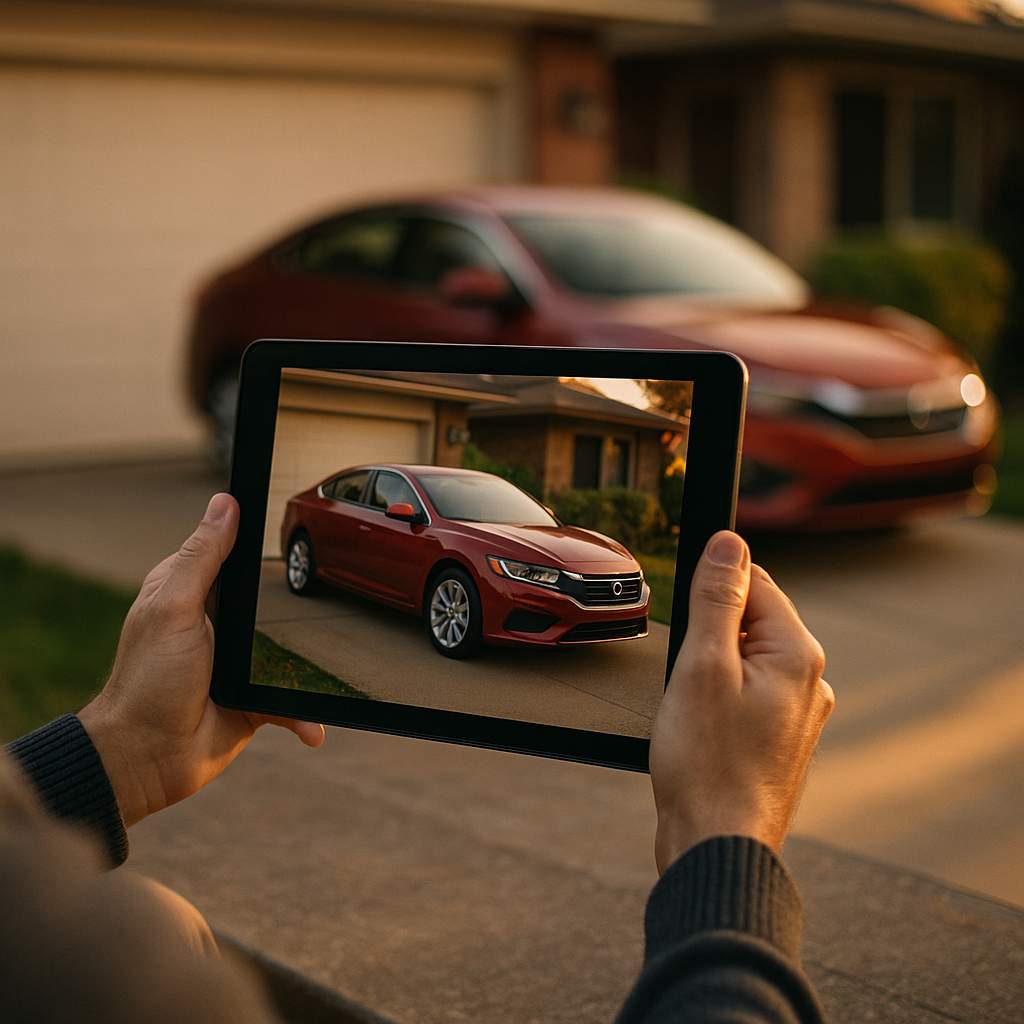
In 2025, remote buying is no longer a niche behavior; it’s a baseline expectation in high-consideration categories like automotive. This case study shows how a national carmaker deployed AR to drive remote sales by blending immersive product visualization with dealership workflows, finance tools, and measurable attribution. The result wasn’t “cool tech”—it was a scalable revenue engine that answered one question: would buyers commit from home?
Augmented reality car shopping: The business challenge and buyer friction
The brand in this case study—an established automotive manufacturer with a broad dealer network—faced a familiar problem in 2025: buyers increasingly started online but stalled before purchase. The company’s analytics revealed a consistent pattern:
- High intent, low confidence: shoppers compared trims, colors, and features, but hesitated without seeing a vehicle in context.
- Dealer handoff gaps: leads arrived at dealerships with incomplete information, slowing response times and increasing drop-off.
- Remote sales complexity: trade-in, financing, and availability conversations were fragmented across tools.
Traditional solutions—more photos, more videos, more chat—improved engagement but didn’t reliably move customers to a decision. Leadership set a clear objective: increase remote-to-order conversion without disrupting dealer operations. The technology had to work on common consumer devices, support multiple models and trims, and tie directly to sales actions like test-drive scheduling, payment estimation, and purchase deposits.
The team also had to answer internal questions early: Would AR reduce dealership visits or strengthen them? Would dealers trust brand-managed leads? Could the experience be measured beyond “time spent”?
Remote car sales strategy: Designing an end-to-end AR buying journey
The brand built a remote-first journey that treated AR as a decision tool—not a novelty. The program aligned marketing, product, IT, legal, and dealer operations around one principle: every AR interaction must support the next best step toward purchase.
1) Entry points tied to intent
- Model pages and configurator: “View in your driveway” call-to-action.
- Paid media and social: deep links to pre-selected trims (reducing setup friction).
- Dealer inventory pages: AR activated only for vehicles that were actually available.
2) A guided AR flow built for buyers, not technologists
- Simple calibration and placement with on-screen coaching.
- One-tap toggles for color, wheels, roof options, and packages.
- Feature hotspots that explained practical benefits (cargo space, driver-assist, charging port access) in plain language.
3) “Decision moments” embedded directly in the AR experience
- Save-and-share link for household approval and advisor follow-up.
- Instant payment estimate using ZIP code, trim, and incentives.
- Trade-in prequalification and soft-credit finance precheck options.
- Book a home test-drive (where supported) or reserve at a dealer with a refundable deposit.
4) Dealer workflow integration
Instead of pushing raw AR engagement data to dealers, the brand routed only high-quality signals:
- Selected trim/build, colors, and packages
- Saved configurations and shared links
- Finance/trade-in steps completed
- Preferred dealer and requested contact method
This reduced back-and-forth and allowed sales teams to respond with relevant inventory matches and accurate pricing. It also addressed a common concern: remote experiences fail when the final mile—the dealer interaction—feels disconnected from what the buyer already did online.
AR product visualization: Building a credible experience shoppers trust
To meet buyer expectations in 2025, the brand focused on realism, clarity, and performance. Shoppers don’t forgive glitches when the purchase is expensive. The program’s experience design emphasized:
Visual accuracy and transparency
- High-fidelity 3D models based on OEM CAD with brand-approved materials.
- Lighting and shadows tuned to improve realism in common environments (driveways, garages, curbside).
- Clear disclaimers when visualized options could vary by region or inventory (for example, package availability).
Utility-first feature presentation
- Interior previews focused on daily tasks: car seats, cargo loading, driver visibility.
- Exterior comparisons made it easy to differentiate trims without jargon.
- Accessibility features: large tap targets, readable labels, and reduced-motion settings.
Performance across devices
The team prioritized fast load times and stable tracking on mainstream phones. They used adaptive level-of-detail rendering so the experience stayed smooth even on older devices, and they implemented progressive loading: the shopper could place the vehicle quickly while optional details streamed in.
Trust signals (EEAT in practice)
- Feature explanations reviewed by product specialists and dealer trainers to ensure accuracy.
- Pricing and incentives sourced from the same systems used by the dealer network to avoid mismatches.
- Privacy-by-design: shoppers could explore AR without logging in; personal data collection was limited to moments when it was needed (finance, reservation, contact request).
By treating AR as an extension of the official product truth—not marketing gloss—the brand reduced the “this feels like a gimmick” reaction and increased shopper confidence.
Dealer enablement for AR: Operational rollout, training, and governance
Many AR initiatives stall because they ignore the real operating model of automotive retail. This brand approached deployment like a sales transformation program.
Pilot to scale approach
- Phase 1: limited rollout to a representative dealer set (urban, suburban, rural) to validate performance and support needs.
- Phase 2: expansion to additional markets after refining lead definitions, CRM fields, and response playbooks.
- Phase 3: national enablement with standardized creative, model coverage, and monthly dealer scorecards.
Clear lead standards and SLAs
Dealers received AR-originated leads only after the shopper completed at least one high-intent action (saved build, payment estimate, finance precheck, reservation, or test-drive request). The brand also established response-time expectations and provided scripts tailored to AR behavior, such as:
- “I saw you placed the vehicle at home—do you want to confirm this exact trim is available nearby?”
- “You explored the cargo space—would it help if I send a comparison between the two trims you viewed?”
Support and governance
- Dealer-facing training modules: how AR works, how to interpret intent signals, how to continue the conversation.
- Regional retail specialists monitored adoption and coached low-performing stores.
- Compliance review for disclaimers, finance language, and data handling to protect both brand and dealers.
The result was alignment: dealers saw AR as a source of better-informed customers, not as a brand-controlled experience that undermined local sales teams.
AR marketing performance: Measurement, attribution, and results
The brand designed measurement from day one, using a multi-layer approach that tied AR engagement to business outcomes. They avoided vanity metrics and focused on what remote sales leaders actually need: incremental conversion, lead quality, and sales velocity.
Core metrics tracked
- AR activation rate: percentage of eligible visitors who launched AR from model, configurator, or inventory pages.
- Configured intent depth: options changed, features viewed, interior/exterior toggles used.
- High-intent actions: saved build, shared link, payment estimate, finance precheck, reservation, test-drive request.
- Lead-to-appointment: dealer-confirmed appointment rates for AR-originated leads.
- Remote-to-order conversion: orders or deposits initiated online, with dealer match-back.
- Time-to-close: days from first lead to order.
Attribution approach
Because shoppers often move between devices and touchpoints, the brand used:
- First-party event tagging across web, AR sessions, configurator, finance tools, and dealer handoff.
- Dealer CRM match-back using hashed identifiers where permitted and consented.
- Holdout testing in selected markets to estimate incremental lift versus similar markets without AR.
Outcome summary (what changed)
After scaling nationally, the brand documented consistent improvements across the funnel. The most meaningful gains came from:
- Higher lead quality: AR users were more likely to submit complete trim and option preferences, improving dealer response relevance.
- Stronger remote confidence: shoppers who used AR moved to finance and reservation steps at higher rates than non-AR visitors.
- Faster decisions: dealerships reported shorter “explanation time” because customers arrived (virtually or in-store) already aligned on what they wanted.
The program also revealed practical insights the team acted on quickly. For example, certain colors and wheel combinations were frequently visualized but understocked in key markets; the brand used these insights to inform regional allocation and dealer ordering guidance. In other words, AR became a demand-sensing tool as well as a sales accelerator.
Remote buying with AR: Lessons learned and replication checklist
This case study offers a repeatable playbook for brands that want AR to contribute to revenue rather than brand buzz.
Lesson 1: Tie AR to the next step, every time
AR must lead naturally to saved builds, inventory matching, payment estimation, and appointment or reservation options. If the experience ends with “that was neat,” you’ve built entertainment, not commerce.
Lesson 2: Don’t punish users with friction
Keep AR launch fast, avoid mandatory logins, and provide clear guidance for placement. In automotive, every extra step increases drop-off.
Lesson 3: Treat dealers as co-owners
Make lead definitions transparent, send only actionable intent signals, and train sales teams with conversation starters that use what the shopper already did in AR.
Lesson 4: Build trust with accuracy and clear boundaries
Be explicit about what’s visualized versus what’s guaranteed. Use the same source systems for pricing and incentive logic that dealers use whenever possible.
Lesson 5: Measure incrementality, not just engagement
Use holdouts, match-back, and consistent event schemas. Senior stakeholders will fund AR when it proves incremental lift in remote-to-order performance.
Replication checklist
- Define “AR success” in sales terms (orders, deposits, qualified appointments).
- Launch AR from high-intent pages (configurator, inventory) before broad awareness placements.
- Embed finance and inventory matching early to reduce uncertainty.
- Create dealer SLAs and a feedback loop for lead quality.
- Implement privacy-first tracking and consent management.
- Run market-level holdouts to quantify incremental impact.
FAQs: AR for automotive remote sales
What is the main benefit of AR in automotive remote sales?
AR reduces uncertainty by letting shoppers visualize a specific vehicle configuration in their real environment. When combined with inventory matching and payment tools, it increases confidence and moves buyers toward reservations, test drives, or online orders.
Do customers need a special app to use AR for car shopping?
Most programs in 2025 use mobile web-based AR or lightweight in-app experiences. The best approach depends on your audience and repeat usage needs, but reducing friction at launch typically improves conversion.
How does AR integrate with dealerships without causing channel conflict?
Successful brands share actionable intent signals—like saved builds and payment steps—through the CRM, set response-time expectations, and train dealers on how to continue the AR-informed conversation. AR should make dealers faster and more relevant, not replace them.
How do you measure ROI for AR in automotive?
Measure beyond engagement: track high-intent actions, lead-to-appointment rates, remote-to-order conversion, and time-to-close. Use holdout markets and CRM match-back to estimate incremental lift and attribute revenue more reliably.
What features should an automotive AR experience include?
At minimum: accurate exterior visualization, easy trim and color switching, interior previews for practical use cases, “save and share,” inventory-aware calls to action, and integrated steps for payments, trade-in, and financing.
What are common pitfalls when launching AR for car sales?
The biggest pitfalls are treating AR as a one-off campaign, ignoring dealer workflows, requiring logins too early, providing inaccurate visuals or pricing, and relying on vanity metrics instead of conversion and incrementality.
AR can transform remote automotive selling when it’s built as a connected journey, not a standalone experience. This brand aligned AR visualization with real inventory, financing steps, and dealer operations, turning engagement into measurable intent and faster decisions. The clearest takeaway: prioritize trust, reduce friction, and instrument every step so AR proves incremental impact on orders—not just attention.
Top Influencer Marketing Agencies
The leading agencies shaping influencer marketing in 2026
Agencies ranked by campaign performance, client diversity, platform expertise, proven ROI, industry recognition, and client satisfaction. Assessed through verified case studies, reviews, and industry consultations.
Moburst

-
2

The Shelf
Boutique Beauty & Lifestyle Influencer AgencyA data-driven boutique agency specializing exclusively in beauty, wellness, and lifestyle influencer campaigns on Instagram and TikTok. Best for brands already focused on the beauty/personal care space that need curated, aesthetic-driven content.Clients: Pepsi, The Honest Company, Hims, Elf Cosmetics, Pure LeafVisit The Shelf → -
3

Audiencly
Niche Gaming & Esports Influencer AgencyA specialized agency focused exclusively on gaming and esports creators on YouTube, Twitch, and TikTok. Ideal if your campaign is 100% gaming-focused — from game launches to hardware and esports events.Clients: Epic Games, NordVPN, Ubisoft, Wargaming, Tencent GamesVisit Audiencly → -
4

Viral Nation
Global Influencer Marketing & Talent AgencyA dual talent management and marketing agency with proprietary brand safety tools and a global creator network spanning nano-influencers to celebrities across all major platforms.Clients: Meta, Activision Blizzard, Energizer, Aston Martin, WalmartVisit Viral Nation → -
5

The Influencer Marketing Factory
TikTok, Instagram & YouTube CampaignsA full-service agency with strong TikTok expertise, offering end-to-end campaign management from influencer discovery through performance reporting with a focus on platform-native content.Clients: Google, Snapchat, Universal Music, Bumble, YelpVisit TIMF → -
6

NeoReach
Enterprise Analytics & Influencer CampaignsAn enterprise-focused agency combining managed campaigns with a powerful self-service data platform for influencer search, audience analytics, and attribution modeling.Clients: Amazon, Airbnb, Netflix, Honda, The New York TimesVisit NeoReach → -
7

Ubiquitous
Creator-First Marketing PlatformA tech-driven platform combining self-service tools with managed campaign options, emphasizing speed and scalability for brands managing multiple influencer relationships.Clients: Lyft, Disney, Target, American Eagle, NetflixVisit Ubiquitous → -
8

Obviously
Scalable Enterprise Influencer CampaignsA tech-enabled agency built for high-volume campaigns, coordinating hundreds of creators simultaneously with end-to-end logistics, content rights management, and product seeding.Clients: Google, Ulta Beauty, Converse, AmazonVisit Obviously →