


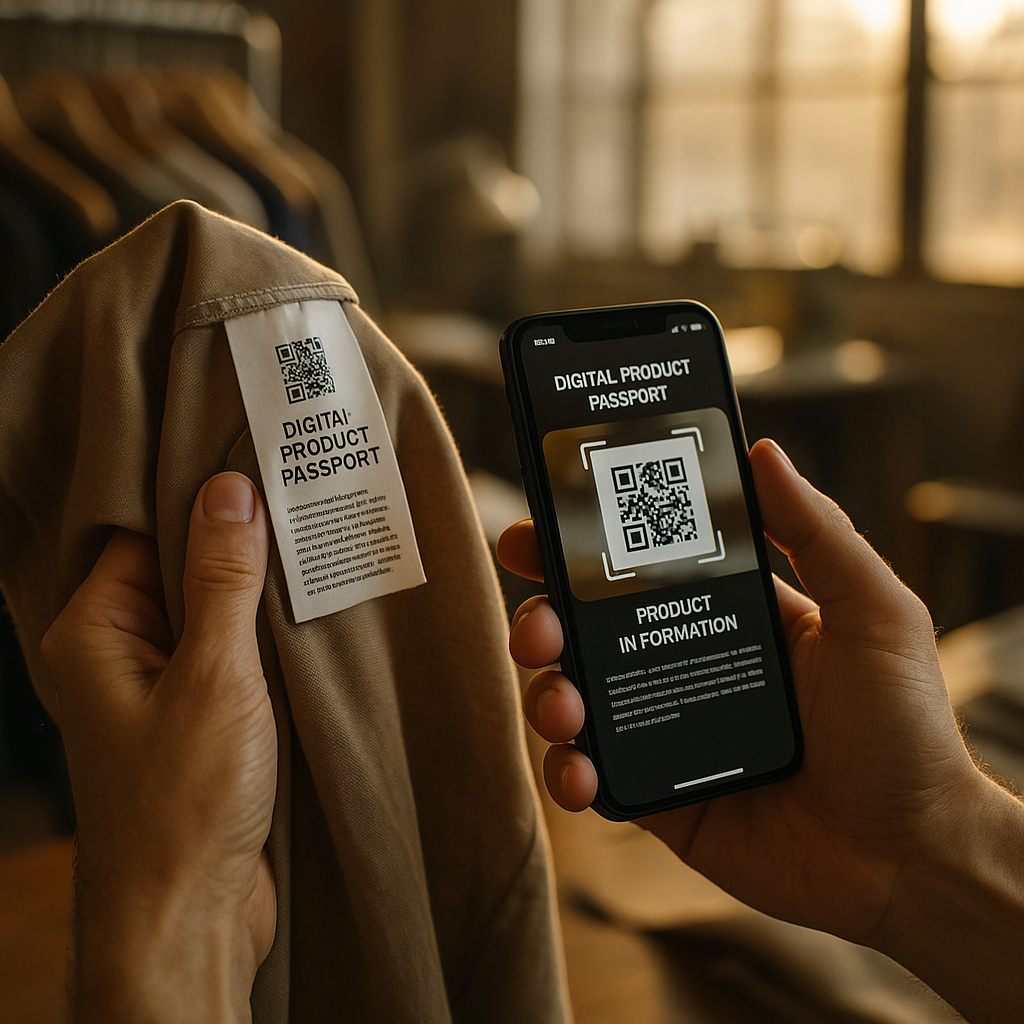
Global retailers face rising pressure to prove product origin, safety, and sustainability across complex supply chains. Digital Product Passport compliance is becoming a practical requirement for selling, sourcing, and scaling in tightly regulated markets. Done well, it reduces friction, improves data quality, and strengthens customer trust. Done poorly, it creates delays, fines, and rework. So how do you build a passport program that actually works?
Understanding Digital Product Passport requirements
A Digital Product Passport (DPP) is a structured set of product data that travels with an item across its lifecycle—manufacture, distribution, use, repair, resale, and end-of-life. For global retailers, the compliance challenge is not just “having data,” but ensuring the right data is accurate, accessible, and shareable with regulators, partners, and consumers when required.
What typically sits inside a DPP? Requirements vary by market and product category, but common data elements include:
- Product identification (GTIN/SKU, batch/lot, serialisation where relevant)
- Material composition (including restricted substances and recycled content claims)
- Origin and supplier chain (tier visibility where required, certifications, audits)
- Environmental attributes (carbon and energy indicators where applicable, packaging data)
- Care, repair, and end-of-life (repair instructions, spare parts, take-back guidance)
- Compliance evidence (test reports, declarations, certificates, due diligence records)
Why it matters in 2025: Retailers increasingly operate in a “proof economy,” where claims must be backed by verifiable evidence. A DPP program helps you standardise that evidence, avoid duplicative reporting, and respond faster to regulator or marketplace requests.
Follow-up question: Is a DPP the same as a QR code? No. A QR code is a carrier that can link to passport information. The passport is the governed dataset and the process that keeps it accurate, current, and permissioned.
EU DPP compliance and cross-border obligations
Many global retailers start with EU DPP compliance because EU rules often set the pace for broader international expectations. Even if you are headquartered elsewhere, you may be pulled into EU-aligned requirements through:
- Direct sales into EU markets (owned channels, marketplaces, subsidiaries)
- Supplier obligations (EU-based brands requesting data from upstream partners)
- Customer expectations (proof of sustainability and authenticity)
Cross-border reality: You rarely have one single “DPP law” to follow. Instead, you must map overlapping obligations—product safety, chemicals restrictions, packaging, waste, forced-labour due diligence, and consumer protection rules—into one coherent passport data model.
What “compliance-ready” looks like:
- Traceable identifiers that work across channels and geographies
- Evidence-backed claims with clear provenance (who stated it, when, based on what)
- Role-based access so regulators, consumers, and repair partners see different views
- Change control for updates (materials change, supplier changes, new test results)
Follow-up question: Do you need one passport per SKU? Often you need a passport per sellable product variant, but some attributes can be shared at model or family level. The practical approach is a hierarchical model (brand → product family → variant → batch/serial) so you avoid maintaining the same data hundreds of times.
Supply chain traceability and data governance
Retailers struggle with DPP programs for one main reason: data governance is harder than technology. Your passport will be judged by accuracy, completeness, and auditability—especially for claims related to origin, restricted substances, and sustainability.
Start by defining “minimum viable compliance data.” Avoid boiling the ocean. Identify the fields that are legally required for your highest-risk categories and markets, then expand.
Build traceability you can defend. Traceability does not always mean full chain-of-custody to raw material for every product on day one. It means a clear, risk-based method that prioritises high-impact categories and suppliers, backed by documentation and controls.
Governance practices that hold up under scrutiny:
- Data owners for each attribute (e.g., regulatory, quality, sourcing, packaging)
- Evidence rules (acceptable document types, expiry management, language requirements)
- Supplier data contracts (who provides what, in what format, by when, and liability)
- Validation checks (range checks, restricted substance flags, certificate authenticity)
- Audit trails (versioning, approvals, and “who changed what” logs)
Follow-up question: How do you handle conflicting supplier data? Treat supplier submissions as inputs, not truth. Require evidence, apply automated validation, and maintain an escalation workflow: supplier correction → internal review → temporary exception with expiry → re-validation. Document every decision so it is defensible.
Product lifecycle transparency and customer trust
Product lifecycle transparency turns compliance into a commercial advantage when executed carefully. Customers want clear, comparable information—without jargon or greenwashing. Regulators want consistency and proof. Repair partners want technical details. Your DPP should serve all three without creating three separate systems.
Design the passport as multiple “views” of the same controlled data:
- Consumer view: care instructions, repair options, origin highlights, verified claims
- Professional view: spare part references, materials, disassembly guidance, safety info
- Regulatory view: test reports, declarations, certificates, due diligence evidence
Make claims verifiable. If you state “recycled content,” include the methodology and certification reference behind the scenes. If you state “made in,” define the rule you use (substantial transformation, last processing step, or other relevant standard) and store the evidence.
Avoid common trust killers:
- Overstated sustainability claims without evidence
- Inconsistent product information across web, packaging, and marketplace listings
- Outdated certificates and missing expiry management
- Opaque data sources that cannot be traced to a responsible party
Follow-up question: Will transparency expose you to risk? It can if your data is weak. But controlled transparency reduces risk over time by forcing data discipline, tightening supplier accountability, and enabling faster corrections when issues appear.
DPP software integration with ERP, PLM, and PIM
Most retailers already have product data scattered across ERP (commercial and logistics), PLM (design and materials), PIM (marketing and e-commerce), and compliance tools. The DPP should not become “one more database.” Instead, it should function as a governed layer that connects systems, standardises attributes, and publishes passport views.
Key integration principle: Decide where the “system of record” lives for each attribute, then integrate—don’t duplicate. For example:
- PLM for bill of materials, component materials, design revisions
- ERP for supplier references, purchase orders, batch/lot logistics
- PIM for consumer-facing content and translations
- Compliance repository for certificates, test reports, declarations, due diligence files
What to look for in DPP enablement technology:
- Standards support for identifiers and product data exchange
- API-first architecture to connect suppliers, labs, logistics partners, and marketplaces
- Workflow and approvals for evidence review, exception handling, and publishing
- Access control and secure sharing (including partner portals)
- Scalable QR/NFC linking that supports multiple views and languages
Follow-up question: Should you build or buy? Most global retailers take a hybrid route: buy a platform or framework for passport publishing, permissions, and workflows, then integrate with existing PLM/ERP/PIM. Building everything from scratch often increases validation, security, and maintenance burden—especially when requirements evolve.
Risk management, audits, and operational readiness
Compliance is not a launch date; it is an operating model. Strong risk management keeps your DPP program resilient when suppliers change, regulations tighten, or product lines expand.
Create a category-by-category compliance roadmap. Some categories (e.g., complex materials, high return rates, or heavy regulation) will require deeper passports sooner. Use a scoring model based on:
- Regulatory exposure (market access risk, documentation requirements)
- Supply chain complexity (tier depth, subcontracting, variable sourcing)
- Claim intensity (sustainability marketing and labels)
- Operational impact (returns, repairs, resale, take-back obligations)
Prepare for audits as a routine. Build an “audit pack” capability that assembles evidence quickly:
- Attribute lineage: where the data came from, who approved it, when it was updated
- Document control: certificate validity, test report scope, laboratory accreditation where relevant
- Exception handling: documented rationale, expiry dates, corrective actions
Operational readiness checklist:
- Training for sourcing, quality, compliance, and e-commerce teams
- Supplier onboarding with clear templates, deadlines, and support
- KPIs such as passport completeness, evidence validity rate, and time-to-publish
- Incident response for recalls, claim challenges, and supplier nonconformance
Follow-up question: How long does readiness take? For a global retailer, a focused pilot can be achieved in months for one category if data owners, supplier contracts, and integrations are in place. Full rollout depends on supplier maturity and catalogue complexity—plan for staged deployment rather than a single “big bang.”
FAQs about Digital Product Passport compliance
What is the fastest way to start a DPP program without disrupting operations?
Pick one high-priority product category and one region, define the minimum required dataset, and run a pilot with a small supplier group. Build workflows for evidence collection and approvals, then expand once data quality stabilises.
Which teams should own Digital Product Passport compliance in a retail organisation?
Compliance and product stewardship should define requirements and controls, while sourcing owns supplier data commitments, quality validates technical evidence, IT enables integrations, and e-commerce/pim teams manage consumer-facing content. Assign a single program owner to prevent fragmented decisions.
How do retailers ensure suppliers provide accurate passport data?
Use contractual data obligations, standard templates, and evidence requirements; add automated validations; and run periodic audits for high-risk suppliers. Incentivise performance with scorecards and consequences for repeated noncompliance.
Do DPPs apply to refurbished, resale, or marketplace items?
Often yes in practice, because lifecycle information becomes more important when products change hands. Retailers should plan passport updates for repairs, component replacements, and condition grading, and ensure the identifier strategy supports resale channels.
What data should never be exposed publicly in a passport?
Do not expose trade secrets, sensitive supplier pricing, confidential formulations, or personal data. Use role-based access so consumers see validated claims and guidance, while regulators and authorised partners can access deeper evidence as permitted.
How do you handle products with multi-sourcing and frequent material changes?
Use variant and batch-level modelling, link passports to approved supplier lists, and enforce change-control workflows. When a supplier or material changes, trigger re-validation of impacted claims and certificates before publishing updates.
Digital Product Passport compliance is a data and operating-model challenge as much as a regulatory one. Global retailers that win in 2025 treat passports as governed product truth: clear identifiers, evidence-backed claims, supplier accountability, and integrated systems that publish the right view to the right audience. Start with a focused pilot, harden governance, then scale by category to reduce risk while building durable trust.
Top Influencer Marketing Agencies
The leading agencies shaping influencer marketing in 2026
Agencies ranked by campaign performance, client diversity, platform expertise, proven ROI, industry recognition, and client satisfaction. Assessed through verified case studies, reviews, and industry consultations.
Moburst

-
2

The Shelf
Boutique Beauty & Lifestyle Influencer AgencyA data-driven boutique agency specializing exclusively in beauty, wellness, and lifestyle influencer campaigns on Instagram and TikTok. Best for brands already focused on the beauty/personal care space that need curated, aesthetic-driven content.Clients: Pepsi, The Honest Company, Hims, Elf Cosmetics, Pure LeafVisit The Shelf → -
3

Audiencly
Niche Gaming & Esports Influencer AgencyA specialized agency focused exclusively on gaming and esports creators on YouTube, Twitch, and TikTok. Ideal if your campaign is 100% gaming-focused — from game launches to hardware and esports events.Clients: Epic Games, NordVPN, Ubisoft, Wargaming, Tencent GamesVisit Audiencly → -
4

Viral Nation
Global Influencer Marketing & Talent AgencyA dual talent management and marketing agency with proprietary brand safety tools and a global creator network spanning nano-influencers to celebrities across all major platforms.Clients: Meta, Activision Blizzard, Energizer, Aston Martin, WalmartVisit Viral Nation → -
5

The Influencer Marketing Factory
TikTok, Instagram & YouTube CampaignsA full-service agency with strong TikTok expertise, offering end-to-end campaign management from influencer discovery through performance reporting with a focus on platform-native content.Clients: Google, Snapchat, Universal Music, Bumble, YelpVisit TIMF → -
6

NeoReach
Enterprise Analytics & Influencer CampaignsAn enterprise-focused agency combining managed campaigns with a powerful self-service data platform for influencer search, audience analytics, and attribution modeling.Clients: Amazon, Airbnb, Netflix, Honda, The New York TimesVisit NeoReach → -
7

Ubiquitous
Creator-First Marketing PlatformA tech-driven platform combining self-service tools with managed campaign options, emphasizing speed and scalability for brands managing multiple influencer relationships.Clients: Lyft, Disney, Target, American Eagle, NetflixVisit Ubiquitous → -
8

Obviously
Scalable Enterprise Influencer CampaignsA tech-enabled agency built for high-volume campaigns, coordinating hundreds of creators simultaneously with end-to-end logistics, content rights management, and product seeding.Clients: Google, Ulta Beauty, Converse, AmazonVisit Obviously →