


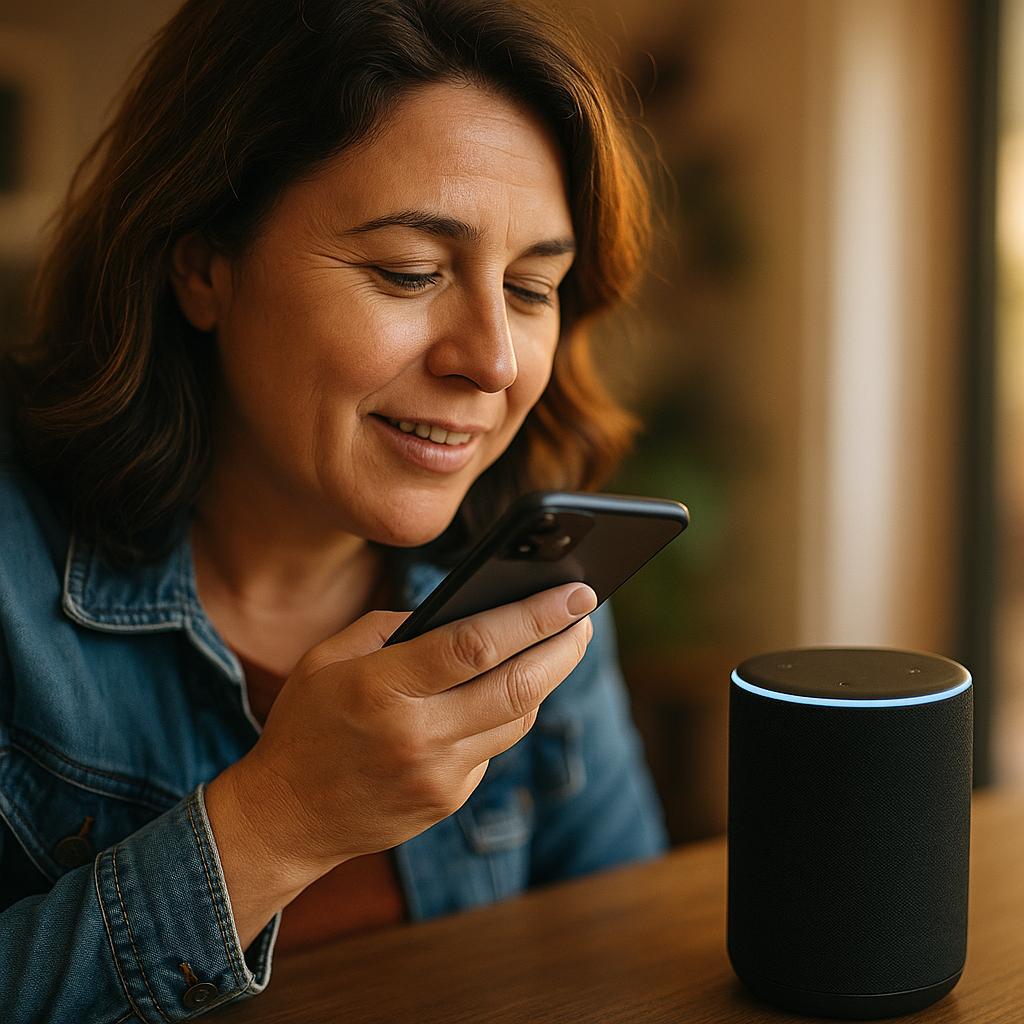
In 2025, customers expect voice experiences that feel local, respectful, and unmistakably “on-brand.” Using AI to personalize voice assistant brand personas by region helps teams adapt tone, vocabulary, pacing, and cultural references without fragmenting governance. Done well, it improves trust, conversion, and customer satisfaction while reducing script maintenance. The question is no longer “can we localize?” but “how do we do it responsibly, at scale?”
AI voice personalization by region: what it means and why it matters
Regional personalization goes beyond translating prompts. It means shaping a consistent brand persona to sound natural in each market: word choice, formality, pronunciation, turn-taking style, humor tolerance, and how directly the assistant asks for information. A retail assistant in London might use softer hedges (“could you”) while a counterpart in New York might be more direct (“let’s do this now”)—without changing the underlying brand values.
In practice, regional persona personalization typically touches:
- Language and dialect: idioms, spelling, preferred terms (e.g., “postcode” vs “zip code”), and code-switching where appropriate.
- Prosody and pacing: speaking rate, pauses, emphasis, and friendliness level to match local expectations.
- Politeness strategy: how the assistant apologizes, makes requests, handles refusal, and confirms details.
- Compliance and disclosures: region-specific wording for consent, recording notices, and financial/health disclaimers.
- Cultural safety: avoiding sensitive references, stereotypes, or locally inappropriate humor.
The business case is straightforward: voice is a high-friction interface when users must repeat themselves or feel misunderstood. Regional tuning reduces that friction. It also protects brand equity: a persona that sounds authentic builds confidence, while a mismatched tone can feel robotic or dismissive even when the answer is correct.
If you’re wondering whether this creates “too many versions,” the key is separating brand DNA (values, boundaries, promise) from regional expression (tone and linguistic style). AI enables that separation through configurable persona layers.
Regional brand voice design: building a persona system, not one-off scripts
Teams get better results when they treat regionalization as a design system with rules, examples, and measurable outcomes—rather than rewriting prompts market by market. Start by defining a single, global persona baseline, then create regional “overlays” that adjust expression while preserving identity.
A practical persona system includes:
- Brand principles: 5–10 non-negotiables (e.g., “helpful, concise, never sarcastic, never guilt-trips the user”).
- Voice and tone sliders: parameters such as formality, warmth, directness, and verbosity ranges by use case.
- Regional lexicon and banned terms: preferred terms, pronunciation notes, and words to avoid due to local connotations.
- Conversation patterns: how the assistant greets, confirms, escalates, and closes—per region.
- Example library: “golden” sample dialogs for top intents (returns, appointments, billing, troubleshooting).
- Accessibility guidance: clear language requirements, reading level targets, and support for speech impairments.
To keep things cohesive, write persona documentation in user-centered language and tie it to outcomes: reduced transfers, higher task completion, fewer re-prompts, and improved customer sentiment. This makes governance easier because stakeholders can agree on measurable goals instead of debating subjective “vibes.”
Answering a common follow-up: How many regional personas are enough? Often, start with country-level variants for high-volume markets, then expand to dialect or city-level variants only where data shows meaningful differences in satisfaction, conversion, or error rates.
LLM localization strategy: data, prompts, and model choices that scale
Most regional persona projects succeed or fail based on localization inputs and the technical approach. In 2025, you can combine prompt engineering, retrieval (RAG), and lightweight fine-tuning to control regional voice while keeping core reasoning consistent.
Use a three-layer architecture:
- Core assistant policy: safety rules, refusal behavior, privacy constraints, and brand non-negotiables.
- Persona layer: brand tone and conversation patterns that are shared globally.
- Regional overlay: locale-specific style instructions, lexicons, examples, and compliance text.
Then decide how to implement the regional overlay:
- Prompt + RAG (recommended first): Store regional style guides and example dialogs in a vetted knowledge base. Retrieve the relevant regional snippets at runtime based on locale signals. This is fast to iterate and auditable.
- Fine-tuning (selectively): Use when you need consistent phrasing at scale, strict tone fidelity, or stable behavior for regulated workflows. Fine-tune on approved examples only, and keep the policy layer separate.
- Speech layer tuning: For TTS, configure voices per locale (accent, timbre, rate) and apply SSML rules for pauses, emphasis, and numeric formatting.
Data guidance for EEAT-aligned content:
- Prefer first-party data: transcripts (with consent), intent logs, and satisfaction signals per region. This best reflects your customers and reduces reliance on stereotypes.
- Balance representation: Ensure samples include diverse speakers, ages, and speech patterns within each region to avoid bias toward a single sociolect.
- Use human-reviewed examples: Curate “approved” responses that demonstrate tone, empathy, and compliance language.
- Version everything: Prompt templates, regional lexicons, and TTS settings should be versioned with change logs and sign-offs.
To answer another likely question: How does the system know the user’s region? Use explicit settings (preferred language/locale), account profile, device locale, and user confirmation when signals conflict. Avoid inferring sensitive traits. If a user’s speech suggests a different dialect than device locale, offer a respectful choice: “Would you like me to use U.S. English or Canadian English?”
Multilingual voice assistants: cultural nuance, consent, and compliance by market
Regional persona work intersects with trust, privacy, and local regulation. The safest approach is to treat compliance language as part of the regional overlay and to adopt a “minimum necessary data” posture.
Key compliance and trust practices:
- Transparent consent: Clearly explain recording, storage, and purpose in plain language that matches the region’s expectations of formality.
- Data minimization: Collect only what the flow requires, and confirm sensitive fields explicitly (e.g., “I’ll repeat that back to make sure it’s correct”).
- Local disclosures: Financial, healthcare, and child-focused experiences often require region-specific disclaimers. Keep them concise and consistent.
- Escalation etiquette: Hand-offs to humans should follow local norms—some markets expect immediate escalation options, others prefer self-service first.
Cultural nuance requires disciplined design. Avoid “painting by flag” stereotypes. Instead, base changes on observed user feedback and measurable conversation signals. If regional humor is used, constrain it to safe categories and ensure it never appears in high-stress scenarios like billing disputes, cancellations, or complaint handling.
Accessibility is also regional. Numerals, dates, units, and address formats vary; mishandling them can create real harm (missed appointments, incorrect deliveries). Build region-specific validation rules: phone formats, postal codes, and name order conventions. For voice, speak numbers in locally standard groupings and confirm critical information.
Voice UX optimization: testing, metrics, and continuous improvement across locales
Personalization must be proven with outcomes, not just preference. Establish a measurement plan before launch and run controlled rollouts per region. Tie changes to customer experience and operational metrics.
Core metrics to track by region and intent:
- Task completion rate: Did the user finish without abandoning or switching channels?
- Re-prompt rate: How often did users repeat or rephrase?
- ASR/WER and NLU accuracy: Speech recognition and intent classification quality by accent and noise profile.
- Containment rate: How often issues are resolved without human escalation, balanced against satisfaction.
- Customer sentiment: Short post-interaction surveys, thumbs signals, or complaint tagging.
- Safety and compliance incidents: Refusal correctness, disclosure adherence, and policy violations.
Testing approach that scales:
- Offline evaluations: Run curated regional test suites with known “golden” outputs and scoring rubrics (tone, correctness, compliance, empathy).
- Human-in-the-loop reviews: Use trained reviewers in-region to score naturalness and appropriateness; rotate reviewers to reduce drift.
- Online A/B experiments: Compare baseline vs regional overlay for specific intents. Keep experiments narrow to isolate impact.
- Red teaming by locale: Probe for culturally sensitive failure modes, slurs, political content pitfalls, and ambiguous phrasing.
A common follow-up is cost: Will this increase QA effort? Initially yes, but a persona system reduces long-term maintenance. Instead of rewriting scripts, teams update the regional overlay and regression-test with automated suites. Over time, this approach lowers the cost of adding new intents and new markets.
Brand governance for AI assistants: keeping personas consistent, safe, and on-brand
Regional personalization can fragment quickly without governance. Establish clear ownership and approval workflows. EEAT-aligned governance emphasizes accountability, documented expertise, and transparent change management.
Recommended operating model:
- Persona owner: A cross-functional lead (brand + CX + product) who owns global persona principles.
- Regional stewards: In-market experts who own the overlay and sign off on cultural nuance and compliance phrasing.
- Model/prompt engineering: Ensures the overlay is technically enforceable and measurable.
- Legal and privacy reviewers: Validate consent flows, disclosures, and data retention alignment.
- Support and operations: Provide real-world feedback loops from escalations and complaints.
Control mechanisms that prevent drift:
- Style constraints in prompts: Explicit “do/don’t” rules, forbidden tones (e.g., snark), and maximum verbosity guidance.
- Approved phrase banks: For high-risk content (payments, cancellations, medical guidance) use templated language with limited variation.
- Audit trails: Log which persona version and regional overlay served each session for traceability.
- Incident playbooks: Define severity levels, rollback procedures, and user communication steps when issues occur.
Most importantly, protect user trust. If the assistant adapts its style, it should not pretend to be a human or fabricate local identity. It can be locally fluent without claiming personal experiences. A simple guideline helps: sound local, stay honest.
FAQs
What’s the difference between localization and regional persona personalization?
Localization typically changes language and formats (dates, currency). Regional persona personalization also adjusts tone, politeness, vocabulary, pacing, and conversational structure so the assistant “fits” local expectations while keeping the same brand identity.
Do we need a different AI model for each region?
Usually no. Many teams use one core model with a regional overlay via prompts and retrieval. Fine-tuning per region is useful when you need highly consistent phrasing, strict compliance language stability, or stronger tone fidelity in a specific market.
How do we avoid stereotypes when designing regional voices?
Base decisions on first-party interaction data, in-region reviewers, and measurable outcomes. Keep changes to language conventions and user preference signals, not caricatures. Document banned patterns and run locale-specific red-team tests.
How do we handle users who travel or prefer a different dialect than their device locale?
Offer a clear setting and a lightweight confirmation when signals conflict. Let users switch language and dialect easily, and remember their preference. Avoid guessing sensitive traits from voice alone.
What data should we store to improve regional performance safely?
Store the minimum needed: anonymized intent outcomes, error tags, and short excerpts when users consent to quality improvement. Apply retention limits, access controls, and clear opt-outs. For regulated use cases, prefer templated language and stricter logging policies.
Which metrics show that regional personalization is working?
Look for improved task completion, reduced re-prompts, better ASR/NLU accuracy by locale, higher satisfaction, and fewer escalations—without increases in safety/compliance incidents. Measure by intent and segment by region to avoid false positives.
Regional personalization works when it stays anchored to a single brand identity and adapts expression through well-governed AI layers. In 2025, the winning approach combines a global persona baseline, region-specific overlays, and rigorous testing with in-market expertise. Treat culture, compliance, and accessibility as core requirements, not afterthoughts. Build for traceability, measure outcomes, and keep user trust central—then scale confidently.
Top Influencer Marketing Agencies
The leading agencies shaping influencer marketing in 2026
Agencies ranked by campaign performance, client diversity, platform expertise, proven ROI, industry recognition, and client satisfaction. Assessed through verified case studies, reviews, and industry consultations.
Moburst

-
2

The Shelf
Boutique Beauty & Lifestyle Influencer AgencyA data-driven boutique agency specializing exclusively in beauty, wellness, and lifestyle influencer campaigns on Instagram and TikTok. Best for brands already focused on the beauty/personal care space that need curated, aesthetic-driven content.Clients: Pepsi, The Honest Company, Hims, Elf Cosmetics, Pure LeafVisit The Shelf → -
3

Audiencly
Niche Gaming & Esports Influencer AgencyA specialized agency focused exclusively on gaming and esports creators on YouTube, Twitch, and TikTok. Ideal if your campaign is 100% gaming-focused — from game launches to hardware and esports events.Clients: Epic Games, NordVPN, Ubisoft, Wargaming, Tencent GamesVisit Audiencly → -
4

Viral Nation
Global Influencer Marketing & Talent AgencyA dual talent management and marketing agency with proprietary brand safety tools and a global creator network spanning nano-influencers to celebrities across all major platforms.Clients: Meta, Activision Blizzard, Energizer, Aston Martin, WalmartVisit Viral Nation → -
5

The Influencer Marketing Factory
TikTok, Instagram & YouTube CampaignsA full-service agency with strong TikTok expertise, offering end-to-end campaign management from influencer discovery through performance reporting with a focus on platform-native content.Clients: Google, Snapchat, Universal Music, Bumble, YelpVisit TIMF → -
6

NeoReach
Enterprise Analytics & Influencer CampaignsAn enterprise-focused agency combining managed campaigns with a powerful self-service data platform for influencer search, audience analytics, and attribution modeling.Clients: Amazon, Airbnb, Netflix, Honda, The New York TimesVisit NeoReach → -
7

Ubiquitous
Creator-First Marketing PlatformA tech-driven platform combining self-service tools with managed campaign options, emphasizing speed and scalability for brands managing multiple influencer relationships.Clients: Lyft, Disney, Target, American Eagle, NetflixVisit Ubiquitous → -
8

Obviously
Scalable Enterprise Influencer CampaignsA tech-enabled agency built for high-volume campaigns, coordinating hundreds of creators simultaneously with end-to-end logistics, content rights management, and product seeding.Clients: Google, Ulta Beauty, Converse, AmazonVisit Obviously →