


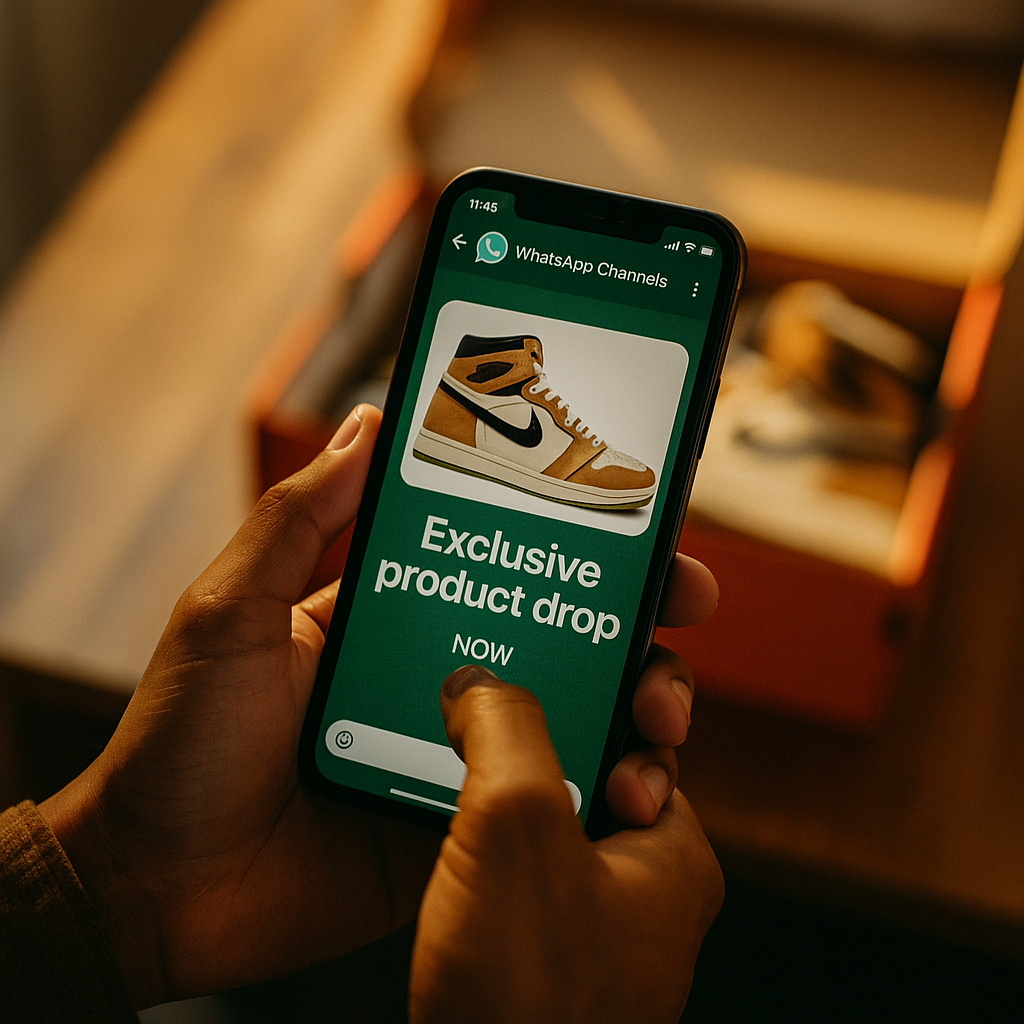
A Playbook For Using WhatsApp Channels For Exclusive Product Drops gives brands a direct, high-intent lane to announce limited releases, build anticipation, and convert fast without fighting crowded feeds. In 2025, audiences expect immediacy, clarity, and real value in exchange for attention. This guide shows how to plan, launch, and optimize drops on WhatsApp Channels with discipline, trust, and measurable results—ready to outperform your next launch?
WhatsApp Channels strategy: set goals, guardrails, and readiness
Exclusive drops succeed when the “exclusivity” is real and the execution is predictable. Start with a WhatsApp Channels strategy that defines what you will release, who it’s for, and how the drop will be fulfilled—before you publish a single update.
Choose a drop model that matches your operations. Common patterns include:
- Limited quantity drop: fixed inventory, first-come-first-served.
- Time-boxed drop: available for a short window, often paired with made-to-order or capped production.
- Tiered access drop: early access for channel followers, then wider release later.
- Bundle drop: a curated set that increases average order value and reduces decision friction.
Define success metrics up front. Treat the channel like a performance asset, not a broadcast toy. Track:
- Follower growth rate (weekly and per campaign)
- Click-through rate on drop links (use UTM parameters)
- Conversion rate and revenue per follower
- Sell-through speed (minutes/hours to sell out)
- Support load (refunds, “where is my order,” sizing questions)
Put trust and compliance first. WhatsApp Channels are one-to-many, but buyers still judge legitimacy by how you communicate. Use a consistent brand name, a clear description, and a recognizable icon. In every drop cycle, state pricing, shipping regions, estimated dispatch times, and purchase limits. If you collect any customer data off-platform, link to a privacy policy and keep consent explicit.
Operational readiness checklist:
- Inventory counts verified and synced with your storefront
- Landing page tested on mobile (speed, checkout, payment methods)
- Customer support macros prepared (delivery, returns, sizing, warranty)
- Fraud and bot protections enabled (rate limits, checkout protections)
- Plan for back-in-stock or secondary drops if demand spikes
If you can’t fulfill quickly, don’t “manufacture hype” to compensate. In 2025, a drop that ships late trains your audience to ignore the next one.
Exclusive product drops: design the offer so scarcity feels fair
Scarcity works only when it’s transparent. Build exclusive product drops that respect the audience’s time and money, and you’ll earn repeat participation.
Start with a clear value proposition. “Exclusive” can mean limited quantity, unique colorway, founder-signed units, early access, or a partner collaboration. Make it specific, verifiable, and easy to explain in one sentence.
Set rules that prevent backlash. Explicitly publish:
- Purchase limits (for example, 1–2 units per customer) to reduce reseller extraction
- Drop time zone and exact release time
- Restock policy (never, maybe, or scheduled)
- Refund/return terms (especially for made-to-order)
Engineer the landing experience to match the channel experience. WhatsApp is fast and intimate; your checkout must be equally clean. Use a single primary CTA, remove unnecessary pop-ups, and pre-answer key questions (sizing, materials, compatibility, what’s included). Add social proof only if it’s relevant and current; outdated testimonials weaken credibility.
Anticipate follow-up questions in the offer itself. If the product is technical, include a short “Who it’s for / Who it’s not for” block on the landing page. If shipping is limited, state eligible countries in the channel update so people don’t click, get excited, then hit a dead end.
Price and scarcity must align. If you charge a premium, justify it with materials, craftsmanship, warranty, or bonus inclusions. If it’s affordable, emphasize accessibility and community value rather than artificial hype.
WhatsApp Channel growth: build the list before you need it
Great drops are built in advance. WhatsApp Channel growth depends on consistent value between launches so followers stay warm and ready.
Use multiple acquisition paths. Add your channel link to:
- Your website header, product pages, and post-purchase page
- Email footer and SMS flows (as an optional add-on, not a forced swap)
- Instagram/TikTok link-in-bio and pinned posts
- Packaging inserts and QR codes at retail or events
Set expectations on day one. In your channel description and a recurring “welcome” post, state:
- What followers will get (early access, codes, behind-the-scenes)
- How often you post (for example, 2–4 updates per week)
- What you won’t do (no spam, no daily sales blasts)
Publish a value cadence that earns attention. Between drops, share content that reduces purchase risk and increases attachment:
- Short product education (care tips, sizing, setup)
- Behind-the-scenes (materials, prototypes, QA checks)
- Customer use cases (with permission and relevant context)
- Voting moments (color options, bundle choices) to increase commitment
Answer the “why WhatsApp?” question indirectly. Your followers should feel they get faster, clearer information here than on other platforms. If posts are just recycled ads, growth stalls and drop performance decays.
Practical quality rule: each week, at least half your updates should be useful even if someone doesn’t buy anything that week. That’s how you build a channel that converts repeatedly, not once.
Drop announcement templates: plan the timeline and message stack
Exclusive drops convert when you control timing, clarity, and repetition without noise. Use a structured message stack so followers never miss the essentials.
Recommended timeline (adjust to your audience):
- Teaser (5–7 days before): announce the category and the date; ask followers to turn on notifications.
- Reveal (3–4 days before): show the product, core benefit, and what makes it exclusive.
- Details (1–2 days before): price, what’s included, shipping regions, purchase limits, and a “how to buy” checklist.
- Reminder (day of, 1–3 hours before): exact time, time zone, and link will be posted here.
- Launch (at drop time): one primary link, one primary CTA, and one line on availability.
- Sell-out / last call: transparent status updates and what happens next.
Drop announcement templates you can adapt:
1) Teaser post
Something limited is coming: [Product type] drops on [Day, Date] at [Time + Time zone]. Channel followers get first access. Turn on notifications so you don’t miss the link.
2) Reveal post
Introducing [Product name]. Built for [use case]. Exclusive because: [limited quantity / unique feature / collaboration]. Full details tomorrow.
3) Details post
Drop details: Price [X]. Includes [A, B, C]. Ships to [regions]. Dispatch starts [date range]. Limit [N] per customer. Link goes live here at [time].
4) Launch post
Live now: [short link]. Limit [N] per customer. If it sells out, we’ll post status updates here.
Message discipline matters. Keep each update skimmable: one objective per post. If you need to add detail, use a second post rather than a dense paragraph that people won’t read.
Make buying frictionless. Use UTM-tagged links, pre-select variants where possible, and ensure the landing page defaults to the right region/currency. If you have multiple variants, publish a simple chooser (for example, “If you want X, choose Size A–C; if you want Y, choose Size D–F”).
WhatsApp marketing analytics: measure impact and improve each drop
WhatsApp Channels don’t give you the same analytics depth as some ad platforms, so you need a measurement plan that combines channel signals with storefront data. This is also where EEAT shows up: careful measurement reduces exaggerated claims and helps you communicate accurately.
Instrument every link. Use UTM parameters for:
- Campaign (drop name)
- Source (whatsapp)
- Medium (channel)
- Content (teaser, reveal, launch, lastcall)
Create a drop scorecard. After each launch, record:
- Followers at start vs. launch day
- Clicks per post (especially the launch post)
- Revenue, conversion rate, and AOV from WhatsApp UTMs
- Time to 25%, 50%, 90% sell-through
- Top support issues and their root causes
Optimize the bottleneck, not the vibe. Common bottlenecks and fixes:
- High clicks, low conversion: landing page mismatch, unclear shipping, slow site, limited payment options.
- Low clicks: weak hook, unclear time, link buried, too many posts, or follower fatigue.
- Fast sell-out with complaints: unclear limits, perceived unfairness, reseller activity; tighten rules and communicate them earlier.
- Support overload: missing FAQs on product page; add a “drop info” block and a post-launch status update schedule.
Run small experiments. Change one variable per drop cycle: post timing, order of information, hero image style, bundle composition, or purchase limit. If you change everything, you learn nothing.
Protect long-term trust. Don’t overstate scarcity, don’t hide delays, and don’t quietly change terms after launch. In 2025, audiences compare notes quickly across platforms. A channel that tells the truth wins future drops.
Customer trust on WhatsApp: protect your reputation during high-demand moments
Exclusive drops generate urgency, and urgency magnifies doubt. Customer trust on WhatsApp comes from proactive clarity, consistent identity, and responsive updates.
Reduce impersonation risk. Regularly remind followers:
- You will only post purchase links in the channel
- You will not ask for passwords or one-time codes
- Official support contact methods (email, help center link)
Publish a “live status” rhythm on launch day. Instead of leaving people guessing, post short updates like:
- “30% sold. Most sizes still available.”
- “Only [variant] left; others sold out.”
- “Sold out. Next steps: waitlist link / restock policy.”
Handle sell-outs with respect. A sell-out can increase demand, but only if people feel treated fairly. Offer a waitlist, announce whether there will be a second wave, and share a realistic timeline. If you can’t restock, say so clearly and offer an alternative product or future drop notification rather than vague promises.
Close the loop after purchase. Post:
- Dispatch start confirmation
- Shipping update milestones if there are delays
- Care/setup guidance to reduce returns
Bring real expertise into your updates. If your product is specialized, have a product lead or founder provide short, factual notes (materials, testing, warranty). This demonstrates first-hand experience and reduces buyer anxiety without sales pressure.
FAQs
Are WhatsApp Channels good for product drops compared to email or SMS?
They work best as a complementary “instant announcement” layer. Email is stronger for longer explanations and receipts; SMS is strong for urgent alerts. WhatsApp Channels shine when you want fast, high-visibility updates, simple CTAs, and a consistent place where followers expect drop information.
How often should I post in a WhatsApp Channel between drops?
For most brands, 2–4 updates per week is enough to stay relevant without fatigue. Increase frequency only when you have useful information (education, behind-the-scenes, or clear drop milestones). If engagement drops, reduce posting and raise content quality.
What should I include in the launch post?
One primary link, the purchase limit, and one availability line. Keep it short so it’s scannable. All extra details (shipping, what’s included, sizing) should be covered in earlier “details” posts and on the landing page.
How do I prevent resellers from buying everything?
Use strict per-customer limits, enforce them at checkout, and consider identity or payment-based limits where appropriate. Communicate rules in advance so legitimate buyers understand the fairness measures. If you see repeat abuse, tighten protections for the next drop.
How do I measure sales from WhatsApp Channels?
Use UTM-tagged links for every post and review your analytics platform for WhatsApp campaign performance. Pair this with a drop scorecard that tracks follower counts, clicks, conversion rate, revenue, and time-to-sell-through. Consistency in tagging is what makes trends reliable.
What if my drop sells out too fast and customers get angry?
Post transparent status updates, confirm whether there will be a restock, and offer a waitlist. For future drops, publish clearer purchase limits, consider staggered release waves, and improve forecasting so supply better matches demand.
Do I need special tools to run drops on WhatsApp Channels?
You can start with a standard storefront, a fast mobile landing page, and disciplined UTM tracking. As volume grows, add tools for inventory synchronization, fraud prevention, and customer support automation. The essentials are operational readiness and clear communication.
Conclusion
WhatsApp Channels can turn exclusive product drops into repeatable revenue when you combine disciplined planning, fair scarcity, and clear, timely updates. Build the channel before you need it, publish a structured message timeline, and instrument every link so each launch teaches you something. In 2025, the winning edge is trust plus speed—execute both, and your next drop will feel inevitable.
Top Influencer Marketing Agencies
The leading agencies shaping influencer marketing in 2026
Agencies ranked by campaign performance, client diversity, platform expertise, proven ROI, industry recognition, and client satisfaction. Assessed through verified case studies, reviews, and industry consultations.
Moburst

-
2

The Shelf
Boutique Beauty & Lifestyle Influencer AgencyA data-driven boutique agency specializing exclusively in beauty, wellness, and lifestyle influencer campaigns on Instagram and TikTok. Best for brands already focused on the beauty/personal care space that need curated, aesthetic-driven content.Clients: Pepsi, The Honest Company, Hims, Elf Cosmetics, Pure LeafVisit The Shelf → -
3

Audiencly
Niche Gaming & Esports Influencer AgencyA specialized agency focused exclusively on gaming and esports creators on YouTube, Twitch, and TikTok. Ideal if your campaign is 100% gaming-focused — from game launches to hardware and esports events.Clients: Epic Games, NordVPN, Ubisoft, Wargaming, Tencent GamesVisit Audiencly → -
4

Viral Nation
Global Influencer Marketing & Talent AgencyA dual talent management and marketing agency with proprietary brand safety tools and a global creator network spanning nano-influencers to celebrities across all major platforms.Clients: Meta, Activision Blizzard, Energizer, Aston Martin, WalmartVisit Viral Nation → -
5

The Influencer Marketing Factory
TikTok, Instagram & YouTube CampaignsA full-service agency with strong TikTok expertise, offering end-to-end campaign management from influencer discovery through performance reporting with a focus on platform-native content.Clients: Google, Snapchat, Universal Music, Bumble, YelpVisit TIMF → -
6

NeoReach
Enterprise Analytics & Influencer CampaignsAn enterprise-focused agency combining managed campaigns with a powerful self-service data platform for influencer search, audience analytics, and attribution modeling.Clients: Amazon, Airbnb, Netflix, Honda, The New York TimesVisit NeoReach → -
7

Ubiquitous
Creator-First Marketing PlatformA tech-driven platform combining self-service tools with managed campaign options, emphasizing speed and scalability for brands managing multiple influencer relationships.Clients: Lyft, Disney, Target, American Eagle, NetflixVisit Ubiquitous → -
8

Obviously
Scalable Enterprise Influencer CampaignsA tech-enabled agency built for high-volume campaigns, coordinating hundreds of creators simultaneously with end-to-end logistics, content rights management, and product seeding.Clients: Google, Ulta Beauty, Converse, AmazonVisit Obviously →