


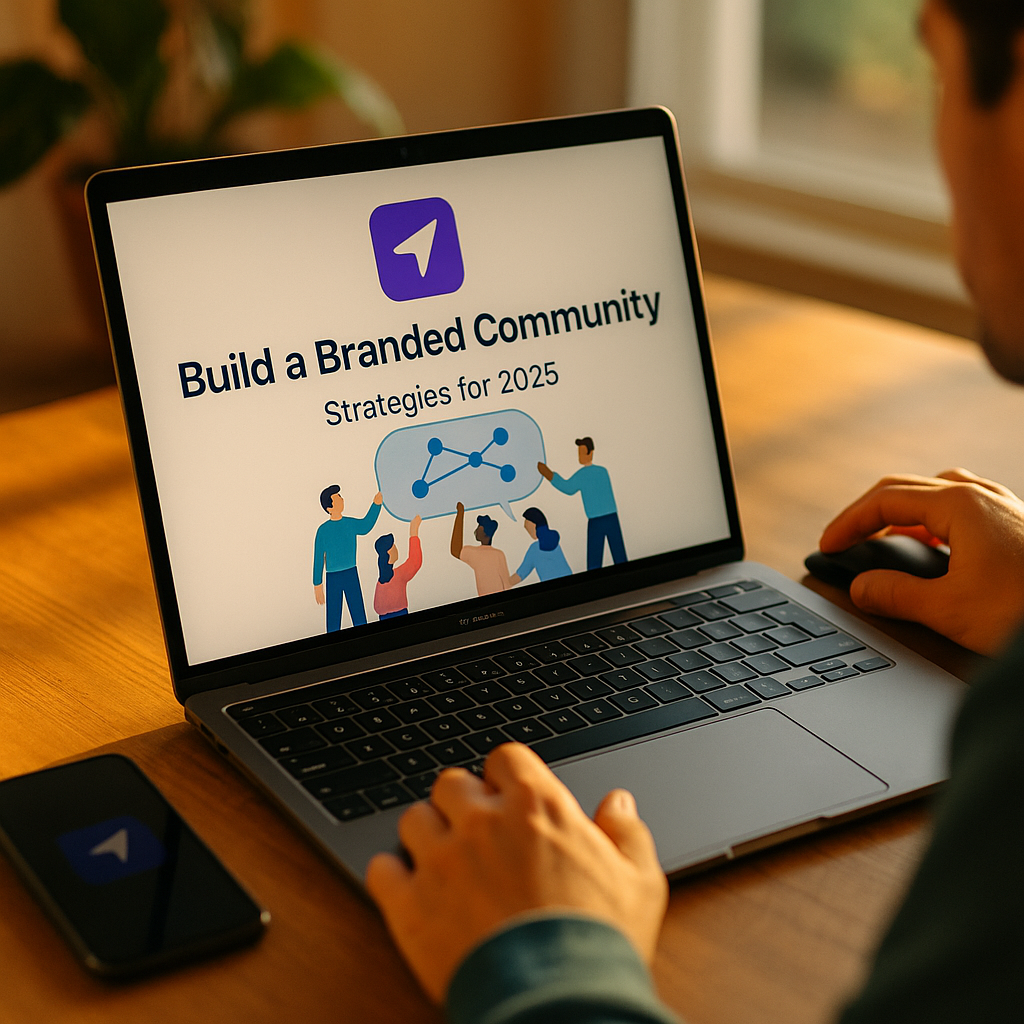
Launching a branded community on Farcaster in 2025 gives teams a direct, composable path to earn attention, learn from customers, and ship faster with public feedback loops. But decentralised social isn’t “post and pray.” You need goals, roles, incentives, and measurable rituals that feel native to Farcaster. This playbook shows what to set up, what to avoid, and how to build momentum—starting today.
Farcaster branded community strategy: define outcomes, audience, and value
A branded community works when it serves members first and the brand second. Start by writing a one-page strategy that answers three questions: Who is this for? What do they get weekly? What business outcome does it support?
Pick one primary outcome for the first 90 days. Common options include:
- Customer insight: gather structured feedback, validate positioning, and test features.
- Creator/partner pipeline: attract builders, affiliates, or collaborators and move them into a repeatable onboarding flow.
- Retention and support: reduce churn by making peer help and product education easy.
- Distribution: increase qualified reach via shares, recasts, and Frames-driven actions.
Define your member archetype (one sentence each). Example: “Independent designers who ship weekly and want peers, exposure, and tools that save time.” Avoid targeting “everyone on Farcaster.” Narrow positioning helps people self-select.
Write a value promise that is specific and deliverable. Good: “Weekly build reviews, two micro-grants per month, and early access to new templates.” Weak: “A place to connect.”
Decide how you’ll earn trust in a decentralised environment. In 2025, audiences reward transparency and consistency. Commit to:
- Public changelogs for community experiments and what you learned.
- Clear boundaries on selling, sponsorships, and data collection.
- Named owners (not “the team”) for moderation and programming.
Set measurable success criteria that match Farcaster’s dynamics. Track a mix of activity and outcomes, such as: weekly active posters, reply depth (threads with 5+ replies), unique contributors, click-through to key actions, and number of “community-sourced” product decisions shipped.
Channel setup on Farcaster: identity, structure, and governance basics
Your setup should make it obvious what the community is, where to post, and how to participate without asking for permission. Start with these building blocks:
1) Establish your onchain identity
- Brand handle: use a consistent handle across your ecosystem. Keep it short and searchable.
- Team presence: designate 2–4 visible operators (community lead, product rep, support, founder/exec sponsor). People follow people.
- Profile hygiene: clear bio, one link to a landing page, and a pinned cast explaining “what members get each week.”
2) Choose the right channel structure
- One primary channel for 90 days. Fragmentation kills early momentum.
- Optional sub-channels only when you can sustain programming (e.g., /support, /jobs, /builds).
3) Write channel rules that protect signal
Keep rules short, enforceable, and visible. Include:
- No impersonation, harassment, or doxxing.
- Promotion rules (what’s allowed, how often, where).
- How to report issues and what enforcement looks like.
4) Governance: start lightweight
Most branded communities don’t need complex governance at launch. What you do need is decision clarity:
- Who can remove spam or bad actors?
- Who approves partnerships or giveaways?
- How do you handle conflicts of interest if you run incentives?
Document decisions publicly. It signals professionalism and reduces repeated questions.
Frames and community onboarding: make joining and participating frictionless
Farcaster’s strength is composability: you can combine posts, identity, and interactive surfaces to turn attention into action. Your onboarding should answer, in under two minutes, “What do I do next?”
Create a simple onboarding path
- Pinned welcome cast: what the community is, who it’s for, weekly schedule, and one first action (“Introduce yourself with X”).
- Starter thread ritual: a weekly “New here?” thread so introductions don’t dilute ongoing discussions.
- One link destination: a lightweight page with rules, schedule, FAQs, and a contact method for support.
Use Frames to reduce drop-off
In 2025, interactive flows are table stakes for branded communities on Farcaster. Use Frames to:
- Collect preferences (role, interests, timezone) and segment follow-ups.
- Run RSVP or waitlists for events, office hours, or betas.
- Trigger rewards for completing onboarding steps (when appropriate).
- Submit feedback with a structured form instead of messy replies.
Answer the privacy question upfront
Members will ask what you store and how you use it. Provide a plain-language statement: what data you collect (if any), why, where it’s stored, who can access it, and how to opt out. This is a trust accelerant and aligns with EEAT expectations.
Design your first-week experience
New members should see activity that proves the promise. Plan three “proof” moments in the first week:
- A welcome reply from a real operator within 24 hours.
- A prompt that invites expertise (e.g., “Post your landing page, we’ll review 5”).
- A visible output (summary thread, template, shortlist of resources, or a product update) that shows the community produces value.
Community content engine: programming, rituals, and moderation that scale
A sustainable Farcaster community is built on repeatable rituals. Create a weekly schedule that members can anticipate and contribute to.
Build a simple programming calendar
- 1 discussion prompt: a question that invites opinions and examples.
- 1 showcase thread: members share work; the brand highlights 3–5 best posts.
- 1 feedback ritual: office hours, teardown thread, or “ship log” review.
- 1 recap: a weekly summary with top insights, winners, and what’s next.
Make quality easy to produce
Provide templates members can reuse: “Here’s my project / who it helps / what I need / how to contact me.” This increases signal and reduces low-context posts.
Moderation: protect the feed without over-policing
In branded spaces, members watch how you handle spam and self-promotion. Apply three moderation principles:
- Be explicit: tell people what “good promotion” looks like (e.g., value-first, transparent, relevant).
- Be consistent: enforce rules the same way for partners, friends, and new accounts.
- Be humane: warn first when possible, then escalate. Remove obvious scams immediately.
Operational roles
Assign ownership so things don’t stall:
- Community lead: calendar, rituals, recaps, member recognition.
- Moderator: spam control, conflict handling, rule enforcement.
- Product liaison: brings community feedback into roadmaps and returns with updates.
- Growth partner: collaborations, cross-channel activations, and creator relationships.
Answer the “how do I contribute?” follow-up inside your programming
End key posts with a clear CTA: “Reply with your example,” “Recast if you want a part 2,” “Drop your project for review,” or “Vote in the Frame.” Members engage more when the next action is obvious.
Incentives and token-gated experiences: rewards without attracting the wrong crowd
Incentives can accelerate participation, but they can also distort it. Use rewards to reinforce desired behavior, not to buy attention.
Start with recognition before rewards
- Member spotlights (weekly “top contributors” post).
- Opportunities (guest hosts, beta access, co-marketing).
- Status markers (roles, badges, visible acknowledgments).
When to use token gating
Token gating works best when it protects scarce value (private AMAs, early releases, limited seats), not basic conversation. If you gate too early, you shrink the learning loop. Consider gating only:
- Investor- or partner-specific briefings.
- Deep technical support for paying customers.
- High-signal workshops with limited capacity.
Design incentives to reduce farming
If you run rewards (points, NFTs, or other perks), tie them to behaviors that correlate with community health:
- Helpful replies marked by peers (qualitative signals).
- Completed onboarding steps (not just “likes”).
- Verified contributions (tutorials, bug reports, case studies).
Disclose incentive rules transparently
Publish eligibility, selection criteria, and timelines. In 2025, brands earn credibility by making reward systems legible and fair. This also lowers support overhead (“Why didn’t I qualify?”).
Community metrics and growth loops: measure what matters and iterate fast
Growth on Farcaster compounds when you build loops: a member contributes, gets recognized, invites peers, and creates more valuable content. Measurement keeps those loops honest.
Set a 30/60/90-day measurement plan
- First 30 days: activation and habit formation (new contributors, replies per thread, onboarding completion).
- 60 days: retention and depth (repeat contributors, average replies per active member, event attendance).
- 90 days: outcomes (product feedback shipped, support deflection, leads, partnerships, revenue influence where measurable).
Track leading indicators, not vanity metrics
Follower count matters less than contribution. Better signals:
- Contributor rate: % of members who post or reply weekly.
- Thread depth: how often discussions become multi-reply conversations.
- Time-to-first-response: how fast operators or peers welcome new posts.
- Return rate: how many contributors come back next week.
Create growth loops that feel native
- Collaborative programming: co-host a weekly prompt with adjacent communities and rotate ownership.
- Member-generated series: turn recurring community insights into a repeatable format.
- Frames as distribution: publish interactive polls, quizzes, or “pick the next feature” Frames that invite recasts.
Close the loop publicly
When the community influences a decision, post the result: “You asked for X, we shipped Y.” This is one of the strongest retention drivers because members see proof that participation matters.
FAQs: launching a branded community on Farcaster
How long does it take to see traction on Farcaster?
Most branded communities see early signal within 2–4 weeks if they run consistent weekly rituals and respond quickly to members. Expect real momentum after you’ve shipped at least 6–8 programming cycles and published public recaps.
Should a brand start with a channel or with individual team accounts?
Do both, but lead with people. Team accounts create trust and conversation; the channel provides a home for repeatable programming. Assign clear roles so members know who handles product, support, and partnerships.
What content performs best for branded communities on Farcaster?
Practical content that invites participation: teardown threads, build logs, “show your work” showcases, opinionated prompts with examples, and short recaps. Interactive elements like Frames increase completion rates for polls, RSVPs, and structured feedback.
How do we prevent spam and low-quality promotion?
Publish simple promotion rules, enforce them consistently, and offer a dedicated recurring thread for sharing work. Remove obvious scams immediately. Reward helpful contributions publicly so the community’s status system favors signal.
Do we need token gating to succeed?
No. Many strong branded communities stay open and use gating only for scarce experiences like workshops, customer-only support, or early access. Over-gating early reduces your feedback loop and slows growth.
What’s the best way to connect the community to business results?
Define one outcome for the first 90 days and instrument it: support deflection, qualified leads, beta signups, or product decisions shipped from community feedback. Publish “you said, we did” updates to show the link between participation and outcomes.
Launching a branded community on Farcaster works when you combine a clear promise, a simple channel structure, and weekly rituals that members can count on. Build trust with visible operators, lightweight governance, and transparent incentives. Measure contribution and retention, not vanity growth, then close feedback loops publicly. Treat the community as a product, iterate weekly, and momentum will compound.
Top Influencer Marketing Agencies
The leading agencies shaping influencer marketing in 2026
Agencies ranked by campaign performance, client diversity, platform expertise, proven ROI, industry recognition, and client satisfaction. Assessed through verified case studies, reviews, and industry consultations.
Moburst

-
2

The Shelf
Boutique Beauty & Lifestyle Influencer AgencyA data-driven boutique agency specializing exclusively in beauty, wellness, and lifestyle influencer campaigns on Instagram and TikTok. Best for brands already focused on the beauty/personal care space that need curated, aesthetic-driven content.Clients: Pepsi, The Honest Company, Hims, Elf Cosmetics, Pure LeafVisit The Shelf → -
3

Audiencly
Niche Gaming & Esports Influencer AgencyA specialized agency focused exclusively on gaming and esports creators on YouTube, Twitch, and TikTok. Ideal if your campaign is 100% gaming-focused — from game launches to hardware and esports events.Clients: Epic Games, NordVPN, Ubisoft, Wargaming, Tencent GamesVisit Audiencly → -
4

Viral Nation
Global Influencer Marketing & Talent AgencyA dual talent management and marketing agency with proprietary brand safety tools and a global creator network spanning nano-influencers to celebrities across all major platforms.Clients: Meta, Activision Blizzard, Energizer, Aston Martin, WalmartVisit Viral Nation → -
5

The Influencer Marketing Factory
TikTok, Instagram & YouTube CampaignsA full-service agency with strong TikTok expertise, offering end-to-end campaign management from influencer discovery through performance reporting with a focus on platform-native content.Clients: Google, Snapchat, Universal Music, Bumble, YelpVisit TIMF → -
6

NeoReach
Enterprise Analytics & Influencer CampaignsAn enterprise-focused agency combining managed campaigns with a powerful self-service data platform for influencer search, audience analytics, and attribution modeling.Clients: Amazon, Airbnb, Netflix, Honda, The New York TimesVisit NeoReach → -
7

Ubiquitous
Creator-First Marketing PlatformA tech-driven platform combining self-service tools with managed campaign options, emphasizing speed and scalability for brands managing multiple influencer relationships.Clients: Lyft, Disney, Target, American Eagle, NetflixVisit Ubiquitous → -
8

Obviously
Scalable Enterprise Influencer CampaignsA tech-enabled agency built for high-volume campaigns, coordinating hundreds of creators simultaneously with end-to-end logistics, content rights management, and product seeding.Clients: Google, Ulta Beauty, Converse, AmazonVisit Obviously →