


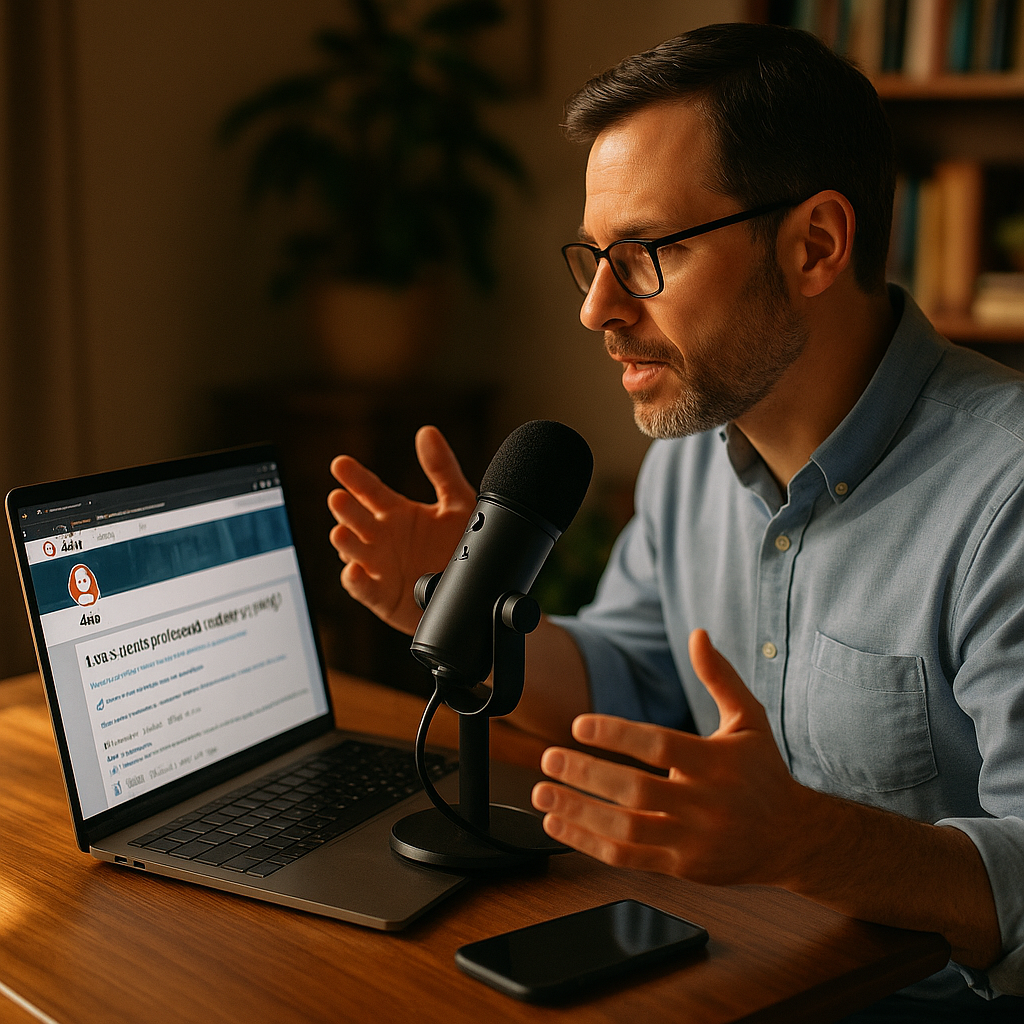
A Playbook For Technical AMA Sessions On Niche Professional Subreddits can turn deep expertise into measurable trust, qualified leads, and long-tail brand search—without sounding like marketing. In 2025, niche communities reward precision, transparency, and proof. This guide shows how to plan, run, and follow up on a technical AMA the way moderators and professionals expect. Ready to earn attention the hard way?
Clarify your goals with technical AMA strategy
A strong AMA starts with a clear outcome that matches how professional subreddits operate: they prioritize signal, not hype. Define one primary goal and two supporting goals.
- Primary goal examples: establish credibility in a specialty (e.g., MLOps, SOC2, database performance), validate a technical thesis, recruit candidates, or gather practitioner feedback on a tool or standard.
- Supporting goals: capture FAQs to improve documentation, identify integration blockers, discover language that professionals use (for better search intent alignment), or build relationships with moderators and contributors.
Then choose your success metrics before you post. For a niche professional AMA, vanity metrics mislead; use metrics tied to trust and downstream action:
- Quality indicators: number of substantive question threads, depth of follow-ups, ratio of technical to opinion questions, and moderator feedback.
- Outcome indicators: click-throughs to a technical doc, GitHub stars or issues opened, newsletter signups for release notes, or inbound DMs from qualified peers (if allowed).
Answer the follow-up question readers often have: “Is an AMA worth it if I’m not selling anything?” Yes—AMAs can compress months of relationship-building into a single day, especially when you publish answers that remain searchable and linkable inside the community.
Choose the right community using niche subreddit selection
Not every subreddit is a fit, even if it’s “professional.” Start with relevance and moderation quality rather than subscriber count. A 50k-member niche with strict moderation can outperform a 1M-member general subreddit for trust and conversions.
Use a short selection checklist:
- Scope match: Does the subreddit’s core topic match your expertise and the AMA’s promise? If you’re discussing kernel observability, a generic career forum will dilute the discussion.
- Rule compatibility: Read the rules and pinned posts. Many communities restrict self-promotion, affiliate links, job posts, or company announcements.
- Content culture: Scan top posts from the last 30–90 days. Do high-performing posts include code, benchmarks, diagrams, or case studies? If yes, your AMA must meet that bar.
- Moderator responsiveness: Message mods with a concise proposal. If you can’t get clarity beforehand, you risk removal mid-AMA.
Pro tip: avoid trying to “force” an AMA where AMAs aren’t common. Instead, propose a format that fits the community: a “postmortem Q&A,” “design review thread,” or “incident response teardown,” then explicitly invite questions.
Likely follow-up: “Should I do multiple subreddits at once?” Not for technical topics. Cross-posting can look like a campaign and splits your attention. Do one high-quality AMA, then later reference it (with permission) in adjacent communities.
Build credibility with AMA verification and proof
EEAT starts before the first question. In professional subreddits, credibility is earned through verifiable context and honest boundaries. Provide enough proof to validate your identity and expertise without compromising privacy or security.
Include in your opener:
- Who you are: role, domain, and what you’ve shipped or operated (e.g., “I run infra for a payments API at scale” or “I maintain an open-source compiler plugin”).
- What you’ll cover: 4–6 specific topics, framed as problems you can solve.
- What you won’t cover: confidential details, client names, internal incident specifics, or anything regulated.
- Verification method: follow the subreddit’s standard (modmail, a verified flair, or a proof link). If proof links are sensitive, coordinate a private verification with mods.
Use “show your work” proof inside answers. Examples that read as credible without oversharing:
- Reproducible snippets: minimal code or commands that demonstrate a concept.
- Benchmark methodology: hardware class, dataset description, and measurement approach, even if exact numbers are withheld.
- Decision rationale: trade-offs and why you rejected alternatives.
Likely follow-up: “Can I mention my product?” In niche subs, you can—if it’s clearly relevant, disclosed, and not the default answer. A good rule: provide a vendor-neutral answer first, then add, “Disclosure: I work on X; here’s how we implement it,” and keep links minimal.
Engineer engagement with AMA question seeding and structure
Technical AMAs fail when they rely on strangers to ask the “right” questions. Seed the thread with prompts that create depth and reduce repeated basics, while still welcoming newcomers.
Before launch, prepare:
- 10–15 seed questions written in the voice of the subreddit (e.g., “How do you handle schema migrations with zero downtime in a multi-tenant setup?”).
- 3 difficulty tiers: fundamentals, intermediate, expert. This prevents the thread from skewing too shallow or too esoteric.
- A quick-start glossary: define 5–8 terms you expect to use (keep it short; nobody wants a textbook).
In the post, structure matters. Use an agenda-like layout:
- One-sentence promise: “Ask me about incident triage for distributed systems, designing SLOs, and reducing cloud spend without breaking latency.”
- Timebox: state how long you’ll answer live (e.g., “I’ll be here for 3 hours, then async replies tomorrow”).
- Answer format: tell readers what to expect: concise first, then deeper details, plus references when useful.
During the AMA, keep the thread readable:
- Pin a “start here” comment (if mods allow) with your scope, disclosures, and links to neutral resources (standards, docs, papers).
- Batch similar questions by linking to your earlier answer: “I answered a close variant here; the key difference is…” This prevents fragmentation.
- Invite clarifications explicitly: “If you share your constraints (budget, team size, uptime target), I’ll tailor the recommendation.”
Likely follow-up: “How technical should I get?” As technical as the question demands, but always start with the decision and the trade-off, then add implementation details. Professionals value judgment as much as code.
Deliver high-trust answers with EEAT for Reddit
Professional subreddits can spot generic advice immediately. High-trust answers share experience, cite constraints, and separate facts from opinions. Use this response framework to stay credible under pressure:
- 1) Direct answer: state the recommendation in one or two sentences.
- 2) Context & assumptions: “This holds if you have X traffic pattern, Y compliance needs, and Z on-call maturity.”
- 3) Trade-offs: performance vs. maintainability, cost vs. latency, security vs. usability.
- 4) Implementation sketch: steps, pseudo-code, config patterns, or architecture bullets.
- 5) Validation: how to measure success (metrics, tests, rollbacks, canary strategy).
- 6) References: vendor-neutral docs, standards, or widely accepted sources; avoid link-dumps.
Handle tough moments like a senior practitioner:
- If you don’t know: say so, then offer how you’d find out. “I haven’t tested that library on ARM64; I’d validate by…”
- If you made a mistake: correct it quickly and visibly. Trust rises when you self-correct.
- If asked for confidential info: refuse cleanly and explain why, then offer a safe alternative pattern.
Keep promotional risk low:
- Disclose affiliations early and consistently.
- Prefer principles over pitches. If your tool is relevant, mention it as one option and explain criteria for choosing alternatives.
- Avoid dark patterns: no gated “DM me” funneling, no vague “we solved it with our platform.”
Likely follow-up: “Should I cite data?” Yes, when it changes the decision. In 2025, cite primary documentation, standards, and reproducible benchmarks. If you reference numbers, describe methodology and limits so the community can evaluate the claim.
Convert attention into outcomes with post-AMA follow-up
The AMA ends, but the impact compounds only if you package what you learned and keep contributing. Plan your follow-up before the AMA starts.
Within 24–72 hours:
- Publish an index comment linking to your best answers by topic. This improves readability and future discovery.
- Summarize learnings in a non-promotional recap: “Top 7 themes I heard from practitioners.”
- Fix your docs based on repeated questions. Then, if subreddit rules allow, reply with: “I updated documentation on X based on this thread.”
Within 1–2 weeks:
- Create evergreen assets from the AMA: a troubleshooting guide, a decision matrix, or a reference implementation.
- Open-source or share templates when possible (runbooks, dashboards, policy examples). Practical artifacts earn long-term trust.
- Maintain presence by answering other threads without linking back to yourself unless directly relevant.
Likely follow-up: “How do I measure SEO impact?” Track branded search lift and long-tail queries in Search Console, referral traffic from Reddit to specific technical pages, and conversions tied to documentation pages you linked. The most durable benefit is usually “trust SEO”: more people searching for your name, tool, or methodology because they saw substance.
FAQs on technical AMA sessions
- How long should a technical AMA run?
Plan 2–4 hours of live responses, then commit to asynchronous replies for at least another day. Professionals post across time zones, and the best questions often arrive after initial lurkers read your early answers.
- What should I include in the opening post?
State your credentials, scope, disclosure, timebox, and 4–6 topics you can answer deeply. Add one “How to ask” line: invite constraints, examples, and error logs (sanitized) to improve answer quality.
- Is it okay to link to my blog, GitHub, or product docs?
Yes, if the subreddit allows it and the links support your answer. Lead with a complete response first, then add one relevant link. Disclose your relationship to any resource you control.
- How do I handle hostile or bad-faith questions?
Answer the technical core briefly, avoid personal sparring, and move on. If a thread becomes disruptive, ask moderators for guidance. Staying calm and specific protects your credibility more than “winning” an argument.
- What if no one asks questions?
Use your seed questions to start threads immediately, and answer them as if a peer asked. Encourage follow-ups: “If you share your stack and constraints, I’ll tailor this.” Also verify you posted at an active time for that community.
- How do I avoid leaking sensitive information?
Prepare red lines in advance: customer identities, proprietary architecture diagrams, exact incident timelines, and security controls that increase attackability. Share patterns, not secrets, and sanitize logs and configs.
Conclusion: Technical AMAs succeed when you treat them like peer review: clear scope, verifiable expertise, structured prompts, and answers grounded in trade-offs and measurement. Choose the right subreddit, align with moderators, and publish proof-based responses that stand up to scrutiny. Then follow up with indexes and improved documentation. The takeaway: earn trust first, and outcomes follow.
Top Influencer Marketing Agencies
The leading agencies shaping influencer marketing in 2026
Agencies ranked by campaign performance, client diversity, platform expertise, proven ROI, industry recognition, and client satisfaction. Assessed through verified case studies, reviews, and industry consultations.
Moburst

-
2

The Shelf
Boutique Beauty & Lifestyle Influencer AgencyA data-driven boutique agency specializing exclusively in beauty, wellness, and lifestyle influencer campaigns on Instagram and TikTok. Best for brands already focused on the beauty/personal care space that need curated, aesthetic-driven content.Clients: Pepsi, The Honest Company, Hims, Elf Cosmetics, Pure LeafVisit The Shelf → -
3

Audiencly
Niche Gaming & Esports Influencer AgencyA specialized agency focused exclusively on gaming and esports creators on YouTube, Twitch, and TikTok. Ideal if your campaign is 100% gaming-focused — from game launches to hardware and esports events.Clients: Epic Games, NordVPN, Ubisoft, Wargaming, Tencent GamesVisit Audiencly → -
4

Viral Nation
Global Influencer Marketing & Talent AgencyA dual talent management and marketing agency with proprietary brand safety tools and a global creator network spanning nano-influencers to celebrities across all major platforms.Clients: Meta, Activision Blizzard, Energizer, Aston Martin, WalmartVisit Viral Nation → -
5

The Influencer Marketing Factory
TikTok, Instagram & YouTube CampaignsA full-service agency with strong TikTok expertise, offering end-to-end campaign management from influencer discovery through performance reporting with a focus on platform-native content.Clients: Google, Snapchat, Universal Music, Bumble, YelpVisit TIMF → -
6

NeoReach
Enterprise Analytics & Influencer CampaignsAn enterprise-focused agency combining managed campaigns with a powerful self-service data platform for influencer search, audience analytics, and attribution modeling.Clients: Amazon, Airbnb, Netflix, Honda, The New York TimesVisit NeoReach → -
7

Ubiquitous
Creator-First Marketing PlatformA tech-driven platform combining self-service tools with managed campaign options, emphasizing speed and scalability for brands managing multiple influencer relationships.Clients: Lyft, Disney, Target, American Eagle, NetflixVisit Ubiquitous → -
8

Obviously
Scalable Enterprise Influencer CampaignsA tech-enabled agency built for high-volume campaigns, coordinating hundreds of creators simultaneously with end-to-end logistics, content rights management, and product seeding.Clients: Google, Ulta Beauty, Converse, AmazonVisit Obviously →