


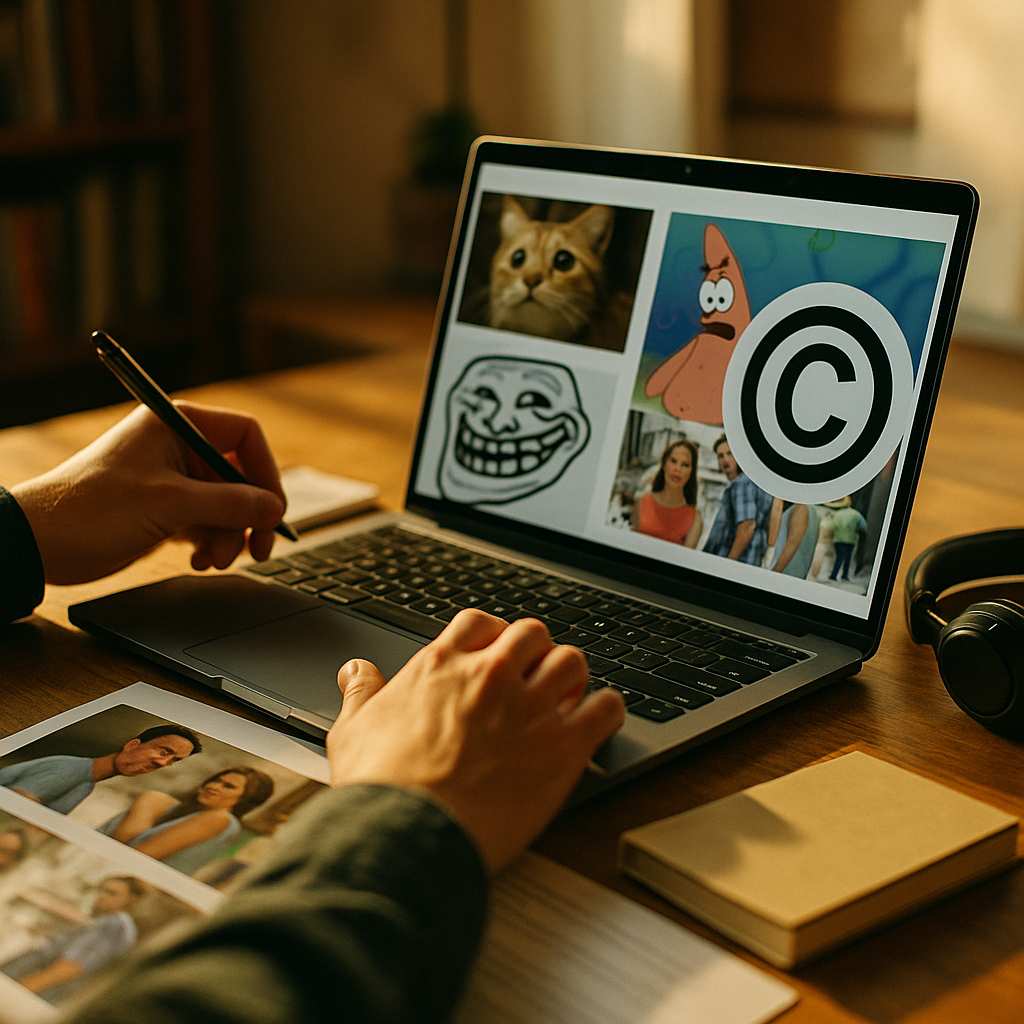
Navigating digital copyright law in today’s remix-and-meme ecosystem can feel like walking a tightrope: one post goes viral, and suddenly questions about permission, ownership, and takedowns follow. In 2025, creators, brands, and everyday users share culture at speed, often without legal clarity. This guide explains the rules, the risks, and practical safeguards—before your next upload becomes a test case.
Digital copyright law basics for memes and remixes
Copyright protects original creative expression fixed in a tangible medium—songs, films, photos, illustrations, writing, choreography captured on video, and more. Online culture often treats media as “community property,” but copyright law does not. The default rule is simple: the copyright owner controls copying, distribution, public display, public performance, and the creation of derivative works.
Memes and remixes typically implicate multiple rights at once. A single meme might copy an image (visual copyright), display it publicly (public display right), and add text that creates a new derivative work (adaptation right). A remix could involve the musical composition, the sound recording, and sometimes the audiovisual footage if a clip is used. If you use a recognizable person, you may also trigger non-copyright rules like publicity rights or defamation, depending on context.
Ownership is often layered. A film still may be owned by a studio; a photo may be owned by a photographer; a track may involve multiple publishers plus a label. Viral formats also create confusion: even if a template is “everywhere,” that does not mean it is free to use. What changes legally is not popularity, but whether a specific use is licensed, falls under an exception (like fair use), or is de minimis (so trivial it may not be actionable), which is highly fact-specific.
Practical takeaway: before posting, identify what you borrowed (image, audio, clip), who likely owns it, and whether your use adds new meaning or simply repackages the original. That assessment determines your risk.
Fair use in remix culture: what actually matters
Many viral posts rely on fair use (or similar exceptions outside the U.S.). Fair use is not a magic phrase and not guaranteed protection. It is a multi-factor test that depends on context, and platforms can still remove content based on complaints even if you believe you are right.
Four factors often decide the outcome:
- Purpose and character of the use: Transformative uses that add new meaning, commentary, criticism, or parody generally fare better than uses that merely decorate or entertain without change. Commercial intent can weigh against you, but it is not automatically disqualifying.
- Nature of the copyrighted work: Using highly creative works (films, songs, art) is usually riskier than using factual works, though this factor rarely decides cases alone.
- Amount and substantiality: Using only what you need to make the point supports fair use. Taking the “heart” of a work—like the most iconic chorus or the most recognizable scene—can weigh against fair use even if the clip is short.
- Effect on the market: If your post substitutes for the original or harms licensing markets the owner reasonably exploits, risk increases. If it drives interest without substituting, this factor can favor fair use.
Parody vs. satire is a key distinction. Parody targets the original work itself and often needs to “conjure up” the original to make its point, which can support fair use. Satire targets something else (society, politics, a celebrity) using the work as a vehicle, which can be harder to justify if the borrowed material isn’t necessary to the commentary.
Answering the question creators ask next: “How much can I use?” There is no safe number of seconds or percentage. A two-second audio hook can be the heart of a song. A single frame can be a protected photo. Use the minimum needed, and be able to articulate your creative purpose in one sentence. If you cannot explain what new meaning you added, you are likely relying on luck rather than law.
DMCA takedown process and platform enforcement in 2025
Even when the law is on your side, the DMCA takedown process and platform policies can decide what stays online. Major platforms use automated content identification tools (for music, video, and sometimes images) plus notice-and-takedown workflows. The result is a two-track reality: legal standards on paper and platform enforcement at scale.
How a typical takedown unfolds:
- Claim or match: Automated systems flag your upload, or a rights holder submits a complaint.
- Removal or restriction: Content may be muted, blocked, monetized by the claimant, or taken down.
- Dispute option: Many platforms allow an in-app dispute. This is not always the same as a formal legal counter-notice.
- Counter-notice (when applicable): A formal DMCA counter-notice typically requires your contact details and a statement under penalty of perjury. It can restore content unless the claimant files a lawsuit within the statutory window.
- Account consequences: Repeated claims can lead to strikes, feature limits, or termination under repeat-infringer policies.
What creators and brands should do before disputing: Preserve evidence (project files, licenses, correspondence), document your intent (commentary, critique, parody), and confirm what you actually used (exact timestamps, source files). If you used third-party music, check whether your edit created a new derivative track beyond platform-licensed libraries. If the post is business-critical, consult qualified counsel before submitting a counter-notice, because it can escalate the dispute.
Answering the next likely question: “If my content is fair use, can the platform still remove it?” Yes. Platforms are private services with their own terms. The legal system may ultimately vindicate you, but the practical outcome can still be removal, demonetization, or regional blocks.
Licensing strategies for creators and brands using user-generated content
If your goal is predictable publishing rather than legal brinkmanship, licensing is your strongest tool. Licensing also supports EEAT: it demonstrates responsible sourcing, reduces disputes, and protects your reputation when content scales.
Common licensing paths that work in meme and remix workflows:
- Use platform-cleared music libraries: Many platforms offer pre-cleared catalogs for short-form video. Verify whether the license covers business accounts, ads, and off-platform reposting.
- Commission original assets: Custom photos, illustrations, and sound design eliminate most clearance issues and strengthen brand distinctiveness.
- Clear rights directly: For music, this may mean syncing rights (composition) and master rights (recording). For video, it can mean clip licenses plus talent releases where needed.
- Use Creative Commons carefully: Confirm the exact license type and obligations (attribution, non-commercial limits, share-alike requirements, no-derivatives restrictions). Maintain screenshots or saved license pages as proof.
- Get permission for UGC: If you want to repost a user’s meme or remix, get written consent. Also ask whether they used third-party material—otherwise you may inherit their risk.
Brands face extra exposure. If you monetize a meme (ads, product promotion, sponsorship), rightsholders are more likely to challenge it, and fair use arguments can be weaker depending on how “transformative” the ad execution is. Build a clearance checklist into your campaign workflow: asset source, rights owner, license scope (platforms, territories, duration), and documentation storage.
Answering the follow-up: “Is attribution enough?” No. Attribution does not replace permission. It may satisfy a Creative Commons condition, but it does not neutralize infringement claims for copyrighted works used without a license or valid exception.
Transformative use, parody, and commentary: practical tests for viral posts
Creators need fast, repeatable decision tools. The most useful concept is transformative use: did you add new expression, meaning, or message, or did you simply repackage the original?
Run these practical tests before posting:
- The “new point” test: Can you clearly state what you are saying that the original did not? Example: critiquing a film trope using a short clip to illustrate the critique.
- The “necessity” test: Did you use only what was needed to make that point? If the same joke works with a less recognizable portion, reduce the borrowed material.
- The “substitution” test: Would someone watch/listen to your post instead of the original? If yes, your use looks more like market substitution.
- The “context shift” test: Did you recontextualize the material in a way that changes meaning (commentary, critique, parody), or is it background decoration?
- The “commercial framing” test: Are you using the content to sell, endorse, or drive paid conversions? If yes, increase clearance efforts or make your transformation unmistakable.
Memes with minimal edits are the riskiest. A caption slapped onto a copyrighted photo may or may not be transformative, depending on whether the text comments on the photo itself or uses it as a generic reaction image. If the humor relies on the copyrighted image’s creative choices (composition, expression, lighting), you are leaning heavily on someone else’s work.
Remixes with recognizable audio fingerprints get flagged. Automated systems often detect small segments of popular recordings. If your creative goal is musical transformation, consider replacing the underlying master recording with a re-recording (where feasible) and licensing the composition, or use cleared stems and sample packs. Keep in mind that re-recording does not clear the composition by itself.
International copyright issues and best-practice compliance for meme pages
Viral media crosses borders instantly, but copyright rules do not. International copyright issues matter in 2025 because your content can be viewed, monetized, or challenged in multiple jurisdictions, and platform actions may apply globally or regionally.
Key realities for global posting:
- Fair use is not universal: Some countries rely on narrower “fair dealing” exceptions tied to specific purposes (such as criticism, review, news reporting, parody). Your strongest defense in one jurisdiction may not exist in another.
- Moral rights can be stronger outside the U.S.: In some places, authors may assert rights related to attribution and integrity of the work, potentially affecting certain edits or distortions.
- Quotation and parody exceptions vary: What counts as parody, and how much you can take, can differ significantly.
- Choice of law can be complex: Claims may arise where the content is accessed, where the platform operates, or where the rightsholder is based.
Operational best practices for meme pages and creator teams:
- Adopt a rights-triage workflow: Tag posts by source type (original, licensed, public domain, Creative Commons, third-party unknown), and reserve high-risk sources for internal review.
- Keep a clearance folder: Store licenses, screenshots of permissions, links, and date-stamped notes describing the intended commentary or parody.
- Use consistent disclaimers carefully: “No infringement intended” does not create a legal defense, but clear labeling of parody/commentary can help communicate purpose and reduce confusion.
- Separate editorial and advertising: If you run sponsorships, treat branded posts as higher-risk and apply stricter clearance and approvals.
- Plan for takedowns: Maintain templates, backup edits, and alternate assets so you can pivot without losing momentum.
Answering the next question: “Can I rely on public domain?” Yes, but verify it. Public domain status depends on jurisdiction and the specific asset. A public-domain painting can be photographed, and that photo may be protected even if the painting is not. Use reputable sources and keep documentation.
FAQs
Is a meme automatically fair use if it’s non-commercial?
No. Non-commercial use can help, but it does not automatically make a use fair. Courts and platforms look at transformation, the amount taken, and market harm. A non-commercial post can still infringe if it copies a substantial, expressive part of a work without adding new meaning.
Can I use a copyrighted image if I add text over it?
Sometimes, but not automatically. The key question is whether the text transforms the meaning of the original image (commentary, critique, parody) and uses only what is necessary. If the image is just a backdrop for an unrelated joke, the risk is higher.
Are “reaction GIFs” legal?
They can be, but many are unlicensed derivatives of film or TV clips. Some may qualify as fair use depending on context and purpose, but there is no blanket rule. Expect higher takedown risk because clips are easily detectable and often owned by sophisticated rightsholders.
What’s the difference between the sound recording and the composition in music?
The composition is the underlying song (melody/lyrics) usually controlled by publishers and songwriters. The sound recording is a specific recorded performance controlled by a label or recording owner. A remix that uses the original audio typically implicates both.
If I buy a stock photo, can I use it in memes?
Only if the license allows that use. Some stock licenses restrict sensitive uses, merchandising, or uses that imply endorsement. Review the license scope (commercial use, redistribution, derivative works) and keep the invoice and license terms.
What should I do if I receive a copyright claim or takedown?
First, don’t repost the same file repeatedly. Review what material triggered the claim, gather documentation (licenses, project files), and evaluate whether your use is transformative. Use the platform’s dispute tools if appropriate, and consider professional legal advice before filing a formal counter-notice.
Does crediting the artist protect me from a claim?
No. Credit is respectful and sometimes required by certain licenses, but it does not substitute for permission. Without a license or a valid exception, you can still face takedowns or legal demands.
Can brands safely participate in meme trends?
Yes, but brands should treat meme participation as a rights-managed activity. Use original or licensed assets, avoid unlicensed audio and film stills in ads, document permissions for UGC reposts, and build a fast clearance checklist into campaign approvals.
Digital remix and meme culture rewards speed, but copyright law rewards clarity. In 2025, the safest path is to post with intent: transform what you borrow, use only what you need, and document your rationale and permissions. Expect platform enforcement even when you have a strong argument. If a post must stay up for business reasons, license it. Create boldly—publish responsibly.
Top Influencer Marketing Agencies
The leading agencies shaping influencer marketing in 2026
Agencies ranked by campaign performance, client diversity, platform expertise, proven ROI, industry recognition, and client satisfaction. Assessed through verified case studies, reviews, and industry consultations.
Moburst

-
2

The Shelf
Boutique Beauty & Lifestyle Influencer AgencyA data-driven boutique agency specializing exclusively in beauty, wellness, and lifestyle influencer campaigns on Instagram and TikTok. Best for brands already focused on the beauty/personal care space that need curated, aesthetic-driven content.Clients: Pepsi, The Honest Company, Hims, Elf Cosmetics, Pure LeafVisit The Shelf → -
3

Audiencly
Niche Gaming & Esports Influencer AgencyA specialized agency focused exclusively on gaming and esports creators on YouTube, Twitch, and TikTok. Ideal if your campaign is 100% gaming-focused — from game launches to hardware and esports events.Clients: Epic Games, NordVPN, Ubisoft, Wargaming, Tencent GamesVisit Audiencly → -
4

Viral Nation
Global Influencer Marketing & Talent AgencyA dual talent management and marketing agency with proprietary brand safety tools and a global creator network spanning nano-influencers to celebrities across all major platforms.Clients: Meta, Activision Blizzard, Energizer, Aston Martin, WalmartVisit Viral Nation → -
5

The Influencer Marketing Factory
TikTok, Instagram & YouTube CampaignsA full-service agency with strong TikTok expertise, offering end-to-end campaign management from influencer discovery through performance reporting with a focus on platform-native content.Clients: Google, Snapchat, Universal Music, Bumble, YelpVisit TIMF → -
6

NeoReach
Enterprise Analytics & Influencer CampaignsAn enterprise-focused agency combining managed campaigns with a powerful self-service data platform for influencer search, audience analytics, and attribution modeling.Clients: Amazon, Airbnb, Netflix, Honda, The New York TimesVisit NeoReach → -
7

Ubiquitous
Creator-First Marketing PlatformA tech-driven platform combining self-service tools with managed campaign options, emphasizing speed and scalability for brands managing multiple influencer relationships.Clients: Lyft, Disney, Target, American Eagle, NetflixVisit Ubiquitous → -
8

Obviously
Scalable Enterprise Influencer CampaignsA tech-enabled agency built for high-volume campaigns, coordinating hundreds of creators simultaneously with end-to-end logistics, content rights management, and product seeding.Clients: Google, Ulta Beauty, Converse, AmazonVisit Obviously →