


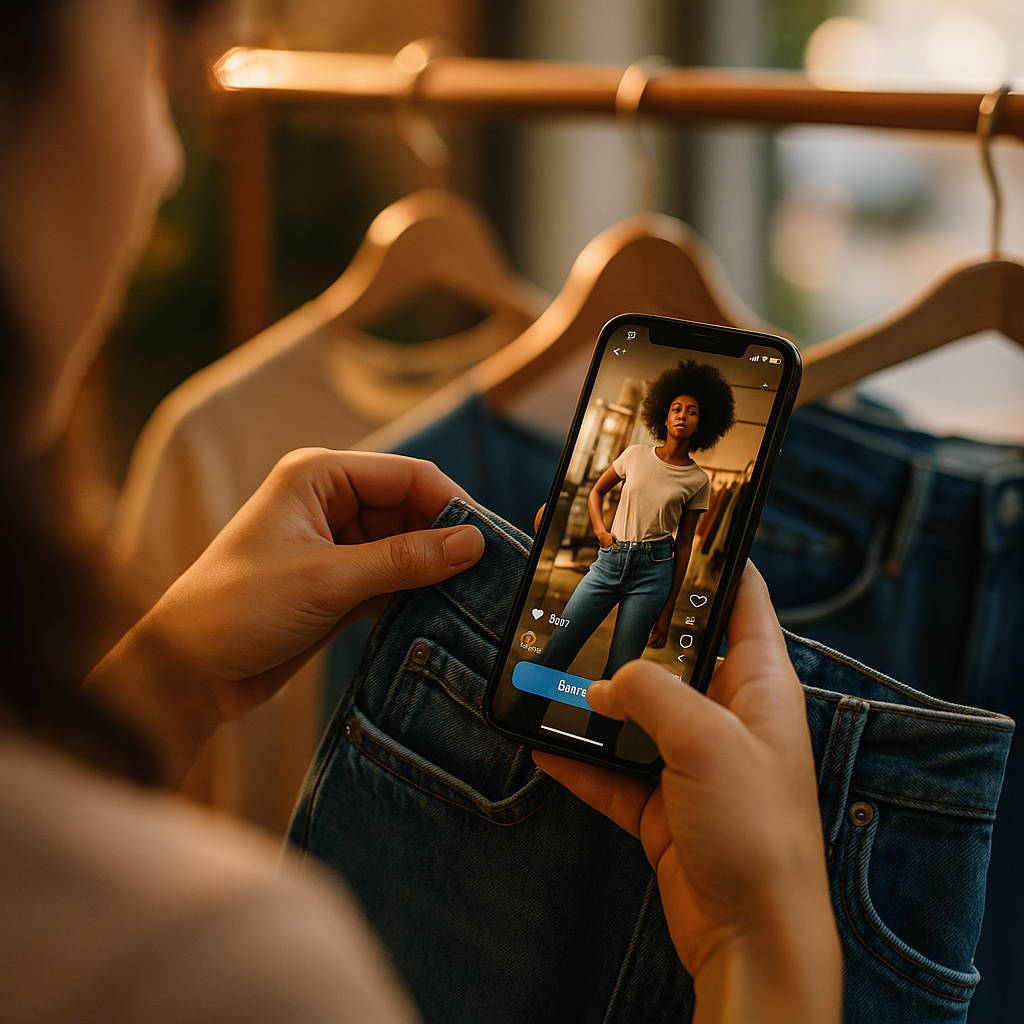
The evolution of social commerce has moved far beyond clickable product tags and curated feeds. In 2025, people don’t just discover items on social platforms; they evaluate, personalize, and buy within the same session, often without leaving the app. Brands that treat social as a full-funnel experience now win attention and trust. The question is: are you building for discovery, or for direct experience?
Social commerce discovery: How attention turns into intent
Discovery is still the entry point, but it has matured into a highly structured layer of demand creation. In 2025, social platforms shape what consumers consider “worth buying” through short-form video, creator storytelling, social search, and algorithmic recommendations. That matters because the buyer journey is no longer linear; it’s a loop where discovery, evaluation, and purchase can happen repeatedly in minutes.
What changed is the quality of discovery. People now expect relevance, context, and immediacy:
- Social search behavior has expanded. Users search with natural language queries like “best running shoes for flat feet” and expect creator-led comparisons and real-world demos.
- Video-first evaluation reduces uncertainty. A 15-second clip can answer sizing, use case, and “will this work for me?” faster than a product page.
- Community cues (comments, saves, duets, stitches, reposts) act as social proof, signaling what’s trending and why.
To convert discovery into intent, brands need to design content that anticipates follow-up questions. If a user sees a product in a video, they immediately want price, variants, shipping speed, return policy, and authenticity reassurance. If that information is missing, the algorithm may deliver attention, but the experience won’t convert.
Actionable approach: build “discovery assets” as modular answers. Pair hero videos with pinned comments, short FAQs in captions, and creator cut-downs focused on one question each (fit, durability, set-up time, or results). This reduces friction before a shopper ever touches a checkout.
In-app checkout: From friction to near-instant purchases
The most important leap in social commerce is transactional: the journey no longer needs to leave the platform. In-app checkout, native product catalogs, and shop surfaces have turned social from a referrer into a point of sale. The practical effect is fewer steps, fewer page loads, and fewer reasons to abandon.
But in-app checkout is not just about speed; it’s about confidence. Shoppers hesitate when they don’t know whether a seller is legitimate, whether sizing is accurate, or whether returns will be painful. Platforms and merchants now compete on trust signals as much as on convenience.
For brands, the operational implications are significant:
- Catalog accuracy becomes a revenue driver. Incorrect titles, missing variants, or mismatched imagery directly create checkout drop-off.
- Fulfillment expectations are visible earlier. Delivery windows and shipping costs must be clear on the product detail view, not buried later.
- Customer support must be immediate. In-app messaging and automated responses reduce hesitation at the decision moment.
Many teams ask whether in-app checkout “cannibalizes” their website. In practice, it typically adds incremental revenue from shoppers who would not have clicked out, while also creating a new feedback loop of real-time demand signals. The smarter question is whether your margins, fulfillment, and support can sustain the volume spikes that social can generate overnight.
Actionable approach: treat in-app checkout as a separate storefront with its own merchandising rules. Maintain a lean set of hero SKUs, ensure variant naming is shopper-friendly, and set clear service-level expectations. When inventory is low, update availability quickly to avoid negative reviews that harm future reach.
Creator marketing: Trust, proof, and product education at scale
Creators have evolved from “influencers” into performance partners who provide education, credibility, and creative testing. In 2025, creator marketing works best when brands respect two truths: audiences trust creators who stay consistent with their taste, and creators convert when they can demonstrate outcomes.
This is where Google’s EEAT principles map cleanly to social commerce:
- Experience: creators show real use, unboxing, comparisons, and long-term updates that answer “does it actually work?”
- Expertise: niche creators (fitness coaches, estheticians, tech reviewers, home organizers) explain trade-offs and correct usage.
- Authoritativeness: credible partners cite standards, specs, or measurable results and are consistent across platforms.
- Trust: transparent sponsorship disclosures, honest pros/cons, and clear policies reduce skepticism.
Brands often struggle with how much control to exert. Over-scripted creator content tends to underperform because it feels like an ad rather than guidance. The solution is to standardize facts, not scripts: provide accurate claims, safety guidelines, ingredients/specs, warranty and returns details, and a list of common objections to address.
Answering follow-up questions inside creator content increases conversion:
- “What size should I get?” Include a sizing reference and who it fits.
- “Is it worth it?” Provide durability cues, warranty length, or cost-per-use framing.
- “What if I don’t like it?” State return windows and how refunds work.
Actionable approach: build a creator briefing kit with verified product claims, do-not-say guidance, and proof assets (lab tests, certifications, before/after methodology, user results). Then let creators choose the story format that matches their audience.
Live shopping: Real-time demonstrations that remove doubt
Live shopping compresses the funnel by combining demonstration, Q&A, social proof, and limited-time offers into one experience. It succeeds when the live format is treated as interactive retail, not as a long advertisement. The best sessions resemble a helpful store associate: show the product, explain options, answer objections, and make checkout simple.
In 2025, live shopping tends to work best for categories with high uncertainty or high option complexity, such as beauty, apparel, gadgets, home tools, and food. The reason is straightforward: live video reduces the “unknowns” that block conversion.
To make live commerce effective, design it around shopper questions:
- Demonstrate outcomes: show the product in use, not just held up to camera.
- Compare variants: side-by-side differences help shoppers choose quickly.
- Handle objections live: address price, durability, compatibility, and setup time.
- Show social proof responsibly: highlight real reviews and common feedback, not exaggerated claims.
Teams also ask how to avoid live fatigue. The answer is to treat lives as episodic programming with clear themes (e.g., “starter kit,” “gift guide,” “problem/solution,” “new drop”), consistent hosts, and a tight agenda. Shorter, more focused lives can outperform long sessions when they reduce time-to-answer for key questions.
Actionable approach: create a run-of-show that includes: opening value proposition, top 3 questions, demo segments, comparison table spoken aloud, return policy reminder, and a final recap with direct calls to action. Ensure a moderator is present to triage questions and pin answers.
Personalized shopping experience: AI-driven relevance and conversational selling
Social commerce is shifting from “broadcast shopping” to individualized experiences. In 2025, personalization is not limited to recommended videos; it extends to product suggestions, bundles, sizing guidance, and conversational assistance inside social apps. This is where discovery becomes a direct experience: the platform can anticipate what a shopper needs and guide them to the right choice.
Personalization succeeds when it respects privacy and feels helpful rather than intrusive. Shoppers respond well to:
- Contextual recommendations: “Based on what you saved” or “pairs well with” suggestions.
- Guided selling: quizzes and prompts that translate needs into the right SKU (skin type, room size, device compatibility).
- Smart bundles: kits that reduce decision fatigue and improve perceived value.
- Conversational commerce: messaging flows that answer shipping, returns, availability, and usage questions instantly.
This raises a common follow-up: how do you personalize without creating compliance risk? The practical approach is to focus on first-party signals (what someone viewed, saved, asked, or bought) and keep personalization transparent. Make it easy to adjust preferences and avoid sensitive targeting claims. Your goal is to reduce friction, not to imply knowledge that feels uncomfortable.
Actionable approach: map the top 20 pre-purchase questions and build automated answers that escalate to a human when needed. Pair that with product recommendation logic that prioritizes fit and satisfaction over maximizing cart value. Long-term trust produces more revenue than short-term upsells.
Social commerce strategy: Measurement, governance, and long-term trust
As social commerce becomes a full sales channel, brands need operational discipline. Strong performance comes from a strategy that connects content, commerce, and customer experience into one measurable system.
Start with measurement that reflects reality. Platform-reported metrics can be helpful, but they should be reconciled with your backend data. Focus on:
- Incremental revenue: measure lift versus baseline, not only last-click attribution.
- Contribution margin: include platform fees, creator costs, returns, and customer support time.
- Customer lifetime value: track repeat purchase rates and cohort performance from social buyers.
- Return reasons: use them as a content roadmap (fit, expectations, quality, shipping).
Governance is equally important. Social commerce can scale quickly, which amplifies risk if policies are unclear. Establish guardrails for claims, pricing integrity, creator disclosures, and customer support response times. Use a single source of truth for product facts and ensure every storefront, creator, and live host is aligned.
To align with EEAT, be explicit about what you can prove. Avoid vague superlatives, make substantiated claims, and provide clear policies. If you sell products in regulated categories, publish safety guidance and usage disclaimers in language shoppers understand.
Actionable approach: implement a weekly “commerce content review” that includes marketing, merchandising, support, and compliance. Review top-performing posts, top objections in comments, refund drivers, and out-of-stock issues. Turn those insights into new assets that answer questions earlier in the journey.
FAQs: The Evolution Of Social Commerce From Discovery To Direct Experience
-
What is social commerce in 2025?
Social commerce is the ability to discover, evaluate, and buy products directly within social platforms using native shops, product tags, messaging, and in-app checkout. It blends content, community, and transactions into one experience. -
How is social commerce different from influencer marketing?
Influencer or creator marketing is a traffic and trust driver. Social commerce is the full system that includes storefronts, product catalogs, checkout, customer service, and measurement. Creators can power social commerce, but they are only one component. -
Does in-app checkout reduce sales on my website?
It can shift some purchases, but it often captures incremental buyers who would not click out. The key is to measure profitability and lifetime value, not only channel attribution, and to ensure your in-app storefront is accurate and well-supported. -
What content converts best for social commerce?
Content that demonstrates real use and answers objections converts best: comparisons, tutorials, “what I’d buy again,” fit and sizing guidance, and problem/solution formats. Strong conversion content reduces uncertainty and makes next steps obvious. -
How do I build trust quickly on social platforms?
Use transparent disclosures, verified product claims, visible policies (shipping, returns, warranty), authentic reviews, and responsive support. Show the product in real contexts, and avoid exaggerated promises that create refunds and negative comments. -
What KPIs matter most for social commerce?
Track incremental revenue, contribution margin, return rate and reasons, repeat purchase rates, customer support response times, and product page-to-checkout conversion. Combine platform metrics with backend data for reliable decision-making.
Social commerce now rewards brands that build complete experiences, not just attention. Discovery still matters, but the winners in 2025 connect content to seamless checkout, trustworthy creators, live demonstrations, and personalized guidance that answers questions in real time. Treat social as a storefront with service standards, clear policies, and measurable profitability. Build for direct experience, and customers will buy with confidence.
Top Influencer Marketing Agencies
The leading agencies shaping influencer marketing in 2026
Agencies ranked by campaign performance, client diversity, platform expertise, proven ROI, industry recognition, and client satisfaction. Assessed through verified case studies, reviews, and industry consultations.
Moburst

-
2

The Shelf
Boutique Beauty & Lifestyle Influencer AgencyA data-driven boutique agency specializing exclusively in beauty, wellness, and lifestyle influencer campaigns on Instagram and TikTok. Best for brands already focused on the beauty/personal care space that need curated, aesthetic-driven content.Clients: Pepsi, The Honest Company, Hims, Elf Cosmetics, Pure LeafVisit The Shelf → -
3

Audiencly
Niche Gaming & Esports Influencer AgencyA specialized agency focused exclusively on gaming and esports creators on YouTube, Twitch, and TikTok. Ideal if your campaign is 100% gaming-focused — from game launches to hardware and esports events.Clients: Epic Games, NordVPN, Ubisoft, Wargaming, Tencent GamesVisit Audiencly → -
4

Viral Nation
Global Influencer Marketing & Talent AgencyA dual talent management and marketing agency with proprietary brand safety tools and a global creator network spanning nano-influencers to celebrities across all major platforms.Clients: Meta, Activision Blizzard, Energizer, Aston Martin, WalmartVisit Viral Nation → -
5

The Influencer Marketing Factory
TikTok, Instagram & YouTube CampaignsA full-service agency with strong TikTok expertise, offering end-to-end campaign management from influencer discovery through performance reporting with a focus on platform-native content.Clients: Google, Snapchat, Universal Music, Bumble, YelpVisit TIMF → -
6

NeoReach
Enterprise Analytics & Influencer CampaignsAn enterprise-focused agency combining managed campaigns with a powerful self-service data platform for influencer search, audience analytics, and attribution modeling.Clients: Amazon, Airbnb, Netflix, Honda, The New York TimesVisit NeoReach → -
7

Ubiquitous
Creator-First Marketing PlatformA tech-driven platform combining self-service tools with managed campaign options, emphasizing speed and scalability for brands managing multiple influencer relationships.Clients: Lyft, Disney, Target, American Eagle, NetflixVisit Ubiquitous → -
8

Obviously
Scalable Enterprise Influencer CampaignsA tech-enabled agency built for high-volume campaigns, coordinating hundreds of creators simultaneously with end-to-end logistics, content rights management, and product seeding.Clients: Google, Ulta Beauty, Converse, AmazonVisit Obviously →