


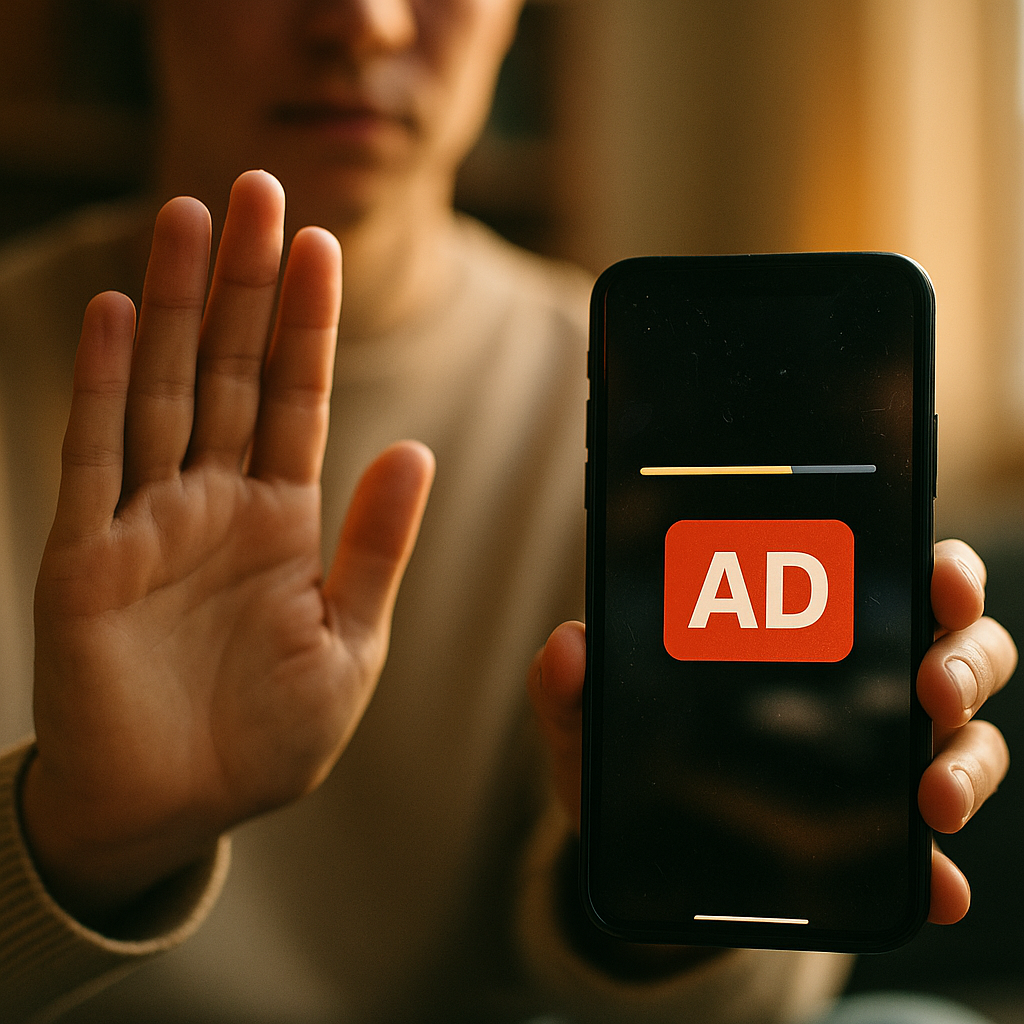
Digital minimalism is reshaping how people use smartphones: fewer apps, fewer notifications, and more intentional screen time. This shift changes what “attention” means for advertisers, especially in mobile formats designed around continuous scrolling. As users tighten boundaries, ad completion rates become harder to earn—and easier to lose. What does this mean for performance, creative, and measurement in 2025?
Digital minimalism trends and user attention (secondary keyword: digital minimalism trends)
Digital minimalism has moved from a niche lifestyle choice to a mainstream behavioral pattern. In 2025, it shows up in everyday decisions: turning off nonessential notifications, limiting social feeds, deleting rarely used apps, and choosing “focus mode” defaults. The common thread is not rejecting technology—it’s demanding clearer value for every tap, swipe, and second of attention.
From an advertising standpoint, these digital minimalism trends reduce the amount of passive, unstructured browsing that many mobile ad formats historically relied on. Users who once tolerated autoplay video while scrolling now often take active steps to prevent it: enabling data saver settings, restricting background app activity, or avoiding ad-heavy environments altogether. Even when they do engage, they move with purpose—opening an app, completing a task, and leaving—rather than drifting through content.
This creates a new baseline: attention must be earned quickly and respectfully. Ads that interrupt, repeat, or obscure content are more likely to be dismissed immediately, reducing the likelihood of reaching key milestones such as 25%, 50%, 75%, or 100% video completion. Conversely, ads that align with intent—helpful, relevant, and fast—can still achieve strong completion because minimalists are not anti-brand; they are anti-waste.
What readers usually ask next: does this mean mobile advertising is “dying”? No. It means it is becoming more selective. The best-performing campaigns increasingly behave like useful content rather than forced interruptions.
Mobile ad completion rates in 2025: what’s changing (secondary keyword: mobile ad completion rates)
Mobile ad completion rates reflect how often users finish an ad experience—most commonly a video ad, rewarded ad, or interactive unit. In 2025, completion is shaped less by raw reach and more by the quality of the moment: user mindset, context, and perceived control.
Digital minimalism affects completion in several concrete ways:
- Shorter sessions: Less time in feed-based apps means fewer opportunities to “wait out” a video ad. If an ad doesn’t land quickly, users exit.
- Lower tolerance for friction: Extra seconds to close a unit, confusing countdowns, or heavy load times can trigger abandonment.
- Stronger preference for control: Users respond better to formats that clearly indicate duration, offer skip options, or provide a benefit for viewing.
- Higher scrutiny of relevance: Minimalists often curate their digital environment. An irrelevant ad can feel like clutter and be rejected instantly.
At the same time, there are countervailing forces that can improve completion when handled well. If a user is in a high-intent environment—searching for a solution, using a utility app, reading product comparisons—then a clear, well-timed ad can achieve excellent completion because it matches a real need. Completion becomes less about capturing someone who is bored and more about helping someone who is focused.
Practical implication: benchmarking completion rates by platform alone is increasingly misleading. Compare by context (placement type, session intent, load time, device conditions) and by creative approach (length, pacing, clarity) to get signals you can act on.
Minimalist phone settings and ad avoidance behavior (secondary keyword: ad avoidance behavior)
Digital minimalism is reinforced by built-in mobile features that reduce interruptions. Users don’t need special tools to avoid ads; many already use default settings that change exposure and completion patterns.
Common behaviors that influence ad avoidance behavior include:
- Notification reduction: Fewer push prompts means fewer re-engagement loops that drive ad impressions. This can lower frequency but improve the quality of sessions that do happen.
- Focus modes and scheduled downtime: Ads served during “work” or “sleep” windows never get seen, shifting impressions into narrower time bands.
- Data saver and low power modes: Some devices limit background activity, reduce preloading, or suppress autoplay. Ads may load slower or not fully render, hurting completion.
- Preference for ad-light environments: Users gravitate toward paid subscriptions, creator-supported platforms, or apps perceived as cleaner.
- Faster dismissals: Even without blockers, minimalists often close ad units quickly, especially if the close button is delayed or unclear.
For advertisers, the takeaway is not to “fight” these behaviors. Attempts to trap attention—unskippable long videos, deceptive UI, forced interstitial stacks—may raise short-term completion on paper but harm brand trust and future performance. In 2025, trust is a performance asset. Users remember which brands respect their time.
What to do instead: design for low-friction engagement. Make duration obvious, keep file sizes lean, and ensure that closing an ad is simple. Paradoxically, when users feel in control, they are more likely to stay.
Mobile video ads strategy for intentional users (secondary keyword: mobile video ads)
Mobile video ads can still deliver strong completion in a minimalist environment, but the creative and delivery strategy must match intentional consumption. The goal is to communicate value fast, reduce cognitive load, and create a reason to watch through to the end.
High-performing approaches in 2025 typically share these traits:
- Front-loaded clarity: Show the product and the benefit in the first two seconds. Avoid slow brand reveals.
- Shorter durations with modular storytelling: Use 6–10 second cutdowns for broad reach, then retarget engaged users with longer explainers.
- Sound-optional design: Use on-screen text and clear visuals so the message works without audio.
- Human proof over hype: Demonstrations, real use cases, and specific outcomes outperform vague claims. Keep claims substantiated and measurable.
- Respectful frequency and sequencing: Repeating the same ad can feel like digital clutter. Rotate creatives and cap frequency intelligently.
- Rewarded and value-exchange formats (when appropriate): In gaming and utility contexts, users often accept ads when the benefit is explicit. Make the exchange transparent.
Intentional users also respond better to ads that help them decide. If you sell a subscription, show how cancellation works. If you sell a product with setup, show the setup. If pricing varies, explain the range. This aligns with Google’s helpful content expectations: reduce uncertainty, answer real questions, and avoid vague persuasion.
Creative checklist for completion: fast loading, clear duration, immediate relevance, simple visuals, honest claims, and a strong mid-video “why keep watching” moment around the 3–5 second mark.
Measuring ad completion with privacy-first analytics (secondary keyword: privacy-first analytics)
Digital minimalism often correlates with higher privacy sensitivity. In 2025, measurement must work even when user-level tracking is limited. This affects how teams interpret ad completion and link it to business outcomes.
To keep measurement credible and useful, shift toward privacy-first analytics methods:
- Event-level quality signals: Track quartile completion, viewable time, interaction rate, mute/unmute, and skips. These are actionable without relying on invasive identifiers.
- Aggregate conversion modeling: Use platform and analytics tools that provide modeled insights where direct attribution is incomplete. Treat models as directional, not absolute.
- Incrementality testing: Run geo tests, holdouts, or matched-market experiments to estimate lift. This is one of the most defensible ways to connect completion to revenue.
- Placement and context reporting: Completion varies heavily by app category, placement type, and connection speed. Segment aggressively to find where attention is real.
- Creative-level diagnostics: Compare completion curves across creatives. A steep drop at 2–3 seconds usually signals weak opening or mismatched targeting.
EEAT expectations apply here as well. If you publish or share performance claims internally or externally, document your methodology. Define what “completion” means in each channel, note whether sound was on or off where available, and disclose whether results are modeled or observed.
Follow-up question: is completion the “best” KPI? Not always. Completion is valuable when it correlates with understanding or intent. For some goals, a high completion rate may simply mean the ad was forced. Pair completion with brand lift, site engagement quality, or incremental conversions to avoid optimizing for the wrong outcome.
Brand trust, user experience, and sustainable performance (secondary keyword: brand trust)
Digital minimalism pushes advertising toward a more accountable standard: brands must justify their presence. In that environment, brand trust becomes a measurable growth lever. Users who feel respected are more likely to watch, click, and return—while users who feel manipulated will minimize you out of their lives.
To build trust while protecting mobile ad completion, focus on the full experience:
- Match landing pages to ad promises: A completed view followed by a confusing or slow landing page wastes the attention you earned.
- Limit intrusive formats: Use interstitials sparingly, avoid deceptive countdowns, and ensure accessibility for close controls.
- Be specific and verifiable: Replace “best ever” language with concrete benefits, proof points, and clear terms.
- Optimize performance: Heavy ads that stall pages or drain battery conflict directly with minimalist values.
- Offer choice: When possible, give users options—skip, learn more, save for later, or choose a product path. Choice reduces resistance.
In practical terms, the brands that thrive are those that treat ad completion as a byproduct of relevance and respect. When the ad feels like useful information delivered at the right time, completion improves naturally. When the ad feels like clutter, the minimalist response is immediate deletion—of the ad, the app, or the brand from consideration.
FAQs (secondary keyword: mobile ad completion FAQs)
- What is mobile ad completion?
Mobile ad completion typically measures whether a user watches a video ad to the end or reaches defined milestones (such as 25%, 50%, 75%, and 100%). It can also refer to finishing an interactive ad experience, depending on the platform.
- How does digital minimalism reduce mobile ad completion rates?
It reduces passive browsing time and increases quick dismissals of anything perceived as clutter. Users also enable settings like data saver or focus modes that can limit autoplay and reduce exposure to longer ad formats.
- Are shorter ads always better for completion?
Shorter ads often improve completion, but the better rule is “right length for the intent.” High-intent audiences may complete longer explainers if the value is clear and the pacing is strong.
- Which ad formats perform best with intentional users?
Value-exchange formats (such as rewarded ads in appropriate contexts), skippable video with clear duration, and native placements that match the surrounding content tend to perform well because they feel more controllable and less disruptive.
- How should marketers measure success if tracking is limited?
Combine completion and engagement events with aggregate reporting, incrementality tests, and creative-level analysis of completion curves. This approach supports decision-making without relying on invasive user-level identifiers.
- What’s the biggest mistake brands make in a minimalist attention economy?
Designing ads to trap attention rather than earn it. Forced views and deceptive UX can inflate completion in the short term but damage trust, retention, and long-term performance.
Digital minimalism is changing mobile behavior in 2025 by shrinking passive attention and raising expectations for relevance, speed, and control. That shift directly impacts ad completion: users finish ads that respect their time and abandon those that feel like clutter. Build for intent, optimize creative openings, and measure with privacy-first methods. The clear takeaway: earn completion through trust and usefulness.
Top Influencer Marketing Agencies
The leading agencies shaping influencer marketing in 2026
Agencies ranked by campaign performance, client diversity, platform expertise, proven ROI, industry recognition, and client satisfaction. Assessed through verified case studies, reviews, and industry consultations.
Moburst

-
2

The Shelf
Boutique Beauty & Lifestyle Influencer AgencyA data-driven boutique agency specializing exclusively in beauty, wellness, and lifestyle influencer campaigns on Instagram and TikTok. Best for brands already focused on the beauty/personal care space that need curated, aesthetic-driven content.Clients: Pepsi, The Honest Company, Hims, Elf Cosmetics, Pure LeafVisit The Shelf → -
3

Audiencly
Niche Gaming & Esports Influencer AgencyA specialized agency focused exclusively on gaming and esports creators on YouTube, Twitch, and TikTok. Ideal if your campaign is 100% gaming-focused — from game launches to hardware and esports events.Clients: Epic Games, NordVPN, Ubisoft, Wargaming, Tencent GamesVisit Audiencly → -
4

Viral Nation
Global Influencer Marketing & Talent AgencyA dual talent management and marketing agency with proprietary brand safety tools and a global creator network spanning nano-influencers to celebrities across all major platforms.Clients: Meta, Activision Blizzard, Energizer, Aston Martin, WalmartVisit Viral Nation → -
5

The Influencer Marketing Factory
TikTok, Instagram & YouTube CampaignsA full-service agency with strong TikTok expertise, offering end-to-end campaign management from influencer discovery through performance reporting with a focus on platform-native content.Clients: Google, Snapchat, Universal Music, Bumble, YelpVisit TIMF → -
6

NeoReach
Enterprise Analytics & Influencer CampaignsAn enterprise-focused agency combining managed campaigns with a powerful self-service data platform for influencer search, audience analytics, and attribution modeling.Clients: Amazon, Airbnb, Netflix, Honda, The New York TimesVisit NeoReach → -
7

Ubiquitous
Creator-First Marketing PlatformA tech-driven platform combining self-service tools with managed campaign options, emphasizing speed and scalability for brands managing multiple influencer relationships.Clients: Lyft, Disney, Target, American Eagle, NetflixVisit Ubiquitous → -
8

Obviously
Scalable Enterprise Influencer CampaignsA tech-enabled agency built for high-volume campaigns, coordinating hundreds of creators simultaneously with end-to-end logistics, content rights management, and product seeding.Clients: Google, Ulta Beauty, Converse, AmazonVisit Obviously →