


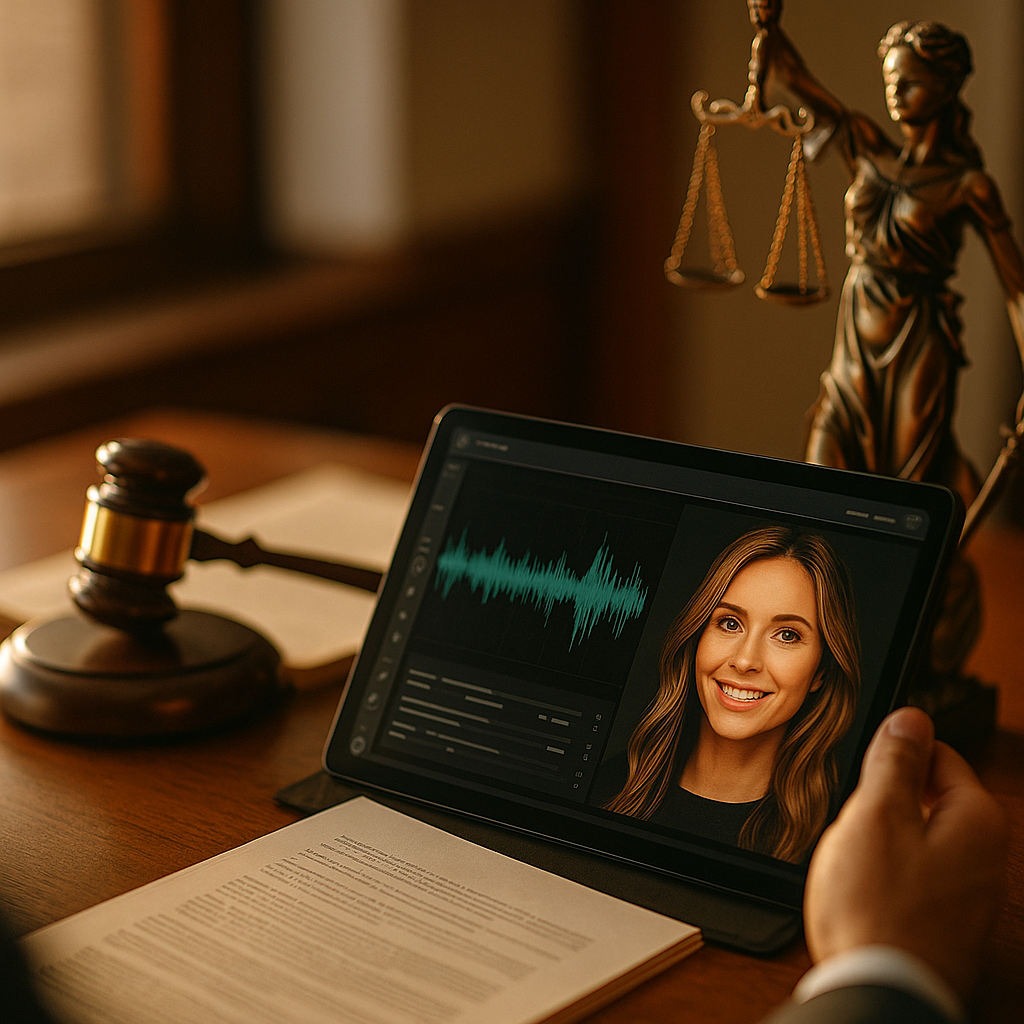
Navigating Legal Disclosure for Synthetic Celebrity Voice Licensing has become a frontline issue in 2025 as brands, studios, and creators deploy AI voice models at scale. The promise is speed and realism, but the legal risks arrive just as quickly: consumer deception claims, right-of-publicity disputes, and platform takedowns. Clear disclosures and disciplined licensing protect everyone involved—so what does “good” look like in practice?
Understanding synthetic voice disclosure requirements
Legal disclosure for synthetic celebrity voices sits at the intersection of advertising law, consumer protection, privacy, and intellectual property. Even when you have permission to use a voice model, you may still need to disclose that the audio is synthetic to avoid misleading the audience. In practice, your compliance posture should assume that regulators and platforms will ask two questions:
- Was the audience likely to be misled? If the voice sounds like a real person and the context implies authenticity (e.g., endorsements, “live” messages, news-like delivery), nondisclosure can create deception risk.
- Did you have the right to use that identity? A license can authorize use, but it does not automatically satisfy disclosure obligations, union rules, or platform policies.
Where do disclosure duties arise? Common sources include:
- Consumer protection and advertising rules that prohibit misleading claims or omissions, especially around endorsements and testimonials.
- Endorsement and influencer standards that require clarity when there is a material connection (payment, sponsorship, or other benefit) and when content could confuse viewers.
- Platform policies for synthetic media, impersonation, and manipulated content labeling; these policies can be stricter than the law.
- Contractual obligations in your voice license, union agreements, talent deals, and distribution agreements, which often specify disclosure language and placement.
Practical rule: If a reasonable person could interpret the audio as the celebrity’s real performance, disclose that it is synthetic and clarify the nature of the authorization. This reduces risk while protecting audience trust.
Celebrity voice licensing agreements and right-of-publicity
A synthetic voice license is not just a permission slip—it is a risk-control instrument. In 2025, the strongest agreements treat the celebrity voice as a protected identity asset and define exactly what is allowed. The key legal backbone is often the right of publicity (or similar personality rights), which can cover voice, likeness, and distinctive identity traits. If you create a “sound-alike” without authorization, you can face claims even if you never used original recordings.
When negotiating celebrity voice licensing agreements, include these essentials:
- Scope of use: channels (TV, streaming, social, radio), territories, and term. If “worldwide” and “in perpetuity” are requested, expect higher fees and tighter controls.
- Permitted content categories: advertising, entertainment, education, political speech, fundraising, adult content exclusions, and sensitive-topic limitations.
- Approval and review rights: pre-approval for scripts, final audio, and edits; clear timelines to avoid production bottlenecks.
- Voice model governance: who hosts the model, who can access it, security standards, and whether the license covers a model or only output audio files.
- Exclusivity and conflicts: category exclusivity (e.g., “no competing beverage ads”) and carve-outs for the celebrity’s own projects.
- Compensation structure: flat fees, usage-based fees, residual-like structures, renewals, and escalation for new media formats.
- Moral rights / reputational protections: restrictions on derogatory, defamatory, or misleading uses; remedies and rapid takedown triggers.
- Indemnities and insurance: who covers which risks (misuse, third-party claims, defamation, regulatory fines), plus E&O insurance requirements for distributors.
Follow-up question you’re likely asking: “If we have a signed license, can we skip disclosure?” Usually no. A license answers “can we use it,” while disclosure answers “are we being transparent.” Treat them as separate compliance lanes that must both be satisfied.
AI voice clone compliance for ads and endorsements
Advertising is where disclosure failures become expensive. When a synthetic celebrity voice appears to endorse a product, the audience may assume the celebrity personally recorded the message and stands behind the claims. That assumption drives legal risk in three main ways:
- Deception risk: consumers may be misled about authenticity or the nature of the endorsement.
- Substantiation risk: the ad’s claims still require adequate support; “the celebrity said it” does not reduce your burden.
- Attribution risk: the celebrity may be blamed for statements they never made, increasing reputational harm and dispute likelihood.
Build an AI voice clone compliance workflow tailored to marketing teams:
- Pre-flight checklist: confirm license scope, confirm approved script, confirm required disclosure language, confirm platform labeling features.
- Claims review: verify product claims with legal and regulatory teams; confirm required disclaimers (health, financial, performance, comparative claims).
- Disclosure placement: make it clear and proximate to the synthetic voice content. In short-form video, put it on-screen and in the caption. In audio-only, put it within the first moments and again at the end if the spot is long.
- “Material connection” transparency: if the celebrity is paid or has equity, disclose the relationship consistent with endorsement rules and the contract.
Recommended disclosure language should be plain, specific, and not hidden. Examples you can adapt:
- Audio-only ad: “This message uses an authorized AI-generated voice of [Name].”
- Video caption/on-screen: “Authorized synthetic voice. [Name] did not record this audio.”
- When relevant: “Paid partnership” or “Sponsored” plus the synthetic voice notice.
Common mistake: using vague terms like “digitally enhanced” when the voice is fully generated. If the goal is to avoid misleading people, be direct about what changed.
Deepfake voice laws and platform policies in 2025
Even when statutes vary by jurisdiction, enforcement realities in 2025 are shaped by three pressures: rising consumer complaints, election-related concerns, and platform-level crackdowns on impersonation. That means your compliance strategy should not rely on the most permissive rule in any single location. Instead, design a baseline standard that is broadly defensible and then layer jurisdiction-specific requirements where needed.
Key principles to apply under evolving deepfake voice laws and platform policies:
- Consent is foundational: documented authorization from the celebrity (or their authorized representative) is the starting point for lawful use.
- Context matters: synthetic voice in parody or obvious fiction carries different risk than synthetic voice in ads, customer service, political messaging, or news-like formats.
- Labeling requirements can be contractual: distributors, streamers, app stores, and ad networks often require synthetic media labels regardless of local law.
- Rapid response expectations: if a complaint arises, platforms may expect quick proof of authorization and swift removal of noncompliant content.
Operationally, prepare a “proof packet” you can provide within hours:
- Signed license and any required approvals for the specific script or campaign.
- Disclosure screenshots showing placement (caption, on-screen text, audio transcript).
- Audio provenance notes (tool used, generation date, authorized operators) without revealing trade secrets.
- Contact point for escalations (legal/email alias) to resolve disputes fast.
Reader follow-up: “Do we need a watermark?” If you can add an audible tag, metadata marker, or provenance credential without harming user experience, it strengthens auditability. It is not always legally required, but it can be decisive in platform disputes and internal investigations.
Consent, contracts, and recordkeeping for voice model governance
Many licensing failures are not about missing paperwork—they’re about weak governance after the contract is signed. Voice models are reusable, portable, and easy to misuse internally. Treat the model like sensitive IP and like a regulated asset. Strong governance proves you acted responsibly, which supports EEAT expectations for trustworthy business practices and reduces liability if something goes wrong.
Implement a voice model governance program with clear ownership and controls:
- Access control: role-based access, multi-factor authentication, and least-privilege permissions for anyone who can generate audio.
- Approved-use registry: a simple database listing each authorized project, script version, approvals, distribution channels, and expiration dates.
- Audit logs: keep logs of who generated what, when, and for which project. This is essential for investigating leaks or unauthorized clips.
- Retention policy: keep records long enough to address claims and contract obligations; delete training materials or outputs if the license requires it.
- Incident response plan: define steps for takedowns, notifications to the celebrity’s team, and internal containment if unauthorized content appears.
Consent deserves special attention. Ensure your consent is:
- Specific: not a broad catch-all that invites disputes. Identify voice use, synthetic generation, and permitted contexts.
- Informed: explain how the model works, what can be generated, and what controls exist.
- Revocable and actionable: define termination effects, wind-down periods, and what happens to stored models and past outputs.
Tip that prevents real-world failures: assign a single internal “license steward” responsible for renewals, scope checks, and ensuring disclosures ship in every distribution format (including cut-downs, regional edits, and influencer reposts).
Disclosure language and placement: practical templates that reduce risk
Disclosure succeeds only if people notice and understand it. That means you should standardize language, placement, and format across channels. Consistency also helps during audits and platform reviews. For synthetic media disclosure, aim for clarity over creativity.
Use these placement guidelines:
- Short-form video (feeds): on-screen text during the first 2 seconds, plus caption text. If the voice is central, keep a small persistent label.
- Long-form video: on-screen disclosure at first instance of the synthetic voice, plus end credits. Include disclosure in the description and transcript.
- Audio-only (podcasts, radio, streaming audio): spoken disclosure near the start, plus a closing disclosure; add it to show notes/metadata where possible.
- Interactive experiences (apps, voice assistants): in-product notice at first use and in settings/help; repeat when the context changes (e.g., switching from narration to “personal message”).
Disclosure templates you can tailor with counsel:
- Authorized performance disclosure: “Audio includes an authorized AI-generated voice of [Name].”
- Non-recording clarification: “[Name] did not record this audio; it was generated using authorized voice technology.”
- Character vs. celebrity clarity: “This is a synthetic performance licensed from [Name] for the character [Character].”
- Customer service boundary: “You’re speaking with an AI voice agent using an authorized synthetic voice.”
Answering a common follow-up: “Will disclosure hurt performance?” In many campaigns it does not, especially when the disclosure is brief and confident. More importantly, it reduces the chance of backlash driven by perceived deception. If you are licensing a celebrity voice, the brand value comes from association and trust; hiding the process undermines both.
FAQs: Legal disclosure for synthetic celebrity voice licensing
Do I need permission to use a celebrity sound-alike voice?
Often yes. Even if you do not use original recordings, a voice that evokes a specific celebrity can trigger right-of-publicity or unfair competition claims. If the goal is to sound like a recognizable person for commercial gain, secure a license or redesign the voice to avoid identifiability.
Is disclosure required if the celebrity approved the script?
Approval helps, but it does not automatically eliminate disclosure obligations. If the audience could reasonably believe the celebrity recorded the audio, a clear synthetic voice disclosure is still the safer approach, and it may be required by contracts or platforms.
Where should the disclosure appear in a 15-second ad?
Use both a visual label (on-screen text early) and a caption disclosure. If the ad is audio-first, add a spoken line at the beginning. The disclosure should be easy to notice without pausing.
What if we only use the synthetic voice internally (e.g., drafts or animatics)?
Internal use can still violate a license if it is outside scope or if the model is accessed by unauthorized teams or vendors. Keep internal projects in the approved-use registry and apply access controls to prevent leaks.
Can we reuse the same voice model for future campaigns?
Only if the license explicitly allows model reuse for new projects, scripts, and channels. Many deals require new approvals per campaign and may restrict model portability across vendors or tools.
What records should we keep to prove compliance?
Keep the signed license, script approvals, generation logs, disclosure evidence (screenshots/transcripts), distribution list, and takedown/incident communications. Organized records reduce downtime during platform challenges and legal inquiries.
How do we handle fan-made reposts or edits that remove disclosure?
Your responsibility depends on your role and control, but you should monitor major channels, issue takedowns where needed, and provide shareable official versions that keep disclosures intact. Contracts can also require partners and influencers to preserve disclosure.
Legal disclosure and licensing for synthetic celebrity voices work best when treated as product design, not last-minute legal copy. In 2025, the defensible approach is consistent: secure explicit consent, lock down scope in the contract, label synthetic audio clearly, and maintain records that prove responsible use. Transparency lowers regulatory risk and protects brand trust—while keeping celebrity partnerships sustainable.
Top Influencer Marketing Agencies
The leading agencies shaping influencer marketing in 2026
Agencies ranked by campaign performance, client diversity, platform expertise, proven ROI, industry recognition, and client satisfaction. Assessed through verified case studies, reviews, and industry consultations.
Moburst

-
2

The Shelf
Boutique Beauty & Lifestyle Influencer AgencyA data-driven boutique agency specializing exclusively in beauty, wellness, and lifestyle influencer campaigns on Instagram and TikTok. Best for brands already focused on the beauty/personal care space that need curated, aesthetic-driven content.Clients: Pepsi, The Honest Company, Hims, Elf Cosmetics, Pure LeafVisit The Shelf → -
3

Audiencly
Niche Gaming & Esports Influencer AgencyA specialized agency focused exclusively on gaming and esports creators on YouTube, Twitch, and TikTok. Ideal if your campaign is 100% gaming-focused — from game launches to hardware and esports events.Clients: Epic Games, NordVPN, Ubisoft, Wargaming, Tencent GamesVisit Audiencly → -
4

Viral Nation
Global Influencer Marketing & Talent AgencyA dual talent management and marketing agency with proprietary brand safety tools and a global creator network spanning nano-influencers to celebrities across all major platforms.Clients: Meta, Activision Blizzard, Energizer, Aston Martin, WalmartVisit Viral Nation → -
5

The Influencer Marketing Factory
TikTok, Instagram & YouTube CampaignsA full-service agency with strong TikTok expertise, offering end-to-end campaign management from influencer discovery through performance reporting with a focus on platform-native content.Clients: Google, Snapchat, Universal Music, Bumble, YelpVisit TIMF → -
6

NeoReach
Enterprise Analytics & Influencer CampaignsAn enterprise-focused agency combining managed campaigns with a powerful self-service data platform for influencer search, audience analytics, and attribution modeling.Clients: Amazon, Airbnb, Netflix, Honda, The New York TimesVisit NeoReach → -
7

Ubiquitous
Creator-First Marketing PlatformA tech-driven platform combining self-service tools with managed campaign options, emphasizing speed and scalability for brands managing multiple influencer relationships.Clients: Lyft, Disney, Target, American Eagle, NetflixVisit Ubiquitous → -
8

Obviously
Scalable Enterprise Influencer CampaignsA tech-enabled agency built for high-volume campaigns, coordinating hundreds of creators simultaneously with end-to-end logistics, content rights management, and product seeding.Clients: Google, Ulta Beauty, Converse, AmazonVisit Obviously →