


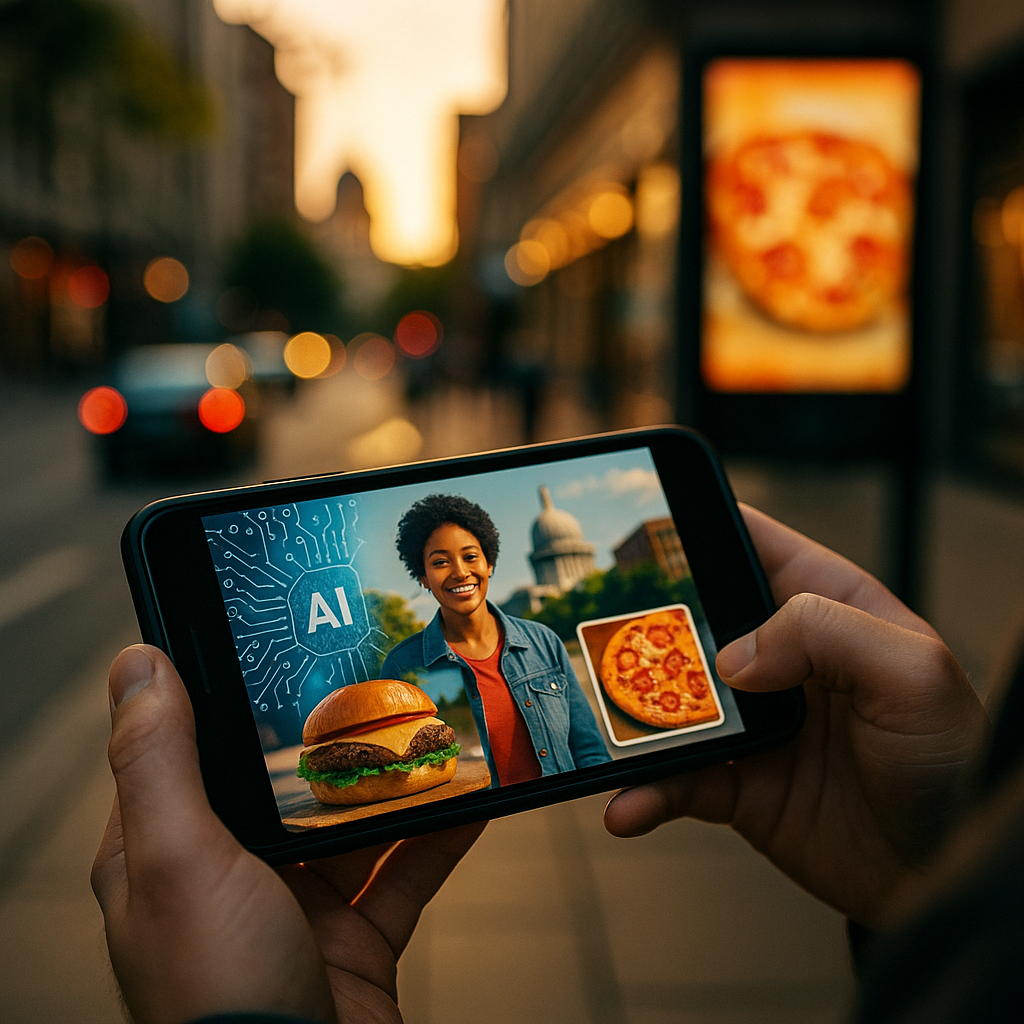
In 2025, marketers win attention by tailoring ads to the moment, not just the audience. Using AI to Personalize Dynamic Creative Based on Local Environment helps brands adapt messaging to weather, traffic, events, and nearby inventory—automatically and at scale. When done responsibly, it lifts relevance without feeling intrusive. The real question is: what local signals should your creative respond to next?
AI-powered dynamic creative optimization: what it is and why local context matters
AI-powered dynamic creative optimization (often called DCO) uses machine learning to assemble and serve ad variations in real time. Instead of producing one fixed banner, video, or social ad, you create modular assets—headlines, images, offers, calls-to-action—and an AI system selects the best combination for each impression.
Local context raises DCO from “personalized” to situationally useful. Two people with similar profiles can need different messages depending on where they are and what’s happening around them. Local environment signals can include:
- Weather: temperature, precipitation, UV index, air quality.
- Time context: hour of day, day of week, seasonality.
- Mobility context: commute patterns, traffic congestion, public transit disruptions.
- Local demand signals: trending searches in a region, local events, school holidays.
- Operational reality: nearest store hours, service availability, delivery windows, local inventory.
This matters because relevance in ads is often about timing and constraints. If a user is in a heatwave, an “iced coffee” or “same-day AC tune-up” message is practical. If a store is out of stock locally, pushing that product damages trust and conversion. Local environment personalization helps close that gap between brand promise and real-world availability.
To keep this helpful (and aligned with Google’s EEAT expectations), you should be able to explain: Which signals you use, how they influence creative, and how you avoid misleading claims.
Local environment targeting signals: the data you need (and how to source it responsibly)
Local environment targeting starts with picking signals that improve decisions without over-collecting personal data. In practice, the best-performing setups rely on a combination of environmental APIs, aggregated location context, and first-party business data.
High-value signal categories include:
- Weather and air quality: Use reputable meteorological APIs. Tie creative to ranges (e.g., “below 5°C” or “rain probability above 60%”) rather than hyper-specific values to avoid brittle logic.
- Store and service operations: Pull from your own systems (POS, OMS, CRM, scheduling). This is often the biggest conversion driver because it reflects what you can actually fulfill.
- Inventory and pricing by location: Sync feeds frequently enough that ads don’t promise unavailable items. For fast-moving categories, consider near-real-time updates.
- Local events and points of interest: Use curated event feeds or partner data. Keep messaging factual (“Near the stadium tonight?”) and avoid sensitive inference.
- Traffic and mobility: Use congestion or transit alerts to adjust urgency (“Order ahead for pickup”) rather than making claims about a user’s exact route.
Responsible sourcing and privacy is a performance issue, not just compliance. Overly granular location use can feel invasive and can reduce engagement. Prefer:
- Coarse location: city, DMA, or store catchment areas where possible.
- Contextual signals: weather and time don’t require identifying individuals.
- Consent-based data: when using precise location or app-based signals.
- Data minimization: collect only what’s needed to drive the creative decision.
Build a simple “signal registry” for your marketing team: each signal’s source, refresh rate, allowed uses, and what the creative can and cannot say. This documentation improves quality control and makes approvals faster.
Hyperlocal creative personalization: building modular assets that the AI can assemble
Hyperlocal creative personalization works best when you design for variability. AI can’t rescue weak assets; it can only recombine what you provide. Start with a modular creative system that includes:
- Message modules: multiple headlines, descriptions, and CTAs mapped to contexts (rain, heat, lunch rush, weekend).
- Offer modules: region-safe promotions, with clear eligibility rules and expiration handling.
- Visual modules: images or short clips that match local conditions (e.g., umbrellas, outdoor dining, snow-safe tires).
- Proof modules: local ratings snippets, “in-stock nearby,” store distance ranges, delivery ETA bands.
Practical creative rules that improve results and reduce risk:
- Use ranges and scenarios, not exact personal references: “Rainy day essentials” is safer than “It’s raining where you are right now.”
- Make claims verifiable: If you say “Ready in 30 minutes,” the system must be connected to real fulfillment capacity.
- Keep brand voice consistent: Define tone, banned phrases, and readability targets. AI selection should not create off-brand combinations.
- Design fallback states: When signals fail (API outage, low confidence), default to evergreen creative rather than guessing.
Answering the common follow-up question—“Will this make our ads look inconsistent?”—requires a template approach. Create a small set of approved layouts and motion styles, then let AI vary copy, imagery, and offer within those frames. Consistency comes from structure, not identical messages.
Real-time contextual advertising: orchestration, decisioning, and measurement
Real-time contextual advertising needs a clear decision layer: what inputs the model sees, what choices it can make, and how success is measured. A strong implementation typically includes:
- Data ingestion: environmental APIs + business feeds (inventory, hours, ETAs) + campaign metadata.
- Decision engine: rules and/or ML that selects variants based on predicted outcomes.
- Creative renderer: assembles the final asset, validates text length, and applies brand constraints.
- Activation: pushes variants to ad platforms (display, social, video, retail media) with correct targeting parameters.
- Measurement: attribution and lift testing with context-aware reporting.
How the AI should decide in 2025: combine predictive scoring with guardrails. Use ML to rank which creative package is most likely to drive your goal (CTR, conversion rate, ROAS, store visits), but keep deterministic rules for compliance and accuracy. Examples of guardrails:
- Never show “in stock” unless the feed confirms availability within a defined radius.
- Never promote delivery if the address area is outside service range.
- Never mention sensitive categories based on local context (e.g., health inferences).
Measurement that answers business questions should include:
- Incrementality tests: geo-holdouts or split tests comparing dynamic vs. static creative within comparable locations.
- Context performance views: results by weather band, time window, and proximity tier so you learn which signals matter.
- Creative-level diagnostics: which modules drive uplift (e.g., CTA type, offer framing, visuals).
Plan for delayed conversions in local commerce. If you run “nearby” messaging, track store visits (where available), calls, map clicks, and appointment bookings alongside online conversions. Otherwise, you’ll under-credit what local context improves.
Location-based marketing automation: governance, safety, and EEAT in AI-driven creative
Location-based marketing automation introduces operational risk if you don’t define ownership. EEAT-aligned content is accurate, transparent, and user-focused—those same standards apply to ads that change dynamically.
Governance checklist to keep personalization helpful:
- Human-reviewed creative library: every module is approved before the AI can use it.
- Truth layer: connect claims to authoritative sources (inventory systems, store hours, service capacity, published pricing rules).
- Audit logs: record which variant served, which signals were used, and why the decision engine chose it.
- Frequency and fatigue controls: cap repetition and rotate modules to prevent annoyance.
- Brand safety and suitability: exclude placements that don’t match your audience expectations and legal constraints.
What to disclose and how is a common follow-up question. You typically don’t need to explain every signal in the ad itself, but you should:
- Maintain clear privacy and ad preference information in your site/app settings.
- Avoid “creepy” copy that implies surveillance.
- Provide opt-outs where required and honor consent choices across systems.
AI reliability tips that protect performance:
- Use confidence thresholds: If a model isn’t confident, fall back to evergreen creative.
- Monitor drift: local patterns change (new store opens, event season starts). Revalidate frequently.
- Stress test edge cases: storms, outages, sudden inventory shortages, and event surges.
When teams treat dynamic creative as a product—complete with QA, monitoring, and documentation—local personalization becomes sustainable instead of fragile.
AI geo-context personalization strategy: a practical launch roadmap
AI geo-context personalization strategy works best when you start narrow, prove lift, then expand signals and channels. A pragmatic roadmap:
- Step 1: Pick one business outcome. Examples: increase store visits, boost pickup orders, improve ROAS in a region.
- Step 2: Choose 2–3 signals with clear logic. Good starters are weather + store distance tier + in-stock status.
- Step 3: Build a tight creative set. 6–12 headlines, 4–8 images, 2–3 CTAs, plus evergreen fallbacks.
- Step 4: Implement guardrails first. Ensure ads never promise what you can’t deliver locally.
- Step 5: Run an incrementality test. Hold out matched locations or audiences; measure lift, not just correlated improvements.
- Step 6: Expand responsibly. Add event signals, traffic context, or localized social proof only after you’ve validated the basics.
Common pitfalls to avoid:
- Too many variants too soon: you dilute learning and create chaotic reporting.
- Disconnected ops data: dynamic messaging without inventory/availability is often worse than static.
- Over-localized copy: naming tiny neighborhoods can reduce reach and feel overly familiar.
A strong north star metric is “fulfilled relevance”: the percentage of impressions where the ad message matches what the user can actually do immediately (buy, book, visit, reserve) in that local context.
FAQs
What local signals usually improve performance the most?
Availability signals tend to outperform everything else: local inventory, service coverage, store hours, and realistic delivery or pickup windows. Weather and time-of-day often add incremental gains when paired with operational truth, because they influence immediate needs and intent.
Do I need precise GPS location to personalize creative effectively?
Not usually. Many winning programs rely on city-level, DMA-level, or store-catchment targeting plus contextual inputs like weather. Precise location can help for distance-based messaging, but it requires stronger consent practices and tighter copy controls to avoid sounding intrusive.
How do I keep AI-generated or AI-selected ads from making inaccurate claims?
Use a truth layer and guardrails: only allow “in stock,” “open now,” or “arrives today” when your systems confirm it. Add fallbacks when data is missing, and maintain audit logs that show which signals drove each ad decision.
What channels work best for local environment-based dynamic creative?
Retail media, paid social, and programmatic display often deliver fast learning because they support modular creative testing. Search and local listings benefit too, especially when synchronized with store hours, inventory, and promotions, but the creative assembly options can be more constrained.
How should I measure success beyond clicks?
Track conversions that reflect local intent: store visits (where available), calls, map actions, appointment bookings, pickup orders, and redemption of local offers. Use geo-holdouts or split tests to quantify incremental lift from dynamic creative versus a static baseline.
Is this approach compliant with privacy expectations in 2025?
It can be, if you minimize data collection, prefer contextual signals, use consent for precise location, and avoid sensitive inferences. Keep disclosures and controls accessible, and ensure your creative never implies you know personal details you didn’t explicitly collect and permission.
AI-driven local personalization turns dynamic creative into a service: it aligns what you say with what people need and what you can deliver nearby. In 2025, the winning pattern is simple—use a few high-impact signals, connect ads to operational truth, and measure incrementality. When your system respects privacy and avoids over-specific messaging, relevance increases without discomfort. Start small, prove lift, then scale confidently.
Top Influencer Marketing Agencies
The leading agencies shaping influencer marketing in 2026
Agencies ranked by campaign performance, client diversity, platform expertise, proven ROI, industry recognition, and client satisfaction. Assessed through verified case studies, reviews, and industry consultations.
Moburst

-
2

The Shelf
Boutique Beauty & Lifestyle Influencer AgencyA data-driven boutique agency specializing exclusively in beauty, wellness, and lifestyle influencer campaigns on Instagram and TikTok. Best for brands already focused on the beauty/personal care space that need curated, aesthetic-driven content.Clients: Pepsi, The Honest Company, Hims, Elf Cosmetics, Pure LeafVisit The Shelf → -
3

Audiencly
Niche Gaming & Esports Influencer AgencyA specialized agency focused exclusively on gaming and esports creators on YouTube, Twitch, and TikTok. Ideal if your campaign is 100% gaming-focused — from game launches to hardware and esports events.Clients: Epic Games, NordVPN, Ubisoft, Wargaming, Tencent GamesVisit Audiencly → -
4

Viral Nation
Global Influencer Marketing & Talent AgencyA dual talent management and marketing agency with proprietary brand safety tools and a global creator network spanning nano-influencers to celebrities across all major platforms.Clients: Meta, Activision Blizzard, Energizer, Aston Martin, WalmartVisit Viral Nation → -
5

The Influencer Marketing Factory
TikTok, Instagram & YouTube CampaignsA full-service agency with strong TikTok expertise, offering end-to-end campaign management from influencer discovery through performance reporting with a focus on platform-native content.Clients: Google, Snapchat, Universal Music, Bumble, YelpVisit TIMF → -
6

NeoReach
Enterprise Analytics & Influencer CampaignsAn enterprise-focused agency combining managed campaigns with a powerful self-service data platform for influencer search, audience analytics, and attribution modeling.Clients: Amazon, Airbnb, Netflix, Honda, The New York TimesVisit NeoReach → -
7

Ubiquitous
Creator-First Marketing PlatformA tech-driven platform combining self-service tools with managed campaign options, emphasizing speed and scalability for brands managing multiple influencer relationships.Clients: Lyft, Disney, Target, American Eagle, NetflixVisit Ubiquitous → -
8

Obviously
Scalable Enterprise Influencer CampaignsA tech-enabled agency built for high-volume campaigns, coordinating hundreds of creators simultaneously with end-to-end logistics, content rights management, and product seeding.Clients: Google, Ulta Beauty, Converse, AmazonVisit Obviously →