


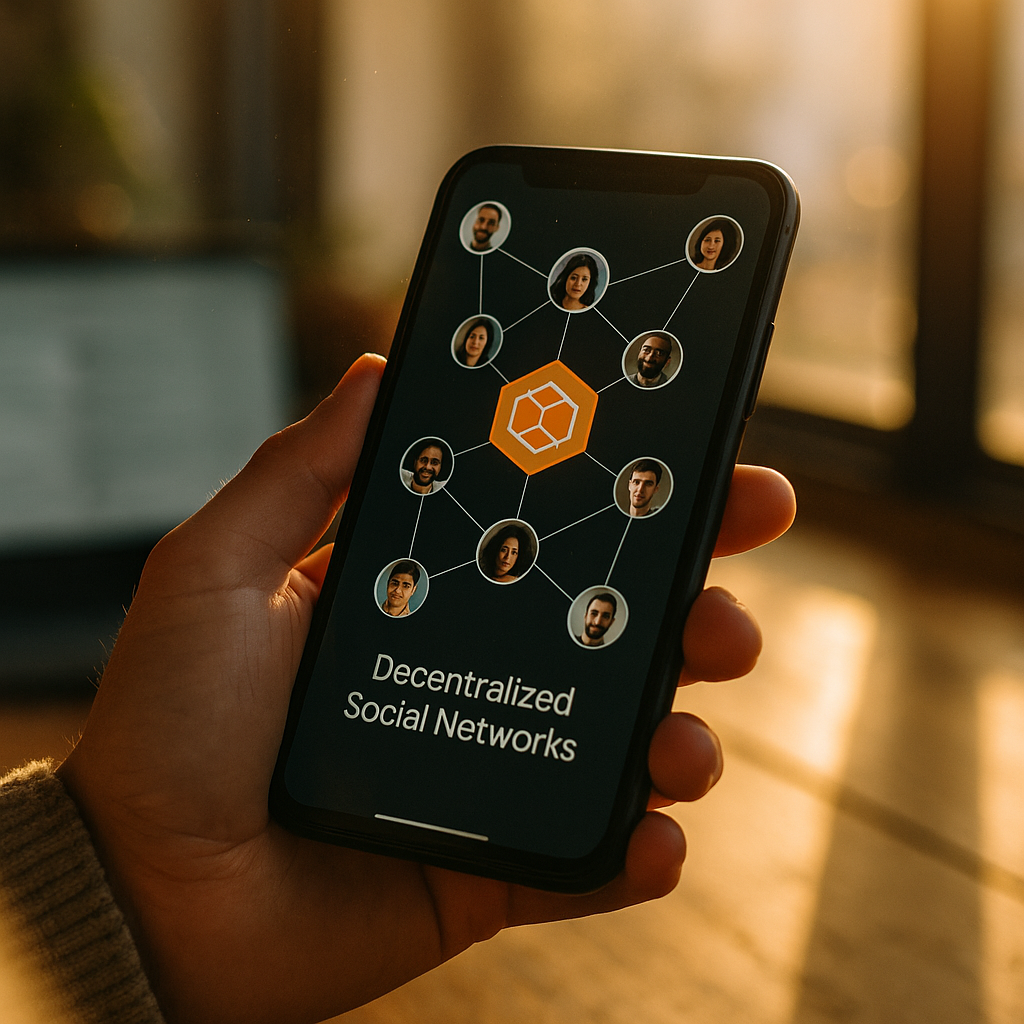
In 2025, the rise of decentralized social networks is reshaping how people connect online, challenging the idea that a few platforms should control identity, reach, and data. Users want choice, transparency, and resilience against sudden policy shifts. This shift also puts personal information back into the spotlight, forcing practical questions about ownership, portability, and trust—so what comes next?
What Are Decentralized Social Networks? (secondary keyword: decentralized social networks)
Decentralized social networks distribute control across many independently operated servers, applications, or nodes rather than concentrating power in a single company’s infrastructure. In practical terms, this changes who sets the rules, who can access your data, and how content moves across the network.
Most decentralized systems fall into a few recognizable architectures:
- Federated networks: Many servers (“instances”) run compatible software and can interoperate. Users on one server can follow and message users on another if federation is enabled.
- Protocol-based networks: A shared protocol defines how identity, posts, and follows work, while multiple apps compete on user experience. Your social graph can move with you if the protocol supports portability.
- P2P networks: Data may be stored and shared directly between users, sometimes with cryptographic verification. This can improve resilience but introduces new usability and moderation challenges.
The key difference from conventional social media is the separation of social identity and social experience. Instead of one company controlling both the database and the app, decentralized models aim to let you choose a provider, host yourself, or switch clients without losing your audience. That promise attracts creators, communities, and organizations that depend on stable access to their relationships.
Why Personal Data Sovereignty Matters Now (secondary keyword: personal data sovereignty)
Personal data sovereignty means you can control how your data is collected, used, shared, and moved—without needing special permission from a platform. It goes beyond privacy settings. It includes the ability to export your content, take your followers with you, and limit data processing to what you explicitly allow.
In 2025, the urgency comes from several overlapping realities:
- Platform risk: Sudden algorithm shifts, account bans, pay-to-reach changes, and policy swings can erase years of community-building.
- Data exhaustion: People increasingly question why intimate behavioral data is the default “price” for social participation.
- Security pressure: Centralized data troves remain high-value targets for attackers. Data minimization and distribution can reduce blast radius, but only if implemented carefully.
- Regulatory expectations: Many jurisdictions now expect clearer consent, better portability, and stronger user rights. Even when the law grants rights, decentralized tools can make them easier to exercise in practice.
Readers often ask: does sovereignty mean you must host your own server or become a security expert? No. The practical goal is meaningful choice: you can rely on a trusted provider, move later, or keep separate identities for different contexts. Sovereignty is a spectrum, and the best systems reduce the effort required to claim it.
How the Fediverse and Open Protocols Work (secondary keyword: fediverse)
The fediverse is a broad ecosystem of interoperable social services that can communicate across independently run servers. While apps and communities differ, federation generally works through shared standards that define how accounts, posts, media, and interactions are exchanged.
What this looks like for a user:
- You pick a home: Choose a server with rules and moderation aligned to your needs, or run your own.
- You still reach beyond it: You can follow people on other servers and interact across the network.
- Communities set boundaries: Servers can block, limit, or filter other servers, which is a core safety tool in federated moderation.
Protocol-based networks add another layer: they aim to decouple your identity and relationships from any single app. That means you could switch clients for better accessibility, better creator tools, or different discovery methods—without rebuilding your audience from zero.
A realistic follow-up question is whether federation fragments conversations. It can. Discovery and search may feel less centralized. However, many users prefer this tradeoff because it reduces the “one feed to rule them all” dynamic. The result is often more community-led context and less pressure to perform for an algorithm.
Benefits for Users and Creators (secondary keyword: data portability)
Decentralization can improve everyday outcomes when it is paired with strong data portability—the ability to move your content, identity, and social graph between services with minimal friction.
Key benefits you can expect when the ecosystem is working well:
- Exit without losing everything: If a server closes, changes rules, or becomes unhealthy, you can migrate accounts and preserve continuity.
- Choice of clients and features: Multiple apps can serve the same network, enabling innovation in accessibility, moderation tools, and creator workflows.
- More transparent governance: Smaller communities often publish clear rules, moderation logs, and appeal processes. You can pick an environment that matches your tolerance for risk and your norms.
- Reduced surveillance incentives: Many decentralized services can sustain themselves through memberships, hosting fees, or donations rather than behavioral advertising.
- Creator resilience: Creators can diversify distribution, use custom domains for identity, and avoid “platform lock-in” that undermines pricing power.
Creators commonly ask how monetization works without a single platform running subscriptions. In practice, monetization becomes modular: memberships through third-party tools, direct patronage, paid newsletters, or community hosting arrangements. The upside is that your revenue streams are less dependent on a single company’s policy decisions.
For organizations, decentralized social can serve as a communication layer that they do not fully outsource. Schools, local governments, clubs, and professional associations can host spaces that reflect their obligations around record-keeping, safety, and accessibility while still connecting to the wider public.
Risks, Moderation, and Security Tradeoffs (secondary keyword: decentralized identity)
Decentralization is not automatically safer or healthier. The biggest questions in 2025 center on moderation, abuse response, and identity integrity—especially as decentralized identity systems grow.
Tradeoffs to understand before you move:
- Moderation is distributed: Instead of one global policy team, each server or community enforces its own rules. This can be empowering, but it can also lead to inconsistent outcomes.
- Abuse handling requires coordination: Effective response often depends on shared blocklists, cross-server reporting norms, and well-trained moderators.
- Server reliability varies: Smaller hosts may have limited resources. You should check backup practices, funding model, and admin responsiveness.
- Security responsibilities shift: If you self-host, you must manage updates, access controls, and incident response. If you use a provider, you still need strong passwords and phishing awareness.
- Identity verification is nuanced: Decentralized identity can reduce reliance on a single login provider, but verification is harder without central authority. Some ecosystems use domain-based verification or cryptographic proofs; each method has limitations.
A practical approach is to treat identity like layers: a stable handle or domain you control, plus platform-specific accounts, plus optional verification proofs. For many users, a custom domain is the simplest durable anchor. If your chosen network supports it, domain verification can help audiences confirm it’s really you.
Another follow-up question: will illegal content and harassment spread more easily? Decentralization can reduce the ability to enforce a single global standard, but it also enables targeted containment. Servers can defederate from abusive servers, limit exposure pathways, and build specialized moderation teams for particular communities. Outcomes depend on implementation quality, admin competence, and user education—not on decentralization alone.
How to Choose a Platform and Protect Your Data (secondary keyword: privacy by design)
If you want the benefits without unnecessary risk, evaluate platforms using privacy by design principles: minimize data collection, limit retention, secure defaults, and clear user controls. The goal is not perfection; it is informed choice and ongoing adaptability.
Use this checklist before committing:
- Portability: Can you export posts, media, and follows in standard formats? Can you migrate to another server without breaking your identity?
- Governance: Are rules published? Is there an appeals process? Are moderation actions documented in a way that respects privacy?
- Safety tooling: Does the platform support granular blocking, content warnings, rate limits, and reporting workflows?
- Security posture: Does the service support strong authentication? Are updates frequent? Is there a public incident policy?
- Business model: Who pays for hosting and moderation? If the service is “free,” what incentives might shape data use?
- Community fit: Does the instance culture match your needs? Small differences in norms can matter more than features.
For personal data sovereignty, adopt a few low-effort habits:
- Keep regular exports: Schedule periodic backups of your content and media, especially if you rely on the account professionally.
- Separate contexts: Use different accounts for personal, professional, and high-risk public activity to reduce collateral exposure.
- Control your identity anchor: If possible, use a domain you own for verification or identity continuity.
- Reduce metadata leakage: Be cautious with location data, contact syncing, and cross-posting patterns that can re-identify you.
If you’re advising a team or organization, add due diligence: request documentation, clarify data processing roles, and define moderation responsibilities. Decentralized does not remove accountability; it changes where it sits.
FAQs (secondary keyword: decentralized social media)
What is the difference between decentralized social media and traditional social media?
Traditional platforms centralize hosting, identity, and moderation under one company. Decentralized social media distributes these functions across multiple servers or apps that can interoperate. This usually increases user choice and reduces lock-in, but it can also make discovery and policy consistency more complex.
Do decentralized social networks eliminate data collection?
No. Any service can collect data. The practical advantage is that many decentralized communities aim to collect less, avoid targeted advertising, and offer clearer control. You still need to review privacy policies and choose reputable hosts.
Can I take my followers with me if I move?
Sometimes. Many federated systems support account migration that redirects followers, but portability varies by network and server. Before joining, confirm whether migration preserves follows, posts, and media, and whether exports use standard formats.
Is moderation worse on decentralized platforms?
Moderation is different, not automatically worse. It is often more community-led and can be faster in smaller spaces, but it may be inconsistent across servers. Strong server governance, clear rules, and federation controls are decisive factors.
Do I need to understand blockchain to use decentralized social networks?
No. Many decentralized networks do not use blockchain at all. Even when blockchain is involved, most users interact through normal apps. Focus on portability, safety features, and the host’s governance rather than the buzzwords.
What is the best first step toward personal data sovereignty?
Start with portability and identity control: choose a service that supports exports and migration, enable strong authentication, and keep periodic backups. If available, verify your identity with a domain you control to reduce dependence on any single provider.
Decentralized social networks are gaining momentum in 2025 because they offer a credible alternative to platform lock-in: more choice, more resilience, and stronger pathways to personal data sovereignty. The benefits are real when portability, governance, and safety tools are solid. Pick reputable communities, keep backups, and anchor your identity. Control improves step by step—and the payoff is lasting flexibility.
Top Influencer Marketing Agencies
The leading agencies shaping influencer marketing in 2026
Agencies ranked by campaign performance, client diversity, platform expertise, proven ROI, industry recognition, and client satisfaction. Assessed through verified case studies, reviews, and industry consultations.
Moburst

-
2

The Shelf
Boutique Beauty & Lifestyle Influencer AgencyA data-driven boutique agency specializing exclusively in beauty, wellness, and lifestyle influencer campaigns on Instagram and TikTok. Best for brands already focused on the beauty/personal care space that need curated, aesthetic-driven content.Clients: Pepsi, The Honest Company, Hims, Elf Cosmetics, Pure LeafVisit The Shelf → -
3

Audiencly
Niche Gaming & Esports Influencer AgencyA specialized agency focused exclusively on gaming and esports creators on YouTube, Twitch, and TikTok. Ideal if your campaign is 100% gaming-focused — from game launches to hardware and esports events.Clients: Epic Games, NordVPN, Ubisoft, Wargaming, Tencent GamesVisit Audiencly → -
4

Viral Nation
Global Influencer Marketing & Talent AgencyA dual talent management and marketing agency with proprietary brand safety tools and a global creator network spanning nano-influencers to celebrities across all major platforms.Clients: Meta, Activision Blizzard, Energizer, Aston Martin, WalmartVisit Viral Nation → -
5

The Influencer Marketing Factory
TikTok, Instagram & YouTube CampaignsA full-service agency with strong TikTok expertise, offering end-to-end campaign management from influencer discovery through performance reporting with a focus on platform-native content.Clients: Google, Snapchat, Universal Music, Bumble, YelpVisit TIMF → -
6

NeoReach
Enterprise Analytics & Influencer CampaignsAn enterprise-focused agency combining managed campaigns with a powerful self-service data platform for influencer search, audience analytics, and attribution modeling.Clients: Amazon, Airbnb, Netflix, Honda, The New York TimesVisit NeoReach → -
7

Ubiquitous
Creator-First Marketing PlatformA tech-driven platform combining self-service tools with managed campaign options, emphasizing speed and scalability for brands managing multiple influencer relationships.Clients: Lyft, Disney, Target, American Eagle, NetflixVisit Ubiquitous → -
8

Obviously
Scalable Enterprise Influencer CampaignsA tech-enabled agency built for high-volume campaigns, coordinating hundreds of creators simultaneously with end-to-end logistics, content rights management, and product seeding.Clients: Google, Ulta Beauty, Converse, AmazonVisit Obviously →