


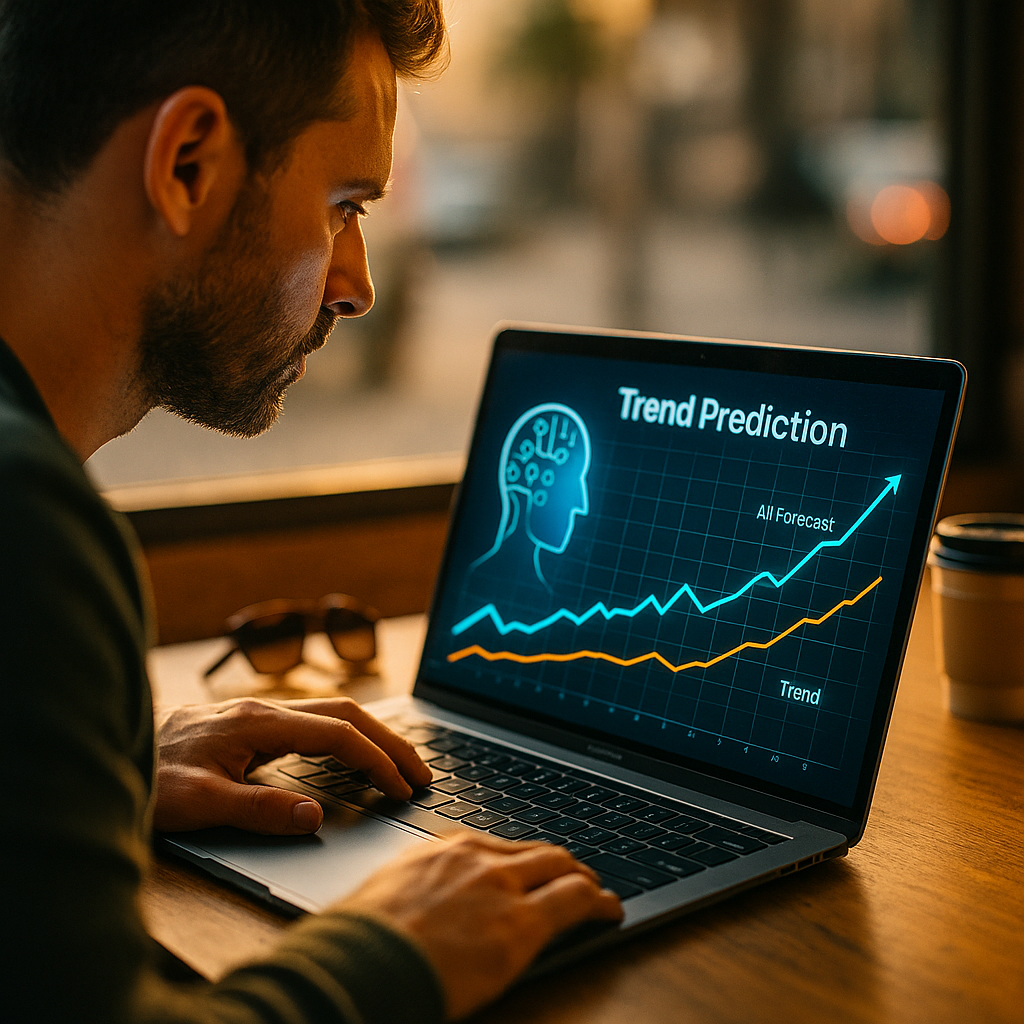
Using AI to Predict Vibe Shifts Before They Hit the Mainstream is becoming a core advantage for brands, creators, and cultural strategists in 2025. Culture moves in bursts: a micro-aesthetic, a phrase, a sound, then a full market swing. AI can spot early signals across platforms, communities, and commerce data faster than any human team. Want to catch the next shift while it’s still forming?
AI trend forecasting: what “vibe shifts” really are
A “vibe shift” is a measurable change in collective taste and behavior that shows up across content, language, aesthetics, and spending. It is not the same as a short-lived meme. A vibe shift has momentum, cross-community adoption, and a pathway into products, events, and identity. In 2025, vibe shifts tend to form inside niche ecosystems first, then spread through recommendation engines, creators, and retail feedback loops.
AI trend forecasting works because it can process weak signals at scale: millions of posts, comments, saves, searches, playlist adds, cart additions, and return reasons. The goal is not to “predict the future” like a crystal ball; it is to reduce uncertainty by identifying early patterns, mapping them to cultural contexts, and testing whether those patterns are accelerating.
To keep this useful (and aligned with Google’s helpful content expectations), treat AI outputs as hypotheses that you verify with human judgment and real-world validation. The best teams combine machine pattern detection with cultural literacy, ethnographic listening, and domain expertise.
Follow-up you might be asking: Is this just social listening? Not quite. Social listening often counts mentions. AI forecasting looks for network effects, semantic drift, and leading indicators that precede mainstream awareness—then estimates how likely they are to cross the adoption threshold.
Machine learning for cultural trends: the signal types that matter
Machine learning for cultural trends succeeds when it uses diverse, high-quality inputs and measures the right “shape” of change. In practice, vibe shifts show up as a combination of behavioral, linguistic, and visual signals.
Key signal categories to monitor:
- Language shifts: new phrases, reclaimed terms, sarcasm markers, and changes in sentiment around existing topics.
- Visual and style clusters: recurring color palettes, silhouettes, typography, framing, filters, and object co-occurrence (for example, specific accessories appearing with certain settings).
- Audio patterns: sound templates, BPM ranges, genre micro-fusions, and the re-contextualization of older tracks.
- Behavioral indicators: saves, shares, watch time completion, repeat views, and “copy” behaviors (duets, stitches, remixes, response videos).
- Commerce and intent signals: search queries, wishlist additions, out-of-stock velocity, basket composition, and customer service tickets that mention emerging needs.
- Community migration: creators and commenters moving a concept from one subculture to adjacent ones (a strong marker of breakout potential).
AI models add value by detecting coordinated movement across signal types. For example, a micro-aesthetic becomes a vibe shift when you see it in visuals, in the language used to describe it, and in shopping behavior. A single spike on one platform can be noise; multi-surface alignment is traction.
Follow-up: What if your data is biased? It will be unless you actively correct for it. Balance sources, normalize by platform growth, and treat each community as its own baseline. When a niche is small, absolute counts mislead; growth rate and network spread matter more.
Social media trend analysis: how AI spots shifts before they scale
Social media trend analysis in 2025 is less about tracking hashtags and more about understanding recommendation-driven diffusion. Most platforms don’t distribute content chronologically; they distribute based on predicted relevance. That makes early momentum visible in engagement patterns, not just volume.
AI techniques that reliably surface early signals:
- Semantic clustering: grouping posts by meaning rather than keywords so you catch emerging concepts before vocabulary stabilizes.
- Embedding drift detection: monitoring when the meaning of a term changes (for example, a word shifting from ironic to sincere usage).
- Graph analysis: mapping who influences whom, which creators act as bridges, and where a niche is “leaking” into broader audiences.
- Velocity + persistence scoring: ranking topics by acceleration and how long they sustain interest, not just peak height.
- Multi-modal recognition: analyzing text, image, and audio together to avoid missing trends that live mostly in visuals or sound.
To make this actionable, define what “before they hit the mainstream” means for you. For a fashion brand, that might be before the aesthetic appears in mass retail search terms. For a media team, it might be before mainstream creators adopt the format. A clear definition lets AI models learn which early signals historically preceded your kind of breakout.
Follow-up: How do you avoid chasing micro-trends? Build a “mainstream likelihood” score that combines:
- Cross-community spread (bridges to adjacent audiences)
- Replicability (can average users reproduce it?)
- Identity usefulness (does it help people signal who they are?)
- Commercial compatibility (can it translate into products or experiences?)
Predictive analytics for consumer behavior: turning vibes into business decisions
Predictive analytics for consumer behavior is where cultural insight becomes measurable advantage. Once AI flags a potential vibe shift, the next step is mapping it to outcomes: product demand, content performance, brand sentiment, and retention.
A practical workflow that teams can run weekly:
- Detect: ingest multi-platform signals; surface clusters with high velocity and persistence.
- Diagnose: label the cluster—what need is it solving, what identity is it signaling, what aesthetic rules define it?
- Forecast: model adoption curves using analogs (similar past patterns) and current diffusion speed.
- Test: launch small experiments—limited drops, pilot content series, or targeted ads—measuring lift versus a control.
- Scale or stop: expand only when lift is consistent across channels and customer feedback matches the hypothesis.
What to measure so “prediction” stays honest:
- Leading indicators: saves, repeat views, “how-to” searches, email sign-ups, waitlists.
- Conversion indicators: add-to-cart rate, price elasticity tests, attach rate with existing products.
- Lagging indicators: returns, reviews, churn, and sentiment after initial hype.
AI is especially useful for answering follow-up questions stakeholders always ask: Who is this for? and Will it last? Use segmentation models to identify early adopters, then run cohort tracking to see whether engagement persists after novelty fades.
Keep your claims grounded. Avoid declaring “the next big thing” internally until you’ve validated with at least two independent signal types (for example, social + search, or creator uptake + purchase intent).
Brand strategy with AI: building a repeatable “vibe radar” in 2025
Brand strategy with AI works best when it is operational, not inspirational. A vibe radar is a system: clear inputs, consistent scoring, documented decisions, and accountability for outcomes.
How to set up an effective vibe radar:
- Create a taxonomy: define categories that match your business (aesthetics, values, occasions, needs, subcultures, product attributes).
- Standardize data ethics: use platform-compliant access methods; respect privacy; avoid deanonymizing individuals.
- Train with your history: label past wins and misses so models learn your brand’s unique adoption patterns.
- Build a human review layer: cultural strategists validate context, avoid misreads, and flag sensitive associations.
- Document decisions: for each “trend bet,” log why you acted, what you expected, and what happened.
EEAT matters here because vibe forecasting can tempt teams to overstate certainty. Demonstrate expertise by showing your method, not just your conclusions. Demonstrate experience by testing in-market and learning from results. Demonstrate authoritativeness by referencing primary signals and transparent metrics. Demonstrate trust by explaining limitations and how you mitigate risk.
Common failure modes and how to avoid them:
- Overfitting to one platform: diversify sources; platforms have distinct demographics and algorithm incentives.
- Confusing irony for intent: use comment analysis, repeat behavior, and creator context to interpret tone.
- Chasing aesthetics without values: many vibe shifts are value-led (privacy, sustainability skepticism, craft, wellness backlash). Map the “why,” not only the “look.”
- Scaling too fast: run controlled pilots; track returns and sentiment to detect mismatch.
Follow-up: Do small teams need enterprise tools? No. A lean stack can work: one robust data ingestion tool, a model layer for clustering and scoring, and a dashboard with alerts. The differentiator is disciplined process and cultural interpretation.
Ethical AI in marketing: privacy, bias, and cultural harm prevention
Ethical AI in marketing is not optional in 2025. Predicting vibe shifts means working with human expression—often from young, marginalized, or tightly bonded communities. Misuse can cause real harm: harassment, appropriation, or targeting that feels invasive.
Guidelines that keep forecasting responsible:
- Use aggregated insights: focus on patterns, not individuals. Avoid building profiles that feel like surveillance.
- Minimize data: collect only what you need; set retention limits; secure access and logs.
- Check for bias: evaluate whether your sources overrepresent certain demographics and underrepresent others; correct with weighting and additional inputs.
- Respect community context: if a vibe is tied to a specific culture, consult and collaborate rather than extract and repackage.
- Set red lines: do not use vibe detection to exploit vulnerable moments (grief trends, mental health spirals, or harmful challenges).
Also consider brand safety beyond keywords. Multi-modal AI can flag when a seemingly neutral aesthetic is associated with harmful symbolism in certain contexts. Human review remains essential, especially when the stakes include identity and social tensions.
Follow-up: Can ethical constraints reduce performance? In practice, they reduce reputational risk and increase long-term trust. Strong governance also improves model quality because it forces clearer definitions, better documentation, and fewer shortcuts.
FAQs
What is the difference between a trend and a vibe shift?
A trend is a noticeable pattern that can be brief or platform-specific. A vibe shift is broader and deeper: it changes aesthetics, language, and behavior across multiple communities and often influences purchasing and identity signaling.
How early can AI detect a vibe shift?
Often weeks to months before mainstream adoption, depending on your category. The earliest detection comes from weak signals like semantic clustering, creator-bridge activity, and rising save/share rates—before volume spikes.
Which data sources work best for predicting mainstream adoption?
Use a mix: social content and engagement, search interest, creator network graphs, and commerce intent signals (wishlists, add-to-cart, preorders). Multi-source alignment is more reliable than any single platform.
How do you validate an AI-flagged vibe shift without wasting budget?
Run small controlled tests: limited inventory, lightweight creative experiments, or geo-targeted pilots. Measure lift against a control group and watch for persistence, not just click spikes.
Can small brands use AI for vibe forecasting?
Yes. You can start with lightweight monitoring, clustering, and a simple scoring model, then add sophistication as you learn. The most important asset is a repeatable process and clear decision criteria.
What are the biggest risks of using AI to predict culture?
Privacy overreach, bias from skewed data, misreading irony or community context, and cultural appropriation. Mitigate with aggregated analysis, diverse sources, human cultural review, and explicit ethical guidelines.
AI can help you see vibe shifts forming while they’re still fragmented, but it only delivers value when paired with clear definitions, multi-source evidence, and disciplined testing. In 2025, the winning approach is a repeatable vibe radar: detect early signals, interpret context, validate with pilots, and scale with restraint. Use AI to sharpen judgment—not replace it—and you’ll move ahead of the mainstream.
Top Influencer Marketing Agencies
The leading agencies shaping influencer marketing in 2026
Agencies ranked by campaign performance, client diversity, platform expertise, proven ROI, industry recognition, and client satisfaction. Assessed through verified case studies, reviews, and industry consultations.
Moburst

-
2

The Shelf
Boutique Beauty & Lifestyle Influencer AgencyA data-driven boutique agency specializing exclusively in beauty, wellness, and lifestyle influencer campaigns on Instagram and TikTok. Best for brands already focused on the beauty/personal care space that need curated, aesthetic-driven content.Clients: Pepsi, The Honest Company, Hims, Elf Cosmetics, Pure LeafVisit The Shelf → -
3

Audiencly
Niche Gaming & Esports Influencer AgencyA specialized agency focused exclusively on gaming and esports creators on YouTube, Twitch, and TikTok. Ideal if your campaign is 100% gaming-focused — from game launches to hardware and esports events.Clients: Epic Games, NordVPN, Ubisoft, Wargaming, Tencent GamesVisit Audiencly → -
4

Viral Nation
Global Influencer Marketing & Talent AgencyA dual talent management and marketing agency with proprietary brand safety tools and a global creator network spanning nano-influencers to celebrities across all major platforms.Clients: Meta, Activision Blizzard, Energizer, Aston Martin, WalmartVisit Viral Nation → -
5

The Influencer Marketing Factory
TikTok, Instagram & YouTube CampaignsA full-service agency with strong TikTok expertise, offering end-to-end campaign management from influencer discovery through performance reporting with a focus on platform-native content.Clients: Google, Snapchat, Universal Music, Bumble, YelpVisit TIMF → -
6

NeoReach
Enterprise Analytics & Influencer CampaignsAn enterprise-focused agency combining managed campaigns with a powerful self-service data platform for influencer search, audience analytics, and attribution modeling.Clients: Amazon, Airbnb, Netflix, Honda, The New York TimesVisit NeoReach → -
7

Ubiquitous
Creator-First Marketing PlatformA tech-driven platform combining self-service tools with managed campaign options, emphasizing speed and scalability for brands managing multiple influencer relationships.Clients: Lyft, Disney, Target, American Eagle, NetflixVisit Ubiquitous → -
8

Obviously
Scalable Enterprise Influencer CampaignsA tech-enabled agency built for high-volume campaigns, coordinating hundreds of creators simultaneously with end-to-end logistics, content rights management, and product seeding.Clients: Google, Ulta Beauty, Converse, AmazonVisit Obviously →