


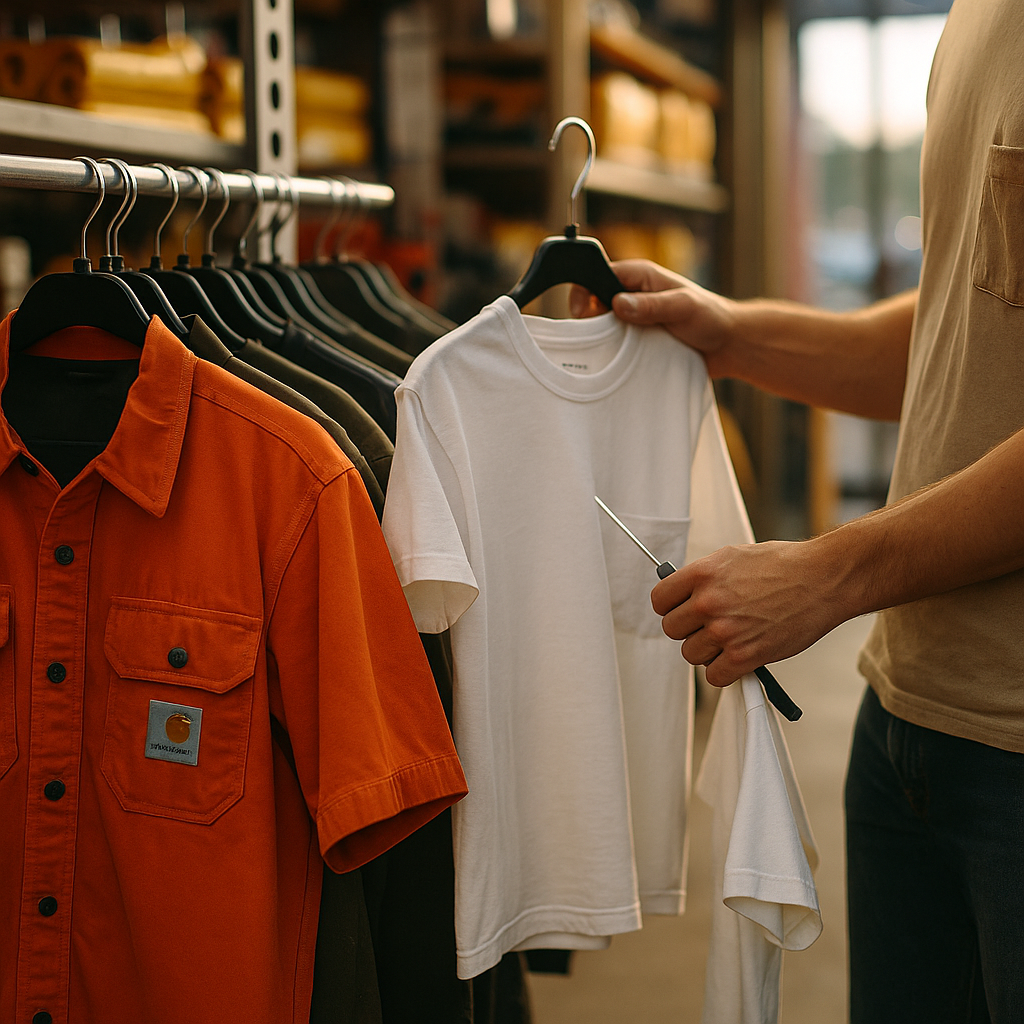
In 2025, many marketers are watching the death of the lifestyle brand unfold in real time. Status-led stories still get attention, but attention no longer equals preference, and preference no longer guarantees repeat purchases. Customers now demand proof: better outcomes, fewer steps, clearer pricing, faster support. Brands that win feel less like identities and more like tools—so what replaces aspiration when utility becomes the new desire?
Why lifestyle branding is failing in 2025: consumer trust
Lifestyle branding used to work because it solved a hard problem: it reduced choice overload. A logo or aesthetic signaled who a product was “for,” and customers adopted it as shorthand for identity. That shortcut is breaking because identity is no longer scarce—evidence is.
Several forces converge in 2025:
- Trust has shifted from messages to mechanisms. Consumers assume marketing claims are optimized for persuasion, not accuracy. They want to see how a product works, what it costs over time, and what happens when something breaks.
- Social feeds reward novelty, not loyalty. Lifestyle brands once relied on consistent aesthetic repetition; now algorithms amplify whatever is new, polarizing, or immediately useful. A coherent “vibe” doesn’t translate into durable differentiation when the feed moves on in hours.
- Price transparency is unavoidable. Comparison engines, marketplaces, and creator reviews make it hard to sustain premium positioning based on symbolism alone. Customers can quickly ask, “What does this do better?” and find competitors.
- Communities are less brand-owned. People gather around interests, workflows, and outcomes—often on platforms where brands are guests, not hosts. That changes the power dynamic: brands earn attention by helping, not by broadcasting identity narratives.
This doesn’t mean storytelling is dead. It means story can’t substitute for substance. The most effective narratives now explain how a product creates value, why it’s trustworthy, and what the customer can expect next—especially after the purchase.
Utility brand definition: value proposition
A utility brand wins because it reliably helps customers accomplish something measurable with minimal friction. It does not abandon emotion; it earns emotion through results. Utility brands are built around a value proposition that is clear enough to repeat and specific enough to verify.
Common traits of utility brands:
- Outcome clarity: They state the job-to-be-done in plain language (save time, reduce risk, improve health markers, lower total cost, increase uptime).
- Proof density: They provide demonstrations, benchmarks, certifications, transparent policies, and real customer examples. Proof isn’t hidden in footnotes; it is the product story.
- Friction removal: They optimize onboarding, returns, setup, customer support, and billing. Convenience becomes part of the product.
- Compounding value: The product gets better with use through services, updates, education, or integrations—without trapping customers.
To make this concrete, consider the difference between:
- “Wear who you are.” (Lifestyle)
- “Stay comfortable for 12 hours with fewer wash cycles; if the fit is wrong, exchange in two clicks.” (Utility)
Both can be premium. The difference is what the premium is buying: belonging versus performance, symbolism versus certainty. In 2025, certainty is increasingly the luxury.
Customer experience as brand: product-led growth
When utility becomes the brand, customer experience is no longer a supporting function; it becomes the primary marketing channel. This is where product-led growth (PLG) and service design reshape brand building.
Utility brands treat every touchpoint as part of the product:
- Discovery: Search pages, listings, and ads answer practical questions immediately (compatibility, sizing, setup time, total cost, warranties).
- Evaluation: Tools like calculators, side-by-side comparisons, and interactive demos replace vague claims. The customer can self-qualify quickly.
- Purchase: Checkout is fast, pricing is legible, and “surprise fees” are avoided because they destroy trust.
- Onboarding: First-use success is engineered through guided setup, templates, or training—because repeat purchase begins with first value.
- Support: Resolution speed and accountability become brand assets. Strong utility brands publish service standards and meet them.
Readers often ask: “Does this mean we stop investing in brand?” No. It means your brand investment shifts from mood boards and slogans to systems—the systems that make the promise real. Visual identity still matters, but it’s the wrapper around a reliable experience.
Another follow-up: “Is PLG only for software?” It’s most visible in software, but the principle applies everywhere. A consumer goods brand can be product-led through fit guarantees, replenishment reminders, repair services, and clear care instructions. A B2B services firm can be product-led through diagnostics, transparent scopes, standardized reporting, and proactive risk alerts.
Credibility marketing: EEAT and trust signals
In a utility-driven market, credibility is the differentiator. Google’s EEAT principles—Experience, Expertise, Authoritativeness, Trust—map cleanly to what customers already want: reassurance that a product will work for them in real conditions.
Utility brands operationalize EEAT with concrete trust signals:
- Experience: Show the product in real scenarios, not idealized studio moments. Use authentic before/after workflows, unedited demos, and “what went wrong” lessons. Experience also shows up in policies: the return process should reflect empathy for real life.
- Expertise: Publish decision guides, troubleshooting content, and safety/quality documentation written or reviewed by qualified professionals. If you make health, financial, or performance claims, explain methods and constraints in plain language.
- Authoritativeness: Earn third-party validation—certifications, standards compliance, reputable partnerships, and credible reviews. Authority is built through consistent delivery and verifiable performance, not self-awarded badges.
- Trust: Be explicit about pricing, data handling, warranties, and limitations. Trust grows when you say what the product doesn’t do as clearly as what it does.
A useful way to test EEAT alignment is to ask: “If a skeptical customer read our website for five minutes, could they accurately predict what it’s like to own this?” If the answer is no, the brand is still leaning on lifestyle fog.
Brands that practice credibility marketing also reduce buyer’s remorse. Clear expectations lower returns, support tickets, and negative reviews—creating a compounding advantage that looks like “brand strength” but is actually operational excellence.
From identity to outcomes: retention strategy
The lifestyle era emphasized acquisition—getting noticed, getting followed, getting associated with a tribe. Utility brands emphasize retention because the product’s value is proven over time. Retention is also more resilient: it depends less on algorithms and more on customer success.
To shift from identity to outcomes, build a retention strategy around three loops:
- Value loop: Customers experience a quick win, then a deeper win. This requires intentional sequencing: templates, setup checklists, starter kits, or “first 30 days” guidance.
- Confidence loop: Customers receive reassurance that they made a good decision. This includes progress tracking, usage insights, reminders, and transparent maintenance guidance. Confidence reduces churn because uncertainty is expensive.
- Relationship loop: Customers can reach a human when needed, and the brand closes the loop with accountability. A utility brand treats complaints as product research, not PR threats.
Follow-up question: “What happens to community?” Community becomes more practical. Instead of “people like me,” it becomes “people solving the same problem.” That shift changes content strategy: publish playbooks, benchmarks, and FAQs that help customers get more value, then invite them to share improvements. The community becomes a performance engine, not a fandom.
Another question: “Can utility brands still be premium?” Yes. Premium utility is built on reliability, support, warranties, durability, and time savings. Many customers will pay more to avoid hidden costs—repairs, downtime, rework, and confusion.
How to build a utility brand: competitive advantage
Transitioning from lifestyle-led marketing to utility-led positioning is a strategic and operational project. The goal is a defensible competitive advantage: a promise competitors can’t easily imitate because it’s built into your product and systems.
Use this framework to build a utility brand:
- 1) Choose a measurable promise. Pick one primary outcome you can own (faster setup, fewer defects, lower total cost, better fit, higher uptime). Make it specific enough to test.
- 2) Map friction from click to renewal. Identify where customers hesitate, fail, or get surprised: pricing, shipping, installation, learning curve, customer support, compatibility, maintenance. Fix the top three first.
- 3) Replace claims with proofs. Add demos, benchmarks, third-party validations, and policy clarity. When you cite performance, explain the conditions. Avoid vague superlatives that erode trust.
- 4) Design for first value. Make the first successful use nearly inevitable. Provide guided steps, setup support, templates, and proactive tips. Track “time to first value” as a core metric.
- 5) Make service part of the product. Publish response times, offer easy returns, and build repair/replace paths. Customers remember what happens when something goes wrong.
- 6) Align incentives internally. Ensure marketing, product, and support share the same success metric: customer outcomes. If marketing is rewarded for leads while support is punished for volume, the brand promise will fracture.
One practical way to start is to audit your homepage and top product pages. Count how many sentences are identity statements versus utility statements. Then rewrite the first screen to answer five questions: What does it do? Who is it for? What proof supports it? What does it cost? What happens if it fails?
FAQs: utility brand vs lifestyle brand
What is the difference between a lifestyle brand and a utility brand?
A lifestyle brand sells identity, aspiration, and belonging through symbolism and aesthetics. A utility brand sells outcomes through performance, clarity, and low friction. Utility brands can still be emotional, but emotion is earned through consistent results and support.
Is lifestyle branding completely dead?
No. It is less effective as the primary differentiator when competitors can match aesthetics quickly and consumers can verify claims easily. Lifestyle elements still help with recognition and affinity, but they must sit on top of real utility: proof, experience, and clear value.
How do I know if my brand should shift toward utility?
If you face high return rates, low repeat purchase, heavy discounting, or customers asking basic questions that your marketing doesn’t answer, you likely need more utility. If reviews mention confusion, setup difficulty, or poor support, the fastest brand lift comes from fixing the experience.
What metrics matter most for a utility brand?
Focus on time to first value, repeat purchase rate, retention/churn, customer support resolution time, return rate, product reliability/defect rate, and net revenue retention for subscription models. Pair these with qualitative feedback from reviews and support transcripts.
How do utility brands win on social media if they’re not “aspirational”?
They win with demonstrations, comparisons, quick lessons, and honest constraints. “Here’s how to choose,” “here’s what to avoid,” and “here’s the fastest setup” content earns shares because it helps immediately. Utility content also performs well in search, creating durable traffic beyond feeds.
Can small brands compete with big brands as utility brands?
Yes. Small brands can move faster on service, clarity, and specialization. A narrow measurable promise, exceptional support, and transparent policies often beat broad lifestyle positioning—especially in categories where customers fear wasting money or time.
In 2025, the shift is clear: customers reward brands that reduce uncertainty and deliver outcomes. The lifestyle story still has a place, but it can’t carry the business on its own. Build a utility brand by making a measurable promise, removing friction across the experience, and backing every claim with proof. When usefulness becomes your identity, loyalty follows.
Top Influencer Marketing Agencies
The leading agencies shaping influencer marketing in 2026
Agencies ranked by campaign performance, client diversity, platform expertise, proven ROI, industry recognition, and client satisfaction. Assessed through verified case studies, reviews, and industry consultations.
Moburst

-
2

The Shelf
Boutique Beauty & Lifestyle Influencer AgencyA data-driven boutique agency specializing exclusively in beauty, wellness, and lifestyle influencer campaigns on Instagram and TikTok. Best for brands already focused on the beauty/personal care space that need curated, aesthetic-driven content.Clients: Pepsi, The Honest Company, Hims, Elf Cosmetics, Pure LeafVisit The Shelf → -
3

Audiencly
Niche Gaming & Esports Influencer AgencyA specialized agency focused exclusively on gaming and esports creators on YouTube, Twitch, and TikTok. Ideal if your campaign is 100% gaming-focused — from game launches to hardware and esports events.Clients: Epic Games, NordVPN, Ubisoft, Wargaming, Tencent GamesVisit Audiencly → -
4

Viral Nation
Global Influencer Marketing & Talent AgencyA dual talent management and marketing agency with proprietary brand safety tools and a global creator network spanning nano-influencers to celebrities across all major platforms.Clients: Meta, Activision Blizzard, Energizer, Aston Martin, WalmartVisit Viral Nation → -
5

The Influencer Marketing Factory
TikTok, Instagram & YouTube CampaignsA full-service agency with strong TikTok expertise, offering end-to-end campaign management from influencer discovery through performance reporting with a focus on platform-native content.Clients: Google, Snapchat, Universal Music, Bumble, YelpVisit TIMF → -
6

NeoReach
Enterprise Analytics & Influencer CampaignsAn enterprise-focused agency combining managed campaigns with a powerful self-service data platform for influencer search, audience analytics, and attribution modeling.Clients: Amazon, Airbnb, Netflix, Honda, The New York TimesVisit NeoReach → -
7

Ubiquitous
Creator-First Marketing PlatformA tech-driven platform combining self-service tools with managed campaign options, emphasizing speed and scalability for brands managing multiple influencer relationships.Clients: Lyft, Disney, Target, American Eagle, NetflixVisit Ubiquitous → -
8

Obviously
Scalable Enterprise Influencer CampaignsA tech-enabled agency built for high-volume campaigns, coordinating hundreds of creators simultaneously with end-to-end logistics, content rights management, and product seeding.Clients: Google, Ulta Beauty, Converse, AmazonVisit Obviously →