


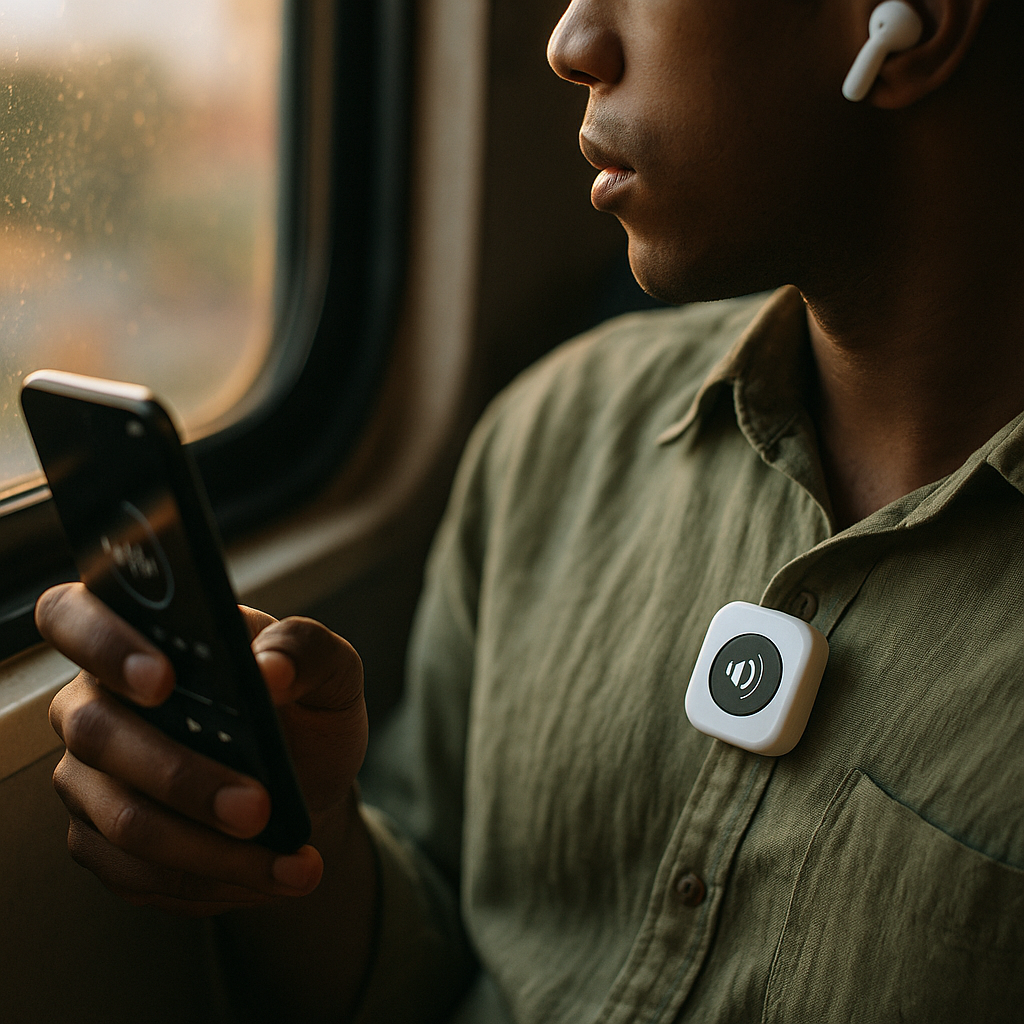
Audio First Marketing on Wearable Smart Pins is moving from novelty to practical channel in 2025 as screenless devices become daily companions. Smart pins sit on a lapel, lanyard, or bag strap, capturing intent in the moment and delivering responses through voice. This playbook shows how to plan, build, measure, and refine audio experiences that respect users and drive results—ready to test what works?
Audio-first marketing strategy: define goals, audiences, and moments
A wearable smart pin is not a smaller smartphone; it is a different behavior model. Users engage while walking, commuting, shopping, working, and socializing—often hands-free and time-constrained. Your strategy should start with moments, not messages.
Set one primary business objective per experience. Common objectives include: lead capture, appointment booking, store visitation, product education, loyalty enrollment, and post-purchase support. Avoid stacking too many goals into one flow; audio journeys degrade quickly when they feel like a menu tree.
Map “micro-moments” by context. Build a simple table internally: location (home, store, outdoors), time (morning commute, lunch), intent (compare, troubleshoot, reorder), and constraints (noise, privacy). Each micro-moment should have a tailored response style: shorter in noisy environments, more confirmatory when transactions are involved.
Choose the right audience slice. Early smart-pin users skew toward productivity, accessibility, and field-work use cases. Your first campaigns should target segments that already value voice: customers who use call support, frequent re-orderers, members in loyalty programs, and users of assistive tech. That focus strengthens relevance and reduces the risk of building for an audience that is not yet there.
Design for trust and safety from day one. Pins can feel intimate because they’re worn. Make privacy expectations explicit: what is recorded, when it is stored, and how a user can delete data. Include a “privacy recap” in plain language within the experience, not hidden in policy pages. This is part of EEAT: clear intent, clear ownership, and clear user control.
Wearable smart pin user experience: conversation design that converts
Audio-first conversion depends on how fast users get value and how confident they feel. Treat the smart pin as a single-turn assistant by default, then add multi-turn only when necessary.
Start with a one-sentence value promise. In the first two seconds, the user should hear what they can accomplish. Example: “I can help you reorder your usual coffee pods—want the same brand and quantity?” This reduces cognitive load and sets expectations.
Use progressive disclosure. Share only what the user needs now. If they ask for more detail, then expand. Pins are used in motion; long responses increase drop-off.
Build confirmation points for accuracy. Speech recognition in real environments can mishear. Confirm critical details: quantities, dates, locations, and payment selections. Use lightweight confirmations: “Got it—two boxes, shipped to Elm Street. Should I place the order?” Keep confirmations short to avoid frustration.
Offer silent and private modes. Many situations are not voice-friendly. Provide an option like “send to my phone” or “summarize silently,” using the companion app or notifications when available. If the platform supports it, allow the user to switch to a brief tone + short spoken prompt rather than full audio output.
Respect accessibility. Audio-first does not mean audio-only. Support slower speech, clear language, and alternatives for hearing-impaired users via companion text. Also consider neurodiversity: predictable structure, minimal interruptions, and the ability to repeat or review the last instruction.
Write like a helpful operator, not an ad. Pins amplify annoyance because they are close to the body. Avoid slogans and excessive brand mentions. Use brand voice through tone and helpfulness, and reserve branding for the close: “I can save this as your default with Acme Outdoors—want that?”
Voice commerce and audio conversion: funnel design for screenless journeys
Screenless funnels succeed when they remove steps, not when they recreate web pages in audio form. Your job is to compress the decision-making path into the smallest set of high-confidence turns.
Pick a conversion model:
- Direct action: reorder, book, pay, or confirm in-session. Best for existing customers and low-risk purchases.
- Assisted handoff: capture intent and route to SMS/email/app for completion. Best for high-consideration products, regulated categories, or multi-party decisions.
- Store and forward: collect details and schedule follow-up from a human agent. Best for B2B, services, and complex troubleshooting.
Reduce choice overload. Smart pins are ideal for curated options: “Your top two matches are X and Y. Want quick differences?” If you have a large catalog, use clarifying questions that narrow quickly: price band, size, compatibility, or occasion. Keep it to one question at a time.
Use memory responsibly. If the user grants permission, remember preferences: sizes, favorite flavors, typical budget, preferred store. But always allow override: “I’m using your usual medium—say ‘change’ to pick a different size.” This improves conversion while keeping the user in control.
Handle payment and identity with care. Avoid reading sensitive details aloud. Use tokenized payments, device-level authentication, and short confirmations. If the platform requires a phone confirm for checkout, frame it as convenience: “I’ve sent a secure confirmation to your phone—approve to finish.”
Plan for failure states. Expect noise, interruptions, and partial attention. Provide graceful recovery: “If you got interrupted, say ‘resume my order.’” Offer fallbacks: call me back, send a link, or connect to an agent. Reliability is a conversion lever.
Smart pin brand safety and privacy: compliance, consent, and credibility
Audio-first marketing on wearables touches sensitive territory: ambient environments, bystanders, and the perception of “always listening.” Strong governance is not optional; it is a competitive advantage.
Lead with transparent consent. Ask permission in context, in plain language, before collecting personal data or storing voice transcripts. Explain why: “I can save your sizes so future orders are faster.” Provide a simple “no” path that still delivers a basic experience.
Minimize data and retain it briefly. Collect only what is required to complete the task. Store the least sensitive representation possible (for example, intent labels instead of raw audio). Set retention rules aligned with user expectations and business needs, and communicate them.
Protect bystanders. Smart pins can be used in public spaces. Design prompts that avoid broadcasting personal info. Instead of “Your lab results are ready,” say “You have a new secure update—want me to send it to your phone?” This reduces reputational risk.
Establish content standards and review. Create an internal checklist for audio scripts: prohibited claims, regulated wording, accessibility requirements, and escalation triggers. In regulated categories, involve legal early and audit the final conversational flows, not just the copy.
Strengthen EEAT signals. Publish clear brand ownership and support routes: who built the experience, how to get help, and how to report issues. If your audio guidance includes advice (health, finance, safety), ensure it is reviewed by qualified professionals and that the experience encourages appropriate professional consultation when needed.
Audio analytics and attribution: measurement for wearable smart pin campaigns
If you cannot measure it, you cannot improve it. Audio-first measurement needs a blend of conversation analytics, downstream business outcomes, and privacy-safe attribution.
Track the right events. Define events that map to user intent and friction, such as:
- Invocation rate (per eligible user or per impression)
- First-turn success (user got a relevant response without repeating)
- Clarification count (how many follow-up questions were needed)
- Completion rate (task finished in-session)
- Handoff acceptance (user accepted phone/app link)
- Fallback rate (agent transfer, error, or abandonment)
Measure “time to value.” For pins, this is often more predictive than total session length. If users achieve the goal in under 20–40 seconds, satisfaction and repeat usage typically rise. Use your own benchmarks and compare across flows rather than chasing generic targets.
Use privacy-safe attribution. Where possible, attribute via first-party identifiers (logged-in user, loyalty ID) and consented device links to the companion app. For offline outcomes, use store visit lift methods that rely on aggregated signals and consented location data, or use redemption codes designed for audio (“Say ‘PIN10’ at checkout”) when appropriate.
Run structured experimentation. A/B test one variable at a time: opening line, number of options presented, confirmation style, or handoff framing. Keep audio variants long enough to reduce novelty bias. Document learnings in a shared library so teams do not repeat mistakes.
Close the loop with qualitative insight. Quant metrics show where users struggle; short post-interaction prompts reveal why. Ask one question maximum: “Did I solve this?” plus an optional voice note. Sample sparingly to avoid fatigue.
Content repurposing for voice: build an audio-first production system
Wearable smart pins reward teams that can produce helpful audio quickly, consistently, and safely. Repurposing is not copy-paste; it is adapting content to spoken delivery and contextual need.
Start with a “voice content matrix.” Identify your top customer questions by stage (pre-purchase, onboarding, troubleshooting, re-order). For each, write:
- A 10-second answer (default)
- A 30-second expanded answer (on request)
- A “send details to phone” version (for specs, lists, or legal text)
Convert blog and help-center content into speakable units. Replace headings with signposts (“First… Next… Finally…”). Use short sentences, concrete nouns, and fewer acronyms. If you must use a term of art, define it once.
Build an expert review workflow. For claims, safety steps, or recommendations, involve subject-matter reviewers and document approvals. This supports EEAT and reduces rework when you expand to new markets or regulated use cases.
Create a brand voice guide for audio. Define pacing, formality, permissible humor, and how the assistant refers to the brand. Include examples of do/don’t responses, escalation language, and how to handle uncertainty: “I’m not fully sure—want me to connect you to support or send options?” Honest uncertainty increases trust.
Prepare for multilingual and accent diversity. Prioritize your most common languages and test with real users, not only internal staff. Ensure names, addresses, and product terms are pronounced well and can be confirmed easily.
FAQs: audio first marketing on wearable smart pins
What makes wearable smart pins different from smart speakers for marketing?
Smart pins travel with the user and are used in short, task-focused moments. That shifts marketing from “lean-back discovery” to “in-the-moment utility,” with stronger emphasis on privacy, brevity, and high-confidence confirmations.
Do I need an app to run campaigns on smart pins?
Not always, but a companion app often improves secure actions, silent handoffs, and measurement. If the platform supports account linking, you can connect pins to existing customer profiles and enable more reliable personalization and attribution.
How do you avoid sounding like an ad in audio-first experiences?
Lead with the task the user wants to complete, keep brand mentions minimal, and offer choices that genuinely help. Use neutral language, confirm intent, and provide an easy exit. Helpful beats hype on a screenless device.
What are the best first use cases to pilot?
Start with high-frequency, low-friction tasks: order status, reorders, appointment scheduling, store hours, basic troubleshooting, and loyalty point checks. These deliver quick wins and produce clean analytics for iteration.
How do you measure ROI without invasive tracking?
Use first-party, consented identifiers for logged-in customers; track task completion and handoff acceptance; and connect to downstream outcomes like purchases, bookings, and reduced support time. For offline impact, use aggregated methods or audio-friendly promo codes.
What privacy practices should be non-negotiable?
Clear consent prompts, minimal data collection, secure handling of sensitive info, user controls for deletion, and bystander-aware messaging. Also provide an obvious route to human support and a way to report problems.
Audio-first marketing on wearable smart pins works in 2025 when you treat the channel as utility, not a loudspeaker. Build for real-world moments, keep conversations short, confirm critical details, and default to privacy-safe choices. Measure time to value, iterate with experiments, and repurpose content into speakable units. Do this well and your brand becomes the assistant users choose to keep close.
Top Influencer Marketing Agencies
The leading agencies shaping influencer marketing in 2026
Agencies ranked by campaign performance, client diversity, platform expertise, proven ROI, industry recognition, and client satisfaction. Assessed through verified case studies, reviews, and industry consultations.
Moburst

-
2

The Shelf
Boutique Beauty & Lifestyle Influencer AgencyA data-driven boutique agency specializing exclusively in beauty, wellness, and lifestyle influencer campaigns on Instagram and TikTok. Best for brands already focused on the beauty/personal care space that need curated, aesthetic-driven content.Clients: Pepsi, The Honest Company, Hims, Elf Cosmetics, Pure LeafVisit The Shelf → -
3

Audiencly
Niche Gaming & Esports Influencer AgencyA specialized agency focused exclusively on gaming and esports creators on YouTube, Twitch, and TikTok. Ideal if your campaign is 100% gaming-focused — from game launches to hardware and esports events.Clients: Epic Games, NordVPN, Ubisoft, Wargaming, Tencent GamesVisit Audiencly → -
4

Viral Nation
Global Influencer Marketing & Talent AgencyA dual talent management and marketing agency with proprietary brand safety tools and a global creator network spanning nano-influencers to celebrities across all major platforms.Clients: Meta, Activision Blizzard, Energizer, Aston Martin, WalmartVisit Viral Nation → -
5

The Influencer Marketing Factory
TikTok, Instagram & YouTube CampaignsA full-service agency with strong TikTok expertise, offering end-to-end campaign management from influencer discovery through performance reporting with a focus on platform-native content.Clients: Google, Snapchat, Universal Music, Bumble, YelpVisit TIMF → -
6

NeoReach
Enterprise Analytics & Influencer CampaignsAn enterprise-focused agency combining managed campaigns with a powerful self-service data platform for influencer search, audience analytics, and attribution modeling.Clients: Amazon, Airbnb, Netflix, Honda, The New York TimesVisit NeoReach → -
7

Ubiquitous
Creator-First Marketing PlatformA tech-driven platform combining self-service tools with managed campaign options, emphasizing speed and scalability for brands managing multiple influencer relationships.Clients: Lyft, Disney, Target, American Eagle, NetflixVisit Ubiquitous → -
8

Obviously
Scalable Enterprise Influencer CampaignsA tech-enabled agency built for high-volume campaigns, coordinating hundreds of creators simultaneously with end-to-end logistics, content rights management, and product seeding.Clients: Google, Ulta Beauty, Converse, AmazonVisit Obviously →