


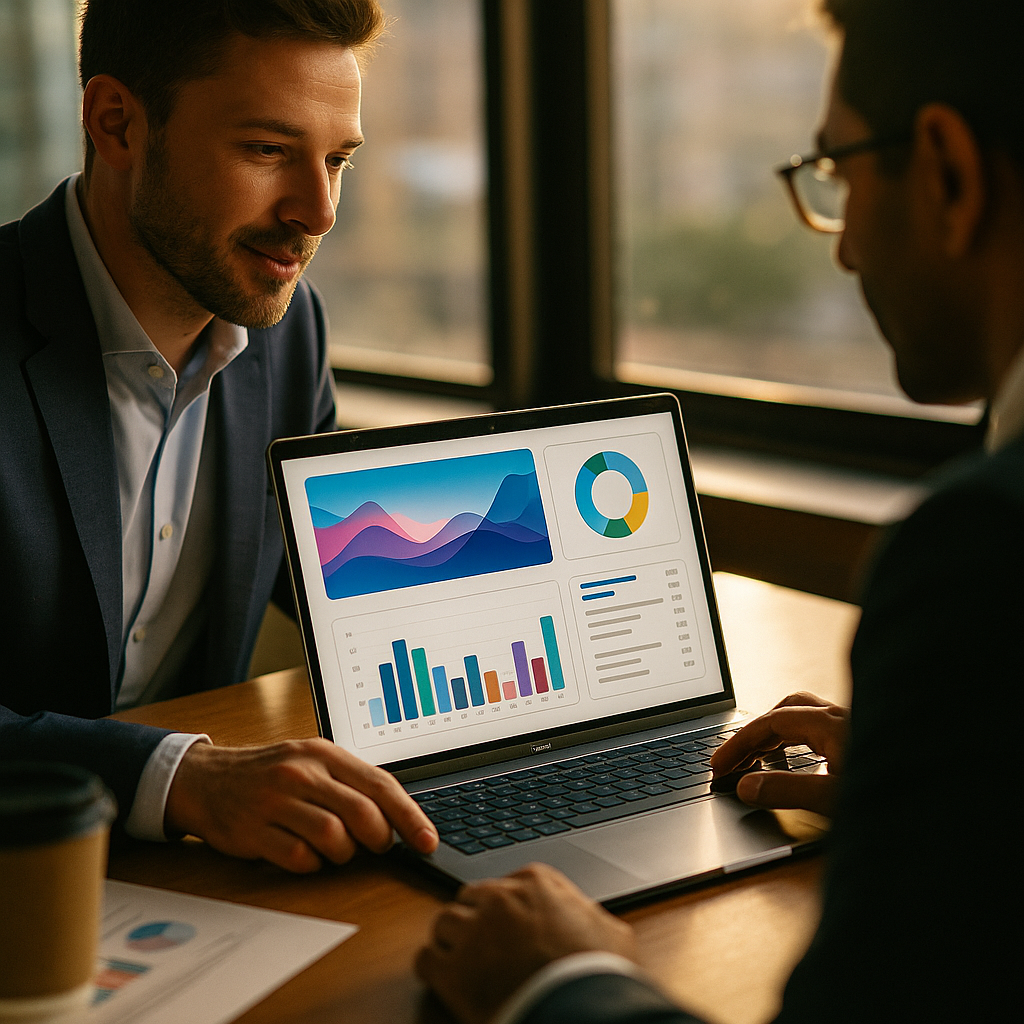
In 2025, buyers judge software in seconds, even in complex procurement cycles. The role of aesthetics in B2B SaaS is no longer cosmetic; it shapes trust, comprehension, and adoption across every persona. When dashboards feel effortless, users move faster and champions advocate harder inside the account. Design becomes a growth lever, not a finishing touch—so what actually makes “pretty” software win?
Why aesthetics in B2B SaaS influences trust and buying decisions
B2B teams like to believe they buy rationally. In practice, first impressions and perceived professionalism influence whether a prospect continues a demo, whether security teams take you seriously, and whether executives feel confident attaching their names to a purchase order. Aesthetics acts as a proxy for operational maturity: if the interface looks neglected, buyers often infer the codebase and processes are neglected too.
“Aesthetics” in SaaS is not about decoration. It’s the visible layer of product quality: layout hierarchy, typography, spacing, color, motion restraint, icon clarity, and the consistency that signals intent. In B2B, where stakes include revenue reporting, compliance, and customer data, a polished UI reduces the subtle anxiety users feel when they cannot predict what will happen after a click.
Trust also shows up during evaluation. Sales-led motions depend on momentum. If evaluators struggle to find basic settings, interpret charts, or complete a guided trial, they slow down and invite alternatives. A visually coherent interface speeds confidence because it helps users build a mental model quickly. That translates into faster consensus across stakeholders: end users, admins, security reviewers, and finance.
To apply this in 2025, measure aesthetics through outcomes, not opinions. Track demo-to-trial conversion, time-to-first-value, onboarding completion, support ticket rate per active user, and expansion eligibility. Then connect improvements in visual clarity and consistency to those metrics. When you can demonstrate that design reduces friction, “pretty” becomes a business case.
UI design for SaaS products: beauty as usability, not decoration
The strongest aesthetic advantage in B2B SaaS is cognitive ease. Users should not spend their working memory deciphering what a page means. When your UI looks “pretty,” it often means it is structured: clean information architecture, predictable patterns, and thoughtful defaults. That is usability wearing a suit.
In practical terms, winning UI design for SaaS products tends to share several traits:
- Clear hierarchy: Primary actions are obvious, secondary actions are discoverable, and destructive actions are unmistakable.
- Consistent components: The same button style, spacing rules, and table behaviors appear across modules, reducing relearning.
- Readable data visuals: Charts use limited color, meaningful labels, and accessible contrasts; tables support scanning and comparison.
- Helpful empty states: Screens explain what’s missing and how to proceed, rather than blaming the user with blank space.
- Deliberate motion: Animations clarify state changes (saving, loading, success) without feeling like entertainment software.
Answer the follow-up question buyers and users silently ask: “Will my team be productive in week one?” Aesthetics can prove it. When the interface communicates state and next steps, users feel competent quickly. That perception becomes adoption, and adoption becomes renewal.
One more reality in B2B: most products are used in busy environments—multiple tabs, Slack interruptions, and tight deadlines. Visual design should anticipate that context. Offer strong contrast, compact density modes for analysts, and generous spacing for less frequent users. “Pretty” is flexible, not fragile.
Product-led growth and aesthetics: driving activation, adoption, and retention
If your go-to-market includes self-serve trials, freemium, or product-qualified leads, product-led growth and aesthetics are tightly linked. Users do not read documentation before judging whether the product “gets them.” They explore. Aesthetic clarity creates a guided experience without forcing a tour.
In 2025, winning PLG teams treat design as part of the growth funnel:
- Activation: A clean first-run experience reduces time-to-first-value. Make one path feel inevitable: import, connect, configure, run.
- Habit formation: Dashboards that highlight “what changed since yesterday” and “what needs attention now” earn repeat visits.
- Expansion: Well-designed upgrade prompts feel like assistance, not interruption, because they are contextual and consistent.
Aesthetics also reduces support load, which is an overlooked retention lever. When users can interpret system status and error states without filing a ticket, they feel in control. That improves satisfaction while lowering cost-to-serve.
To make this measurable, define a small set of product events that represent successful outcomes (for example: first integration connected, first report shared, first automation published). Then run UI experiments that reduce friction to those events. Avoid superficial “reskins” that don’t change comprehension. The right question is: “Did the new layout reduce time and errors?” not “Did stakeholders like the new color palette?”
Enterprise UX and accessibility: aesthetics that scale across roles and compliance
Enterprise UX brings constraints that consumer apps can ignore: complex permissions, audit logs, dense data, and governance requirements. The best enterprise aesthetics makes complexity navigable. That means careful information design, progressive disclosure, and role-based experiences that feel tailored without being fragmented.
Accessibility is a key part of aesthetics in enterprise contexts. In 2025, accessible design is not optional for serious vendors. It reduces legal and procurement risk, broadens usability, and improves overall clarity for everyone. Accessible design choices also tend to look better because they force discipline: contrast that supports readability, typography that scales, and interactions that are unambiguous.
Build enterprise-ready aesthetics by focusing on these elements:
- Role-aware UI: Admins need settings visibility and auditability; end users need task focus. Don’t make both wade through the same screens.
- Permission clarity: If a user can’t perform an action, explain why and how to request access. Mystery erodes trust.
- Audit-friendly design: Make change history easy to find and interpret. A clean audit trail is a visual trust signal.
- Accessible components: Keyboard navigation, focus states, and readable contrasts should be built into the design system, not patched later.
Procurement teams often ask follow-up questions that design can answer directly: “Can we govern this at scale?” “Will it work for different abilities and devices?” “Will it reduce operational risk?” A polished, accessible, and consistent UI communicates that you have anticipated enterprise realities.
Design systems for SaaS: consistency that reduces cost and speeds delivery
Pretty software rarely comes from one-off screens. It comes from a design system that enforces consistency and accelerates shipping. In B2B SaaS, where features expand and modules multiply, inconsistency is expensive: it increases QA burden, user confusion, and time-to-build for every new page.
A strong design systems for SaaS approach includes:
- Token-based theming: Color, spacing, typography, and elevation as tokens allow controlled evolution and enterprise theming without chaos.
- Component governance: Clear ownership, contribution rules, and deprecation paths prevent “almost the same” components from proliferating.
- Content standards: Microcopy guidelines keep labels, tooltips, and empty states consistent in tone and meaning.
- Data display patterns: Tables, filters, pagination, and export behaviors should work the same everywhere.
Design systems also strengthen your EEAT story in the product itself. Consistency signals expertise and reliability. It shows that teams share standards and that the product is maintained thoughtfully. When a buyer asks, “How do we know this vendor will still feel modern in two years?” a cohesive interface answers without words.
Internally, a design system improves cross-functional speed. Engineers spend less time debating UI decisions. Product managers can spec more clearly. Support and success teams can document and train faster because screens behave predictably. Over time, “pretty” becomes the visible result of operational excellence.
B2B SaaS branding through UI: differentiation, credibility, and memorability
Many B2B categories look interchangeable on a feature checklist. B2B SaaS branding through UI is how you make your product feel distinct during demos and daily use. Branding is not a logo in the corner; it is the atmosphere of the experience: clarity, restraint, confidence, and the way the product communicates with busy professionals.
Effective UI branding in B2B balances personality with seriousness. The goal is to look modern without looking risky. A few practical tactics:
- Own a visual point of view: A distinctive type scale, icon style, or data-visual language can make your product recognizable without being loud.
- Use color with purpose: Reserve saturated colors for meaning (status, priority, alerts). This reads as professional and improves scanning.
- Make messaging match behavior: If you claim “enterprise-grade,” the UI must feel stable: predictable layouts, clear loading states, and no surprising interactions.
- Design for screenshots: Buyers share screenshots internally. A clean, legible UI becomes sales collateral inside the customer’s org.
Answer a common follow-up question: “Does a nicer UI really beat better features?” The reality is that aesthetics amplifies the perceived value of features by making them understandable and trustworthy. In competitive deals, features often reach parity. The product that feels easier, safer, and more coherent wins more often because it reduces perceived switching and training risk.
FAQs
Is aesthetics really important in B2B SaaS if the product is complex?
Yes. Complexity makes aesthetics more important because users need stronger visual hierarchy, clearer status feedback, and consistent patterns to avoid errors. A polished UI reduces cognitive load and helps teams learn faster, which directly supports adoption and renewal.
What’s the difference between “pretty” design and good UX?
Pretty design focuses on visual appeal; good UX focuses on outcomes. In winning B2B SaaS, the two converge: the interface looks good because it communicates clearly, behaves predictably, and respects users’ time. If it looks good but confuses users, it’s not good aesthetics—it’s decoration.
How do we measure ROI from UI improvements?
Tie design changes to metrics such as time-to-first-value, onboarding completion, task success rate, support tickets per active user, trial-to-paid conversion, and retention/expansion. Combine behavioral analytics with usability testing to confirm why the metrics moved.
Will a redesign hurt enterprise customers who hate change?
It can if you change patterns without a transition plan. Reduce risk with progressive rollout, feature flags, in-app “what changed” notes, preserved keyboard shortcuts, and optional density settings. Keep core workflows familiar while improving clarity and consistency.
Do we need a design system, or can we just refresh the UI?
If you want lasting results, you need a design system. A one-time refresh often decays as new features ship. A system—tokens, components, and governance—keeps the product cohesive, speeds development, and lowers long-term maintenance costs.
How does accessibility relate to aesthetics?
Accessibility improves aesthetics by enforcing clarity: readable contrast, clear focus states, scalable typography, and understandable interactions. It also reduces procurement risk and expands usability across a wider range of users and environments.
In 2025, aesthetics is a competitive advantage in B2B SaaS because it makes software easier to trust, faster to learn, and safer to adopt at scale. The best-looking products win not through decoration, but through clarity, consistency, and accessible enterprise UX. Invest in design systems, measure outcomes, and align UI branding with real behavior. Pretty software wins when it makes work feel simpler.
Top Influencer Marketing Agencies
The leading agencies shaping influencer marketing in 2026
Agencies ranked by campaign performance, client diversity, platform expertise, proven ROI, industry recognition, and client satisfaction. Assessed through verified case studies, reviews, and industry consultations.
Moburst

-
2

The Shelf
Boutique Beauty & Lifestyle Influencer AgencyA data-driven boutique agency specializing exclusively in beauty, wellness, and lifestyle influencer campaigns on Instagram and TikTok. Best for brands already focused on the beauty/personal care space that need curated, aesthetic-driven content.Clients: Pepsi, The Honest Company, Hims, Elf Cosmetics, Pure LeafVisit The Shelf → -
3

Audiencly
Niche Gaming & Esports Influencer AgencyA specialized agency focused exclusively on gaming and esports creators on YouTube, Twitch, and TikTok. Ideal if your campaign is 100% gaming-focused — from game launches to hardware and esports events.Clients: Epic Games, NordVPN, Ubisoft, Wargaming, Tencent GamesVisit Audiencly → -
4

Viral Nation
Global Influencer Marketing & Talent AgencyA dual talent management and marketing agency with proprietary brand safety tools and a global creator network spanning nano-influencers to celebrities across all major platforms.Clients: Meta, Activision Blizzard, Energizer, Aston Martin, WalmartVisit Viral Nation → -
5

The Influencer Marketing Factory
TikTok, Instagram & YouTube CampaignsA full-service agency with strong TikTok expertise, offering end-to-end campaign management from influencer discovery through performance reporting with a focus on platform-native content.Clients: Google, Snapchat, Universal Music, Bumble, YelpVisit TIMF → -
6

NeoReach
Enterprise Analytics & Influencer CampaignsAn enterprise-focused agency combining managed campaigns with a powerful self-service data platform for influencer search, audience analytics, and attribution modeling.Clients: Amazon, Airbnb, Netflix, Honda, The New York TimesVisit NeoReach → -
7

Ubiquitous
Creator-First Marketing PlatformA tech-driven platform combining self-service tools with managed campaign options, emphasizing speed and scalability for brands managing multiple influencer relationships.Clients: Lyft, Disney, Target, American Eagle, NetflixVisit Ubiquitous → -
8

Obviously
Scalable Enterprise Influencer CampaignsA tech-enabled agency built for high-volume campaigns, coordinating hundreds of creators simultaneously with end-to-end logistics, content rights management, and product seeding.Clients: Google, Ulta Beauty, Converse, AmazonVisit Obviously →