


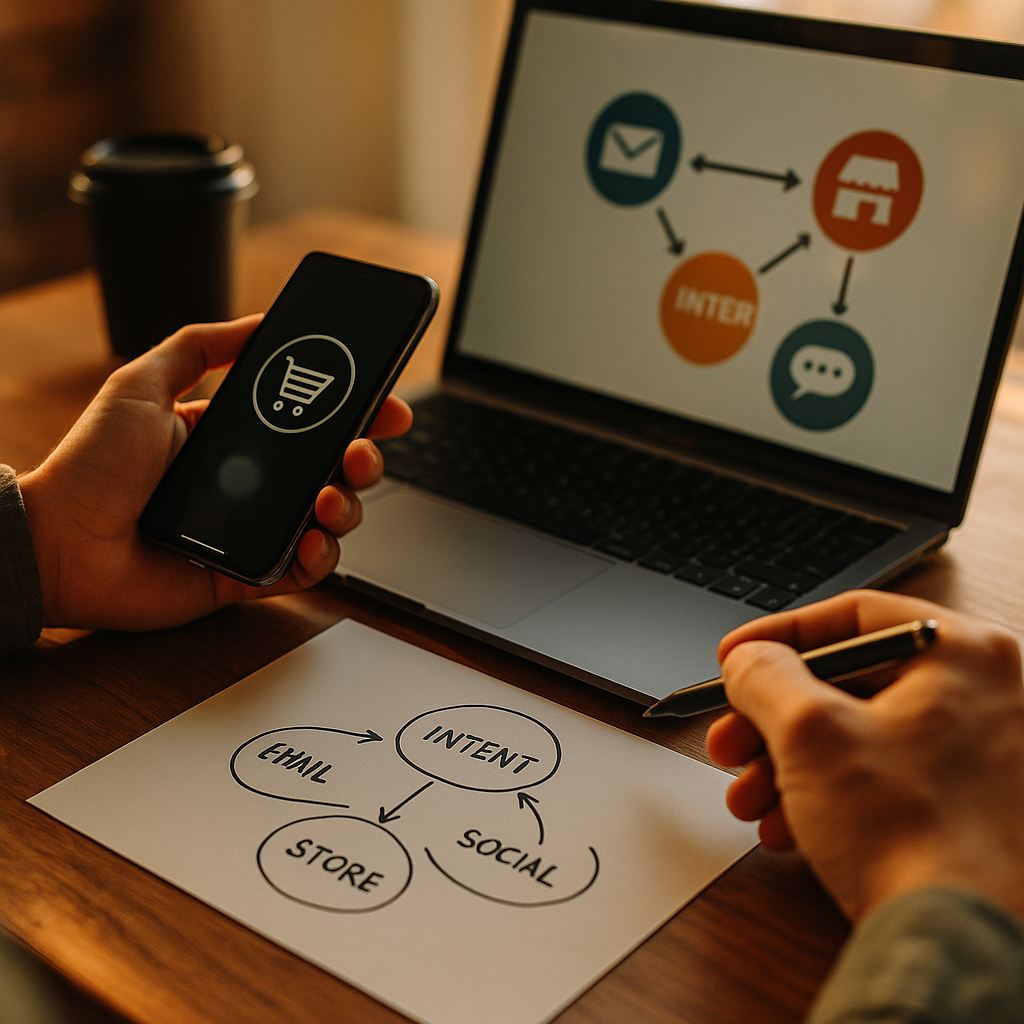
In 2025, many brands have mastered omnichannel execution but still struggle to prove which interactions actually drive profitable growth. Moving From Omnichannel to Optichannel Strategy shifts the focus from being everywhere to being effective where it matters, using data, intent, and experience design. When you align channels to customer goals and business outcomes, performance improves and complexity drops—so where do you start?
Optichannel strategy definition and why omnichannel is no longer enough
Omnichannel aims to create a seamless experience across many touchpoints—web, app, email, social, store, call center, marketplaces. It often measures success through coverage (how many channels are connected) and consistency (same message, same offers). That approach helped customers move across channels without friction, but it also encouraged brands to keep adding touchpoints even when incremental value was unclear.
Optichannel is a decision framework that prioritizes the best channels and sequences for specific customers, intents, and moments—then deliberately deprioritizes or redesigns the rest. It does not replace omnichannel plumbing; it uses it more intelligently. The difference is outcome focus: optichannel asks, “Which channel mix and journey produce the highest value at the lowest cost for this situation?”
In 2025, this shift is accelerated by three realities:
- Rising acquisition costs make “always-on everywhere” less sustainable. Brands need precision in where they spend.
- Privacy and measurement constraints reduce the usefulness of broad attribution models; you need stronger first-party data and experimentation.
- Customer attention is fragmented, so relevance beats presence. Customers reward brands that make decisions easier, faster, and more personal.
Optichannel does not mean fewer channels for everyone; it means fewer channels per decision, per customer, per moment—based on evidence.
Customer journey optimization with intent-based channel selection
Optichannel starts with customer journey optimization grounded in intent. Instead of mapping an idealized journey, map the journeys customers actually take—and label each step with what the customer is trying to accomplish. Typical intents include: exploring options, validating trust, comparing pricing, resolving an issue, replenishing, upgrading, or returning.
Then match intent to channels that excel at that job:
- Exploration: SEO content, short-form video, influencer partnerships, category pages, in-store discovery experiences.
- Validation: reviews, expert comparisons, live chat, store associates, detailed FAQs, transparent policies.
- Conversion: fast checkout, saved carts, call-back scheduling, financing tools, store pickup.
- Support: self-service portal, messaging, proactive order updates, phone for complex issues.
Answer the follow-up question your team will ask: How do we know which channels “excel”? Use a combination of behavioral data (drop-off, time to value), operational data (cost per contact, handle time), and customer feedback (CSAT, NPS, effort score). The best channel is the one that meets intent with the least friction while protecting margin and brand trust.
Also design for sequence, not just selection. For example, a high-consideration product may benefit from “content → comparison tool → scheduled consult → purchase,” while a replenishment journey should compress to “reminder → one-tap reorder.” Optichannel makes these sequences explicit, measurable, and improvable.
Personalization and first-party data strategy for optichannel execution
Optichannel relies on personalization, but not the superficial kind. It uses first-party data to decide: which channel, which message, which cadence, and which experience to present—without over-contacting customers. In 2025, strong optichannel personalization typically uses:
- Declared data: preferences, sizes, communication choices, service needs, loyalty profile.
- Behavioral data: browsing depth, feature interest, repeat patterns, content consumption, cart behavior.
- Transactional and service data: returns, warranties, delivery preferences, support history.
A practical approach is to build a decisioning layer that sits above channels. Instead of each channel team optimizing locally, the decisioning layer sets rules and models such as:
- Next best action: educate, offer, assist, or step back.
- Next best channel: email vs. SMS vs. app push vs. retargeting vs. human outreach.
- Frequency and suppression: limit messages when engagement drops or complaints rise.
Answer another common concern: What if we don’t have “perfect” data? You do not need perfection to start. Begin with a few high-signal attributes—recency, frequency, monetary value, product category interest, and service history—then iterate. Pair the data with transparent consent, clear preference centers, and easy opt-outs. That builds trust, improves deliverability, and strengthens your ability to personalize responsibly.
Finally, align personalization with value exchange. If you ask customers for data, show them what they gain: faster reorders, more accurate recommendations, better service, fewer irrelevant messages.
Channel performance metrics and measurement frameworks that prove value
Optichannel succeeds when measurement moves beyond channel-level vanity metrics. The goal is to understand incremental impact and total journey performance. A robust framework in 2025 blends three layers of measurement:
- Experience metrics: conversion rate by intent stage, time to resolution, customer effort score, repeat purchase rate, churn risk.
- Financial metrics: contribution margin, cost to serve, customer lifetime value, return rate impact, discount dependency.
- Operational metrics: contact deflection, agent productivity, fulfillment speed, inventory accuracy, on-time delivery.
To answer the inevitable follow-up: How do we attribute outcomes when journeys are messy? Use a combination of:
- Incrementality tests: geo or holdout testing for paid media and messaging.
- Experimentation in owned channels: A/B tests for message, cadence, and journey design.
- Media mix modeling: for broader spend allocation decisions where user-level tracking is limited.
Optichannel measurement also requires a single view of the customer journey—even if it is not “one platform.” Focus on clean identity resolution (within consent), consistent event taxonomy, and shared definitions of success. When teams agree on definitions, optimization decisions become faster and less political.
One more practical step: create a channel scorecard that includes “keep, improve, or reduce” guidance. If a channel drives awareness but increases returns or support load, the scorecard should reveal that tradeoff so leaders can redesign the experience rather than only pushing more volume.
Operating model and team alignment for optichannel transformation
Optichannel is as much an operating model change as a marketing change. Omnichannel often creates siloed optimization: each channel has targets, budgets, and calendars. Optichannel requires shared goals tied to journeys and customer outcomes.
Start with three governance moves:
- Journey owners: assign accountability for priority journeys (onboarding, replenishment, service recovery) across channels.
- Unified planning: run quarterly planning by journey and intent, then allocate channel budgets accordingly.
- Decision rights: define who can change cadence, suppress messaging, adjust offers, and reroute traffic.
Then invest in capabilities that reduce friction between teams:
- Shared playbooks: standard patterns for acquisition, onboarding, win-back, and service recovery.
- Creative modularity: assets designed for reuse across touchpoints without rewriting everything.
- Service and marketing alignment: support insights should directly inform messaging and product education.
Answer the internal leadership question: Does optichannel mean cutting headcount or channels? Not inherently. It means reallocating effort from low-impact activity to high-impact journeys, and redesigning channels that create avoidable costs. Many brands keep the same channel set but use it with more discipline: fewer blasts, more targeted sequences, and tighter coordination with operations.
Finally, protect brand integrity. Optichannel can fail if it becomes purely cost-driven. The right approach balances efficiency with customer trust, accessibility, and fairness—especially in service and returns, where short-term savings can damage long-term loyalty.
Optichannel roadmap: practical steps to transition without disrupting revenue
A transition works best when it is staged and evidence-led. Use this roadmap to reduce risk while generating early wins:
- Audit channel roles: document what each channel is supposed to do versus what it actually does. Identify overlaps, gaps, and costly detours.
- Pick 2–3 priority journeys: choose journeys with high volume and clear pain points (for example, onboarding, replenishment, “where is my order,” or service recovery).
- Define intent and success: set measurable outcomes: time to first value, repeat rate, cost per resolution, margin per order.
- Design the optichannel sequence: specify the “happy path,” channel fallbacks, and human escalation rules. Make it easy for customers to switch when needed.
- Implement decisioning and suppression: apply frequency caps, preference controls, and triggers based on behavior and service events.
- Test for incrementality: run holdouts and A/B tests. Keep what improves net outcomes, not just clicks.
- Scale via templates: turn what works into reusable patterns, then extend to additional journeys and segments.
Plan for common obstacles. If data is fragmented, start with lightweight integration: unify identifiers in key systems (commerce, CRM, support) and standardize event tracking. If teams resist change, pilot with a cross-functional squad and publish results. If leadership demands quick ROI, focus on journeys that reduce operational cost (like proactive shipping updates that deflect contacts) while maintaining conversion.
Optichannel rewards patience and rigor. When you continually refine channel roles and sequences, you gain compounding benefits: lower waste, better experiences, and clearer proof of what drives growth.
FAQs about moving from omnichannel to optichannel strategy
-
Is optichannel the same as multichannel optimization?
No. Multichannel optimization often improves each channel separately. Optichannel optimizes the journey across channels, choosing the best combination and sequence for a specific intent and segment, and intentionally reducing low-value interactions.
-
Do we need a new platform to implement optichannel?
Not always. Many organizations start by adding a decisioning layer and standardizing data and measurement. A new platform may help later, but early progress usually comes from clearer journey design, governance, and testing.
-
How do we avoid annoying customers with “optimized” messaging?
Use preference centers, frequency caps, suppression rules after purchases or complaints, and intent signals. Measure effort and unsubscribe rates alongside revenue, and treat trust as a core KPI.
-
What channels typically get deprioritized in an optichannel model?
Channels that add cost without improving outcomes—often excessive retargeting, redundant lifecycle emails, and low-resolution support touchpoints. The goal is not to cut channels blindly, but to reduce duplication and friction.
-
How long does it take to see results?
Teams often see measurable improvements within one or two journey pilots—especially when focusing on high-volume moments like onboarding or service updates. Durable results come from scaling playbooks and continuously testing incrementality.
Optichannel is a disciplined way to grow in 2025: align channels to customer intent, prove incremental impact, and stop investing in touchpoints that do not improve outcomes. Keep the omnichannel foundation, but use it with sharper decisioning, better measurement, and cross-functional ownership. Start with a few priority journeys, test relentlessly, and scale what works—your customers will feel the difference.
Top Influencer Marketing Agencies
The leading agencies shaping influencer marketing in 2026
Agencies ranked by campaign performance, client diversity, platform expertise, proven ROI, industry recognition, and client satisfaction. Assessed through verified case studies, reviews, and industry consultations.
Moburst

-
2

The Shelf
Boutique Beauty & Lifestyle Influencer AgencyA data-driven boutique agency specializing exclusively in beauty, wellness, and lifestyle influencer campaigns on Instagram and TikTok. Best for brands already focused on the beauty/personal care space that need curated, aesthetic-driven content.Clients: Pepsi, The Honest Company, Hims, Elf Cosmetics, Pure LeafVisit The Shelf → -
3

Audiencly
Niche Gaming & Esports Influencer AgencyA specialized agency focused exclusively on gaming and esports creators on YouTube, Twitch, and TikTok. Ideal if your campaign is 100% gaming-focused — from game launches to hardware and esports events.Clients: Epic Games, NordVPN, Ubisoft, Wargaming, Tencent GamesVisit Audiencly → -
4

Viral Nation
Global Influencer Marketing & Talent AgencyA dual talent management and marketing agency with proprietary brand safety tools and a global creator network spanning nano-influencers to celebrities across all major platforms.Clients: Meta, Activision Blizzard, Energizer, Aston Martin, WalmartVisit Viral Nation → -
5

The Influencer Marketing Factory
TikTok, Instagram & YouTube CampaignsA full-service agency with strong TikTok expertise, offering end-to-end campaign management from influencer discovery through performance reporting with a focus on platform-native content.Clients: Google, Snapchat, Universal Music, Bumble, YelpVisit TIMF → -
6

NeoReach
Enterprise Analytics & Influencer CampaignsAn enterprise-focused agency combining managed campaigns with a powerful self-service data platform for influencer search, audience analytics, and attribution modeling.Clients: Amazon, Airbnb, Netflix, Honda, The New York TimesVisit NeoReach → -
7

Ubiquitous
Creator-First Marketing PlatformA tech-driven platform combining self-service tools with managed campaign options, emphasizing speed and scalability for brands managing multiple influencer relationships.Clients: Lyft, Disney, Target, American Eagle, NetflixVisit Ubiquitous → -
8

Obviously
Scalable Enterprise Influencer CampaignsA tech-enabled agency built for high-volume campaigns, coordinating hundreds of creators simultaneously with end-to-end logistics, content rights management, and product seeding.Clients: Google, Ulta Beauty, Converse, AmazonVisit Obviously →