


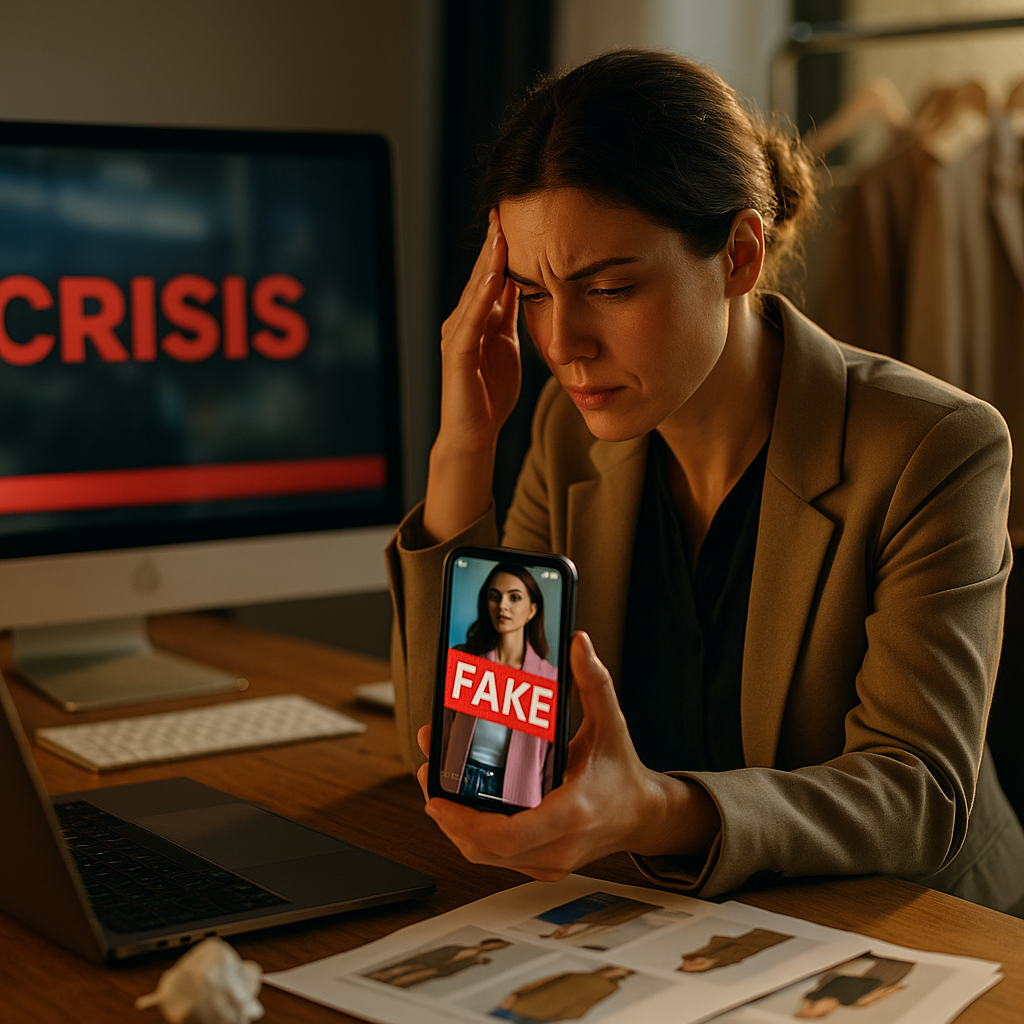
In 2025, a single viral post can rewrite a brand story in minutes. This case study shows how a mid-sized fashion label used a disciplined playbook to contain a false claim, protect customers, and restore trust. You’ll see the exact decisions, timelines, and artifacts that mattered most in a viral misinformation crisis—and why speed without accuracy can backfire fast.
Viral brand crisis management: What happened and why it spread
The fashion label—known for minimalist streetwear and transparent sourcing—woke up to a surge of tags on short-form video platforms. A creator claimed the brand used “toxic dye” linked to skin reactions and alleged the company “paid to hide complaints.” The post included a cropped screenshot of a lab report and an out-of-context customer email. Within hours, reposts amplified the claim, and the brand’s customer support inbox spiked with cancellations and refund requests.
Three conditions made the misinformation sticky:
- High emotional charge: Health and safety accusations trigger immediate sharing and protective behavior.
- Visual “proof” cues: Screenshots and faux-document artifacts create a sense of authority, even when incomplete.
- Algorithm-friendly format: Short clips with simple blame narratives perform well and invite duets/stitches.
The leadership team avoided the common mistake of guessing publicly. Instead, they treated the moment as both a communications and an operational risk event: if customers believed there was a safety issue, the label needed evidence quickly, and it needed to deliver that evidence in a format people could understand.
Social media misinformation response: The first 6 hours (triage and containment)
The brand ran a six-hour incident sprint with a clear command structure. The goal was to stop drift—conflicting statements, delayed approvals, and “helpful” posts from individual employees. They assigned roles and locked channels.
Step 1: Stand up an incident team. The label appointed an incident lead (Head of Comms), a decision owner (COO), and domain leads across Quality, Legal, Customer Support, and Social. One person tracked actions and timestamps to maintain a single source of truth.
Step 2: Preserve evidence and map the claim. The team captured the original video, top reposts, comments, and the “lab report” image in a secure folder. They wrote a one-page “claim map” listing each allegation, what would prove or disprove it, and which internal system held the relevant data.
Step 3: Pause scheduled content and tighten moderation rules. They stopped promotional posts and updated moderation to remove doxxing and hate while keeping criticism visible. This mattered because over-deleting can look like a cover-up.
Step 4: Publish a short holding statement—fast, factual, and humble. Within three hours, the brand posted across channels:
- They acknowledged awareness of the claim.
- They stated the current known facts: no confirmed safety reports tied to the alleged dye.
- They committed to sharing verified documentation within 24 hours.
- They provided a dedicated email and form for affected customers.
This avoided debating the creator directly. The label focused on customers: what to do now, what the brand would do next, and when to expect proof.
Step 5: Customer support scripting. Support agents received a short script that answered the top questions, plus a policy: refunds honored without friction for customers who felt unsafe. That decision reduced anger and prevented escalations that would feed the viral loop.
Fashion PR crisis strategy: Building proof people trust (not just statements)
In misinformation events, audiences don’t just ask “Is it true?” They ask “Who should I believe?” The label built credibility through evidence design—materials that were easy to verify and hard to misquote.
1) Verify the supply chain and the exact SKU. The rumor targeted one bestselling hoodie. The Quality lead traced its dye lots, mill batch numbers, and finishing facility records. They confirmed the factory and chemical inputs used for the colorway named in the viral post.
2) Commission an independent lab test with a defined scope. The label chose an accredited third-party lab and documented the chain of custody. They tested for relevant restricted substances commonly referenced in consumer safety concerns. The lab report was prepared for public release with minimal redaction and a plain-language summary.
3) Publish a “receipts” page designed for sharing. Rather than posting a dense PDF only, the brand created a dedicated page containing:
- Timeline: When the claim appeared, what actions were taken, and what was confirmed when.
- Test results: Scannable summary plus a link to the full lab document.
- Supplier documentation: Compliance certificates and lot-level traceability (with sensitive pricing removed).
- Customer guidance: How to wash, how to report irritation, and refund options.
- Contact: A named spokesperson and a monitored inbox for journalists.
4) Explain uncertainty without sounding evasive. The brand stated what it knew, what it did not know, and how it would update. That stance often performs better than absolute language because it matches how real investigations work.
5) Prepare for legitimate edge cases. Even if the dye wasn’t “toxic,” a small number of customers can experience irritation from detergents, friction, or sensitivities. The label added a nurse-led tele-advice partnership for escalations and encouraged medical consultation for persistent symptoms. That support reduced the perception that the brand only cared about being “right.”
Reputation repair after misinformation: Communication that converts skeptics
Once evidence was ready, the label moved from containment to correction. They did not rely on one “big statement.” They used a multi-format approach designed for how people actually consume information in 2025.
A) A concise corrective video from a credible leader. The COO appeared on camera for 45 seconds, using simple language, showing the test summary, and pointing viewers to the receipts page. The tone stayed calm: no insults, no threats, no “cancel culture” framing.
B) A long-form Q&A for customers who want detail. On the website, they posted a structured Q&A that answered:
- What was claimed and what was false or unproven
- What tests were run and by whom
- What certifications the supplier holds
- What customers should do if they feel irritation
- How refunds and returns work during the incident
C) One-on-one outreach to high-impact accounts. The label privately contacted creators and community moderators who were amplifying the claim—not to pressure them, but to share the documentation and offer a live walkthrough. Several updated their posts with clarifications or links. Not all did, and the brand planned for that.
D) Media and marketplace alignment. The team sent the same evidence packet to key retail partners and marketplace trust-and-safety teams. This prevented product delistings based on rumor alone and reduced the likelihood that a partner would publish an inaccurate “customer warning.”
E) Comment strategy that respects the audience. In comment threads, the social team used a consistent pattern:
- Answer the question in one sentence.
- Link the receipts page.
- Invite DMs for order-specific issues.
They avoided arguing about motives. They focused on verifiable facts, customer safety, and service.
Customer trust rebuilding: Operational changes that prove the lesson stuck
Trust does not rebound fully from content alone. Customers watch what a brand changes after the spotlight moves. The label implemented visible, durable measures that reduced the chance of a repeat and strengthened its EEAT signals.
1) Add a public compliance hub. The brand created a permanent “Materials & Safety” section with:
- Restricted substance policy and testing cadence
- Supplier compliance standards and audit approach
- How to read care labels and reduce irritation risks
- A process to request documentation for specific products
2) Update product pages with batch-level transparency. For core items, customers could see the manufacturing region, mill, and a batch code. The brand explained what each field meant so transparency didn’t become another source of confusion.
3) Improve customer reporting pipelines. They added a structured form for skin reactions that captured photos, wash conditions, detergent used, and timing. This allowed Quality to detect patterns quickly and demonstrate due diligence if questions resurfaced.
4) Train staff on “single voice” incident protocol. The company ran a short internal training: who can post, how to route screenshots, and why “off-the-record” comments can become headlines. This reduced internal risk without silencing employees.
5) Strengthen refund and care support policies. The label kept the low-friction refund posture for a defined window and published it publicly. Customers interpreted this as confidence backed by service, not defensiveness.
Crisis monitoring and lessons learned: Metrics, governance, and a reusable playbook
The label treated the event like a measurable system problem, not a one-time PR scare. They tracked outcomes and built governance so the next incident would be faster and cleaner.
What they measured (daily for two weeks, then weekly):
- Volume and velocity: Mentions per hour and top resharing nodes
- Sentiment shifts: Ratio of accusatory vs. neutral vs. corrective mentions
- Customer impact: Refund rate, contact rate, repeat contacts per order
- Search behavior: Brand + “toxic dye” query trends and clicks to the receipts page
- Resolution time: Time from claim detection to evidence publication
Governance upgrades: They formalized an “incident severity ladder” with pre-approved actions. For example: pausing paid ads at certain thresholds, triggering external lab testing, and launching a dedicated landing page template.
The central lesson: Misinformation thrives in ambiguity and delay. The label won back ground by pairing speed with verification, then converting verification into content that people could quickly understand, share, and trust.
FAQs: Viral misinformation crisis in fashion brands
What should a fashion brand do first when a false safety claim goes viral?
Activate an incident team, preserve the original posts as evidence, pause scheduled marketing, and publish a short holding statement that acknowledges the claim and commits to a verification timeline. Move immediately to collect internal production and quality records tied to the specific product and batch.
Should the brand threaten legal action against the creator?
Usually not at the start. Legal threats can amplify the claim and look like intimidation. Prioritize customer safety steps, evidence publication, and calm correction. Consult counsel quietly, and only escalate if there is clear defamation, fraud, or ongoing harm that cannot be addressed through facts and platform reporting.
How do you prove a materials claim is false in a way customers trust?
Use independent testing from an accredited lab, document chain of custody, and publish both a plain-language summary and the full report. Pair the lab results with lot-level traceability and supplier compliance documentation so the proof is specific, not generic.
How long should it take to publish evidence?
Publish an initial holding statement within hours, then share preliminary verifications (like traceability and existing compliance certificates) within 24 hours when possible. Independent lab testing may take longer; set expectations clearly and provide a date for updates.
What if some customers report irritation even if the claim is misinformation?
Take reports seriously. Irritation can occur for reasons unrelated to banned chemicals, such as detergents, sensitivities, or friction. Offer refunds or exchanges, provide care guidance, and route reports into a structured quality review. This protects customers and shows responsible governance.
How can a brand prevent misinformation from escalating again?
Build a permanent compliance hub, add product-level transparency, maintain incident templates, and monitor early signals through social listening and customer support tags. Train staff on a single-voice protocol and keep relationships with labs and retail partners ready for rapid verification.
In 2025, fashion labels cannot outpost misinformation; they must out-verify it. This case study shows that disciplined triage, independent evidence, and customer-first service can stop a false narrative from defining a brand. The clearest takeaway: prepare a repeatable incident playbook now—because the moment a rumor spikes, your response time and proof quality become your reputation.
Top Influencer Marketing Agencies
The leading agencies shaping influencer marketing in 2026
Agencies ranked by campaign performance, client diversity, platform expertise, proven ROI, industry recognition, and client satisfaction. Assessed through verified case studies, reviews, and industry consultations.
Moburst

-
2

The Shelf
Boutique Beauty & Lifestyle Influencer AgencyA data-driven boutique agency specializing exclusively in beauty, wellness, and lifestyle influencer campaigns on Instagram and TikTok. Best for brands already focused on the beauty/personal care space that need curated, aesthetic-driven content.Clients: Pepsi, The Honest Company, Hims, Elf Cosmetics, Pure LeafVisit The Shelf → -
3

Audiencly
Niche Gaming & Esports Influencer AgencyA specialized agency focused exclusively on gaming and esports creators on YouTube, Twitch, and TikTok. Ideal if your campaign is 100% gaming-focused — from game launches to hardware and esports events.Clients: Epic Games, NordVPN, Ubisoft, Wargaming, Tencent GamesVisit Audiencly → -
4

Viral Nation
Global Influencer Marketing & Talent AgencyA dual talent management and marketing agency with proprietary brand safety tools and a global creator network spanning nano-influencers to celebrities across all major platforms.Clients: Meta, Activision Blizzard, Energizer, Aston Martin, WalmartVisit Viral Nation → -
5

The Influencer Marketing Factory
TikTok, Instagram & YouTube CampaignsA full-service agency with strong TikTok expertise, offering end-to-end campaign management from influencer discovery through performance reporting with a focus on platform-native content.Clients: Google, Snapchat, Universal Music, Bumble, YelpVisit TIMF → -
6

NeoReach
Enterprise Analytics & Influencer CampaignsAn enterprise-focused agency combining managed campaigns with a powerful self-service data platform for influencer search, audience analytics, and attribution modeling.Clients: Amazon, Airbnb, Netflix, Honda, The New York TimesVisit NeoReach → -
7

Ubiquitous
Creator-First Marketing PlatformA tech-driven platform combining self-service tools with managed campaign options, emphasizing speed and scalability for brands managing multiple influencer relationships.Clients: Lyft, Disney, Target, American Eagle, NetflixVisit Ubiquitous → -
8

Obviously
Scalable Enterprise Influencer CampaignsA tech-enabled agency built for high-volume campaigns, coordinating hundreds of creators simultaneously with end-to-end logistics, content rights management, and product seeding.Clients: Google, Ulta Beauty, Converse, AmazonVisit Obviously →