


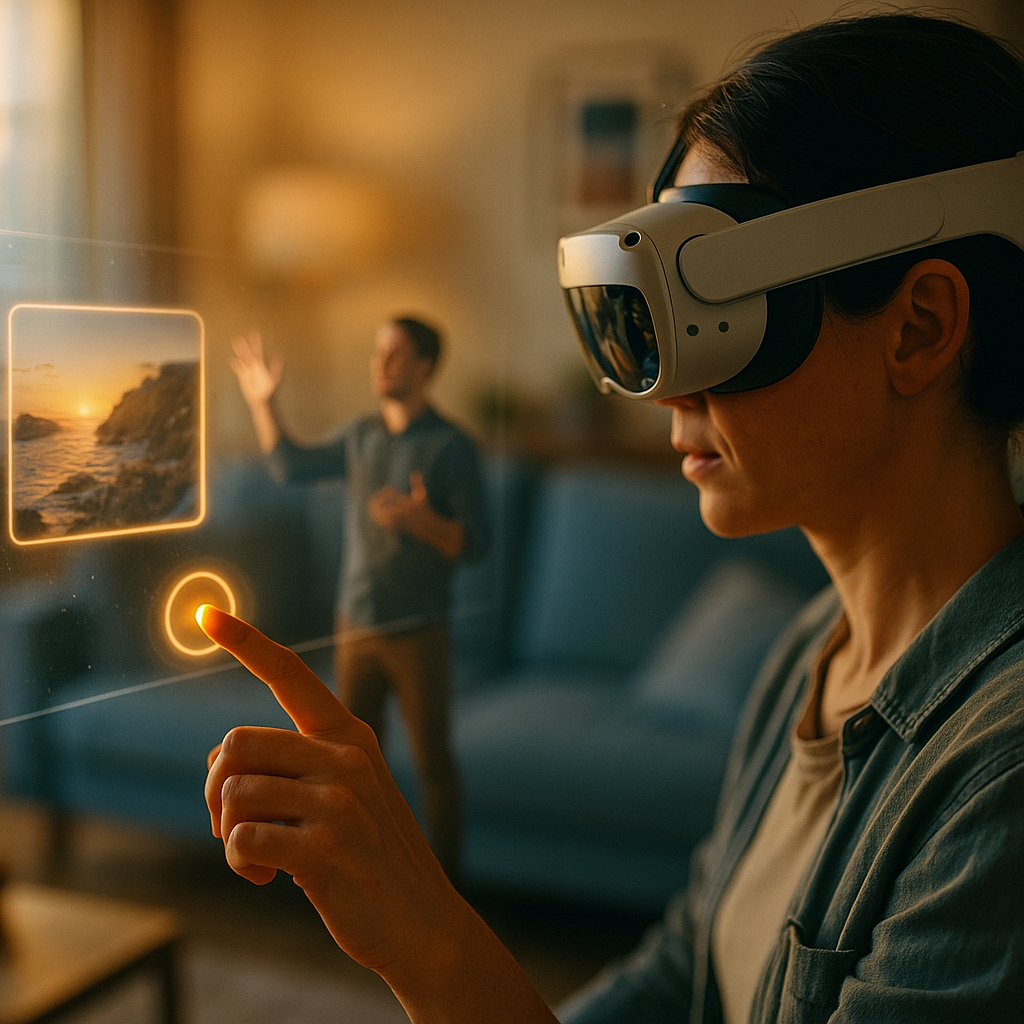
In 2025, spatial computing narrative brand content is moving from novelty to a practical way brands earn attention and trust. As headsets, AR glasses, and room-scale experiences spread, stories no longer live on a flat screen—they occupy the user’s world. This shift changes how brands design, measure, and govern storytelling. What happens when your customer can step inside your narrative?
Spatial computing marketing: why the storytelling canvas is changing
Spatial computing blends digital content with physical space, using sensors, computer vision, and 3D interfaces to anchor experiences to rooms, streets, products, and people. For brand storytellers, the most important change is simple: the audience is no longer “watching” a story. They are located inside it.
That shift forces new narrative decisions:
- Space becomes structure. Scenes can unfold by moving through a store, scanning packaging, or walking around a 3D object at home.
- Attention becomes earned. Users can look away, leave, or explore side paths at any moment, so narrative must reward curiosity rather than demand passive viewing.
- Context becomes content. Lighting, surfaces, noise, and the user’s surroundings influence readability, emotion, and pacing.
Brands that relied on linear video edits now need experience design skills: spatial layout, interaction choreography, and environmental storytelling. The practical implication is that creative and product teams converge—because you are effectively shipping a “story product,” not an ad unit.
Follow-up question most teams ask: Does this replace video and social? No. Spatial experiences work best as a high-intent layer—activated through apps, retail, events, customer support, or post-purchase ownership—while traditional channels drive discovery and distribution.
Immersive brand storytelling: narrative techniques that work in 3D
Immersive storytelling succeeds when it respects human movement, comfort, and agency. The goal is not to overwhelm; it is to guide. In spatial experiences, narrative clarity comes from a few repeatable patterns:
- Environmental cues over exposition. Use sound direction, light, and object placement to show what matters. Let the environment “explain” the brand promise.
- Micro-interactions that reveal meaning. Tapping, rotating, opening, or assembling objects can communicate product value faster than a paragraph of copy.
- Branching with constraints. Offer choice, but keep the number of paths manageable. Too many options can dilute the message and complicate measurement.
- Embodied metaphors. For example, “unlocking” features by physically moving through layers of a system can make abstract benefits feel tangible.
- Timeboxing and checkpoints. Build clear “moments” that complete in under a minute, with optional depth for enthusiasts.
For narrative brand content, a strong spatial arc usually includes: a compelling entry point (scan, gesture, location), a guided first win (something impressive happens quickly), deeper exploration (optional modules), and a resolution that converts intent into an action (save, share, buy, book, contact, learn).
One more likely follow-up: How do we keep the brand from feeling intrusive? In spatial contexts, users feel intrusion more intensely because it occupies their personal environment. Use permission-based triggers, clear control affordances, and branded elements that serve the story instead of interrupting it.
AR and VR brand content: where each format fits the customer journey
AR and VR are often grouped together, but they excel at different moments of the journey. Matching format to intent protects budgets and improves outcomes.
- AR (world-anchored): Best for discovery-to-consideration and post-purchase support. It overlays information on real products, homes, and stores—ideal for try-on, visualization, guided setup, interactive packaging, and service troubleshooting.
- VR / MR (fully immersive or mixed): Best for high-value persuasion, training, and deep narrative worlds. It creates controlled environments where users can experience scenarios that are impossible, expensive, or unsafe in reality.
For narrative brand content specifically, AR tends to work like “chapters” in everyday life—short, useful, repeatable. VR/MR tends to work like “episodes”—longer, more cinematic, more emotionally engaging, often tied to launches, events, or premium audiences.
To answer a common planning question—What should we build first? Start where friction is highest and value is easiest to prove. Many brands see faster ROI from AR product visualization or guided support than from fully immersive VR films, because AR can reduce returns, increase confidence, and shorten time-to-purchase.
3D content strategy: building scalable narrative systems, not one-off demos
Spatial computing punishes “one-and-done” thinking. The teams that win treat 3D content as a reusable system: assets, behaviors, and narrative modules that can be redeployed across channels and devices.
A scalable 3D content strategy typically includes:
- A modular asset library. Product models, environments, characters, motion sets, sound cues, and UI components with clear naming, ownership, and version control.
- Experience templates. Repeatable patterns such as “guided tour,” “compare modes,” “interactive how-to,” “configure and save,” and “story quest.”
- Cross-device design rules. Define what changes between phone-based AR, glasses, and headsets—text size, interaction type, session length, and accessibility requirements.
- Performance budgets. Polygon counts, texture sizes, lighting complexity, and frame-rate targets should be set early. Smooth experiences feel premium; stutter feels broken.
- Narrative governance. A brand story bible that specifies voice, visual language, spatial UI behaviors, and how product claims must be presented.
Another practical question: Do we need real-time 3D for everything? Not always. Use real-time 3D where interaction and personalization matter. Use pre-rendered video or lightweight 3D where the story is fixed. The best programs blend both to control cost and ensure quality.
EEAT note: for claims about product performance, sustainability, health, or financial outcomes, spatial experiences should link to the same evidence standards as any other marketing. If a user can “see” a claim in their living room, that claim feels more real—so your substantiation needs to be stronger, not weaker.
Spatial analytics and measurement: proving impact without violating trust
Spatial experiences generate new signals—gaze direction, proximity, dwell time, hand interactions, and environment mapping. These signals can improve storytelling, but they also raise privacy stakes. In 2025, measurement must be designed with consent and minimization from the start.
What to measure for narrative brand content:
- Entry and completion rates. How many users start the experience, and how many reach the intended narrative resolution.
- Engagement depth. Interactions per session, optional module usage, repeat visits, saved configurations, and share actions.
- Decision signals. “Compare,” “bookmark,” “add to cart,” “book a demo,” or “contact” events mapped to narrative moments.
- Comfort and friction. Abandonment points, motion discomfort feedback, UI errors, and performance drops.
- Incrementality. Lift testing against a control group using consistent success metrics (conversion rate, return rate, support tickets, or sales cycle length).
How to measure responsibly:
- Ask plainly, not legally. Consent prompts should explain what is collected and why, in human language.
- Prefer on-device processing. Where possible, process sensitive signals locally and transmit only aggregated, non-identifying events.
- Collect the minimum needed. If you can optimize the story with “module completed,” you may not need raw gaze paths.
- Separate identity from behavior. Use privacy-preserving IDs and retention limits.
A key follow-up: What KPIs should leadership expect? Spatial narrative should be held to business outcomes, not novelty metrics. Tie experience milestones to measurable actions: reduced returns, increased conversion on high-consideration products, higher lead quality, faster onboarding, or fewer support escalations.
Brand trust and governance: safety, accessibility, and credibility in immersive worlds
Spatial computing places brand content closer to the body and the home. That proximity amplifies both delight and risk. Strong governance protects people and strengthens brand credibility.
Operational safeguards to implement:
- Comfort-first design. Avoid forced locomotion, rapid camera moves, and cluttered UI. Offer seated modes and clear exit controls.
- Accessibility as a baseline. Provide captions, audio descriptions where relevant, adjustable text size, color-contrast options, and multiple input methods.
- Clear labeling. Distinguish sponsored content, product placement, and simulated product behavior. Spatial realism can blur perception; clarity is part of trust.
- Claim substantiation workflow. Legal and subject-matter experts should review interactive claims the same way they review copy—especially when users can manipulate scenes.
- Safety boundaries. Use boundary prompts, collision warnings, and guidance for shared spaces to reduce physical risk.
- Content moderation rules. If you allow user-generated elements (avatars, rooms, shared annotations), define what is prohibited and how enforcement works.
EEAT is earned in immersive media through consistency: consistent evidence for claims, consistent user controls, consistent respect for privacy, and consistent quality across devices. When the experience feels stable and transparent, the story feels believable.
FAQs
What is spatial computing in marketing?
Spatial computing in marketing uses AR, VR, and mixed reality to place interactive brand content in physical space or immersive environments. Instead of viewing a message on a screen, people explore products and stories through 3D objects, spatial audio, and gestures—often tied to real locations, items, or moments of use.
How does spatial computing change narrative brand content?
It shifts storytelling from linear, creator-controlled sequences to experiences shaped by user movement and choice. Narrative becomes interactive and context-aware, with “scenes” triggered by proximity, scanning, or interaction. Brands must design for agency, comfort, and clarity while still guiding users toward a meaningful takeaway.
Is AR or VR better for brand storytelling?
AR is usually better for practical, short-form storytelling tied to real products and real spaces (try-on, visualization, guided setup). VR/MR is better for deeper emotional immersion, training, and premium experiences where a controlled environment improves persuasion and learning. Many brands use both, mapped to different journey stages.
What skills does a team need to produce spatial narrative content?
You typically need experience design, 3D art, interaction design, real-time development, sound design, UX writing, and analytics. You also need legal and domain experts to validate claims, plus accessibility and privacy expertise because spatial data and embodied interfaces raise new risks.
How do you measure ROI for spatial computing campaigns?
Measure completion and engagement depth, then connect them to business outcomes: conversion lift, lead quality, reduced returns, fewer support tickets, higher attachment rates, or shorter sales cycles. Use controlled experiments where possible and avoid relying on novelty metrics like “time in experience” without a clear behavioral outcome.
What are the biggest risks in spatial brand experiences?
The biggest risks are privacy overreach (collecting sensitive spatial signals without clear consent), discomfort or safety issues (poor locomotion or unclear boundaries), misleading realism (unclear simulation vs reality), and accessibility gaps. Strong governance and transparent controls reduce these risks and improve trust.
Spatial computing is reshaping brand storytelling by turning audiences into participants who explore, choose, and act inside the narrative. The winners in 2025 will treat immersive content as a scalable system—modular 3D assets, privacy-first analytics, and governance that protects comfort and credibility. Build for usefulness first, then add wonder. When the story respects the user’s space, the brand earns a place in it.
Top Influencer Marketing Agencies
The leading agencies shaping influencer marketing in 2026
Agencies ranked by campaign performance, client diversity, platform expertise, proven ROI, industry recognition, and client satisfaction. Assessed through verified case studies, reviews, and industry consultations.
Moburst

-
2

The Shelf
Boutique Beauty & Lifestyle Influencer AgencyA data-driven boutique agency specializing exclusively in beauty, wellness, and lifestyle influencer campaigns on Instagram and TikTok. Best for brands already focused on the beauty/personal care space that need curated, aesthetic-driven content.Clients: Pepsi, The Honest Company, Hims, Elf Cosmetics, Pure LeafVisit The Shelf → -
3

Audiencly
Niche Gaming & Esports Influencer AgencyA specialized agency focused exclusively on gaming and esports creators on YouTube, Twitch, and TikTok. Ideal if your campaign is 100% gaming-focused — from game launches to hardware and esports events.Clients: Epic Games, NordVPN, Ubisoft, Wargaming, Tencent GamesVisit Audiencly → -
4

Viral Nation
Global Influencer Marketing & Talent AgencyA dual talent management and marketing agency with proprietary brand safety tools and a global creator network spanning nano-influencers to celebrities across all major platforms.Clients: Meta, Activision Blizzard, Energizer, Aston Martin, WalmartVisit Viral Nation → -
5

The Influencer Marketing Factory
TikTok, Instagram & YouTube CampaignsA full-service agency with strong TikTok expertise, offering end-to-end campaign management from influencer discovery through performance reporting with a focus on platform-native content.Clients: Google, Snapchat, Universal Music, Bumble, YelpVisit TIMF → -
6

NeoReach
Enterprise Analytics & Influencer CampaignsAn enterprise-focused agency combining managed campaigns with a powerful self-service data platform for influencer search, audience analytics, and attribution modeling.Clients: Amazon, Airbnb, Netflix, Honda, The New York TimesVisit NeoReach → -
7

Ubiquitous
Creator-First Marketing PlatformA tech-driven platform combining self-service tools with managed campaign options, emphasizing speed and scalability for brands managing multiple influencer relationships.Clients: Lyft, Disney, Target, American Eagle, NetflixVisit Ubiquitous → -
8

Obviously
Scalable Enterprise Influencer CampaignsA tech-enabled agency built for high-volume campaigns, coordinating hundreds of creators simultaneously with end-to-end logistics, content rights management, and product seeding.Clients: Google, Ulta Beauty, Converse, AmazonVisit Obviously →