


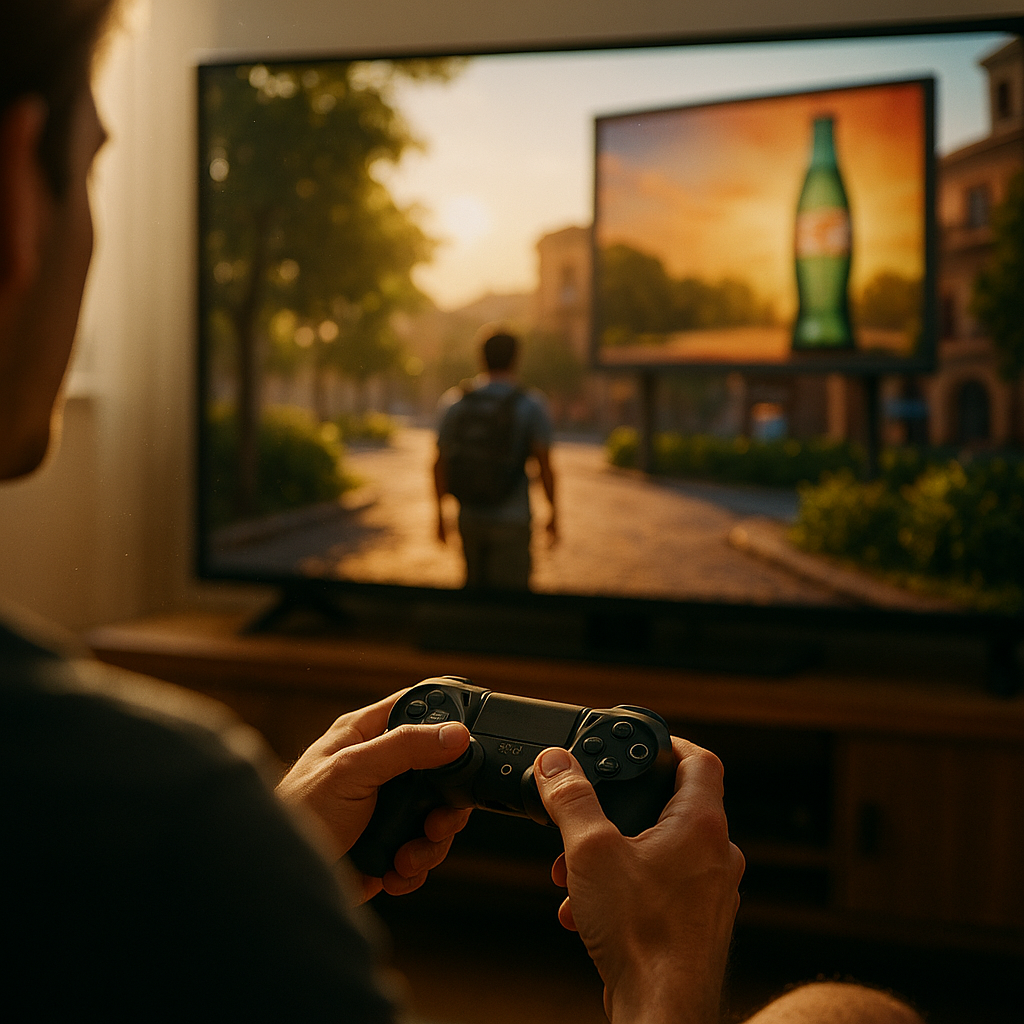
In 2025, brands and world builders are moving beyond pop-up ads toward persistent, context-aware placements. This playbook for in game billboards in non combat virtual worlds explains how to plan, place, measure, and optimize billboard media without breaking immersion or trust. You will learn what works, what to avoid, and how to prove results to stakeholders—ready to make your world feel alive?
Non combat virtual worlds: where billboards add value (or damage trust)
Non combat virtual worlds include social hubs, roleplay towns, life sims, creator platforms, virtual campuses, and exploration spaces where the primary loop is presence rather than conflict. That difference matters: users spend more time looking around, reading signs, and navigating spaces, which makes billboards naturally visible—yet also more scrutinized.
In these environments, the best billboard programs work like real-world out-of-home media: they support wayfinding, enrich atmosphere, and feel consistent with the setting. Poor programs feel like intrusive overlays and can reduce retention, creator goodwill, and brand lift.
Practical rule: if a placement would look out of place in a real plaza, street, subway, or arena with similar foot traffic, it will likely look out of place in a virtual equivalent.
Before you sell inventory or sign a sponsorship, define what “helpful” means for your world:
- Player benefit: does the billboard provide information, entertainment, or realism?
- World benefit: does it fund live ops, events, moderation, and updates?
- Brand fit: would the brand reasonably exist in this universe, or can it be adapted?
Answering those questions early supports Google-style helpful content principles for your documentation and marketing materials: transparent policies, clear user value, and measurable outcomes rather than vague promises.
Immersive advertising design: formats, placement rules, and frequency
Immersive billboard design starts with constraints. Non combat worlds often include comfort-sensitive users (new VR users, younger audiences, accessibility needs). Your ad system should respect attention, motion, and cognitive load.
Common billboard formats that work well:
- Static world signage: posters, storefront signs, transit ads, event banners. Lowest risk, highest “belonging.”
- Animated billboards: short loops with limited motion. Best for plazas and transit corridors.
- Contextual boards: change by zone (shopping district vs. campus), time of day, or event state.
- Interactive boards: optional click/tap/scan to open a web view, quest, coupon, or product viewer. Use sparingly.
Placement rules you can adopt as policy:
- Diegetic first: integrate ads into believable surfaces (building facades, kiosks, bus shelters).
- Never block objectives: do not cover NPCs, portals, menus, or tutorial content.
- Avoid “forced gaze” moments: keep billboards away from spawn points, teleports, and mandatory cutscenes unless they are world-owned announcements.
- Comfort-safe motion: avoid rapid flashing, strobing, aggressive parallax, or full-field animations that can trigger discomfort.
Frequency and pacing: treat ad density like sound design: subtle, not constant. A useful heuristic is “one premium board per major hub sightline,” then supplement with smaller, lower-priority placements along routes. If users can stand in one spot and see more than three unrelated brands at once, you likely crossed the line.
Follow-up question you will get: “How big should the billboard be?” Size it to the viewing distance and typical movement speed. A small, readable sign at 5–10 meters beats a massive board that dominates the skyline and breaks the scene. Test readability with your minimum supported device and lowest expected resolution.
Virtual world monetization strategy: inventory, pricing, and partnerships
Billboards are a monetization tool, but in non combat worlds they are also a governance tool: they signal what you endorse and how you sustain operations. A strong strategy clarifies inventory tiers, pricing logic, and partner standards.
Define inventory tiers:
- Tier 1 (Landmark): main plaza boards, transit terminals, stadium walls, event stages.
- Tier 2 (Route): corridor signage, storefront displays, neighborhood billboards.
- Tier 3 (Local): small posters, kiosks, in-world noticeboards, creator districts.
Price with a defensible unit: avoid vague “presence” pricing. Use one of these models:
- CPM based on viewable impressions: best when you can reliably measure viewability.
- Share of voice per zone: fixed fee for owning a percentage of ad time in a location.
- Event sponsorship bundles: signage plus quest, virtual booth, or branded minigame (optional participation).
Partnership standards (EEAT-aligned): publish clear ad policies. Include disallowed categories, creative requirements, age-appropriateness rules, and data practices. Add a human review step for Tier 1 placements. This improves trust with users and brand safety for advertisers.
Answer the obvious stakeholder concern: “Will ads reduce retention?” They can if they feel intrusive. They can also improve retention if they fund better content, signal real-world relevance, and support events. Make that trade explicit in your roadmap and show users where revenue goes when appropriate (for example, “Sponsored events fund weekly creator payouts”).
User experience and brand safety: consent, suitability, and governance
Non combat worlds often serve mixed audiences and user-generated content ecosystems. That increases the need for guardrails. Your goal: keep the experience comfortable and the ads appropriate without turning your world into a compliance maze.
Consent and transparency:
- Disclose advertising clearly: label sponsored placements in a way that fits the world (for example, a small “Sponsored” tag on the frame).
- Offer controls: consider an option to reduce ad personalization or switch to contextual-only ads. If you have a premium subscription, consider an ad-light experience while keeping world-owned signage intact.
- Explain data use: keep a short, readable in-world notice and a full policy page.
Suitability and brand safety:
- Age gating: if your world includes minors, avoid sensitive categories and use stricter creative review.
- Creator adjacency: prevent ads from appearing next to user-generated content that could create reputational risk. Zone-based controls help.
- Context rules: in calming spaces (meditation rooms, memorials, classrooms), prioritize world-owned announcements or allow only limited sponsorships that match the mood.
Governance workflow: set up a review pipeline with clear roles: ad ops, moderation, legal/privacy, and community. Define “kill switches” to remove a campaign instantly if it violates policy or becomes controversial.
Likely follow-up question: “Do we need personalization?” Not always. Many non combat worlds perform well with contextual placement (zone + language + device type) because relevance comes from where the user is, not who they are. Contextual approaches also reduce privacy risk and implementation complexity.
In-game billboard analytics: viewability, outcomes, and reporting that convinces
If you cannot measure viewability and outcomes, billboards become a hard sell after the first campaign. In 2025, advertisers expect reporting that resembles modern digital out-of-home: viewability standards, brand safety logs, and outcome proxies.
Define “viewable impression” for your world:
- On-screen time threshold: for example, at least 1 second on screen.
- Minimum pixel share: the billboard occupies a minimum portion of the viewport.
- Angle and distance: within readable distance and not extreme angles.
- Occlusion handling: do not count impressions when blocked by objects.
Measure outcomes without overreaching:
- Engagement: optional interactions, QR/short-link opens, visits to a branded space.
- Footfall uplift: changes in traffic to nearby POIs during a campaign.
- Brand lift surveys: lightweight in-world prompts offered sparingly and with consent.
- Retention signals: session length and return rate, monitored for negative impact around high-density ad zones.
Reporting that builds trust: provide advertisers with a concise dashboard plus a downloadable report including placement screenshots, zone maps, impression methodology, and a list of safety controls used. Include what you did not measure (for example, “No biometric tracking” or “No cross-app identity matching”), which strengthens credibility.
Answer the CFO question: “How do we compare this to web ads?” Use CPM for viewable impressions, then add a secondary metric tied to your world’s strengths: dwell time near the board, repeat exposure across sessions, and event attendance. Explain why your environment can deliver higher attention than scrolled feeds, while staying honest about attribution limits.
Creative ops and optimization: production pipeline, testing, and iteration
Operational excellence is the difference between a tasteful billboard program and a chaotic rotation of mismatched assets. Build a pipeline that protects performance, quality, and community trust.
Creative specs checklist:
- Aspect ratios per placement: document each board’s dimensions and safe areas.
- File formats and compression: optimize for fast loads; set size limits.
- Animation rules: cap frame rate and motion intensity; avoid flashing patterns.
- Localization: language variants and region-appropriate offers.
- Accessibility: legible typography, adequate contrast, no critical info solely in small text.
Testing plan before launch:
- Device coverage: test on your most common devices and lowest-performance targets.
- Lighting and weather: check readability in night scenes, fog, bloom, and high-contrast areas.
- Traffic simulation: validate viewability when many avatars are present.
- Community QA: use a small cohort to flag tone issues early.
Optimization loop: rotate creatives based on viewability and negative feedback, not just clicks. In non combat worlds, a low-click campaign can still be successful if it boosts recall or event attendance. Use A/B tests carefully: keep world consistency, change one variable at a time (copy, color, motion), and run tests long enough to cover peak and off-peak hours.
Follow-up question: “Should we allow user-created ads?” If your world supports creators, consider a separate marketplace with stricter templates, pre-approved categories, escrowed payments, and clear disclosure. This can unlock local commerce while minimizing scams and inappropriate content.
FAQs
What makes in game billboards different in non combat virtual worlds?
Users spend more time exploring and socializing, so billboards get longer attention and stronger scrutiny. The best placements feel like natural signage, support navigation and events, and avoid interrupting comfort-sensitive moments such as spawn, onboarding, and quiet spaces.
How many billboards should a hub area have?
Start with one premium billboard per major sightline, then add small local signs along routes. If a user can see more than three unrelated brands from a single standing point, reduce density or consolidate into a curated rotation.
Do we need personalized ads to succeed?
No. Contextual targeting by zone, language, device type, and event state often performs well and reduces privacy risk. Personalization can be added later if you have strong consent flows and clear user controls.
How do we measure billboard performance without clicks?
Use viewable impressions (time on screen, size, distance, angle, occlusion) plus outcome proxies such as visits to a branded space, event attendance, footfall uplift near points of interest, and optional brand lift surveys.
What are the biggest brand safety risks?
Unsafe adjacency to user-generated content, inappropriate categories for mixed-age audiences, misleading claims, and the inability to remove a campaign quickly. Solve these with zone controls, category policies, human review for top inventory, and an instant kill switch.
How can we keep billboards from hurting immersion?
Make them diegetic (believable surfaces), keep motion subtle, avoid forced-gaze placements, match art direction, and prioritize world benefit. When users understand that sponsorships fund events and improvements, tolerance increases.
In 2025, successful billboard programs in non combat virtual worlds balance monetization with world integrity. Define inventory tiers, design diegetic placements, set strict comfort and safety rules, and measure viewability with transparent methodology. Optimize using attention and sentiment, not only clicks. The takeaway: treat billboards as infrastructure—planned, governed, and tested—so brands win and users keep trusting the space.
Top Influencer Marketing Agencies
The leading agencies shaping influencer marketing in 2026
Agencies ranked by campaign performance, client diversity, platform expertise, proven ROI, industry recognition, and client satisfaction. Assessed through verified case studies, reviews, and industry consultations.
Moburst

-
2

The Shelf
Boutique Beauty & Lifestyle Influencer AgencyA data-driven boutique agency specializing exclusively in beauty, wellness, and lifestyle influencer campaigns on Instagram and TikTok. Best for brands already focused on the beauty/personal care space that need curated, aesthetic-driven content.Clients: Pepsi, The Honest Company, Hims, Elf Cosmetics, Pure LeafVisit The Shelf → -
3

Audiencly
Niche Gaming & Esports Influencer AgencyA specialized agency focused exclusively on gaming and esports creators on YouTube, Twitch, and TikTok. Ideal if your campaign is 100% gaming-focused — from game launches to hardware and esports events.Clients: Epic Games, NordVPN, Ubisoft, Wargaming, Tencent GamesVisit Audiencly → -
4

Viral Nation
Global Influencer Marketing & Talent AgencyA dual talent management and marketing agency with proprietary brand safety tools and a global creator network spanning nano-influencers to celebrities across all major platforms.Clients: Meta, Activision Blizzard, Energizer, Aston Martin, WalmartVisit Viral Nation → -
5

The Influencer Marketing Factory
TikTok, Instagram & YouTube CampaignsA full-service agency with strong TikTok expertise, offering end-to-end campaign management from influencer discovery through performance reporting with a focus on platform-native content.Clients: Google, Snapchat, Universal Music, Bumble, YelpVisit TIMF → -
6

NeoReach
Enterprise Analytics & Influencer CampaignsAn enterprise-focused agency combining managed campaigns with a powerful self-service data platform for influencer search, audience analytics, and attribution modeling.Clients: Amazon, Airbnb, Netflix, Honda, The New York TimesVisit NeoReach → -
7

Ubiquitous
Creator-First Marketing PlatformA tech-driven platform combining self-service tools with managed campaign options, emphasizing speed and scalability for brands managing multiple influencer relationships.Clients: Lyft, Disney, Target, American Eagle, NetflixVisit Ubiquitous → -
8

Obviously
Scalable Enterprise Influencer CampaignsA tech-enabled agency built for high-volume campaigns, coordinating hundreds of creators simultaneously with end-to-end logistics, content rights management, and product seeding.Clients: Google, Ulta Beauty, Converse, AmazonVisit Obviously →