


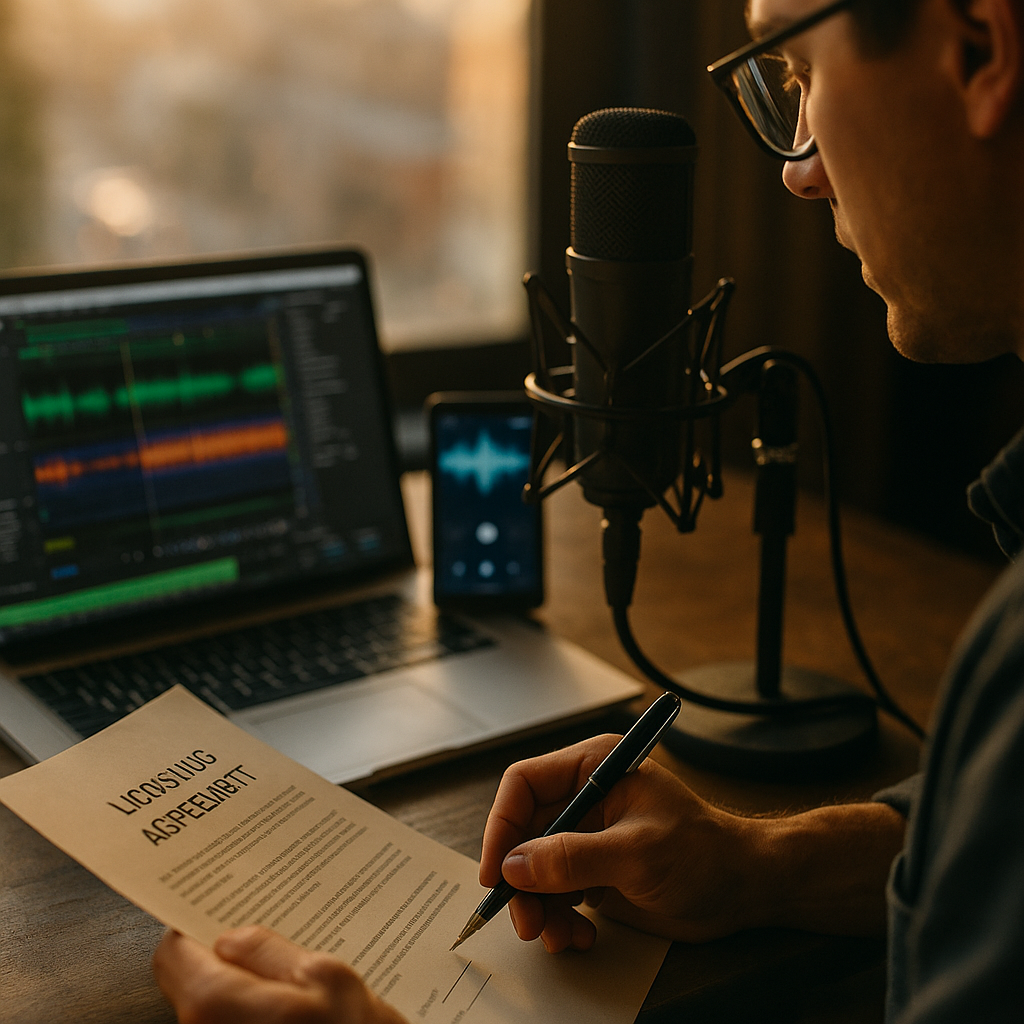
In 2025, synthetic voice licensing platforms have become a practical option for brands running global ads at speed, especially when campaigns need many languages, versions, and quick updates. But licensing terms, usage rights, and consent standards vary widely across vendors. This review compares leading options and clarifies what “commercial use” truly means—so you can scale responsibly. Ready to choose without surprises?
Key licensing models for commercial voiceover rights
Licensing is the difference between “a great-sounding voice” and “a voice you can safely run in paid media worldwide.” Most platforms offer one of three models, and many blend them:
- Subscription with usage tiers: You pay monthly/annually and your rights depend on plan level (often capped by minutes, projects, seats, or distribution type). This can be efficient for teams producing high volumes of localized ads.
- Per-use or per-project licensing: You pay for output tied to a specific campaign, territory, channel, or duration. This can be cleaner for legal review because the scope is explicit.
- Enterprise agreements: Custom contracts that can cover unlimited use, indemnities, higher SLA support, or negotiated clauses for regulated industries.
When evaluating any plan, confirm these terms in writing and in the platform’s current contract artifacts (order form, master terms, and any “acceptable use” policy):
- Paid media allowance: Some plans permit internal, organic, or product use but restrict paid ads unless you upgrade.
- Territory and language scope: “Global” should mean worldwide distribution, not “where we operate.” If your ads run internationally, the license must match.
- Duration and renewals: Are you allowed to run the spot indefinitely, or does the right expire with the subscription?
- Derivative works: Ads often require edits, time-compression, mixing, or translation; ensure the license allows modifications.
- Platform/channel restrictions: Some vendors distinguish broadcast TV, streaming, social ads, in-store, IVR, and programmatic placements.
- Audit trail: For global campaigns, you need proof of rights: voice model name, license scope, dates, and the exact output used.
Practical rule: If your media team can’t answer “Where can we run this, for how long, and with what proof?” the licensing is not yet ad-ready.
AI voiceover platforms for global ads: leading options reviewed
Below is a practical review of widely used synthetic voice platforms and how they tend to fit global advertising workflows. Because offerings change, treat this as a decision guide and verify current terms during procurement.
ElevenLabs is known for highly natural speech and strong multilingual output. It fits teams producing large volumes of localized creatives and A/B variants. For ads, scrutinize commercial usage rights by plan, especially if you need broad paid media distribution and clear documentation. It’s a strong choice when performance and expressiveness matter and you can support vendor diligence.
Murf AI focuses on an accessible studio workflow and business-friendly voiceover production. It typically suits marketing teams that need quick turnaround for social, explainer ads, and regional variations. It can be a solid fit for organizations that value ease of use and predictable operations, provided the paid advertising scope and territories are explicitly covered in your agreement.
LOVO offers a broad voice catalog and a creator-friendly production environment. It’s commonly used for content marketing and promotional audio, and can extend to ads when licensing supports it. Teams should confirm whether the chosen plan includes paid media and broadcast-like placements if those are in scope.
PlayHT emphasizes voice quality and supports multiple languages with an API-friendly orientation. This can suit performance marketing pipelines where the team generates localized variants programmatically. As with other vendors, the core question is not just quality but whether your intended ad distribution is contractually permitted and easily provable.
Speechify is widely recognized for text-to-speech consumption and accessibility use cases. For global advertising, it may be less of a primary production platform, but it can play a role where teams already have deployments. Ensure the commercial terms match ad use; do not assume consumer-grade TTS rights extend to paid campaigns.
Resemble AI is often evaluated for voice cloning and custom voice models. This can be valuable for brands that want a consistent “sonic identity” across markets. The trade-off is governance: you’ll need strict consent management, access controls, and a contract that clearly addresses ownership, permitted uses, and protections if disputes arise.
WellSaid Labs is known for polished, studio-like output and a business positioning that often resonates with brand teams. It can be a good fit for ads needing clean, consistent delivery. For global ads, verify language coverage and ensure your license supports the full distribution mix (social, OTT, web, and potentially broadcast).
Reader follow-up answered: “Which is best?” The best platform is the one whose license matches your media plan, whose voices match your brand, and whose governance standards satisfy your legal and procurement teams.
Voice cloning consent and talent rights: what brands must verify
Global advertising raises a higher bar for consent and talent rights than internal training videos. If a platform offers custom voice cloning or “instant voice” creation, your due diligence should be explicit and documented.
- Proven consent for the voice source: If using a cloned voice (even your own executive), confirm written consent, scope of allowed uses (including paid ads), and revocation terms.
- Talent compensation model: Some vendors provide marketplace voices with pre-negotiated compensation; others require you to bring your own talent and negotiate separately.
- Restrictions on impersonation: Platforms should prohibit generating voices that mimic public figures or individuals without authorization. Your internal policy should mirror this.
- Regional legal sensitivity: Ads may trigger local rules around publicity rights, consumer protection, and deceptive practices. Your legal team should review any market with strict advertising standards.
- Usage boundaries for sensitive categories: Healthcare, finance, elections, and content aimed at children often require extra approvals. Make sure the vendor’s acceptable use policy doesn’t conflict with your campaign needs.
Operational safeguard: Create a “voice dossier” for every synthetic voice used in ads: who approved it, the license scope, where it can run, and the exact model/version. This becomes your defense if a platform changes terms or a distribution partner requests proof.
Brand safety and compliance controls in synthetic audio
Licensing alone does not guarantee ad safety. Synthetic audio introduces risks: misattribution, deepfake allegations, and inconsistent pronunciation across languages. Leading platforms and responsible brands address this with controls.
- Content moderation and misuse detection: Look for vendor enforcement against fraud, impersonation, and disallowed content. Ask what happens if a voice is reported or flagged.
- Watermarking or traceability: Some vendors offer technical measures that help identify synthetic audio. If available, weigh it as a risk-reduction feature for large-scale ad programs.
- Access control: Enterprise features like SSO, role-based permissions, and audit logs matter when multiple agencies and regions produce assets.
- Model stability: If a vendor frequently changes voice models, your brand voice can drift. Ask how they handle model updates and whether you can lock a voice version for campaign consistency.
- Disclosure strategy: Decide whether and when to disclose synthetic voice usage. Requirements vary by market and platform policy, but transparency can reduce reputational risk.
Reader follow-up answered: “Can we use it for influencer-style ads?” If your concept implies a real person is speaking, you need explicit rights and a clear creative approach that avoids misleading consumers. When in doubt, keep the voice clearly branded as a character, narrator, or original persona you control.
Pricing, scalability, and workflow integration for multilingual campaigns
Global ads stress-test pricing and operations. A platform that looks inexpensive for a single market can become costly when you produce thousands of variants across languages and channels.
Cost drivers to model before you commit:
- Minutes and rendering limits: Estimate monthly generation needs, including retakes and A/B versions.
- Seat-based collaboration: Global teams need separate access for brand, legal, and agencies. Seat costs and permissioning can matter more than minutes.
- API usage: If you automate localization, confirm API pricing, rate limits, and whether commercial rights differ for API-generated audio.
- Language and accent coverage: “Supports language” can mean basic pronunciation, not native-level delivery. Test with real scripts from your campaign.
- Review workflow: Look for features like pronunciation dictionaries, SSML controls, and versioning so regional teams can approve audio quickly.
Integration checklist: If your creative pipeline uses a DAM, project management, or creative automation tool, confirm export formats (WAV/MP3), consistent loudness handling, and metadata support so assets remain traceable from production to media trafficking.
Choosing a platform: a practical procurement checklist
To select the right vendor for global advertising, use a structured evaluation that balances creative quality, legal safety, and operational speed.
- Define your media scope first: List channels (social, OTT, web, broadcast, in-store), territories, and duration. The license must match the plan, not the other way around.
- Require a plain-language rights summary: Ask the vendor to state, in writing, “You may use the generated audio in paid ads worldwide for X duration,” with any exclusions called out.
- Confirm voice catalog rights: Marketplace voices can have different terms than custom voices. Ensure you understand both.
- Demand auditability: You should be able to prove which voice model generated which final audio file, when, and by whom.
- Negotiate protections: For large spend, pursue enterprise terms that address indemnities, support response times, and continuity if a voice is retired.
- Pilot with real creatives: Run a limited set of ads across two or three languages, include brand names and compliance lines, and measure revision cycles.
Decision shortcut: If your organization prioritizes speed and variant volume, choose the platform with the best automation and multilingual quality after confirming paid media rights. If your priority is brand consistency and risk control, favor vendors with stronger governance, audit logs, and stable voice management.
FAQs about synthetic voice licensing platforms
-
Do synthetic voice licenses usually allow paid advertising?
Not always. Many platforms permit commercial use but restrict paid media, broadcast, or certain channels unless you are on a higher tier or enterprise contract. Treat “commercial use” as ambiguous until the vendor confirms your exact ad channels, territories, and duration in writing.
-
Can we run the same synthetic voice globally in multiple languages?
Often yes, but you should validate language quality and accent authenticity with native reviewers. Also confirm that your license does not limit usage by region. For some brands, using different voices per region reduces cultural risk and improves performance.
-
What’s the difference between using a stock AI voice and a cloned voice?
A stock AI voice typically comes from a vendor-managed catalog with predefined rights. A cloned voice uses recordings from a specific person (or talent) to create a custom model. Cloned voices require stronger consent documentation, tighter access controls, and clearer contractual protections.
-
Do we own the audio files generated by the platform?
You usually receive rights to use the outputs, but “ownership” varies by contract. Some vendors grant broad usage rights while retaining platform IP. For ads, what matters is whether your usage is perpetual or time-limited, and whether rights survive subscription cancellation.
-
How do we handle pronunciation of brand names and legal disclaimers?
Choose a platform that supports pronunciation dictionaries or SSML controls, then standardize approved pronunciations by market. Have legal teams approve the final audio for required disclosures, especially in regulated categories where wording and cadence can matter.
-
What should we ask vendors about brand safety?
Ask about misuse prevention, impersonation policies, audit logs, access controls, and whether they offer watermarking or traceability. Also ask how they handle voice retirement and model updates so your campaign audio remains consistent and defensible.
Choosing a synthetic voice platform for global advertising in 2025 requires more than judging demo reels. You need licensing that matches your media plan, consent you can prove, and governance that stands up across regions and partners. Pilot with real scripts, negotiate clear paid-media rights, and document every voice used. When rights and workflow align, synthetic voice becomes a scalable advantage.
Top Influencer Marketing Agencies
The leading agencies shaping influencer marketing in 2026
Agencies ranked by campaign performance, client diversity, platform expertise, proven ROI, industry recognition, and client satisfaction. Assessed through verified case studies, reviews, and industry consultations.
Moburst

-
2

The Shelf
Boutique Beauty & Lifestyle Influencer AgencyA data-driven boutique agency specializing exclusively in beauty, wellness, and lifestyle influencer campaigns on Instagram and TikTok. Best for brands already focused on the beauty/personal care space that need curated, aesthetic-driven content.Clients: Pepsi, The Honest Company, Hims, Elf Cosmetics, Pure LeafVisit The Shelf → -
3

Audiencly
Niche Gaming & Esports Influencer AgencyA specialized agency focused exclusively on gaming and esports creators on YouTube, Twitch, and TikTok. Ideal if your campaign is 100% gaming-focused — from game launches to hardware and esports events.Clients: Epic Games, NordVPN, Ubisoft, Wargaming, Tencent GamesVisit Audiencly → -
4

Viral Nation
Global Influencer Marketing & Talent AgencyA dual talent management and marketing agency with proprietary brand safety tools and a global creator network spanning nano-influencers to celebrities across all major platforms.Clients: Meta, Activision Blizzard, Energizer, Aston Martin, WalmartVisit Viral Nation → -
5

The Influencer Marketing Factory
TikTok, Instagram & YouTube CampaignsA full-service agency with strong TikTok expertise, offering end-to-end campaign management from influencer discovery through performance reporting with a focus on platform-native content.Clients: Google, Snapchat, Universal Music, Bumble, YelpVisit TIMF → -
6

NeoReach
Enterprise Analytics & Influencer CampaignsAn enterprise-focused agency combining managed campaigns with a powerful self-service data platform for influencer search, audience analytics, and attribution modeling.Clients: Amazon, Airbnb, Netflix, Honda, The New York TimesVisit NeoReach → -
7

Ubiquitous
Creator-First Marketing PlatformA tech-driven platform combining self-service tools with managed campaign options, emphasizing speed and scalability for brands managing multiple influencer relationships.Clients: Lyft, Disney, Target, American Eagle, NetflixVisit Ubiquitous → -
8

Obviously
Scalable Enterprise Influencer CampaignsA tech-enabled agency built for high-volume campaigns, coordinating hundreds of creators simultaneously with end-to-end logistics, content rights management, and product seeding.Clients: Google, Ulta Beauty, Converse, AmazonVisit Obviously →