


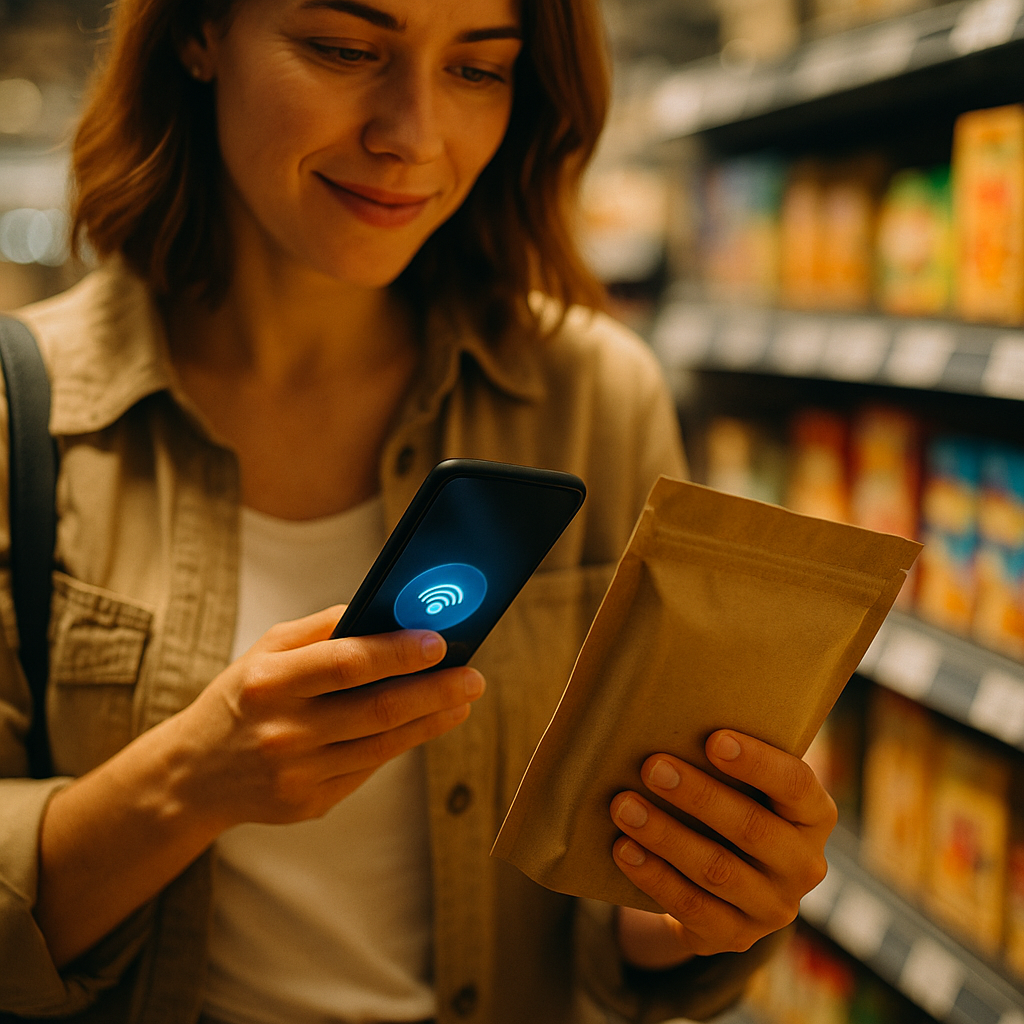
In 2025, retailers face a simple reality: acquisition costs keep climbing while loyalty feels fragile. This case study shows how one mid-sized brand turned NFC embedded packaging into a retention engine by linking every product to helpful post-purchase experiences. You’ll see the exact strategy, rollout plan, metrics, and lessons learned—plus what to copy and what to avoid for your next launch.
Retail retention strategy: why the brand needed a new lever
A specialty retailer (multi-channel: eCommerce plus 40 stores) sold personal care and home essentials with strong first-purchase conversion driven by paid social. The problem appeared after checkout:
- Repeat purchase lag: customers often waited too long to reorder, then switched brands.
- Support friction: how-to questions (usage, refills, allergens, returns) hit customer service instead of being answered in the moment.
- Limited relationship with gift recipients: products were frequently gifted, but the brand could not engage the end user.
- Packaging as dead space: packaging communicated benefits but could not adapt to customer needs after purchase.
The leadership team evaluated retention options: larger loyalty discounts, more email automation, subscription pushes, and SMS. Each carried tradeoffs—margin pressure, higher unsubscribe risk, and rising messaging compliance complexity. They needed an owned, permission-forward touchpoint that activated at the moment customers actually used the product.
Packaging became the lever. Customers already handled it repeatedly, especially for refillable items. The team set a retention goal: increase repeat purchases without increasing discount depth, while reducing avoidable support tickets and improving post-purchase satisfaction.
NFC smart packaging: design choices and customer experience
The retailer chose NFC smart packaging because it works with modern smartphones without requiring an app. A simple “Tap with your phone” callout was added to the package, backed by an embedded NFC inlay placed under a brand mark.
Key design decisions that made adoption work:
- App-free flow: the tap opened a secure web experience optimized for mobile.
- One tap, one promise: the landing page clearly explained the benefit: “Get setup steps, refill reminders, and product support.”
- Contextual content: the tap destination used the product SKU to display the exact guide, ingredients, and safety notes for that item.
- Accessibility: large buttons, readable type, and multilingual support for the top two customer languages.
- Fallback via QR: a QR code sat near the tap icon for customers unfamiliar with NFC or using older devices.
The customer journey looked like this:
- First use: customer taps packaging and sees a 30–60 second quick-start plus best practices.
- Confidence moment: a “Is this right for me?” section answers common concerns (scent sensitivity, surface compatibility, skin types), reducing returns.
- Value exchange: customers can opt in to reorder reminders by email or SMS, choosing timing based on typical usage.
- Ongoing utility: later taps provide refill instructions, recycling steps, and “how to get the most out of it” tips.
Importantly, the retailer resisted gimmicks. No sweepstakes, no forced sign-ups, no confusing microsites. The packaging tap delivered practical help first, then offered a relationship. This aligns with helpful content principles: users get value even if they never opt in.
First-party data and personalization: retention without heavy discounting
The brand treated NFC as a bridge to first-party data and personalization—but implemented it with strict permission and minimal data collection. The goal was not “collect everything,” but “collect only what improves the next purchase.”
What they captured (only with explicit consent):
- Reminder preference: email or SMS, plus frequency window (e.g., 21/30/45 days).
- Product usage profile: self-selected options like “daily,” “weekly,” “household of 1–2 / 3–5.”
- Support topic selection: which help articles were opened (used to improve content, not to target sensitive segments).
What they did not capture: precise location, contact access, or unrelated demographic data. This kept the program privacy-forward and easier to explain on the landing page.
How personalization drove retention:
- Reorder timing matched reality: reminders were based on real usage inputs, not generic “buy again” blasts.
- Cross-sell stayed relevant: customers saw compatible refills and accessories only after they viewed care or refill steps, indicating intent.
- Gift recipient conversion: the tap experience invited gift recipients to register their product for care tips, creating a direct line to a customer the brand previously could not reach.
To avoid discount dependency, the retailer used a “benefits ladder” approach: first reminder contains a helpful tip and a one-click reorder link; later reminders add a small perk (free shipping threshold highlight or bundle suggestion). Discounts were reserved for win-back segments, not the default reorder path.
Likely follow-up question: “Is this just another channel that will annoy customers?” The retailer controlled frequency by letting customers set the schedule and by keeping messages utility-based. Opt-out links were prominent, and the NFC landing page allowed customers to adjust preferences anytime.
Customer engagement metrics: pilot setup, testing, and results
This initiative succeeded because the team ran a disciplined pilot with clear measurement. They started with two high-volume SKUs (one refillable) and limited distribution to eCommerce orders plus ten stores.
Measurement framework (tracked weekly):
- Tap rate: percentage of units that generated at least one NFC or QR session.
- Engaged taps: sessions that viewed at least two content modules (e.g., quick-start + refill).
- Opt-in rate: percent of engaged users who chose reminders.
- Repeat purchase rate: within the product’s typical replenishment window.
- Support deflection: reduction in “how do I use/refill” ticket categories for those SKUs.
- Return rate: to ensure education improved satisfaction rather than pushing premature repurchases.
Testing plan (what they A/B tested):
- On-pack callout: “Tap for setup + refill reminders” versus “Tap for tips and support.” The first outperformed because it was specific.
- Landing page order: quick-start first versus reminder sign-up first. Quick-start first increased trust and improved overall opt-ins.
- Reminder framing: “Never run out” versus “Right-time refill.” “Right-time refill” reduced unsubscribes.
What changed after rollout (directional outcomes from the pilot):
- Repeat purchases increased for the pilot SKUs, with the biggest gains among first-time buyers who completed the quick-start module.
- Support tickets decreased for usage and refill topics because answers lived on the product itself.
- Refund-related friction dropped due to clearer usage guidance and compatibility notes.
Because the retailer already had baseline cohorts, they compared pilot SKUs to similar SKUs without NFC during the same period. This reduced the chance of attributing seasonality or campaign effects to the packaging alone.
Follow-up question: “How long before you see impact?” The retailer saw early signals within weeks (tap and opt-in data), while repeat purchase lift required waiting through the normal replenishment cycle. They planned the pilot duration around product usage reality, not calendar convenience.
Packaging technology ROI: cost model, operations, and risk control
Proving packaging technology ROI required a complete view of costs, not just tag price. The retailer built a model that included materials, packaging line changes, platform fees, content production, and incremental support time during launch.
Costs they accounted for:
- NFC inlay and placement: unit cost varied by volume; they negotiated pricing tiers before scaling.
- Packaging design updates: artwork changes plus compliance review for claims.
- Landing experience: web build, analytics, and CRM integration.
- Content creation: short how-to modules, refill guides, and FAQs written with product experts.
- QA and device testing: ensuring compatibility across major phone models and cases.
Operational choices that reduced risk:
- Phased inventory strategy: they avoided reboxing existing stock by starting with new production runs.
- Tag durability testing: NFC placement avoided high-moisture zones and heavy abrasion points.
- Secure redirects: each tag routed through a controlled domain so the brand could update destinations without reprinting packaging.
- Fraud mitigation: they monitored abnormal tap patterns and rate-limited suspicious activity.
ROI drivers they used to justify scale:
- Incremental repeat purchases from reminder opt-ins and better onboarding.
- Lower support costs via deflection of repetitive questions.
- Higher lifetime value through refill adoption and reduced churn.
They also included a “soft ROI” line item: packaging became a continuously improvable channel. Updating a refill video or adding a new troubleshooting step took hours, not a full packaging reprint cycle.
Brand loyalty program integration: how NFC became a retention flywheel
The retailer already had a points-based rewards system, but enrollment relied on post-purchase emails. With brand loyalty program integration, NFC turned the product into the enrollment prompt—without making loyalty feel like a hard sell.
What they integrated:
- Unified identity: customers could join loyalty or log in from the NFC landing page.
- Receipt-free proof of purchase: taps helped customers find support and manage returns even when the item was a gift (within policy limits).
- Education-based rewards: small points bonuses for completing care steps or recycling guidance, reinforcing good product outcomes.
Why this improved retention:
- Habit formation: customers tapped again when refilling or troubleshooting, strengthening familiarity.
- Trust increased: help content written with product specialists reduced uncertainty and improved satisfaction.
- More accurate segmentation: loyalty profiles gained behavioral signals (what content was used), enabling more relevant replenishment and accessory recommendations.
EEAT execution details: The retailer put expert ownership on content: product managers reviewed instructions, quality assurance approved safety notes, and customer support validated top issues addressed. Each module displayed a “Reviewed by” line and a contact path for unresolved questions. This improved accuracy, reduced risk, and increased customer confidence.
FAQs
Do customers need an app to use NFC embedded packaging?
No. Most modern smartphones can read NFC tags by tapping the phone on the marked area, which opens a mobile web page. The best programs also include a QR fallback for customers who prefer scanning.
How do you prevent NFC tags from sending customers to outdated pages?
Route the tag through a controlled redirect URL on your domain. That way, you can update the destination content anytime without changing the physical packaging.
What content performs best after a tap?
Utility-first content: quick-start steps, troubleshooting, refill instructions, compatibility notes, and recycling guidance. Once customers get value, offer optional reorder reminders or loyalty sign-up.
Is NFC better than QR codes for retention?
NFC typically reduces friction because it’s a tap, not a scan, which can lift engagement. QR remains useful as a universal backup and for customers who are more familiar with scanning. Using both often delivers the best coverage.
What metrics should I track to prove retention impact?
Track tap rate, engaged sessions, opt-in rate, repeat purchase rate within the replenishment window, support deflection by topic, and return rate. Compare against similar products without NFC during the same period to control for seasonality.
How do you handle privacy and compliance?
Be explicit about what you collect and why, minimize fields, and require affirmative consent for marketing reminders. Provide easy preference controls and opt-outs. Avoid collecting sensitive data unless it is essential and clearly justified.
What are common implementation mistakes?
Overloading the landing page with promotions, forcing sign-up before delivering value, placing the NFC tag where it fails in real-world conditions, and neglecting customer education on how to tap. Clear on-pack instructions and fast-loading pages prevent most issues.
Done well, NFC embedded packaging turns a one-time transaction into an ongoing product relationship. This retailer used taps to deliver immediate utility, capture permission-based preferences, and trigger right-time reorders—while reducing support friction and avoiding discount addiction. The takeaway for 2025 is practical: start with high-repeat SKUs, lead with helpful content, measure rigorously, and scale only after the data proves retention lift.
Top Influencer Marketing Agencies
The leading agencies shaping influencer marketing in 2026
Agencies ranked by campaign performance, client diversity, platform expertise, proven ROI, industry recognition, and client satisfaction. Assessed through verified case studies, reviews, and industry consultations.
Moburst

-
2

The Shelf
Boutique Beauty & Lifestyle Influencer AgencyA data-driven boutique agency specializing exclusively in beauty, wellness, and lifestyle influencer campaigns on Instagram and TikTok. Best for brands already focused on the beauty/personal care space that need curated, aesthetic-driven content.Clients: Pepsi, The Honest Company, Hims, Elf Cosmetics, Pure LeafVisit The Shelf → -
3

Audiencly
Niche Gaming & Esports Influencer AgencyA specialized agency focused exclusively on gaming and esports creators on YouTube, Twitch, and TikTok. Ideal if your campaign is 100% gaming-focused — from game launches to hardware and esports events.Clients: Epic Games, NordVPN, Ubisoft, Wargaming, Tencent GamesVisit Audiencly → -
4

Viral Nation
Global Influencer Marketing & Talent AgencyA dual talent management and marketing agency with proprietary brand safety tools and a global creator network spanning nano-influencers to celebrities across all major platforms.Clients: Meta, Activision Blizzard, Energizer, Aston Martin, WalmartVisit Viral Nation → -
5

The Influencer Marketing Factory
TikTok, Instagram & YouTube CampaignsA full-service agency with strong TikTok expertise, offering end-to-end campaign management from influencer discovery through performance reporting with a focus on platform-native content.Clients: Google, Snapchat, Universal Music, Bumble, YelpVisit TIMF → -
6

NeoReach
Enterprise Analytics & Influencer CampaignsAn enterprise-focused agency combining managed campaigns with a powerful self-service data platform for influencer search, audience analytics, and attribution modeling.Clients: Amazon, Airbnb, Netflix, Honda, The New York TimesVisit NeoReach → -
7

Ubiquitous
Creator-First Marketing PlatformA tech-driven platform combining self-service tools with managed campaign options, emphasizing speed and scalability for brands managing multiple influencer relationships.Clients: Lyft, Disney, Target, American Eagle, NetflixVisit Ubiquitous → -
8

Obviously
Scalable Enterprise Influencer CampaignsA tech-enabled agency built for high-volume campaigns, coordinating hundreds of creators simultaneously with end-to-end logistics, content rights management, and product seeding.Clients: Google, Ulta Beauty, Converse, AmazonVisit Obviously →