


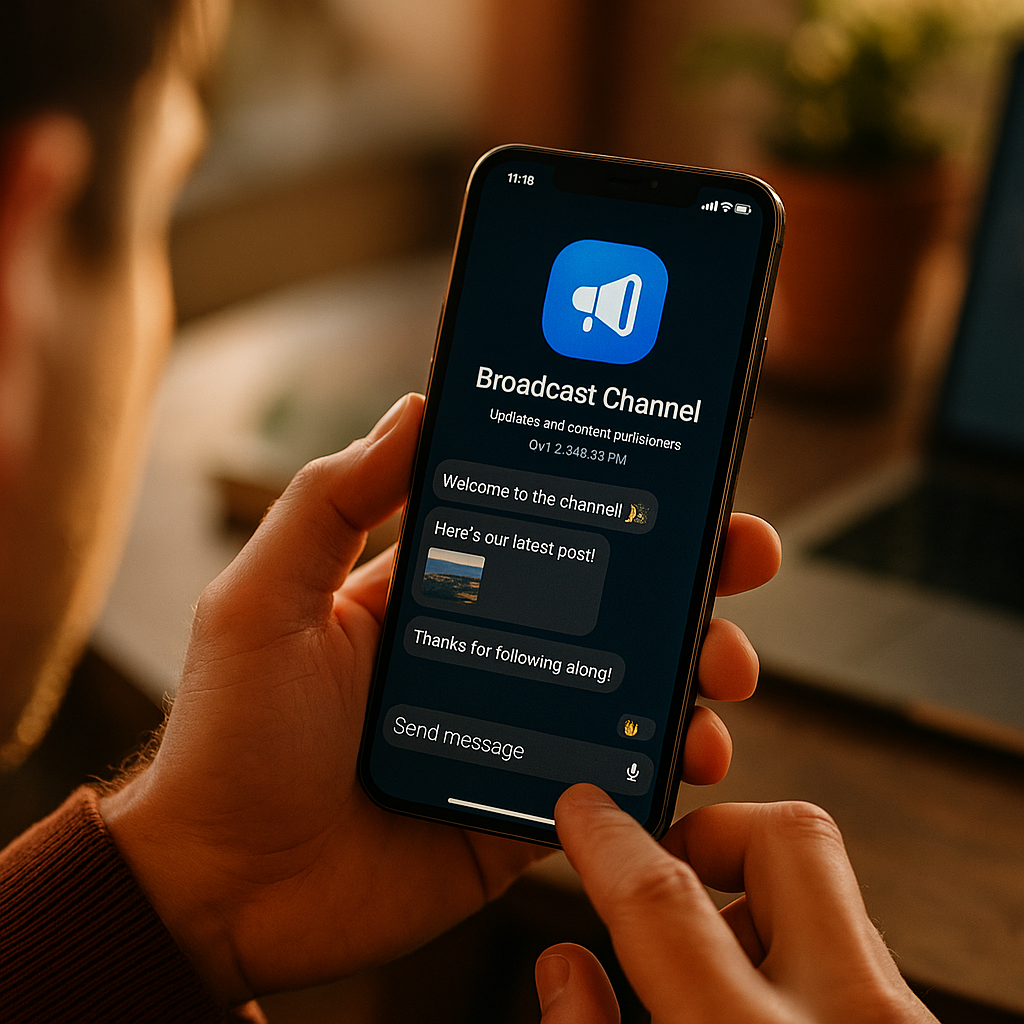
In 2025, brand reach is cheaper to lose than to rebuild. A Playbook for Leveraging Broadcast Channels on Meta Platforms helps you turn followers into reliably reachable subscribers across Instagram, Facebook, and Messenger—without spamming, gimmicks, or guesswork. This guide breaks down setup, content design, measurement, and compliance so your channel earns attention and drives outcomes. Ready to build an owned audience you can activate on demand?
Broadcast channel strategy: choose the right channel for the right job
Broadcast channels on Meta are one-to-many messaging spaces where admins publish updates and subscribers receive them in a lightweight, feed-adjacent experience. The strategic advantage is simple: you get direct distribution to opted-in subscribers without competing for every impression in the algorithmic feed.
Start by defining the job your channel will do. The strongest channels pick one primary outcome and optimize everything around it:
- Launch and drops: early access, waitlists, back-in-stock pings, limited-time bundles.
- Education and onboarding: short tips, “how to use it” sequences, troubleshooting, feature releases.
- Community direction: event reminders, polls to guide content, “office hours” prompts.
- Creator-to-fan connection: behind-the-scenes notes, tour dates, exclusive clips, merch offers.
Map channel choice to platform behavior. Instagram broadcast channels often work best for creators and brands with high engagement on Reels/Stories. Facebook can fit audiences that prefer groups and longer consideration cycles. Messenger can support support-adjacent use cases, but keep it clearly distinct from customer service to avoid confusion.
Decide what you will not do. A broadcast channel is not a replacement for support inboxes, and it should not become a raw repost stream from every other surface. If your audience can’t predict the value of the next update, opt-outs rise.
Follow-up question you’ll have: “How often should we post?” Start with a sustainable cadence (for many teams, 2–5 updates per week), then tune based on retention and click-through—not vanity subscriber counts.
Instagram broadcast channels setup: governance, roles, and subscriber growth
Execution begins with a clean setup that protects brand integrity and makes growth measurable. Treat your channel like a product: define ownership, rules, and onboarding.
1) Assign clear roles. At minimum, name a channel owner (strategy and final approval) and a publisher (day-to-day posting). If your organization is regulated or sensitive to claims, add an approver.
2) Write channel guidelines before the first post. Keep it short and visible internally:
- Approved topics and no-go topics
- Voice and formatting rules (length, links, visuals)
- Claim standards (what requires substantiation)
- Escalation path for mistakes or negative responses
3) Build an onboarding sequence. Your first 5–7 updates set expectations. Draft them in advance so the channel feels purposeful from day one:
- Welcome message: what subscribers get and how often
- A poll to learn intent (shopping, learning, events, deals)
- Your “best-of” link hub (or a single flagship resource)
- A clear call-to-action (CTA) that matches subscriber intent
4) Drive opt-ins with native and high-intent placements. Prioritize surfaces where people already trust you:
- Instagram Stories link stickers with a specific value promise
- Reels pinned comment pointing to the channel for updates
- Profile link hub: “Join the channel for weekly drops”
- Post-purchase email: invite customers to receive tips and restocks
5) Instrument tracking early. Use unique UTM parameters per channel CTA, and keep a simple naming convention (e.g., utm_source=instagram&utm_medium=broadcast&utm_campaign=launch_name). This lets you attribute traffic, signups, and revenue without relying on guesswork.
Follow-up question you’ll have: “Should we run ads to grow subscribers?” Yes, if you can clearly communicate the value exchange and you have a retention plan. Paid growth without a content system inflates churn.
Meta engagement tactics: content formats that keep subscribers opted in
Broadcast channels reward consistency and relevance. Subscribers don’t want a second feed—they want signal. Design content like a newsletter: clear promise, repeatable formats, and measurable actions.
Use a simple content framework: 70% value, 20% interaction, 10% promotion. Value can be tips, access, or clarity. Interaction includes polls and quick questions. Promotion is offers and asks.
High-performing broadcast channel formats:
- “Three bullets + one link” updates: a quick insight, a proof point, and a next step.
- Poll-driven programming: let subscribers vote on next topics, colors, or bundle options, then publish results and act on them.
- Timed windows: “Next 24 hours: early access,” then close the loop with a recap.
- Mini-series: 5-day onboarding, 3-part launch story, weekly “fix of the week.”
- Behind-the-scenes with intent: show process, then link to the outcome (preorder, RSVP, download).
Write for scanning. Keep messages tight, front-load the point, and use line breaks. One strong CTA per update beats three weak ones. If you share links, explain what the subscriber gets on the other side.
Balance exclusivity with accessibility. Exclusivity can be early access, limited content, or first notice. But don’t hide essential customer info behind the channel. Your channel should be an advantage, not a requirement.
Follow-up question you’ll have: “How promotional is too promotional?” Watch opt-out spikes after posts. If promotion-heavy updates correlate with unsubscribes or muted notifications, increase value posts between offers and tighten targeting (send offers aligned with poll-indicated intent).
Audience segmentation on Meta: personalize without breaking trust
Broadcast channels are inherently one-to-many, so segmentation happens through channel architecture and content signaling, not one-off personalization. The goal is to respect subscriber intent and avoid turning your channel into a generalized megaphone.
Option A: Multiple channels by intent. This is the cleanest approach for brands with diverse audiences:
- Deals & drops
- How-to & training
- Local events (city/region)
- Pro users vs. beginners
Keep each channel promise specific. Promote them separately so people self-select.
Option B: One channel with content lanes. If you can’t maintain multiple channels, use predictable labels:
- [DROP] for product releases
- [TIP] for education
- [LIVE] for events and reminders
Build trust with transparent data practices. Even when you’re not collecting extra data, subscribers will assume you track clicks and behavior. State what you do and don’t do in plain language. If you run polls, explain how results influence decisions (“We’ll stock the winning color next month”). Then follow through.
Connect the channel to your broader journey. Subscribers might be new, returning, or already customers. Use a lightweight “start here” update every month that links to:
- Your best intro resource
- Your most asked questions
- Your current offer (if applicable)
Follow-up question you’ll have: “Can we integrate this with CRM?” You can link channel clicks to CRM via UTMs and landing pages. Avoid asking for extra personal info inside the channel unless it’s essential and you can explain the benefit.
Measurement and KPIs: prove ROI with the right metrics
Success is not “subscriber count.” In 2025, distribution is only valuable if it produces outcomes you can defend. Set metrics that match your channel’s job and review them on a consistent rhythm.
Core KPI categories:
- Growth quality: new subscribers per week, subscriber source (Stories, profile, paid, email), and opt-in conversion rate on landing pages.
- Engagement: poll participation rate, link click-through rate (CTR), saves of key resources (if applicable), and replies where enabled.
- Retention: unsubscribe/leave rate after each post, mute rate signals (where observable), and week-4 retention of new subscribers.
- Business impact: revenue per click, lead submissions, event RSVPs, app installs, or trial starts attributable to UTMs.
Set a measurement cadence. Weekly: content performance and unsubscribes by post. Monthly: cohort retention (week-1 vs. week-4), top subscriber sources, and conversion trends. Quarterly: channel purpose check—does it still match audience intent?
Use testing that respects the subscriber experience. Run A/B tests over weeks, not hours. Test one variable at a time:
- CTA wording (direct vs. curiosity-driven)
- Posting time windows (morning vs. evening)
- Content format (poll-first vs. tip-first)
- Offer structure (early access vs. bundle)
Create a “channel scorecard.” A one-page internal report keeps stakeholders aligned: purpose, cadence, top posts, unsubscribes, traffic, conversions, and next month’s plan.
Follow-up question you’ll have: “What’s a good CTR?” It varies widely by niche, but the best benchmark is your own baseline over time. Focus on improving CTR while keeping unsubscribes flat or declining.
Compliance and brand safety: protect trust, privacy, and deliverability
Broadcast channels feel informal, but they are still marketing communications. Treat them with the same rigor you apply to ads, email, and public posts—especially in regulated categories.
Consent and expectations. Subscribers must understand what they’re opting into. Don’t bait-and-switch with unrelated content. If your cadence changes (e.g., during a launch week), tell subscribers in advance.
Claims and substantiation. If you mention performance, results, or comparisons, ensure you can substantiate them. Avoid absolute language unless it’s provably true. When relevant, include clarifying context in the message or on the linked page.
Privacy-first linking. If you send subscribers to forms, keep them short and explain why you need each field. Use secure pages and avoid collecting sensitive data unless essential.
Crisis handling plan. Mistakes happen. Prepare a response pattern:
- Acknowledge clearly and quickly
- Correct the information
- Explain what you changed to prevent repeats
Accessibility and clarity. Write in plain language, avoid jargon, and ensure linked pages work on mobile. If you share images, keep accompanying text descriptive so meaning isn’t lost.
Follow-up question you’ll have: “Will frequent posts get us ‘penalized’?” The bigger risk is subscriber fatigue, not punishment. Prioritize relevance and pacing; monitor opt-outs after clusters of messages.
FAQs
What are broadcast channels on Meta platforms?
Broadcast channels are one-to-many messaging spaces on Meta where admins publish updates and subscribers receive them. They’re designed for announcements, exclusive content, and interactive prompts like polls, helping you reach opted-in audiences more directly than standard feed posts.
Are Meta broadcast channels better than email newsletters?
They serve different roles. Broadcast channels typically deliver faster reach and lower friction opt-ins inside Meta apps, while email offers stronger portability, deeper formatting, and more mature automation. Many teams use both: the channel for timely updates and email for longer-form content and lifecycle flows.
How often should a brand post in a broadcast channel?
Choose a cadence you can sustain and that matches subscriber expectations. Many brands perform well at 2–5 updates per week, increasing during launches with advance notice. Let retention and click performance guide adjustments.
How do you grow subscribers without annoying followers?
Lead with a specific value promise (early access, weekly tips, local events), place the invite where intent is high (Stories, pinned comments, profile links), and deliver a strong onboarding sequence. If the first week feels valuable, subscribers stay.
What should you measure to prove ROI?
Track growth sources, engagement (poll participation and CTR), retention (unsubscribes by post and cohort retention), and business outcomes using UTMs (revenue, leads, RSVPs, trials). Report trends, not one-off wins.
Can small teams run broadcast channels effectively?
Yes. Start with one channel, one goal, and three repeatable formats. Batch-produce a month of posts, reuse high-performing posts with updates, and keep governance simple so publishing doesn’t stall.
Broadcast channels reward brands that treat attention as earned, not assumed. Define a single purpose, set up clear governance, publish predictable value-led formats, and measure outcomes with UTMs and retention signals. When you respect subscriber intent and protect trust, Meta channels become a reliable distribution layer you can activate for launches, education, and community direction. Build the system now, and results compound.
Top Influencer Marketing Agencies
The leading agencies shaping influencer marketing in 2026
Agencies ranked by campaign performance, client diversity, platform expertise, proven ROI, industry recognition, and client satisfaction. Assessed through verified case studies, reviews, and industry consultations.
Moburst

-
2

The Shelf
Boutique Beauty & Lifestyle Influencer AgencyA data-driven boutique agency specializing exclusively in beauty, wellness, and lifestyle influencer campaigns on Instagram and TikTok. Best for brands already focused on the beauty/personal care space that need curated, aesthetic-driven content.Clients: Pepsi, The Honest Company, Hims, Elf Cosmetics, Pure LeafVisit The Shelf → -
3

Audiencly
Niche Gaming & Esports Influencer AgencyA specialized agency focused exclusively on gaming and esports creators on YouTube, Twitch, and TikTok. Ideal if your campaign is 100% gaming-focused — from game launches to hardware and esports events.Clients: Epic Games, NordVPN, Ubisoft, Wargaming, Tencent GamesVisit Audiencly → -
4

Viral Nation
Global Influencer Marketing & Talent AgencyA dual talent management and marketing agency with proprietary brand safety tools and a global creator network spanning nano-influencers to celebrities across all major platforms.Clients: Meta, Activision Blizzard, Energizer, Aston Martin, WalmartVisit Viral Nation → -
5

The Influencer Marketing Factory
TikTok, Instagram & YouTube CampaignsA full-service agency with strong TikTok expertise, offering end-to-end campaign management from influencer discovery through performance reporting with a focus on platform-native content.Clients: Google, Snapchat, Universal Music, Bumble, YelpVisit TIMF → -
6

NeoReach
Enterprise Analytics & Influencer CampaignsAn enterprise-focused agency combining managed campaigns with a powerful self-service data platform for influencer search, audience analytics, and attribution modeling.Clients: Amazon, Airbnb, Netflix, Honda, The New York TimesVisit NeoReach → -
7

Ubiquitous
Creator-First Marketing PlatformA tech-driven platform combining self-service tools with managed campaign options, emphasizing speed and scalability for brands managing multiple influencer relationships.Clients: Lyft, Disney, Target, American Eagle, NetflixVisit Ubiquitous → -
8

Obviously
Scalable Enterprise Influencer CampaignsA tech-enabled agency built for high-volume campaigns, coordinating hundreds of creators simultaneously with end-to-end logistics, content rights management, and product seeding.Clients: Google, Ulta Beauty, Converse, AmazonVisit Obviously →