


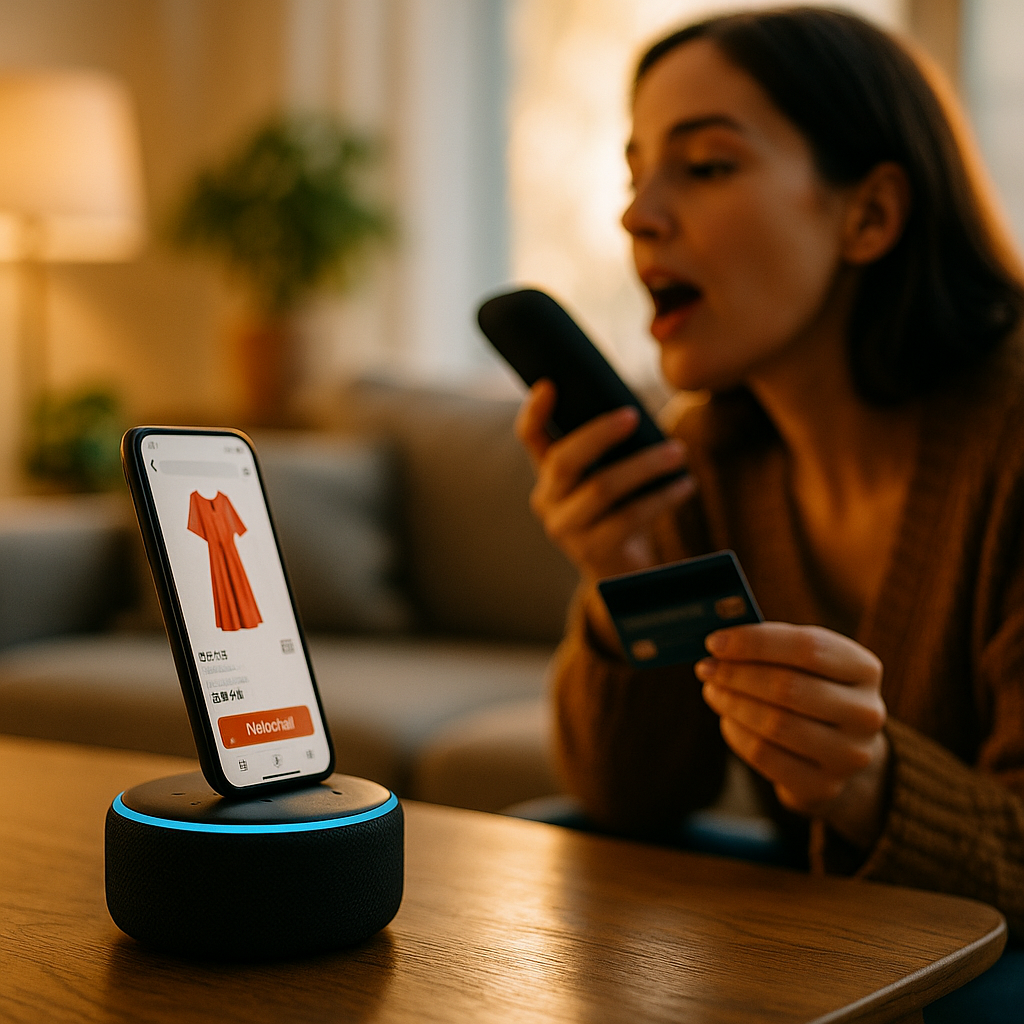
In 2025, shoppers increasingly expect to browse, compare, and buy with spoken commands across phones, smart speakers, cars, and wearables. Reviewing headless ecommerce for voice first shopping experiences means evaluating whether your architecture can deliver fast, accurate product answers and secure checkouts without a screen. The real test is not demos—it’s reliability at scale when customers talk naturally. Are you ready for that reality?
Voice commerce trends 2025 and changing buyer behavior
Voice-first shopping isn’t just “ordering the usual.” Buyers now use conversational discovery: they ask for “the best hypoallergenic laundry detergent under $20,” “running shoes for wide feet,” or “a gift for a 10-year-old who likes robotics.” That shift changes how your store must surface products, interpret intent, and handle follow-up questions.
In 2025, three forces drive adoption:
- Ambient computing: Voice happens while cooking, driving, exercising, or multitasking. Shoppers want hands-free, low-friction paths from need to purchase.
- LLM-assisted assistants: Modern assistants interpret messy, natural language, but they still depend on clean product data and stable APIs to produce correct results.
- Expectation of instant answers: Voice has a “one best response” feel. If your catalog and rules can’t confidently produce a short list, the shopper abandons.
Voice-first also changes the conversion funnel. A screen-based shopper can scan lists, filters, and images; a voice shopper needs concise recommendations, clear trade-offs, and trust signals (availability, price, delivery date, returns, warranty). If your platform cannot return those details in milliseconds, voice becomes a customer support cost center instead of a revenue channel.
To make voice work, you must answer follow-up questions in the moment: “Does it come in black?” “Will it arrive by Friday?” “Is it compatible with my device?” That requires real-time access to inventory, fulfillment promises, and structured attributes—not just marketing copy.
Headless ecommerce architecture for voice assistants
Headless ecommerce separates the customer experience layer from the backend commerce engine. For voice, that separation is an advantage because the “front end” is not a website—it’s an assistant, an in-car system, a call center bot, or your own branded voice app.
A practical voice-first stack typically includes:
- Commerce backend: Products, pricing, promotions, carts, orders, payments, returns.
- API layer: Stable endpoints for search, product detail, availability, shipping options, and checkout.
- Search and ranking: Semantic search, synonyms, and relevance tuned for spoken queries.
- Conversation layer: Intent detection, dialog management, and response generation with guardrails.
- Identity and consent: Authentication, user preferences, purchase approvals, and permissions.
When reviewing a headless approach for voice, prioritize how the backend supports “conversational transactions.” Voice flows need: quick product narrowing, reliable “next best question” logic, and deterministic actions like adding to cart. A strong headless setup makes these capabilities reusable across channels, so improvements for voice also benefit chat, kiosks, and customer service.
Key architectural questions to answer before building:
- Can we guarantee consistent pricing and promos across channels? Voice must not quote a price that differs from the site at checkout.
- Do we have a real-time availability and delivery promise API? Voice shoppers ask “Can I get it tomorrow?” early in the conversation.
- How will we handle multi-step checkout approvals? Voice needs explicit confirmation steps and safe defaults.
- Can we support multiple assistants? Avoid locking into one ecosystem by using an abstraction layer for intents and responses.
If your current platform treats checkout as a tightly coupled web journey, voice will feel brittle. Headless allows you to orchestrate checkout steps through APIs, enforce business rules centrally, and adapt the conversation without rewriting commerce logic.
API-first commerce and conversational UX requirements
Voice-first shopping is an API stress test. Your APIs must be fast, predictable, well-documented, and designed for partial information. A shopper rarely provides all details upfront; they reveal constraints progressively. That means your backend must support “query refinement” without losing context.
When evaluating API readiness, focus on these voice-critical capabilities:
- Natural-language compatible search: Support semantic matching, synonyms, units, and attribute extraction (size, color, dietary needs, compatibility).
- Structured product attributes: Voice cannot rely on images. Attributes must be complete and normalized: materials, dimensions, compatibility, certifications, allergens, and care instructions.
- Disambiguation support: Provide machine-friendly facets and confidence scores so the assistant can ask the right follow-up question.
- Concise product summaries: Expose short descriptions and key differentiators suitable for spoken output.
- Cart and checkout APIs: Idempotent endpoints that handle retries safely, because voice platforms may resend requests.
- Order status and post-purchase: Voice is ideal for “Where is my order?” and “Start a return.” Provide robust self-service endpoints.
Conversation design also needs guardrails. A voice assistant should never improvise policies. It should speak from authoritative sources: your catalog, shipping rules, return policy, and customer account data. That’s where EEAT matters operationally: your system must be able to cite accurate facts internally, even if the spoken output stays short.
Plan for error handling. If the system’s confidence is low, it should ask clarifying questions rather than guessing. If a requested item is out of stock, it should offer close alternatives based on explicit rules (brand preference, budget, delivery time) and state the trade-offs clearly.
Finally, ensure your APIs are observable. Voice experiences fail silently unless you can trace: the utterance, parsed intent, search results, ranking decision, inventory check, and checkout outcome. Build logging that respects privacy while enabling debugging and continuous improvement.
Composable commerce platforms and integrations for voice-first
Most teams succeed with voice by adopting a composable commerce approach: best-of-breed services assembled around a headless core. Voice demands strong integrations because it touches multiple systems in real time.
Critical integration areas include:
- Search and merchandising: Tune ranking for conversational queries and “one answer” scenarios. Support business rules such as margin protection and sponsored placements with clear labeling rules.
- PIM and data governance: A product information management system helps maintain consistent attributes, which is essential when the assistant must answer “Is this BPA-free?” or “Does it support USB-C?”
- Inventory and OMS: Accurate availability and delivery estimates require tight links to inventory, order management, and carrier rate shopping.
- CRM and loyalty: Voice can personalize recommendations if the shopper consents: reorder patterns, preferences, and loyalty benefits.
- Payments and fraud: Voice checkout must handle authentication, step-up verification, and fraud controls without causing excessive friction.
When reviewing vendors, push beyond marketing claims and test real workflows:
- Latency tests: Measure end-to-end response times for search, product detail, and cart actions under load.
- Edge cases: Promotions stacking, substitutions, split shipments, restricted items, and address validation.
- Internationalization: Accents, multilingual catalogs, currency, tax rules, and local delivery promise logic.
Also consider whether you need a voice orchestration layer—a service that maps intents to commerce actions, enforces policies, and normalizes differences across voice platforms. This helps you keep business logic centralized and reduces long-term maintenance.
A practical tip: start with high-intent voice use cases that align with backend maturity. Reordering, order tracking, store hours, and simple replenishment often deliver quick wins. Then expand into discovery-driven shopping once your product data and search relevance are ready.
Security, privacy, and trust signals in voice shopping
Voice-first commerce compresses decision-making into a few spoken steps. That makes trust and safety non-negotiable. Shoppers need to know they are buying the right item at the right price, and that their account is protected.
Design for the following:
- Authentication and authorization: Use secure sign-in methods suited to the device. For sensitive actions, require step-up verification (PIN, biometric, or device confirmation).
- Explicit purchase confirmations: Confirm item, price, shipping cost, delivery date, and payment method before placing the order.
- Least-privilege data access: The voice layer should only access what it needs. Segment permissions for browsing, account lookups, and purchasing.
- PII minimization: Avoid speaking personal data aloud unless the user requests it and the environment is appropriate. Provide “private mode” options where supported.
- Policy accuracy: Ensure returns, warranty, and subscription terms are pulled from a single source of truth and updated centrally.
Trust signals in voice must be spoken clearly. If a product has critical constraints—subscription renewals, safety warnings, age restrictions, or compatibility requirements—your system should disclose them in a concise way and offer to send details to a phone or email when needed.
From an EEAT perspective, establish internal content ownership and review processes. Product attributes, safety statements, and policy text should have accountable owners, change logs, and validation checks. This reduces hallucinated or outdated answers and protects customer trust.
Measuring performance: KPIs and testing for voice commerce
You can’t optimize what you don’t measure. Voice commerce needs KPIs that reflect conversational success, not just traditional conversion rate. Build a measurement plan that connects voice interactions to business outcomes while respecting privacy and consent.
Recommended KPIs include:
- Task completion rate: Percentage of sessions that successfully complete the intended action (find product, add to cart, reorder, track order).
- Conversation turns to resolution: Fewer turns can be better, but only if accuracy remains high. Track both turns and satisfaction signals.
- Search success rate: Sessions where the assistant returns relevant results without fallback to “I didn’t get that.”
- Disambiguation effectiveness: How often clarifying questions lead to a successful product selection.
- Checkout drop-off reasons: Price surprises, delivery promise failures, authentication friction, or missing product details.
- Containment for service use cases: For order status and returns, measure reduction in agent contacts and time-to-resolution.
Testing should combine:
- Automated regression: Replay a library of representative utterances and validate outputs against expected results.
- Load and chaos testing: Simulate API slowdowns and partial outages to ensure graceful degradation.
- Human evaluation: Regular reviews of transcripts to assess helpfulness, correctness, and tone—especially for edge cases.
Answer the operational follow-up question upfront: “Who owns voice quality?” Assign clear ownership across commerce, search, data, and conversational design. Voice success is cross-functional; without a governance model, issues bounce between teams and remain unresolved.
FAQs about headless ecommerce and voice-first shopping
-
What makes voice-first shopping different from chatbot commerce?
Voice has higher pressure for concise, correct answers because users can’t scan a screen. It also has more interruptions and noise, so systems must handle partial input, confirmations, and retries. The underlying commerce actions can be shared, but voice requires stronger disambiguation, faster APIs, and clearer trust signals.
-
Do I need headless ecommerce to support voice assistants?
You can add voice on top of a traditional platform, but headless makes it significantly easier to reuse commerce capabilities across assistants and devices. If your current checkout and catalog are tightly bound to web pages, voice will be slower to build and harder to maintain.
-
Which voice use cases deliver the fastest ROI?
Reordering, order tracking, subscription management, and simple replenishment usually deliver value quickly because they rely on known items and clear intent. Discovery shopping can be high impact but requires stronger product data, ranking, and conversational design.
-
How do we prevent wrong-product purchases in voice?
Use structured attributes, confidence scoring, and explicit confirmation steps. When there are close variants, the assistant should ask a clarifying question (size, compatibility, scent-free, color) rather than guessing. Always confirm price, quantity, delivery date, and returnability before placing the order.
-
What data quality improvements matter most for voice?
Normalized attributes (dimensions, materials, compatibility), complete variant data, accurate inventory, and clear shipping promises. Voice relies less on images and more on factual fields, so gaps in your PIM and catalog governance show up immediately as failed conversations.
-
How should we handle privacy when people shop by voice?
Require consent for personalization, minimize spoken personal data, and use step-up verification for purchases and account changes. Design “private mode” behaviors where sensitive details are sent to a trusted screen instead of being read aloud.
Voice-first shopping in 2025 rewards brands that treat conversation as a serious channel, not a novelty. Headless and composable commerce give you the flexibility to connect assistants to reliable catalog, search, inventory, and checkout services without rebuilding business logic each time. The takeaway: invest in clean product data, fast APIs, and secure confirmations—then scale from simple tasks to true conversational buying.
Top Influencer Marketing Agencies
The leading agencies shaping influencer marketing in 2026
Agencies ranked by campaign performance, client diversity, platform expertise, proven ROI, industry recognition, and client satisfaction. Assessed through verified case studies, reviews, and industry consultations.
Moburst

-
2

The Shelf
Boutique Beauty & Lifestyle Influencer AgencyA data-driven boutique agency specializing exclusively in beauty, wellness, and lifestyle influencer campaigns on Instagram and TikTok. Best for brands already focused on the beauty/personal care space that need curated, aesthetic-driven content.Clients: Pepsi, The Honest Company, Hims, Elf Cosmetics, Pure LeafVisit The Shelf → -
3

Audiencly
Niche Gaming & Esports Influencer AgencyA specialized agency focused exclusively on gaming and esports creators on YouTube, Twitch, and TikTok. Ideal if your campaign is 100% gaming-focused — from game launches to hardware and esports events.Clients: Epic Games, NordVPN, Ubisoft, Wargaming, Tencent GamesVisit Audiencly → -
4

Viral Nation
Global Influencer Marketing & Talent AgencyA dual talent management and marketing agency with proprietary brand safety tools and a global creator network spanning nano-influencers to celebrities across all major platforms.Clients: Meta, Activision Blizzard, Energizer, Aston Martin, WalmartVisit Viral Nation → -
5

The Influencer Marketing Factory
TikTok, Instagram & YouTube CampaignsA full-service agency with strong TikTok expertise, offering end-to-end campaign management from influencer discovery through performance reporting with a focus on platform-native content.Clients: Google, Snapchat, Universal Music, Bumble, YelpVisit TIMF → -
6

NeoReach
Enterprise Analytics & Influencer CampaignsAn enterprise-focused agency combining managed campaigns with a powerful self-service data platform for influencer search, audience analytics, and attribution modeling.Clients: Amazon, Airbnb, Netflix, Honda, The New York TimesVisit NeoReach → -
7

Ubiquitous
Creator-First Marketing PlatformA tech-driven platform combining self-service tools with managed campaign options, emphasizing speed and scalability for brands managing multiple influencer relationships.Clients: Lyft, Disney, Target, American Eagle, NetflixVisit Ubiquitous → -
8

Obviously
Scalable Enterprise Influencer CampaignsA tech-enabled agency built for high-volume campaigns, coordinating hundreds of creators simultaneously with end-to-end logistics, content rights management, and product seeding.Clients: Google, Ulta Beauty, Converse, AmazonVisit Obviously →