


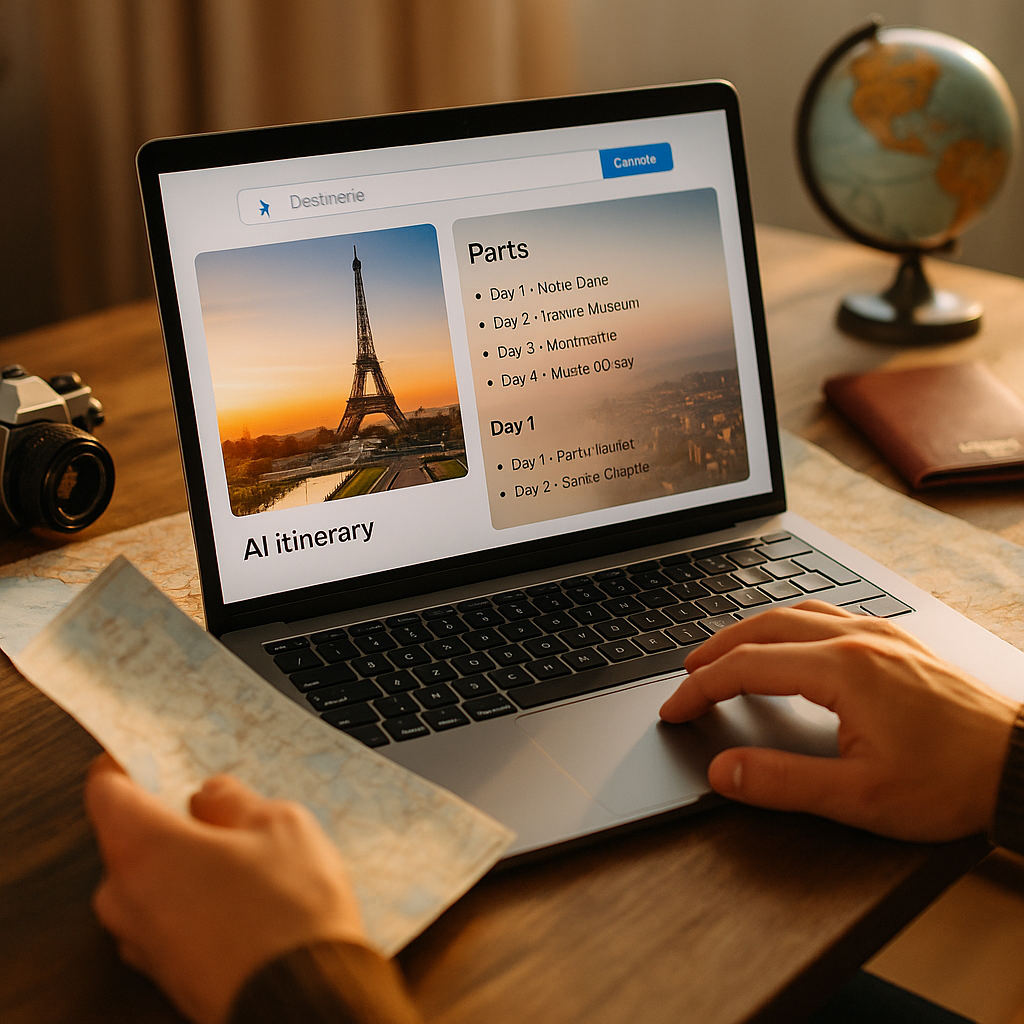
Case Study: How a Travel Brand Used AI Itinerary Lead Magnets is a practical look at turning trip planning into measurable growth in 2025. Travelers want fast, personalized answers, and brands want qualified leads they can nurture. This case study breaks down the exact funnel, tech, and messaging that made it work—plus what you can replicate without a huge team. Ready to see the playbook?
AI itinerary lead magnets: the brand, goal, and baseline
A mid-sized direct-to-consumer travel brand (selling curated tours and local experiences) faced a familiar problem: strong social reach, weak email capture, and low intent from generic “subscribe for deals” pop-ups. The team needed a lead magnet that felt like a service, not a coupon.
Primary objective: increase qualified email leads and speed up the path from first visit to trip inquiry.
Baseline challenges:
- High bounce on destination guides: visitors skimmed but didn’t take the next step.
- Low conversion on pop-ups: the offer lacked specificity and urgency.
- Long consideration cycle: users needed help deciding where to go, what to do, and how to fit it into time and budget.
Strategic insight: travelers often don’t want “more content.” They want an actionable plan they can trust. The brand decided to exchange a personalized itinerary for an email address, with the itinerary itself designed to reveal intent signals (destination, dates, budget, travel style) that would improve follow-up targeting.
Travel lead generation: funnel design and offer positioning
The brand built a two-step funnel that treated the itinerary as a “planning deliverable” rather than a marketing PDF. The core promise: “Get a realistic, day-by-day plan you can actually use—tailored to your time, budget, and interests.”
Step 1: Destination intent capture
- Entry points: destination blog posts, paid social ads, and a “Plan My Trip” button in the site header.
- Micro-commitment: users selected destination (or “help me choose”), trip length, and month of travel.
Step 2: Personalization + email capture
- Users answered 6–8 questions: pace, interests (food, outdoors, culture), traveler type, budget range, accessibility needs, and must-see priorities.
- Email capture came after the value was clear: a preview showed the first day’s outline and a sample map list, then asked for email to deliver the full itinerary.
Why this worked for travel lead generation: it matched visitor intent at the moment they were already planning. Instead of interrupting with a discount, the brand assisted decision-making. That assistance also created a natural bridge to the brand’s paid offerings: tours and add-ons aligned to each day’s plan.
Likely follow-up question: “Did they gate the entire itinerary?” Yes—but they provided a credible preview (Day 1 outline, hotel area suggestions, and a “what we considered” note) so users understood the quality before sharing an email.
AI personalization for travel: data inputs, prompts, and guardrails
The itinerary engine combined structured inputs (form fields) with brand knowledge (destination constraints, partner inventory, and editorial rules). The goal wasn’t “creative writing.” It was useful planning output with consistent tone, realistic timing, and safety checks.
Core inputs used:
- Trip structure: destination(s), number of days, arrival/departure windows, home airport region (for flight time assumptions).
- Preferences: interests, pace, dietary notes, mobility needs, nightlife preference, family-friendly flag.
- Budget range: used to suggest neighborhood types and activity mix (free/paid).
- Seasonality: month of travel to avoid recommending closed roads, extreme weather hikes, or off-season closures.
Prompting approach (kept simple and repeatable): the system requested a day-by-day plan with time blocks, transit assumptions, and “why this fits you” notes. Each day included:
- Morning / afternoon / evening activities
- Transit guidance (walk, public transport, short taxi) without pretending to be real-time navigation
- Booking pointers (what needs reservations, what doesn’t)
- Alternatives for rain, low-energy days, or crowds
Guardrails to protect trust (EEAT):
- Accuracy constraints: the model could not claim real-time availability, prices, or opening hours.
- Local review layer: the brand’s destination specialists maintained “do not recommend” lists and seasonal notes.
- Safety and ethics: it avoided unsafe hikes for families, flagged high-risk activities, and offered accessibility-first options when selected.
- Disclosure: each itinerary stated it was AI-assisted and advised users to confirm hours and conditions.
Answering the next question: “Did they use user data responsibly?” They minimized collection to what improved the itinerary and stored preference data for personalization only, with clear consent and an easy unsubscribe.
Marketing automation for travel: delivery, segmentation, and nurture
The itinerary was delivered within minutes by email, and the email itself acted like a mini product. The brand didn’t bury the plan behind a login. They made the itinerary instantly usable while guiding the reader toward a consultation or curated package.
Delivery email structure:
- Top: a concise “Trip Snapshot” (days, pace, themes, estimated daily activity load)
- Middle: day-by-day itinerary with expandable sections (kept readable on mobile)
- Bottom: recommended add-ons aligned to the itinerary (small-group tour on Day 2, food experience on Day 4)
Segmentation logic (simple rules with high impact):
- Destination + month: seasonal content and availability notes.
- Trip length: short breaks vs. extended trips.
- Budget tier: which packages and upsells to show first.
- Interest cluster: food-focused vs. outdoor vs. culture-heavy nurture tracks.
Nurture sequence (7–10 days):
- Email 1: itinerary delivery + one-click “swap Day 3” preference poll
- Email 2: “Top 5 booking mistakes for your month” (practical, not salesy)
- Email 3: curated experiences that match their itinerary day slots
- Email 4: social proof: traveler stories and reviews for the same destination
- Email 5: clear CTA: schedule a 15-minute planning call or request a quote
Key automation detail: user clicks updated the itinerary itself. If someone chose “more nature,” the next email included an updated Day 2–3 plan and relevant offers. This made the brand feel responsive without manual work.
Conversion rate optimization for travel: landing page, UX, and trust signals
Small UX decisions drove big performance gains. The brand treated the itinerary tool like a premium planner, not a lead-gen gimmick. Every page element answered an implied objection: “Will this be generic? Will it waste my time? Can I trust it?”
High-impact CRO changes:
- Preview before email: a real sample of “Day 1” personalized from their inputs.
- Time-to-complete honesty: “Takes about 90 seconds” beside the first question.
- Constraint-based questions: fewer open text fields; more structured choices to reduce friction and improve output quality.
- Trust blocks: destination specialist review note, refund policy link for packages, and review excerpts relevant to the destination.
- Privacy clarity: one sentence on data use plus a link to preferences management.
How they handled accuracy concerns: the page explicitly stated that times and routing were approximate and provided a “confirm before you go” checklist. This reduced complaints and increased confidence because it demonstrated practical expertise.
What about travelers who don’t know where to go? The funnel included a “Help me choose” path. Those users received a two-option comparison itinerary (“Option A: city-first,” “Option B: nature-first”) and a short quiz result summary, which created a natural follow-up for a consultation.
AI travel marketing results: what improved and what they changed next
The brand measured success beyond email sign-ups. They tracked downstream metrics: quote requests, call bookings, and revenue per lead. They also monitored qualitative feedback to refine itinerary quality.
Observed outcomes after rollout in 2025:
- Higher lead quality: the itinerary inputs provided immediate context, so sales conversations started with clear preferences.
- More engaged subscribers: itinerary recipients clicked more because the content directly reflected their choices.
- Shorter path to inquiry: the itinerary reduced “analysis paralysis,” making it easier to commit to dates and experiences.
What they changed after the first month:
- Added a “budget reality check” panel: a range-based estimate to set expectations and prevent sticker shock.
- Improved family and accessibility options: clearer pacing and rest time suggestions, plus alternative activities.
- Introduced human review for high-value leads: when a lead selected longer trips or premium budgets, a specialist reviewed and lightly edited the itinerary before delivery.
EEAT reinforcement: the brand credited sources when using statistical or advisory information (for example, general guidance on booking windows) and separated factual claims from recommendations. They also maintained author pages for destination experts and noted when an itinerary was “AI-assisted and reviewed by our team.”
FAQs
What is an AI itinerary lead magnet?
An AI itinerary lead magnet is a personalized trip plan generated from a traveler’s inputs and delivered in exchange for contact information (usually an email). Done well, it provides immediate utility (a usable schedule) and also captures intent data that improves segmentation and follow-up.
How do you prevent AI itineraries from being inaccurate?
Use guardrails: avoid real-time claims, maintain destination rules (seasonality, closures, safety), and include a confirmation checklist. For higher-stakes trips, add a human review step or restrict suggestions to vetted partners and well-known attractions.
What questions should the lead magnet ask to maximize conversions?
Ask only what meaningfully improves the plan: destination (or “help me choose”), trip length, month, budget range, pace, key interests, and constraints like mobility needs. Keep it to 6–8 questions, show progress, and provide a preview before the email gate.
Should the itinerary be delivered as a PDF or in the email?
In-email delivery reduces friction and increases immediate engagement. You can still offer a “download PDF” option for convenience, but the fastest path to value is a mobile-friendly email plus a hosted web version for easy updates.
How do you turn itinerary leads into bookings without being pushy?
Recommend add-ons that fit specific day slots in the itinerary and explain why they match the traveler’s preferences. Follow up with practical planning tips first, then invite a low-commitment next step like a short planning call or a quote request.
Is this approach compliant with privacy expectations in 2025?
It can be, if you minimize data collection, clearly explain how preference data is used, obtain consent for marketing emails, and provide easy opt-out and preference controls. Avoid collecting sensitive data unless essential, and protect any stored profiles with strong security practices.
What’s the clearest sign the lead magnet is working?
Not just more emails—more qualified actions. Track itinerary engagement (clicks, preference updates), consultation bookings, quote requests, and revenue per lead. If those improve alongside unsubscribe stability, the lead magnet is creating real value.
In 2025, this travel brand proved that personalized planning can function as both a service and a growth engine. By using AI to generate itineraries with clear guardrails, strong UX, and smart automation, they captured higher-intent leads and nurtured them with genuinely helpful guidance. The takeaway: build a lead magnet that solves a real planning problem, then connect it to a respectful, segmented path to booking.
Top Influencer Marketing Agencies
The leading agencies shaping influencer marketing in 2026
Agencies ranked by campaign performance, client diversity, platform expertise, proven ROI, industry recognition, and client satisfaction. Assessed through verified case studies, reviews, and industry consultations.
Moburst

-
2

The Shelf
Boutique Beauty & Lifestyle Influencer AgencyA data-driven boutique agency specializing exclusively in beauty, wellness, and lifestyle influencer campaigns on Instagram and TikTok. Best for brands already focused on the beauty/personal care space that need curated, aesthetic-driven content.Clients: Pepsi, The Honest Company, Hims, Elf Cosmetics, Pure LeafVisit The Shelf → -
3

Audiencly
Niche Gaming & Esports Influencer AgencyA specialized agency focused exclusively on gaming and esports creators on YouTube, Twitch, and TikTok. Ideal if your campaign is 100% gaming-focused — from game launches to hardware and esports events.Clients: Epic Games, NordVPN, Ubisoft, Wargaming, Tencent GamesVisit Audiencly → -
4

Viral Nation
Global Influencer Marketing & Talent AgencyA dual talent management and marketing agency with proprietary brand safety tools and a global creator network spanning nano-influencers to celebrities across all major platforms.Clients: Meta, Activision Blizzard, Energizer, Aston Martin, WalmartVisit Viral Nation → -
5

The Influencer Marketing Factory
TikTok, Instagram & YouTube CampaignsA full-service agency with strong TikTok expertise, offering end-to-end campaign management from influencer discovery through performance reporting with a focus on platform-native content.Clients: Google, Snapchat, Universal Music, Bumble, YelpVisit TIMF → -
6

NeoReach
Enterprise Analytics & Influencer CampaignsAn enterprise-focused agency combining managed campaigns with a powerful self-service data platform for influencer search, audience analytics, and attribution modeling.Clients: Amazon, Airbnb, Netflix, Honda, The New York TimesVisit NeoReach → -
7

Ubiquitous
Creator-First Marketing PlatformA tech-driven platform combining self-service tools with managed campaign options, emphasizing speed and scalability for brands managing multiple influencer relationships.Clients: Lyft, Disney, Target, American Eagle, NetflixVisit Ubiquitous → -
8

Obviously
Scalable Enterprise Influencer CampaignsA tech-enabled agency built for high-volume campaigns, coordinating hundreds of creators simultaneously with end-to-end logistics, content rights management, and product seeding.Clients: Google, Ulta Beauty, Converse, AmazonVisit Obviously →