


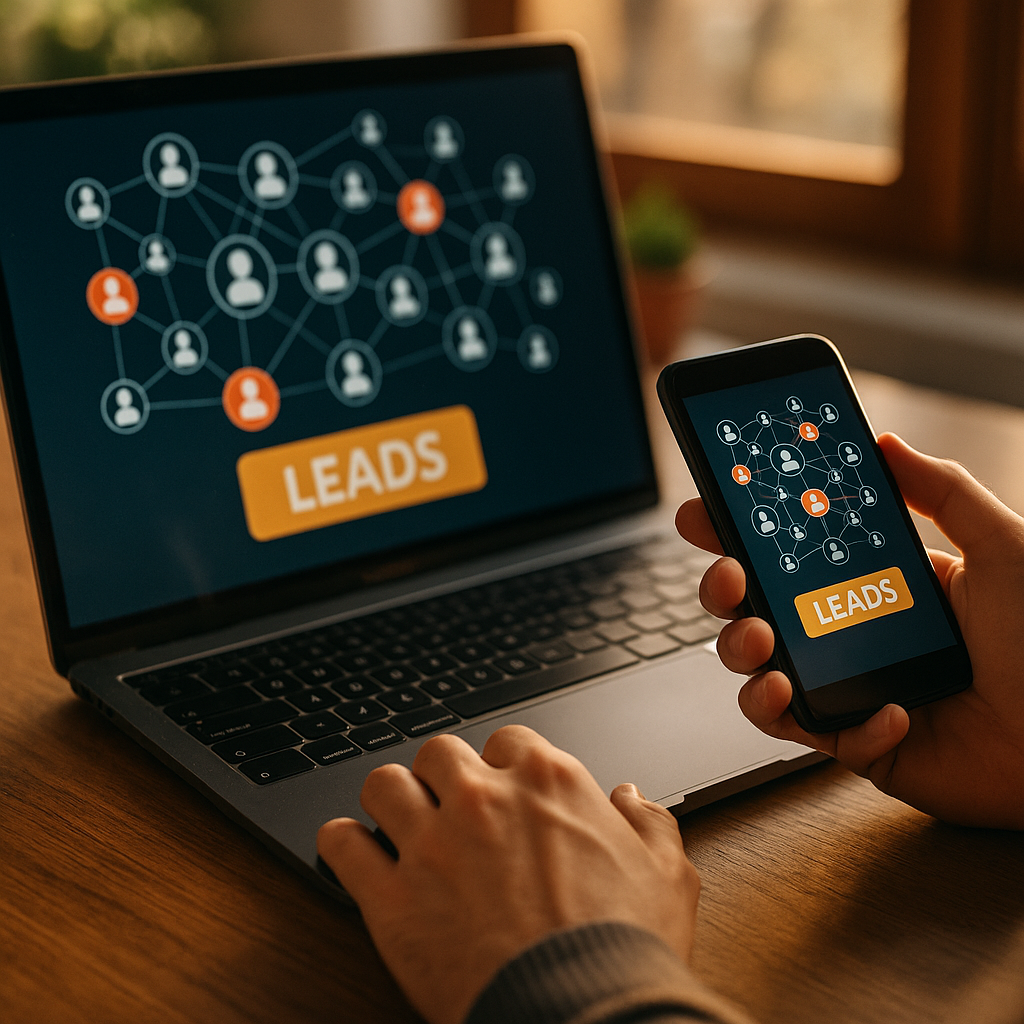
Niche professional messaging networks have become high-intent channels where decision-makers actually reply—if you approach them with relevance and restraint. This playbook shows how to use reaching leads on niche professional messaging networks to build pipeline without spam, protect brand trust, and measure outcomes. You’ll learn what to target, what to say, and how to follow up—so your next outreach earns a response. Ready to stand out?
Secondary keyword: niche professional networks — Choosing the right channel and audience
Not every “professional” network behaves like LinkedIn. Many niche platforms—industry forums with direct messaging, invite-only communities, association portals, practitioner Slack/Discord groups with DMs, and specialized marketplaces—run on tighter norms and stronger identity signals. That’s good news for lead generation, but only if you match the channel to your ideal customer profile (ICP).
Start with three filters:
- Role density: Are your buyers (or key influencers) present in meaningful numbers?
- Intent signals: Does the network surface “looking for,” “hiring,” “seeking vendor,” “requesting recommendations,” or problem-specific threads you can respond to?
- Access and etiquette: Is cold messaging allowed, discouraged, or gated by contribution history?
Build a channel scorecard before you send a single message. Rate each network from 1–5 on: ICP match, active users, moderation strictness, ease of search, DM deliverability, and reputation risk. Prioritize two channels to start; spreading thin across six platforms usually produces generic messaging and compliance mistakes.
To keep your approach aligned with Google’s helpful-content expectations, document your targeting logic. Create a simple “why this person, why now” note for each lead based on observable context: a post they made, a question they asked, a project they announced, or a role change visible on their profile. If you can’t justify outreach in one sentence, you’re not ready to message.
Secondary keyword: lead targeting strategy — Building lists ethically with high intent
Niche networks reward specificity. Your list quality matters more than your list size because communities penalize mass outreach fast—through reports, muted accounts, or silent reputational damage. A good lead targeting strategy combines relevance, permission, and timing.
Define your ICP in the language of the community. Titles vary by niche. In cybersecurity communities you’ll see “SecOps,” “Detection Engineer,” or “GRC.” In architecture networks you may see “Project Architect” rather than “Head of Design.” Use the platform’s taxonomy so your searches find the right people.
Capture intent signals without scraping or violating terms. In 2025, privacy expectations are higher and many networks explicitly restrict automated collection. Use manual, platform-native methods:
- Thread-based discovery: Identify recurring problem threads and note who asks, who answers, and who is thanked.
- Event rosters: Virtual meetups and workshops often reveal active practitioners with current projects.
- Resource downloads or shared templates: If the community supports resources, contributors and commenters often map to active initiatives.
- Job posts and hiring signals: Hiring often indicates budget, urgency, and internal change.
Segment by readiness, not just fit. Split your list into:
- Hot: explicitly seeking vendors, tools, referrals, or solutions.
- Warm: discussing the problem, evaluating approaches, or collecting benchmarks.
- Cold-but-relevant: matches ICP but no visible intent. Use contribution-first plays, not direct pitching.
Answer the obvious follow-up: “How many leads should I target?” For most teams, start with 30–60 highly relevant profiles per network per month. That volume supports learning and iteration while keeping personalization real.
Secondary keyword: outreach messaging framework — Writing messages that earn replies
Niche communities are allergic to generic templates because members see the same playbook recycled. An effective outreach messaging framework is short, contextual, and buyer-centric. Your goal is not to “book a call.” Your goal is to open a conversation with minimal friction.
Use this 6-sentence structure (and stop there):
- Context: One line proving why you chose them (specific post, thread, event, or role).
- Problem alignment: Name the problem in their words, not yours.
- Credibility: One proof point that reduces risk (relevant use case, niche expertise, or a resource you created).
- Value offer: A small, concrete next step (benchmark, checklist, teardown, template).
- Low-pressure ask: “Worth sharing?” or “Want me to send it?” instead of “Do you have 30 minutes?”
- Permission: A clear exit: “If not useful, I’ll close the loop.”
Example DM (customize the bracketed items):
Hi [Name]—I saw your note in [Thread/Channel] about [specific challenge]. A lot of [their role] teams run into [problem phrased as they did] when [trigger]. I’ve helped [similar org/type] handle it by [outcome, not feature]. I can share a 1-page [checklist/benchmarks] we use to spot quick wins—want me to send it here? If it’s not relevant, no worries and I’ll stop after this.
Make your credibility verifiable. In 2025, skepticism about AI-generated outreach is high. Avoid vague claims like “we’re the leading provider.” Instead, use specific, checkable signals: a published guide, a talk you gave, an open-source repo, or a customer story the recipient can validate. If you can’t substantiate a claim quickly, don’t include it.
Keep the message native to the network. Some communities prefer longer, thoughtful notes; others value brevity. Mirror the average post length and tone. Don’t force corporate phrasing into practitioner spaces.
Secondary keyword: community-led lead generation — Earning attention before you ask
In many niche networks, the strongest lead flow comes from visibility and trust, not direct DMs. Community-led lead generation means you show up as a helpful peer first, then use messaging as a follow-through tool when people raise their hand.
Contribution plays that compound:
- Answer questions with decision support: Provide trade-offs, constraints, and “when not to do this.” This signals expertise and integrity.
- Publish lightweight assets: Templates, checklists, calculators, or “how to evaluate vendors” guides. These build authority without forcing a pitch.
- Host micro-events: A 20-minute “office hours” session inside the community can outperform external webinars because attendance is self-selected and contextual.
- Summarize learnings: Turn a recurring thread into a concise summary post and tag contributors (where allowed). You become a curator, not a promoter.
How this connects to outreach: When you DM, reference your contribution: “I posted a checklist in the thread you were in—happy to tailor it to your setup.” That moves you from stranger to known quantity, improving reply rates and lowering perceived risk.
Guardrails to protect trust:
- Don’t gate everything. If every helpful post ends with “DM me,” you’ll get ignored. Share real value publicly.
- Respect moderators. Ask permission before posting promotional links. Follow channel rules precisely.
- Disclose your role. If you sell a product related to the topic, say so plainly. Transparency supports EEAT.
Readers often ask, “Is this slower than cold outreach?” It can be slower at first, but it produces higher-quality conversations and reduces churn in your pipeline because leads understand your point of view before the first call.
Secondary keyword: follow-up sequence — Timing, frequency, and multi-touch without spamming
Most leads won’t reply to the first message, even if it’s good. The difference between persistence and spam is new information, clear spacing, and easy exits. Build a follow-up sequence that respects attention and adds incremental value.
A practical 4-touch sequence for niche DMs:
- Touch 1 (Day 0): Context + permission-based offer (send resource).
- Touch 2 (Day 3–5): Share the resource snippet inline (not just a link) and offer to tailor it.
- Touch 3 (Day 10–14): Provide a relevant observation: a benchmark, risk, or “common trap” tied to their earlier context.
- Touch 4 (Day 21–28): Close the loop: “Should I stop reaching out, or is this a priority later?”
Rules that keep you on the right side of etiquette:
- One ask at a time: Don’t stack requests (call + referral + feedback) in one thread.
- Use “micro-yes” steps: “Want the checklist?” precedes “Want to talk?”
- Don’t chase across channels immediately: If you DM on the network, wait before emailing or connecting elsewhere unless they opt in.
- Stop quickly on disinterest: A “no” is valuable. Confirm you’ll close the loop.
What if the platform limits DMs? Some networks cap messages for new accounts. Treat that as a quality filter: build history through posts, comments, and participation until messaging access expands. This also improves trust signals when you do reach out.
Secondary keyword: outreach analytics — Measuring results and staying compliant
If you can’t measure outcomes, you’ll default to volume. Outreach analytics in niche networks should focus on conversation quality and downstream pipeline, not vanity metrics.
Track these metrics per network and segment (hot/warm/cold):
- Delivery/read indicators: Where available, track whether messages are seen; if not available, use reply rate as your proxy.
- Positive reply rate: Replies that indicate interest, questions, or requests for the resource.
- Resource engagement: If you share links, use UTM parameters and a privacy-respecting analytics setup. Prefer first-party tracking and clear disclosures.
- Meeting conversion rate: From positive reply to scheduled call.
- Opportunity rate: From meeting to qualified opportunity (define this rigorously).
- Time-to-first-reply: Helps you choose the best send windows for that community.
Close the loop with message testing that stays human. A/B testing is useful, but avoid testing that strips context. Test one variable at a time: opening line type (thread reference vs. role reference), offer format (template vs. benchmark), or CTA wording (“send it here?” vs. “ok to share?”). Keep personalization intact.
Compliance and risk management in 2025:
- Follow platform terms: Many networks prohibit automation, scraping, or bulk messaging. Violations can lead to bans and brand damage.
- Respect privacy: Don’t export personal data unnecessarily. Store only what you need for legitimate outreach and delete when it’s no longer required.
- Be transparent about AI assistance: If you use AI to draft messages, ensure a human reviews for accuracy, tone, and appropriateness. Avoid fabricated personalization.
- Document your process: Keep a simple outreach SOP that covers targeting criteria, messaging rules, follow-up limits, and opt-out handling.
When results lag, the fix is usually upstream: channel choice, weak intent signals, or an offer that’s too generic. Analytics helps you diagnose which lever to pull without increasing spam.
FAQs
- What counts as a niche professional messaging network?
Any specialized community where professionals exchange knowledge and can message each other directly—such as industry forums with DMs, association member platforms, invite-only groups, practitioner Slack/Discord communities with direct messages, and vertical marketplaces with messaging.
- Is cold messaging allowed in these communities?
It depends on the platform rules and norms. Some allow it explicitly; others discourage it unless you’ve contributed first. Always check the community guidelines, and when in doubt, lead with public contribution before initiating DMs.
- How do I avoid sounding like everyone else?
Reference a specific thread or moment, use the community’s vocabulary, offer a small actionable asset, and keep claims verifiable. Avoid generic intros, broad value statements, and overlong product descriptions.
- What should I offer if I don’t have a case study in that niche?
Offer a practical resource: an evaluation checklist, a comparison framework, a teardown of common approaches, or a benchmark survey of options. You can also share a short “decision memo” template that helps them align stakeholders.
- How many follow-ups are appropriate?
Typically 3–4 touches over 3–4 weeks works well if each follow-up adds new value and includes an easy exit. Stop immediately if they say no or ask you to stop, and don’t escalate to other channels without permission.
- How do I measure ROI from DMs inside closed networks?
Track positive reply rate, meeting conversion, and opportunity creation in your CRM. Use UTM-tagged links when appropriate, but don’t rely solely on click tracking; many recipients prefer to respond without clicking.
Reaching leads in niche networks works when you treat messaging as a trust-building tool, not a shortcut. Pick channels where your buyers gather, target based on intent signals, and send short messages that offer real help with clear permission. Contribute publicly to earn familiarity, follow up with new value, and track downstream pipeline—not vanity metrics. Do that consistently, and replies become predictable.
Top Influencer Marketing Agencies
The leading agencies shaping influencer marketing in 2026
Agencies ranked by campaign performance, client diversity, platform expertise, proven ROI, industry recognition, and client satisfaction. Assessed through verified case studies, reviews, and industry consultations.
Moburst

-
2

The Shelf
Boutique Beauty & Lifestyle Influencer AgencyA data-driven boutique agency specializing exclusively in beauty, wellness, and lifestyle influencer campaigns on Instagram and TikTok. Best for brands already focused on the beauty/personal care space that need curated, aesthetic-driven content.Clients: Pepsi, The Honest Company, Hims, Elf Cosmetics, Pure LeafVisit The Shelf → -
3

Audiencly
Niche Gaming & Esports Influencer AgencyA specialized agency focused exclusively on gaming and esports creators on YouTube, Twitch, and TikTok. Ideal if your campaign is 100% gaming-focused — from game launches to hardware and esports events.Clients: Epic Games, NordVPN, Ubisoft, Wargaming, Tencent GamesVisit Audiencly → -
4

Viral Nation
Global Influencer Marketing & Talent AgencyA dual talent management and marketing agency with proprietary brand safety tools and a global creator network spanning nano-influencers to celebrities across all major platforms.Clients: Meta, Activision Blizzard, Energizer, Aston Martin, WalmartVisit Viral Nation → -
5

The Influencer Marketing Factory
TikTok, Instagram & YouTube CampaignsA full-service agency with strong TikTok expertise, offering end-to-end campaign management from influencer discovery through performance reporting with a focus on platform-native content.Clients: Google, Snapchat, Universal Music, Bumble, YelpVisit TIMF → -
6

NeoReach
Enterprise Analytics & Influencer CampaignsAn enterprise-focused agency combining managed campaigns with a powerful self-service data platform for influencer search, audience analytics, and attribution modeling.Clients: Amazon, Airbnb, Netflix, Honda, The New York TimesVisit NeoReach → -
7

Ubiquitous
Creator-First Marketing PlatformA tech-driven platform combining self-service tools with managed campaign options, emphasizing speed and scalability for brands managing multiple influencer relationships.Clients: Lyft, Disney, Target, American Eagle, NetflixVisit Ubiquitous → -
8

Obviously
Scalable Enterprise Influencer CampaignsA tech-enabled agency built for high-volume campaigns, coordinating hundreds of creators simultaneously with end-to-end logistics, content rights management, and product seeding.Clients: Google, Ulta Beauty, Converse, AmazonVisit Obviously →