


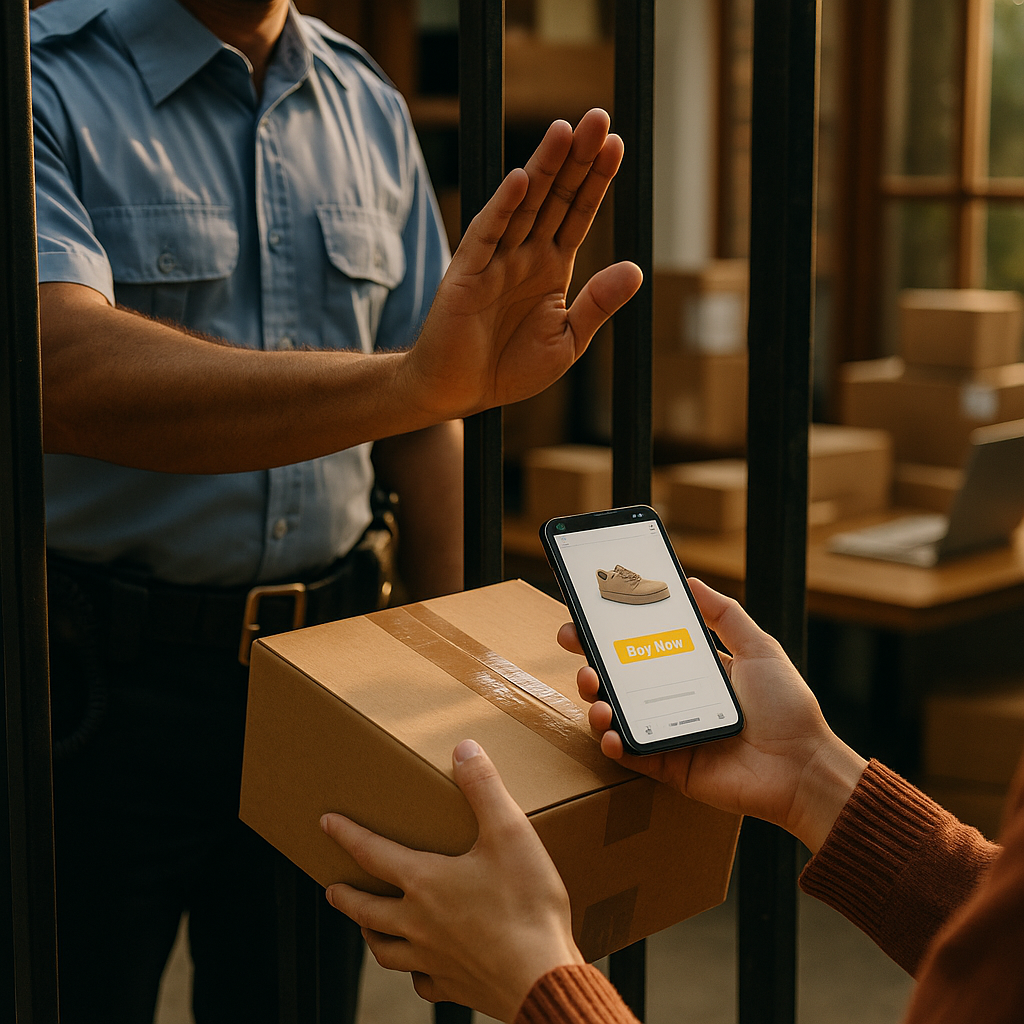
In 2025, D2C brands fight for attention in crowded feeds, rising ad costs, and shorter trend cycles. This case study shows how one brand turned controlled access into measurable demand using gatekeeping as a service. You’ll see the exact mechanics—waitlists, verification, drop rules, and community cues—plus what it cost, what it changed, and what you can replicate without backlash.
Gatekeeping as a service: what it is and why it works for D2C
Gatekeeping as a service is a structured, outsourced system that manages who can access a product, when, and under what conditions—using tools like identity checks, member tiers, invite codes, waitlists, and anti-bot controls. Unlike “limited stock” marketing, it’s operational: rules are enforced consistently, fraud is reduced, and access becomes a product feature.
It works in D2C because it aligns three forces that usually compete:
- Scarcity with credibility: scarcity feels real when it’s verified and rule-based, not vague.
- Community with boundaries: members value spaces that are protected from spam, bots, and resale abuse.
- Demand signals with data: waitlists, verified profiles, and cohort behavior reveal what customers will buy next.
In 2025, brands also face more sophisticated fraud. Imperva’s 2024 Bad Bot Report found that 49.6% of all internet traffic was automated, with “bad bots” accounting for 32%. That reality makes controlled access less of a gimmick and more of a revenue-protection layer—especially for drops, limited editions, and collabs.
D2C hype strategy: the brand, the problem, and the opportunity
This case study follows a mid-sized D2C skincare brand we’ll call Aurora Skin. Aurora had strong product reviews and repeat purchase behavior, but growth had flattened. The team noticed three compounding issues:
- Launches underperformed: new products spiked briefly, then disappeared under paid social noise.
- Discount dependency: promotions trained customers to wait, lowering margins and weakening brand perception.
- Drop-day chaos: collab launches attracted bots, checkout failures, and reseller activity that frustrated loyal buyers.
Aurora didn’t want artificial exclusivity. They wanted a system that rewarded loyalty, prevented fraud, and turned launches into events without constant discounting. The opportunity was clear: convert existing enthusiasm into a predictable, repeatable D2C hype strategy—with operational controls that protected customers and the brand.
The leadership team set three non-negotiable goals:
- Fair access: loyal customers should feel prioritized without making newcomers feel punished.
- Measurable uplift: the program must improve conversion, retention, or launch revenue—ideally all three.
- Brand trust: transparency about rules, inventory, and eligibility had to be built in from day one.
Waitlist marketing: the playbook Aurora implemented with a service partner
Aurora partnered with a gatekeeping provider to build a controlled-access layer across Shopify, email/SMS, and community channels. The rollout prioritized clarity and speed: one landing page, one set of rules, and a staged access calendar.
1) A two-step waitlist that filtered intent
- Step 1: Join (email + SMS optional). Everyone could join in under 10 seconds.
- Step 2: Verify (light identity check + bot screening). Verification unlocked earlier access and higher purchase limits.
This structure mattered. It separated curiosity from real intent while keeping the top of funnel open. Aurora avoided asking for too much upfront, but still built a high-integrity list for drops.
2) Tiered access windows that felt earned
- Tier A: verified repeat buyers (early access window)
- Tier B: verified first-timers (standard access window)
- Tier C: unverified waitlisters (public window, limited quantities)
Eligibility was calculated automatically using order history and verification status. Aurora explained it plainly: “Earlier access reduces checkout stress and helps us block bots.” That message reframed gating as customer protection, not exclusion.
3) A purchase policy that prevented reseller drain
- Per-customer caps on hero SKUs during the first 24 hours
- Address and payment velocity checks to detect scripted buying
- Queue + tokenized checkout links that expired if shared publicly
4) A “drop briefing” that answered follow-up questions before they became tickets
Aurora published a short briefing before every launch covering: inventory range, window times, tier rules, caps, and restock policy. Customer support used the same copy, reducing inconsistency. The goal was to eliminate ambiguity, because ambiguity is what makes gatekeeping feel manipulative.
Exclusive product drops: launch execution, content, and community cues
Aurora didn’t rely on scarcity alone. They treated each release like a mini-campaign designed to educate, confirm quality, and signal belonging—without turning the brand into an inside joke.
Drop format
- Monthly micro-drop: limited bundle or scent variant to maintain rhythm
- Quarterly hero drop: new product or major collaboration with deeper storytelling
Content strategy that supported the gate
- Proof-based claims: ingredient rationale, usage guidance, and who it’s for
- Behind-the-scenes constraints: packaging lead times, batch sizes, and quality checks
- Member-first demos: verified members received early tutorials and FAQs via email/SMS
Community cues that built hype without hazing
Aurora created a “Members’ Lab” channel where verified members could vote on future variants and packaging tweaks. Importantly, voting wasn’t the only benefit. Members also received practical perks: faster support routing on drop days and access to restock notifications before the public window.
This avoided a common failure mode: when exclusivity becomes social theater, not customer value. Aurora’s approach made membership feel useful, not performative.
Checkout day experience
- Queue transparency: estimated wait time and clear messaging about caps
- Fallback options: “Reserve for restock” for verified members if the item sold out
- Post-drop follow-up: usage tips, shipping expectations, and an easy way to opt out of future drops
The opt-out mattered for trust. Gatekeeping should increase relevance, not trap people in urgency cycles.
Brand scarcity tactics: results, metrics, and what changed operationally
Aurora tracked outcomes across acquisition efficiency, conversion, and retention, with specific attention to whether gatekeeping improved customer experience or just created noise. They evaluated three drop cycles before scaling.
Key outcomes after three drops
- Higher launch-day conversion: verified cohorts converted at a meaningfully higher rate than unverified traffic, attributed to reduced bot traffic and less checkout friction.
- Lower support load per order: fewer “Where is my order?” and “I couldn’t checkout” tickets because rules and timelines were clearer.
- Improved margin discipline: launches hit revenue targets with minimal discounting, shifting promos to value-based bundles rather than percentage-off codes.
- Better demand forecasting: waitlist verification data helped Aurora plan batch size and allocate inventory between tiers without guessing.
What changed behind the scenes
- Inventory allocation became policy-driven: Aurora reserved a defined portion for Tier A and Tier B, then released leftovers to Tier C. That reduced the perception of “everything sold out instantly” while still protecting loyal customers.
- Fraud prevention became part of marketing: instead of hiding anti-bot controls, Aurora explained them as fairness tools.
- Retention loops became event-based: customers had a reason to stay subscribed to SMS/email: meaningful early information, not constant offers.
Signals Aurora used to avoid backlash
- Complaint ratio by tier (support tickets per 1,000 attempted checkouts)
- Time-to-checkout for verified vs. unverified users
- Repeat purchase rate among verified members vs. baseline customers
- Unsubscribe spikes after drop messaging (a sign of over-urgency)
Gatekeeping amplified demand, but the real win was predictability. Aurora could plan launches with less guesswork, protect the brand from bot-driven chaos, and create a sense of momentum without sliding into perpetual discounting.
Customer trust and verification: ethics, compliance, and best practices
Gatekeeping fails when it feels unfair, invasive, or arbitrary. Aurora treated trust as a feature, not PR. Their provider helped implement verification with minimal data collection and clear disclosures.
Best practices Aurora followed
- Data minimization: collect only what’s needed to deter bots and enforce caps.
- Plain-language consent: explain what’s checked, why it’s checked, and how long data is retained.
- Accessibility: provide alternatives if a customer can’t complete verification (for example, support-assisted access for edge cases).
- Consistency: publish rules that don’t change mid-drop unless there’s a genuine system issue—and if there is, explain it immediately.
- Fairness controls: avoid “invite-only forever.” Keep at least one path for newcomers to earn access through verification and participation.
Common reader question: “Will this hurt acquisition?”
It can if you gate the wrong thing. Aurora kept product education, reviews, and most content open. They only gated early access and high-demand checkout windows, where rules improved customer experience. That balance protected top-of-funnel growth while still creating a strong incentive to join and verify.
Common reader question: “How do you avoid fake scarcity?”
Aurora avoided claims like “limited forever.” Instead, they communicated in ranges: “This batch is limited due to production capacity; we plan a restock window for verified members first.” They also kept a reserve for replacements (damaged shipments) to prevent post-drop frustration from turning into distrust.
FAQs
What types of D2C brands benefit most from gatekeeping as a service?
Brands with drops, collaborations, limited production runs, high resale risk, or bot-heavy checkout events benefit most. It’s also useful for brands shifting away from discounting and toward loyalty and community-led launches.
Is a waitlist enough, or do you need verification?
A waitlist builds anticipation, but verification makes access credible and enforceable. If you sell high-demand items, verification helps prevent bots, duplicate orders, and reseller behavior that can damage customer experience.
How do you explain gatekeeping without sounding elitist?
Frame it as fairness and protection: fewer bots, smoother checkout, and clearer access rules. Keep educational content public, and offer a straightforward path for new customers to verify and participate.
What should you gate: content, products, or checkout?
Most D2C brands get the best result by gating early access and checkout windows, not basic information. Keep product pages, ingredients, reviews, and usage guidance open to support informed buying decisions.
How do you measure whether gatekeeping is working?
Track conversion by tier, drop-day checkout success rate, fraud/bot blocks, support tickets per 1,000 sessions, repeat purchase rate among verified members, and margin impact (especially reduced reliance on discounts).
What are the biggest risks of using gatekeeping as a service?
The main risks are perceived unfairness, over-collection of customer data, and inconsistent rules. You mitigate them with transparent policies, minimal data collection, accessible alternatives, and clear pre-drop communications.
Gatekeeping can look like a marketing trick, but in 2025 it works best as operations: clear rules, fair access, and protection against bots and resale abuse. Aurora Skin used tiered verification, waitlists, and disciplined drop messaging to increase launch predictability and trust while reducing checkout chaos. The takeaway: gate early access—not information—and make every restriction feel like customer protection.
Top Influencer Marketing Agencies
The leading agencies shaping influencer marketing in 2026
Agencies ranked by campaign performance, client diversity, platform expertise, proven ROI, industry recognition, and client satisfaction. Assessed through verified case studies, reviews, and industry consultations.
Moburst

-
2

The Shelf
Boutique Beauty & Lifestyle Influencer AgencyA data-driven boutique agency specializing exclusively in beauty, wellness, and lifestyle influencer campaigns on Instagram and TikTok. Best for brands already focused on the beauty/personal care space that need curated, aesthetic-driven content.Clients: Pepsi, The Honest Company, Hims, Elf Cosmetics, Pure LeafVisit The Shelf → -
3

Audiencly
Niche Gaming & Esports Influencer AgencyA specialized agency focused exclusively on gaming and esports creators on YouTube, Twitch, and TikTok. Ideal if your campaign is 100% gaming-focused — from game launches to hardware and esports events.Clients: Epic Games, NordVPN, Ubisoft, Wargaming, Tencent GamesVisit Audiencly → -
4

Viral Nation
Global Influencer Marketing & Talent AgencyA dual talent management and marketing agency with proprietary brand safety tools and a global creator network spanning nano-influencers to celebrities across all major platforms.Clients: Meta, Activision Blizzard, Energizer, Aston Martin, WalmartVisit Viral Nation → -
5

The Influencer Marketing Factory
TikTok, Instagram & YouTube CampaignsA full-service agency with strong TikTok expertise, offering end-to-end campaign management from influencer discovery through performance reporting with a focus on platform-native content.Clients: Google, Snapchat, Universal Music, Bumble, YelpVisit TIMF → -
6

NeoReach
Enterprise Analytics & Influencer CampaignsAn enterprise-focused agency combining managed campaigns with a powerful self-service data platform for influencer search, audience analytics, and attribution modeling.Clients: Amazon, Airbnb, Netflix, Honda, The New York TimesVisit NeoReach → -
7

Ubiquitous
Creator-First Marketing PlatformA tech-driven platform combining self-service tools with managed campaign options, emphasizing speed and scalability for brands managing multiple influencer relationships.Clients: Lyft, Disney, Target, American Eagle, NetflixVisit Ubiquitous → -
8

Obviously
Scalable Enterprise Influencer CampaignsA tech-enabled agency built for high-volume campaigns, coordinating hundreds of creators simultaneously with end-to-end logistics, content rights management, and product seeding.Clients: Google, Ulta Beauty, Converse, AmazonVisit Obviously →