


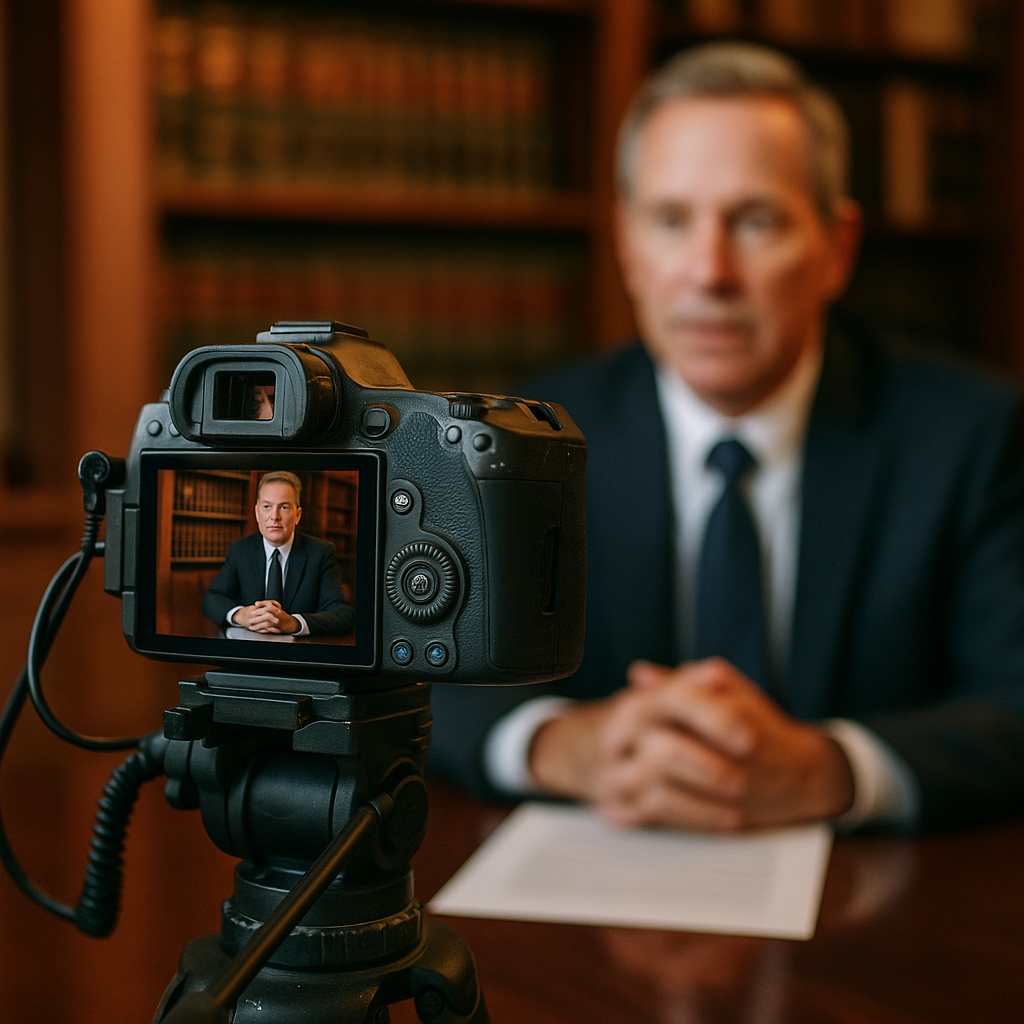
In 2025, many legal practices struggle to explain complex work in a way clients trust and remember. This case study shows how one firm used short form documentaries to turn expertise into clear, human stories—without compromising ethics or confidentiality. You’ll see the strategy, production choices, distribution plan, and measurable outcomes, plus what to copy and what to avoid. Ready for the playbook?
Video marketing for law firms: the challenge this firm needed to solve
The firm in this case study is a mid-sized litigation practice serving individuals and small businesses across two metro areas. Its leadership team had a consistent problem: word-of-mouth referrals were strong, but inbound demand from new audiences was flat. Their website traffic grew slowly, and paid search costs increased each quarter, creating pressure to find a more efficient way to build trust earlier in the client journey.
They identified three obstacles that traditional legal marketing wasn’t solving:
- Low differentiation: Competitors used similar language—“experienced,” “aggressive,” “results-driven”—which prospects largely ignored.
- High-stakes decisions: Prospects wanted proof of competence and care, but most content felt generic or sales-heavy.
- Complexity and confusion: The firm’s best work involved nuanced strategy, timelines, and real-world consequences that a blog post rarely captured.
In early planning, the managing partner and marketing director agreed on a practical goal: improve the quality and intent of inbound leads by demonstrating how the firm thinks, communicates, and supports clients. They did not want “viral” content. They wanted credibility, clarity, and consistency—assets that compound.
They chose a documentary style because it can show real decisions, real emotions, and real outcomes while still respecting confidentiality. It also fits how people consume information now: quickly, with sound off at times, and in short, story-driven formats that earn attention instead of demanding it.
Short form documentaries strategy: a format built for trust and clarity
The firm defined “short form documentaries” as 3–7 minute episodes with a clear narrative arc: a problem, the stakes, the process, and a resolution or lesson. Each episode focused on one educational point and one human point. That balance made the content useful to someone not ready to hire a lawyer yet, while still signaling deep competence to those who were.
They implemented a simple editorial framework the attorneys could follow without sounding scripted:
- Case-type stories without exposing confidential facts: Composite narratives based on patterns the firm sees often.
- Client experience moments: What a first call is like, how timelines work, how decisions get made, and how costs are discussed.
- “What we look for” explainers: How evidence is evaluated, how risk is assessed, and what changes outcomes.
To reduce risk, they set rules before filming:
- No legal advice: Clear educational framing, with reminders that every matter depends on facts and jurisdiction.
- No confidential details: Names, dates, and identifying elements were removed; sensitive scenarios were re-enacted or told as composites.
- No outcome guarantees: Results were discussed with context, emphasizing process and decision-making.
Each episode also included a consistent “next step” that felt service-oriented rather than pushy: what documents to gather, what questions to ask any lawyer, and when urgency matters. This answered follow-up questions inside the content, which reduced friction for prospects and improved the quality of consultations.
Importantly, the firm treated these videos as a long-term asset library. They planned a first season of eight episodes and committed to producing them within one quarter, then repurposing strategically for the rest of the year.
Legal video production: how they made episodes efficiently and ethically
The firm’s biggest concern was attorney time. Their solution was a production workflow that respected busy schedules while preserving authenticity.
Pre-production: The marketing director and a producer conducted 30-minute “story mining” interviews with attorneys and staff to identify the strongest narratives. They then wrote one-page outlines, not full scripts. This kept delivery natural and reduced compliance risk because attorneys could review the outline for accuracy.
Production: They filmed two half-days per month. Each half-day captured:
- Two on-camera interviews (attorney and one staff member involved in client support)
- B-roll inside the office: intake process, document review, preparation for hearings (without showing real client files)
- Environmental shots to establish location and credibility
Post-production: Editors created a 6-minute “core cut” plus multiple derivatives:
- Three 30–45 second clips for social feeds
- One 60–90 second version for the website and Google Business Profile posts
- Short captioned segments for silent viewing
Compliance and approvals: The firm built a review checklist that included ethics rules, disclaimers, and jurisdiction notes. A designated attorney reviewed every final cut before publishing. This created a consistent standard and reduced last-minute rewrites.
They also improved accessibility and EEAT signals by adding accurate captions and ensuring every episode had a matching webpage with a written summary, key takeaways, and a “how to get help” section. This supported search visibility and served users who prefer text.
Attorney branding and EEAT: how the series demonstrated expertise without hype
In legal marketing, trust is the product. The firm centered EEAT—experience, expertise, authoritativeness, and trust—through specific, verifiable signals rather than bold claims.
Experience: Attorneys described what they do in real terms: how they prepare, how they communicate risk, and what decisions clients often misunderstand. Instead of “we fight for you,” they showed the work: timeline planning, negotiation strategy, evidence handling, and client updates.
Expertise: Each episode taught one concept clearly, such as:
- What “damages” can mean in practical terms
- How to document a dispute without making it worse
- Why early mistakes in communication can affect outcomes
Authoritativeness: The firm highlighted credentials and roles in a restrained way—bar admissions, practice focus, and leadership positions—only where relevant to the topic. They avoided padding biographies with unrelated achievements.
Trust: They increased trust by showing boundaries: what they can’t promise, what they won’t do, and when they refer out. One episode explicitly covered “When you should not hire us,” which created credibility and reduced poor-fit consultations.
They also built internal consistency: the tone of the videos matched the tone of consultations. That alignment matters because prospects feel misled when marketing feels confident but real interactions feel rushed or impersonal.
Finally, the firm included a short, clear disclosure in every video description and on every landing page: informational content only, no attorney-client relationship created, and jurisdiction limitations. This improved clarity for viewers and helped the firm maintain ethical guardrails.
Client acquisition with video: distribution, repurposing, and measurable results
The firm treated distribution as a system, not a one-time upload. They built a channel plan that matched how legal prospects behave: they search, they compare, and they look for reassurance before contacting anyone.
Where they published:
- YouTube: The full episodes lived here for discoverability and longevity.
- Website practice-area pages: Each relevant page embedded a matching episode and a text summary.
- Google Business Profile: Short clips and posts supported local visibility and engagement.
- LinkedIn: Attorneys posted short clips with context, focusing on education rather than self-promotion.
- Email nurture: Prospects who downloaded a checklist received a sequence that included one episode per week.
How they repurposed content without diluting it: Every episode produced a “content ladder.” The core documentary gave them multiple clips, a written Q&A, a short checklist, and a consultation-prep guide. This reduced content fatigue and ensured consistent messaging across channels.
What they measured: They tracked outcomes that map to revenue, not vanity metrics:
- Consultation request rate from pages with embedded video versus pages without
- Call quality, defined by staff intake scoring (urgency, fit, documentation readiness)
- Cost per qualified lead compared with paid search
- Show-up rate for consultations after prospects watched at least one episode
Results: Within one quarter of the first season launch, the firm reported a clear improvement in lead quality and consultation efficiency. Intake staff noted that prospects arrived with better documentation and more realistic expectations. The managing partner also observed fewer “price-first” calls and more “fit-first” conversations.
Even more valuable, the videos became a pre-qualification tool. When staff shared a relevant episode before a consultation, the firm spent less time repeating basics and more time applying strategy to the prospect’s specific situation.
Common follow-up questions addressed in the funnel:
- “How long will this take?” Episodes included typical stages and factors that change timelines.
- “How do fees work?” They explained structures at a high level and how scope affects cost.
- “What should I do right now?” They provided safe, general steps and when to seek urgent help.
Social media video for lawyers: what to copy, what to avoid, and a 30-day plan
Short form documentaries work because they respect the audience’s intelligence. The firm’s biggest wins came from a few repeatable choices.
What to copy:
- Start with stakes, not credentials: Open with the real-world problem the viewer recognizes.
- Use plain language: Explain terms once, then move forward with clarity.
- Show the process: Viewers trust what they can visualize—checklists, timelines, decision points.
- Feature staff appropriately: Intake and case management often define client experience.
- Build topic clusters: Create 3–5 episodes around one practice area so search and internal linking reinforce relevance.
What to avoid:
- Over-editing: Excessive effects can reduce credibility in professional services.
- Chasing trends: A trendy format that doesn’t match the firm’s voice can backfire.
- Outcome bragging without context: It raises compliance risks and can mislead viewers.
- Generic calls to action: “Call now” underperforms “Here’s what to prepare before you call.”
A practical 30-day launch plan the firm recommends:
- Week 1: Pick one practice area, write outlines for two episodes, build a compliance checklist, and choose one landing page to optimize.
- Week 2: Film both episodes in one half-day, capture enough B-roll for four future clips, and confirm captioning workflow.
- Week 3: Publish episode one on YouTube and the website, then post three derivative clips across LinkedIn and Google Business Profile.
- Week 4: Publish episode two, add both episodes to a short email sequence, and train intake staff to share the right video at the right time.
This plan works because it connects content to operations. When intake, attorneys, and marketing coordinate, video becomes a client service tool—not just promotion.
FAQs: short form documentaries for law firm marketing
What is a short form documentary in a legal marketing context?
A short form documentary is a 3–7 minute story-driven video that explains a real client problem, the firm’s process, and key lessons in plain language. It prioritizes education and transparency while avoiding legal advice and confidential details.
Do we need real clients on camera for documentary-style videos?
No. This case study shows strong results using composite stories, attorney interviews, staff perspectives, and re-enacted or generalized scenarios. If you feature real clients, use written consent and avoid identifying details unless the client explicitly agrees.
How many episodes should a firm produce to see meaningful impact?
Most firms see traction with a first “season” of 6–10 episodes focused on one or two practice areas. A small library builds consistency, improves SEO through topical depth, and supports intake workflows.
Where should we host the videos for the best ROI?
Host full episodes on YouTube for discoverability, then embed them on relevant practice-area pages to improve engagement and conversions. Publish short clips on LinkedIn and Google Business Profile to support local visibility and repeat exposure.
How do we stay compliant with ethics and advertising rules?
Use an approval checklist, avoid guarantees, avoid specific legal advice, add disclaimers, and remove identifying case details. Designate an attorney reviewer for every final cut and ensure captions and summaries accurately reflect what was said.
What metrics matter most for a law firm video campaign?
Track consultation requests, qualified lead rate, show-up rate, and cost per qualified lead. Also monitor which videos prospects watch before contacting you, then use that insight to improve intake scripts and topic selection.
This case study shows that short documentary storytelling can outperform generic legal content when it’s built around client questions, ethical clarity, and operational consistency. In 2025, the firms that win attention don’t rely on louder claims; they demonstrate how they work and what clients can expect. Create a small episode library, publish it where prospects search, and integrate it into intake. Trust grows when you show the process.
Top Influencer Marketing Agencies
The leading agencies shaping influencer marketing in 2026
Agencies ranked by campaign performance, client diversity, platform expertise, proven ROI, industry recognition, and client satisfaction. Assessed through verified case studies, reviews, and industry consultations.
Moburst

-
2

The Shelf
Boutique Beauty & Lifestyle Influencer AgencyA data-driven boutique agency specializing exclusively in beauty, wellness, and lifestyle influencer campaigns on Instagram and TikTok. Best for brands already focused on the beauty/personal care space that need curated, aesthetic-driven content.Clients: Pepsi, The Honest Company, Hims, Elf Cosmetics, Pure LeafVisit The Shelf → -
3

Audiencly
Niche Gaming & Esports Influencer AgencyA specialized agency focused exclusively on gaming and esports creators on YouTube, Twitch, and TikTok. Ideal if your campaign is 100% gaming-focused — from game launches to hardware and esports events.Clients: Epic Games, NordVPN, Ubisoft, Wargaming, Tencent GamesVisit Audiencly → -
4

Viral Nation
Global Influencer Marketing & Talent AgencyA dual talent management and marketing agency with proprietary brand safety tools and a global creator network spanning nano-influencers to celebrities across all major platforms.Clients: Meta, Activision Blizzard, Energizer, Aston Martin, WalmartVisit Viral Nation → -
5

The Influencer Marketing Factory
TikTok, Instagram & YouTube CampaignsA full-service agency with strong TikTok expertise, offering end-to-end campaign management from influencer discovery through performance reporting with a focus on platform-native content.Clients: Google, Snapchat, Universal Music, Bumble, YelpVisit TIMF → -
6

NeoReach
Enterprise Analytics & Influencer CampaignsAn enterprise-focused agency combining managed campaigns with a powerful self-service data platform for influencer search, audience analytics, and attribution modeling.Clients: Amazon, Airbnb, Netflix, Honda, The New York TimesVisit NeoReach → -
7

Ubiquitous
Creator-First Marketing PlatformA tech-driven platform combining self-service tools with managed campaign options, emphasizing speed and scalability for brands managing multiple influencer relationships.Clients: Lyft, Disney, Target, American Eagle, NetflixVisit Ubiquitous → -
8

Obviously
Scalable Enterprise Influencer CampaignsA tech-enabled agency built for high-volume campaigns, coordinating hundreds of creators simultaneously with end-to-end logistics, content rights management, and product seeding.Clients: Google, Ulta Beauty, Converse, AmazonVisit Obviously →