


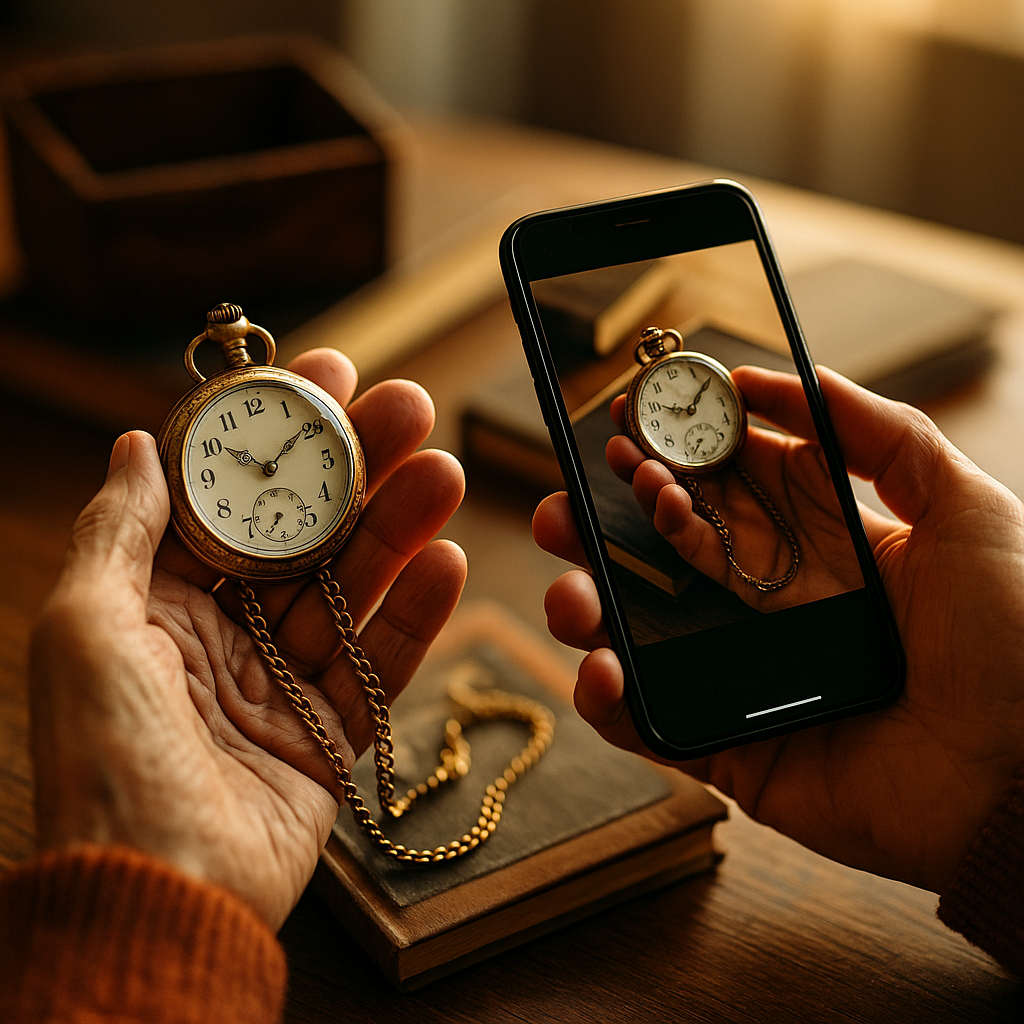
Digital heirloom marketing is reshaping how brands build trust, loyalty, and long-term value in 2025. Instead of chasing short-lived trends, companies are designing products and stories meant to last decades, and customers are responding. This shift blends durable design, future-proof data practices, and meaningful brand commitments. What does it take to build for fifty years—and market it without sounding hollow?
Digital heirloom marketing strategy: why “built to last” is winning
Consumers have always valued longevity, but the difference now is that longevity must include both the physical product and the digital layers that surround it—apps, firmware, warranties, receipts, and identity. A “heirloom” in 2025 is as much about continuity of access as it is about craftsmanship.
A practical digital heirloom marketing strategy starts by acknowledging the full lifecycle a customer expects:
- Purchase confidence: transparent materials, provenance, and repairability are explained before checkout.
- Use confidence: the product continues to work even if a phone is upgraded, an app changes, or a company evolves.
- Transfer confidence: ownership can pass to a child, partner, or buyer with records intact.
- Memory confidence: the stories, settings, and documentation remain accessible without friction.
Two forces make this approach compelling. First, rising skepticism toward disposable products has pushed buyers to evaluate total cost of ownership, including maintenance and replacement. Second, digital dependency has increased the risk of “bricked” functionality when software support ends. Brands that can credibly reduce those risks earn a durable premium.
To market “built for fifty years” without overpromising, focus on verifiable commitments. Spell out what you guarantee (e.g., repair availability, parts timeline, data export), what you design for (e.g., backward compatibility), and what you cannot control (e.g., third-party platform changes). That clarity reads as confidence, not hedging.
Long-term product design: engineering for repair, upgrade, and continuity
Marketing cannot carry a longevity claim if the product experience contradicts it. Long-term product design requires decisions that often feel unglamorous: standard fasteners, modular components, robust enclosures, and supply-chain resilience. For digital-adjacent products—anything with software, connectivity, or identity—longevity also includes architectural discipline.
Design choices that support a fifty-year narrative:
- Repair-first construction: replaceable wear parts, accessible service guides, and a realistic repair pathway beyond warranty.
- Modularity where it matters: batteries, storage, and key electronics can be upgraded without replacing the whole unit.
- Stable interfaces: keep core functions usable without cloud dependency; provide local modes and open, documented protocols when possible.
- Versioned documentation: service manuals, parts catalogs, and firmware notes maintained as living records customers can download.
Readers often ask: Isn’t planning for fifty years impossible with technology moving so fast? It’s difficult, but not mysterious. You design for graceful degradation and planned continuity. A product can remain functional even if smart features evolve. When cloud services add convenience, the core should still work offline or via local control. If that is not feasible, your next-best approach is a published support horizon and a sunset plan that includes data export and alternatives.
Another common question: Won’t this raise costs too much? It can, but long-horizon design also reduces costs in other areas: fewer returns, stronger retention, less reputation damage, and a higher willingness to pay. The brands succeeding here treat longevity as a margin strategy, not a charitable act.
Legacy branding and storytelling: making durability emotionally credible
Heirlooms are emotional objects. People keep them because they represent identity, continuity, and care. Legacy branding and storytelling turns functional durability into a narrative customers want to join—and share.
The key is to tell stories that are specific and provable. Avoid vague claims like “timeless quality.” Replace them with details customers can evaluate:
- Origin and provenance: where materials come from, how they are tested, and why you chose them.
- Craft and process: show production constraints that protect quality (inspection steps, tolerances, stress testing).
- Service culture: introduce the repair team, not just the marketing team; publish turnaround targets and escalation paths.
- Customer lineages: with permission, document multi-owner journeys—gifted, inherited, resold, restored.
To align with Google’s helpful content expectations, aim for experience-led evidence. Use real repair cases, restoration timelines, and warranty outcomes. Include photos and scans on your site where relevant, but keep the messaging consistent: “Here’s what we do, here’s what it costs, here’s how long it takes, here’s what happens if something fails.”
Also address skepticism directly. People worry that “lifetime” promises hide exclusions. Make exclusions plain, and then design a policy that still feels human: transparent fees, clear parts pricing, and a path for legacy support even after a model is discontinued.
Data preservation and digital legacy: receipts, access, and ownership that endure
A physical heirloom can outlast its maker. A digital heirloom fails if authentication systems, file formats, or account rules prevent future access. Data preservation and digital legacy is now central to “built for fifty years” positioning.
What customers need, in plain terms, is control:
- Durable proof of ownership: downloadable receipts, serial records, and warranty status that do not require a single app login to retrieve.
- Transfer tools: the ability to assign ownership to someone else without violating terms or losing service history.
- Exportable data: settings, usage logs, playlists, or personalization data available in common formats.
- Format and platform resilience: avoid locking essential functionality behind proprietary, opaque formats.
Brands can operationalize this by creating a Digital Heirloom Vault (name it clearly, keep it simple): a customer portal that stores receipts, manuals, service records, authenticity certificates, and transfer permissions. Crucially, offer offline backups—a downloadable package that customers can store independently. That step signals real respect for the customer’s future.
Security is part of longevity, not a trade-off against it. Implement strong authentication options, but avoid designs that create single points of failure. For example, if multi-factor authentication is required, provide clear recovery processes, trusted contacts, and documented inheritance pathways. Customers planning for decades want to know: What happens if I lose my phone, forget my password, or pass away? Answer that directly on your support pages.
From an EEAT perspective, this is where trust becomes measurable: publish your retention policies, data deletion options, and how you handle account inactivity. State what you store, why you store it, and how customers can export or remove it.
Premium durable goods marketing: pricing, warranties, and the resale flywheel
To sell products built for fifty years, your premium durable goods marketing must explain value over time, not just features today. Customers need a clear model for why paying more now is rational later.
Three levers make longevity understandable:
- Total cost of ownership (TCO): compare expected repair cycles, replacement frequency, and maintenance costs.
- Service guarantees: publish warranty length, parts availability commitments, and repair pricing philosophy.
- Resale and transfer value: show how service history, authenticity, and refurb programs protect resale pricing.
Many brands overlook resale because they fear it cannibalizes new sales. In practice, a healthy resale market often expands the customer base. A verified refurb channel brings price-sensitive buyers into the ecosystem, and the original owner benefits from higher retained value—making the initial purchase easier to justify.
To build the resale flywheel:
- Authenticity verification: certificates tied to serials, with service records that travel with the product.
- Official refurbishment: clear grading standards and replacement of critical wear parts.
- Transferable warranties (where feasible): even partial transferability increases confidence.
Pricing should match the promise. If you claim longevity but hide repair costs, customers will treat the “heirloom” language as theater. Publish common repairs and typical price ranges. Include turnaround targets and parts lead times. The more a buyer can predict the future, the more they will trust a long-horizon brand.
Customer trust and EEAT signals: proving expertise and reliability at every touchpoint
Digital heirloom positioning rises or falls on credibility. In Google’s framework, that means demonstrating Experience, Expertise, Authoritativeness, and Trustworthiness in ways that users can verify. Customer trust and EEAT signals are not decorative badges; they are operational habits made visible.
Practical EEAT actions for “built for fifty years” brands:
- Experience: publish real maintenance guides, repair videos, and case studies from your service team.
- Expertise: include named engineers, designers, or material specialists with credentials and clear accountability.
- Authoritativeness: reference independent testing, certifications, or standards where relevant; host third-party reviews transparently.
- Trustworthiness: clear policies on warranties, data handling, returns, and service pricing; no surprise exclusions.
Also build internal consistency. If your ad copy promises permanence, your checkout, onboarding, and support processes must reflect that same philosophy. Customers notice contradictions quickly: a “heirloom” brand that makes it hard to find repair parts, hides manuals, or refuses transfers will lose trust faster than a brand that never made the claim.
Answer follow-up questions before they reach support:
- How long will you support this product? Provide a minimum support horizon and define “support” (parts, firmware, phone support).
- What happens if you discontinue the app? Publish a sunset plan including local use, alternatives, and data export.
- Can I pass it on? Explain transfer steps, what carries over, and what does not.
FAQs
-
What is digital heirloom marketing?
It is a long-term brand and product approach that markets durability, repairability, and multi-owner continuity, while also protecting the digital layers—accounts, records, firmware, and data access—so the product remains usable and transferable over decades.
-
What kinds of products can be positioned as “built for fifty years”?
Physical goods with durable construction and serviceability (furniture, watches, tools, audio equipment) and hybrid goods (connected devices, e-bikes, appliances) can qualify if they have credible repair pathways, parts plans, and a digital continuity strategy.
-
How do you prove a longevity claim without exaggerating?
Use verifiable commitments: published parts availability timelines, repair pricing guidelines, transferable service records, independent testing results, and clear warranty terms. Replace broad promises with precise, checkable statements.
-
What is a “digital heirloom vault” and why does it matter?
It is a customer-controlled repository for receipts, manuals, authenticity certificates, and service history, ideally with offline export. It matters because it preserves ownership proof and product knowledge across device changes, app updates, and ownership transfers.
-
How should brands handle software end-of-life for long-lasting products?
Publish a sunset plan: minimum support horizon, security update policy, data export options, and a fallback mode that keeps core functions usable. If cloud services are essential, explain what happens if they change or shut down and provide migration options.
-
Does supporting resale hurt new product sales?
Often it helps. Verified resale and refurbishment can expand the market, strengthen brand trust, and increase retained value for original owners, making premium pricing easier to justify.
In 2025, the brands gaining durable loyalty design for decades, not quarters. Digital heirloom marketing works when product engineering, service policies, and data continuity align into a promise customers can verify. Build repairability, publish support horizons, enable ownership transfer, and protect access to records and settings. The takeaway is simple: longevity is a feature only when it is operational.
Top Influencer Marketing Agencies
The leading agencies shaping influencer marketing in 2026
Agencies ranked by campaign performance, client diversity, platform expertise, proven ROI, industry recognition, and client satisfaction. Assessed through verified case studies, reviews, and industry consultations.
Moburst

-
2

The Shelf
Boutique Beauty & Lifestyle Influencer AgencyA data-driven boutique agency specializing exclusively in beauty, wellness, and lifestyle influencer campaigns on Instagram and TikTok. Best for brands already focused on the beauty/personal care space that need curated, aesthetic-driven content.Clients: Pepsi, The Honest Company, Hims, Elf Cosmetics, Pure LeafVisit The Shelf → -
3

Audiencly
Niche Gaming & Esports Influencer AgencyA specialized agency focused exclusively on gaming and esports creators on YouTube, Twitch, and TikTok. Ideal if your campaign is 100% gaming-focused — from game launches to hardware and esports events.Clients: Epic Games, NordVPN, Ubisoft, Wargaming, Tencent GamesVisit Audiencly → -
4

Viral Nation
Global Influencer Marketing & Talent AgencyA dual talent management and marketing agency with proprietary brand safety tools and a global creator network spanning nano-influencers to celebrities across all major platforms.Clients: Meta, Activision Blizzard, Energizer, Aston Martin, WalmartVisit Viral Nation → -
5

The Influencer Marketing Factory
TikTok, Instagram & YouTube CampaignsA full-service agency with strong TikTok expertise, offering end-to-end campaign management from influencer discovery through performance reporting with a focus on platform-native content.Clients: Google, Snapchat, Universal Music, Bumble, YelpVisit TIMF → -
6

NeoReach
Enterprise Analytics & Influencer CampaignsAn enterprise-focused agency combining managed campaigns with a powerful self-service data platform for influencer search, audience analytics, and attribution modeling.Clients: Amazon, Airbnb, Netflix, Honda, The New York TimesVisit NeoReach → -
7

Ubiquitous
Creator-First Marketing PlatformA tech-driven platform combining self-service tools with managed campaign options, emphasizing speed and scalability for brands managing multiple influencer relationships.Clients: Lyft, Disney, Target, American Eagle, NetflixVisit Ubiquitous → -
8

Obviously
Scalable Enterprise Influencer CampaignsA tech-enabled agency built for high-volume campaigns, coordinating hundreds of creators simultaneously with end-to-end logistics, content rights management, and product seeding.Clients: Google, Ulta Beauty, Converse, AmazonVisit Obviously →