


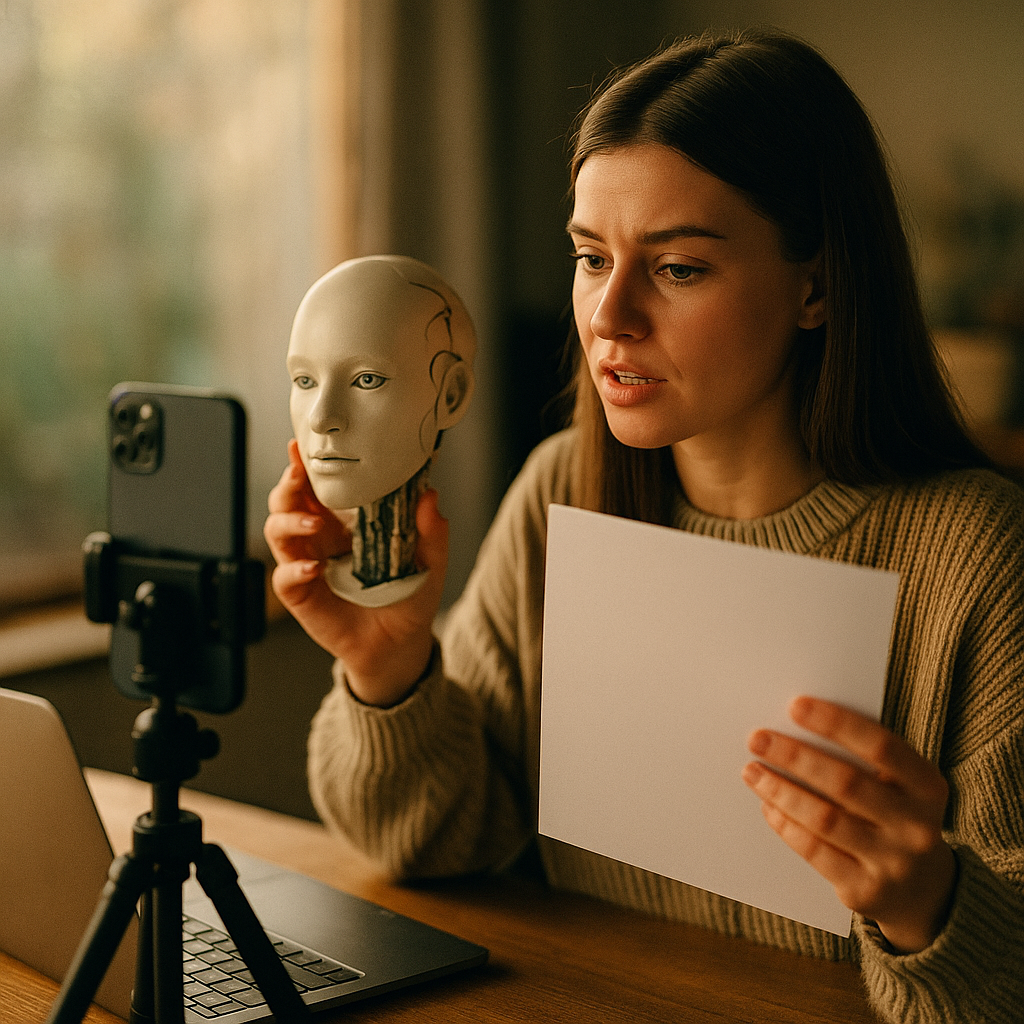
Understanding New Disclosure Rules for AI Generated Influencer Likeness is now a practical requirement for brands, agencies, and creators working with synthetic media. In 2025, regulators and platforms expect clear, timely, and audience-friendly transparency when an influencer’s face, voice, or persona is generated or materially altered by AI. If you publish or sponsor this content, you need defensible processes, not guesswork—because trust and compliance hinge on the details. Are you ready?
What “AI-generated likeness” means under the new disclosure rules
In 2025, “AI-generated influencer likeness” typically refers to content where an influencer’s identity signals—such as face, voice, body, mannerisms, or recognizable persona—are created, replaced, or substantially altered using AI. The most common formats include:
- Fully synthetic creators: A “virtual influencer” with no real-world human counterpart, rendered or generated using AI tools.
- Digital doubles: A real influencer’s likeness cloned or reconstructed for new scenes, languages, or scripts.
- Voice cloning: Speech generated to sound like the influencer, including dubbing, narration, or live-style delivery.
- Face swaps and performance transfer: AI maps one person’s expressions onto another’s face or body.
- Material alteration: Edits that change what a reasonable viewer would think is real (not just color correction or background cleanup).
New disclosure expectations focus less on the exact model used and more on the audience impact: Would a typical viewer believe the influencer personally performed, said, or endorsed something that they did not? If yes—or if you used AI to create the impression of authentic performance—disclosure becomes essential.
Many teams ask whether minor enhancements count. Basic retouching, noise reduction, or standard post-production usually does not trigger AI-likeness disclosure. The risk rises when you change identity signals (voice/face) or generate new performance. When in doubt, assess the materiality: does the AI change meaning, authenticity, or endorsement perception?
Disclosure requirements for synthetic media in influencer marketing
The strongest compliance approach in 2025 combines clear labeling, proximity to the claim, and consistency across platforms. While the exact legal standard varies by jurisdiction, the practical rule is consistent: audiences should not have to hunt for the truth.
Apply these disclosure principles:
- Be unmissable: Put the disclosure where people will actually see it—on-screen text in video, near captions in social posts, and close to the endorsement message.
- Use plain language: Avoid technical jargon. “AI-generated” or “AI voice” is usually clearer than “synthetic audio.”
- Disclose early: Add it at the beginning of the content or before the key promotional claim, not after.
- Repeat when necessary: Longer videos and multi-part story sequences need recurring notices.
- Match the format: If the impression is created visually, disclose visually. If it’s audio-only, disclose in audio.
What should the disclosure say? Use direct statements that communicate what was generated and why it matters. Examples that typically read well to consumers:
- “AI-generated video” (when the performance or scene is generated)
- “AI-generated voice” (when the voice is cloned or synthesized)
- “Digital likeness used with permission” (when a real influencer’s likeness is licensed)
- “Virtual influencer (AI)” (for a fully synthetic persona)
Also answer the follow-up question viewers have but rarely ask: Did the influencer actually approve this? Where appropriate, include language like “used with permission” or “approved by [Name]” if it is true and you can substantiate it. Never imply approval you cannot document.
Finally, integrate AI-likeness disclosures with standard sponsorship disclosures. If it’s an ad, the audience should see both: that it’s sponsored and that AI materially generated the likeness or performance. Treat these as complementary, not interchangeable.
Consent, rights, and licensing for influencer likeness AI
Disclosure is only one part of compliance. Using someone’s likeness—especially a recognizable influencer—raises consent, publicity rights, trademark issues (in some contexts), and contractual obligations. Even if your disclosure is perfect, unlicensed likeness use can still create significant legal exposure.
Strong consent and licensing practices in 2025 typically include:
- Written permission that explicitly covers AI generation, voice cloning, and digital doubles (not just “editing”).
- Scope definitions: what channels, regions, languages, and formats are allowed; whether paid ads are included; whether affiliates can reuse the assets.
- Term limits: start and end dates; renewal terms; takedown procedures.
- Approval rights: who signs off on scripts, final renders, and performance realism thresholds.
- Revocation and safety clauses: what happens if the influencer’s reputation is harmed, or if the content is repurposed beyond intent.
- Data handling: how training inputs (photos, audio) are stored, who can access them, and when they are deleted.
Brands often ask: Can we use publicly available videos to train or clone? Public availability is not the same as permission. A defensible program treats training data for identity cloning as highly sensitive and uses it only with explicit consent and controlled vendor terms.
Creators should also protect themselves. Ask for clarity on whether the brand can create “future” content without you being involved, whether your likeness can be used after the campaign ends, and whether your voice can be repurposed into other languages. If you are comfortable with AI dubbing, specify what qualifies as an acceptable translation and tone.
Platform and regulator expectations for influencer transparency in 2025
In 2025, expectations come from multiple directions: advertising regulators, consumer protection authorities, election and political advertising rules (when relevant), and platform policies focused on manipulated media. The practical effect is that brands must build a single transparency standard that works across channels instead of reacting post-by-post.
Key expectations you should design for:
- Audience-first clarity: Disclosures must be understandable to non-experts and visible on mobile screens.
- No “disclosure dumping”: A long list of hashtags or fine print does not satisfy the spirit of transparency if it is easy to miss.
- Context matters: If a synthetic likeness appears to make medical, financial, or performance claims, the scrutiny increases.
- Misleading realism is a red flag: The more the content mimics a real testimonial, the higher the need for explicit labeling.
Teams also ask whether AI-generated influencer content requires special handling in paid ads. Yes—because paid distribution amplifies risk. Standardize disclosures in your ad templates so they remain visible after cropping, republishing, or placement in different aspect ratios.
Another common question: What about live streams and “real-time” AI avatars? If a reasonable viewer might believe a real person is speaking live when it’s an AI-driven avatar or synthesized voice, provide an upfront verbal and on-screen disclosure, then keep a persistent label during the stream.
Compliance checklist: how to disclose AI-generated influencer content correctly
For brands and agencies, the goal is repeatable compliance that survives scale. Build a workflow that catches AI-likeness issues before publication and stores proof after the campaign is live.
Pre-production checklist:
- Classify the asset: Is it a virtual influencer, digital double, voice clone, or materially altered performance?
- Confirm consent: Do you have a signed agreement that covers AI generation and distribution channels?
- Script review: Are there claims that elevate risk (health, finance, “I tried this,” “I guarantee”)?
- Vendor due diligence: Does the AI vendor prohibit training on your influencer’s data? Do they offer deletion controls and audit logs?
Production and editing checklist:
- Embed disclosure in the creative: Use on-screen text or audio callouts, not only a caption.
- Keep disclosures readable: Ensure adequate contrast, size, and duration so viewers can actually process it.
- Preserve authenticity boundaries: If the influencer did not say it, do not make it appear they did without explicit labeling and approval.
Publishing checklist:
- Pair disclosures: Include both ad/sponsored disclosure (when applicable) and AI-generated/AI voice disclosure.
- Make it persistent: For longer videos, repeat or maintain an on-screen label at key moments.
- Localize disclosures: If you dub content into other languages with AI, disclose in the audience language.
Post-publication checklist:
- Archive evidence: Store final creatives, timestamps, captions, and approval emails in a central system.
- Monitor comments and reports: Confusion from viewers is a signal your disclosure is not clear enough.
- Maintain takedown readiness: Be able to remove or correct content quickly if disclosures are missing or permissions change.
Creators can use a similar checklist: confirm how your likeness will be generated, approve the final output, insist on clear labels, and request confirmation that your training materials will be deleted or securely stored per the contract.
Risk management and trust: why AI disclosure protects your brand
AI-generated likeness content can perform well, but it carries a trust penalty if audiences feel tricked. In 2025, trust is not an abstract value—it affects conversion, brand safety, and the willingness of top creators to work with you.
Clear disclosure reduces four major risks:
- Regulatory risk: Inadequate disclosure can be treated as deceptive marketing, especially when endorsements appear authentic.
- Contract risk: Influencers and talent representatives increasingly require AI-specific restrictions; violations can trigger termination or damages.
- Platform enforcement: Misleading manipulated media can be removed or downranked, disrupting paid campaigns and analytics continuity.
- Reputation risk: Audiences tolerate AI when it is transparent; they react strongly when they feel misled.
Many marketers worry disclosure will reduce performance. In practice, straightforward labeling often improves outcomes by setting expectations. You can also turn transparency into a brand advantage by explaining the benefit: “AI dubbing used to provide accurate translations” or “AI-generated visuals used to avoid reshoots and reduce waste.” Provide a reason that respects the viewer’s right to understand what they are watching.
To strengthen EEAT, ensure every campaign has a named responsible owner (marketing lead or compliance contact), documented approvals, and a repeatable policy. If you publish guidance, keep it practical, avoid vague promises, and align internal training with how content is actually produced.
FAQs
Do I need to disclose if I used AI to write the caption but the video is real?
Usually, no—if the influencer performance is real and you did not materially change identity signals or mislead viewers. However, you still must disclose sponsorships and avoid deceptive claims. If the caption implies a personal experience the influencer did not have, fix the claim rather than relying on an AI disclosure.
Where should the AI-generated disclosure appear on short-form video?
Put a clear on-screen label near the start and keep it long enough to read on mobile. If the AI element is central (like a cloned voice), also add a brief spoken disclosure. Include a matching note in the caption for accessibility and clarity.
Is “#AI” an adequate disclosure?
Often not. It can be too vague and easy to miss. Use plain language like “AI-generated video” or “AI voice,” placed prominently and close to the content it qualifies.
If an influencer gave consent once, can we reuse their AI likeness for future campaigns?
Only if your agreement explicitly grants that right, including term length, channels, regions, and whether new scripts require approval. Assume future reuse needs fresh permission unless the contract clearly states otherwise.
Do we need disclosure for a fully virtual influencer with no real person behind it?
Yes, if the content could reasonably be perceived as a real human influencer. Labeling the account and posts as “virtual influencer” or “AI-generated character” supports transparency and reduces the chance of misleading audiences.
What about AI dubbing into another language using the influencer’s voice?
Disclose it as “AI-generated voice” or “AI-dubbed” in the audience language, and ensure you have explicit permission to clone or simulate the voice. Also confirm the translation is accurate and approved, especially for regulated claims.
Who is responsible for disclosure—the brand, the influencer, or the agency?
All parties share risk, but brands should set the standard and verify execution. Agencies should operationalize it in production and trafficking. Influencers should follow the required language and confirm it remains visible after posting.
In 2025, the safest path is simple: disclose AI use clearly, secure explicit permission for any likeness or voice, and document every approval. When you treat transparency as part of the creative—not a footnote—you reduce regulatory and reputational risk while improving audience trust. Build a repeatable checklist, train your teams, and standardize labels across platforms so every campaign remains credible at scale.
Top Influencer Marketing Agencies
The leading agencies shaping influencer marketing in 2026
Agencies ranked by campaign performance, client diversity, platform expertise, proven ROI, industry recognition, and client satisfaction. Assessed through verified case studies, reviews, and industry consultations.
Moburst

-
2

The Shelf
Boutique Beauty & Lifestyle Influencer AgencyA data-driven boutique agency specializing exclusively in beauty, wellness, and lifestyle influencer campaigns on Instagram and TikTok. Best for brands already focused on the beauty/personal care space that need curated, aesthetic-driven content.Clients: Pepsi, The Honest Company, Hims, Elf Cosmetics, Pure LeafVisit The Shelf → -
3

Audiencly
Niche Gaming & Esports Influencer AgencyA specialized agency focused exclusively on gaming and esports creators on YouTube, Twitch, and TikTok. Ideal if your campaign is 100% gaming-focused — from game launches to hardware and esports events.Clients: Epic Games, NordVPN, Ubisoft, Wargaming, Tencent GamesVisit Audiencly → -
4

Viral Nation
Global Influencer Marketing & Talent AgencyA dual talent management and marketing agency with proprietary brand safety tools and a global creator network spanning nano-influencers to celebrities across all major platforms.Clients: Meta, Activision Blizzard, Energizer, Aston Martin, WalmartVisit Viral Nation → -
5

The Influencer Marketing Factory
TikTok, Instagram & YouTube CampaignsA full-service agency with strong TikTok expertise, offering end-to-end campaign management from influencer discovery through performance reporting with a focus on platform-native content.Clients: Google, Snapchat, Universal Music, Bumble, YelpVisit TIMF → -
6

NeoReach
Enterprise Analytics & Influencer CampaignsAn enterprise-focused agency combining managed campaigns with a powerful self-service data platform for influencer search, audience analytics, and attribution modeling.Clients: Amazon, Airbnb, Netflix, Honda, The New York TimesVisit NeoReach → -
7

Ubiquitous
Creator-First Marketing PlatformA tech-driven platform combining self-service tools with managed campaign options, emphasizing speed and scalability for brands managing multiple influencer relationships.Clients: Lyft, Disney, Target, American Eagle, NetflixVisit Ubiquitous → -
8

Obviously
Scalable Enterprise Influencer CampaignsA tech-enabled agency built for high-volume campaigns, coordinating hundreds of creators simultaneously with end-to-end logistics, content rights management, and product seeding.Clients: Google, Ulta Beauty, Converse, AmazonVisit Obviously →