


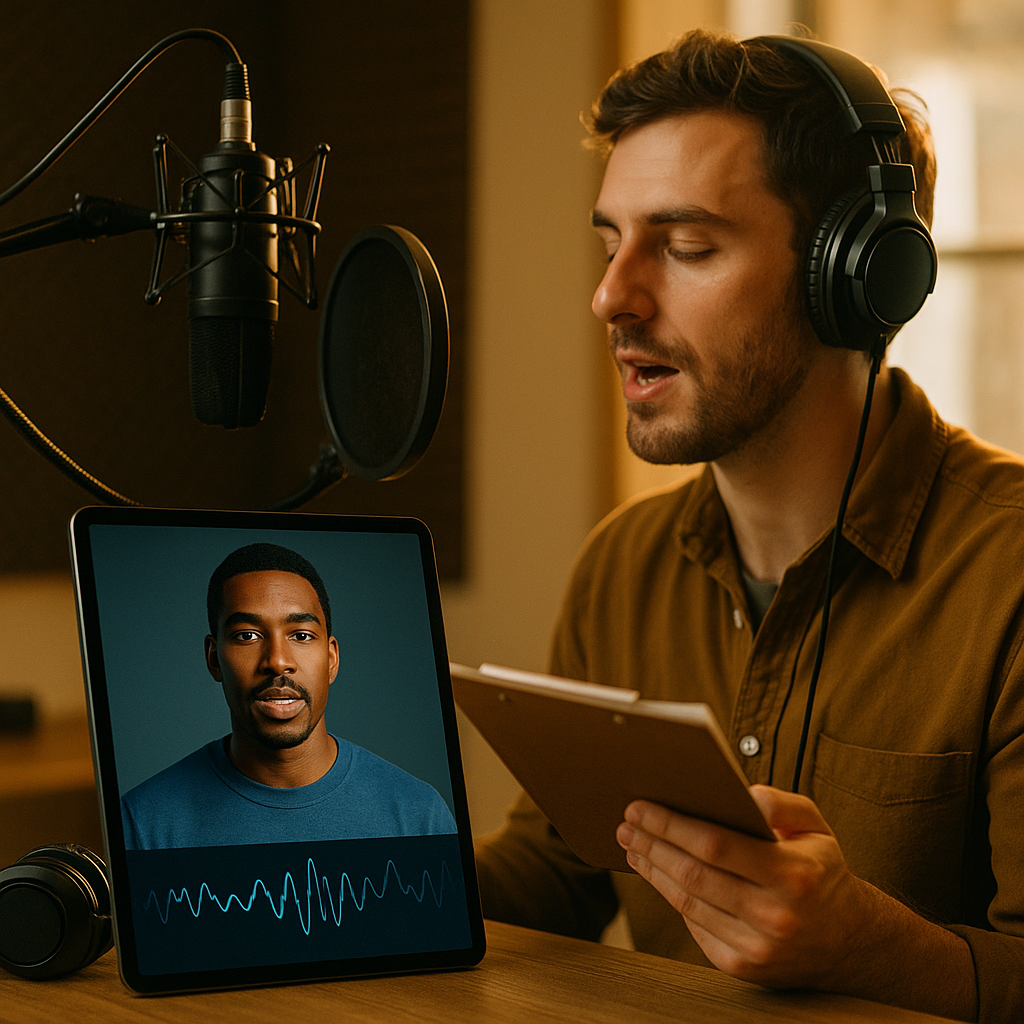
Using AI to Personalize Synthetic Voiceovers for Local Dialect Accuracy is changing how brands, educators, and creators sound to real people in real places. In 2025, audiences expect more than “neutral” speech: they listen for local rhythm, vocabulary, and cultural cues. This article explains how to build dialect-accurate voiceovers responsibly, measure quality, and avoid common pitfalls—so your next project lands naturally, not awkwardly.
Local dialect accuracy: what it means and why it matters
Local dialect accuracy goes beyond swapping a few words or selecting a regional “accent” preset. Dialects involve pronunciation, intonation, speed, stress patterns, sentence melody, and local pragmatics (how people soften requests, show politeness, or signal humor). If any of these elements feel off, listeners notice immediately and may lose trust.
Dialect accuracy matters because voice is identity. In advertising, a voice that sounds “close but not quite” can come across as performative. In public information, it can reduce comprehension. In e-learning, it can distract from the lesson. If you produce multilingual or multi-region content, consistent dialect quality also reduces rework: fewer revisions from local reviewers and fewer complaints after release.
Expect readers to ask: “Isn’t an accent enough?” Not usually. A convincing dialect reflects phonetics (how sounds are formed), prosody (rhythm and emphasis), and lexicon (local word choice). An AI workflow must address all three, plus cultural appropriateness.
Dialect-aware voice cloning: how AI personalizes speech at scale
Dialect-aware voice cloning typically combines three layers:
- Text normalization and localization: converting numbers, dates, currency, abbreviations, and units into regionally expected formats; selecting local vocabulary; adjusting formality and idioms.
- Acoustic modeling and style control: generating speech with controllable pitch, pace, energy, and timbre; applying regional phoneme patterns; shaping intonation contours.
- Post-processing: de-essing, breath control, loudness normalization, and noise-floor shaping for consistency across episodes and channels.
Personalization comes from training or conditioning models on representative speech samples and from applying dialect-specific pronunciation rules (or learned mappings). Modern toolchains allow you to keep one brand voice while shifting dialect features for different regions, but the best results usually come from creating a small set of “dialect siblings” rather than forcing a single voice to cover every locale.
A practical question: “Should I clone one local speaker per dialect?” If authenticity is the goal, yes—especially for community-facing or culturally sensitive content. For internal training or broad consumer apps, you can use professionally recorded voice talents and generate dialect variations with explicit review and consent. Either way, prioritize transparent licensing and documented permissions for training data.
Speech dataset quality: sourcing, consent, and representativeness
Speech dataset quality is the make-or-break factor for dialect accuracy. If your data skews toward broadcasters, call-center speech, or a single city, your output will sound “generic local” at best and incorrect at worst. Focus on three pillars: consent, coverage, and cleanliness.
Consent and rights: use recordings with clear permission for synthetic voice generation and your intended distribution. Maintain a paper trail: contracts, data retention terms, and revocation procedures. If you’re building for clients, require them to confirm they own or license the source voice. This supports EEAT by demonstrating responsible practice and auditability.
Representativeness: dialects vary by neighborhood, age, and social context. Build a balanced sample plan: multiple speakers (or at least multiple sessions), varied speaking styles (narration, conversational, emotional), and realistic vocabulary. Include local names, place names, and common code-switching patterns when relevant. When the content targets a specific audience (for example, youth services), ensure your reference data matches that audience’s speech norms.
Cleanliness and annotation: remove clipping, heavy reverb, and background speech. Label metadata such as region, sub-dialect, speaker demographics (where appropriate and consented), recording conditions, and intended tone. Good annotation enables controlled synthesis: “formal customer service,” “friendly explainer,” or “urgent safety message.”
Readers often wonder: “How much data do I need?” There’s no single number because model architectures differ, but quality outweighs quantity. A smaller, well-recorded, well-labeled dataset can outperform a larger, noisy corpus. Plan iterative collection: start with a pilot, generate samples, run local reviews, then fill gaps.
Phoneme and prosody modeling: getting pronunciation and rhythm right
Phoneme and prosody modeling is where many synthetic voiceovers fail. Two voices can share similar vowels, yet differ dramatically in rhythm, emphasis, and the “music” of speech. To achieve natural dialect accuracy, treat pronunciation and prosody as first-class requirements, not afterthoughts.
Pronunciation strategies:
- Custom pronunciation lexicons: include regional place names, surnames, loanwords, and local brand names. Validate with native reviewers, not just dictionaries.
- Grapheme-to-phoneme (G2P) tuning: adapt phoneme rules to local realizations (for example, vowel shifts or consonant reductions) while avoiding stereotypes.
- Code-switching support: if the dialect naturally includes other languages or registers, ensure the system handles transitions smoothly and respectfully.
Prosody strategies:
- Style tokens or prompts: control upbeat vs. serious tone, conversational vs. announcer cadence, and emphasis placement.
- Phrase break prediction: dialects differ in pausing patterns. Better phrasing increases clarity and believability.
- Emotion and intent alignment: local speech often signals politeness or urgency differently; match intent to context (health, finance, entertainment).
A common follow-up: “Can I just fix it in post?” You can polish audio, but you can’t easily correct wrong stress patterns or unnatural sentence melody after the fact. Build a review loop where linguists and local listeners evaluate sample scripts early, then refine lexicons and style controls before scaling.
Human-in-the-loop localization: workflows that protect authenticity
Human-in-the-loop localization turns AI voice from a shortcut into a reliable production system. The highest-performing teams blend automation with structured human review so dialect accuracy stays consistent across projects.
Recommended workflow:
- Script localization first: localize text before synthesis. Have regional editors adjust phrasing, honorifics, and idioms. Avoid translating word-for-word when local usage differs.
- Dialect brief and style guide: define target sub-dialect, formality level, taboo terms, pronunciation preferences, and examples of “do/don’t” phrasing. Treat it like a brand voice guide, but regional.
- Generate multiple takes: produce 2–4 variations per line (pace, emphasis, warmth). This mimics a real studio session and reduces one-shot errors.
- Local reviewer scoring: use a rubric: pronunciation, rhythm, naturalness, cultural fit, and clarity. Require notes, not just a pass/fail.
- Issue tracking and updates: feed errors back into lexicons, prompts, and model settings. Track recurring mispronunciations and fix them systematically.
To answer the practical question “Who should review?” use a mix: a trained linguist for technical accuracy and community-based reviewers for authenticity. Compensate reviewers fairly and document their role. This strengthens EEAT because it shows real expertise and lived experience shaping the output.
Voice AI ethics and compliance: avoiding harm while building trust
Voice AI ethics and compliance is inseparable from dialect work because dialects can be tied to marginalized communities, identity, and discrimination. Build trust by designing for consent, safety, and transparency.
Key safeguards:
- Informed consent and revocation: voice providers should understand how their voice will be used, where it will appear, and how they can withdraw permission going forward.
- Disclosure policies: decide when to label audio as synthetic. For customer support, public services, and political or sensitive contexts, disclosure reduces deception risk.
- Misuse prevention: apply watermarking or provenance tooling where available, restrict who can generate audio, and log generation events for audits.
- Bias testing: evaluate whether the system produces less natural speech for certain sub-dialects, age groups, or gender expressions. If it does, improve data coverage and tuning rather than forcing “standardization.”
- Cultural respect: avoid caricature. Dialect accuracy should reflect real speech patterns, not exaggerated features used for comedic effect unless the community and context explicitly support it.
Teams often ask: “Does dialect personalization increase legal risk?” It can if you lack rights to source voices, if you misrepresent a community, or if you enable impersonation. Reduce risk with strong contracts, limited access, review processes, and clear documentation of how the voice was created and approved.
FAQs
What’s the difference between an accent and a dialect in synthetic voiceovers?
An accent mainly describes pronunciation. A dialect includes pronunciation plus vocabulary, grammar patterns, rhythm, and cultural usage. Synthetic voiceovers that only change accent often still sound “non-local” because prosody and word choice remain generic.
How do I choose the right dialect for a region with many variations?
Start with audience research: where your listeners live, what media they consume, and which local variety they identify with. Pick a target sub-dialect, document it in a style guide, and validate with local reviewers before producing at scale.
Can one AI voice model cover multiple dialects without sounding fake?
Sometimes, but it works best when dialects are closely related and you use strong pronunciation and prosody controls. For high-stakes public content or brand campaigns, consider separate tuned voices (or “dialect siblings”) for each major region.
How do I measure local dialect accuracy objectively?
Use a scoring rubric with native listeners and linguists, track error types (mispronounced place names, unnatural stress, wrong register), and measure revision rates. Pair human scores with consistency checks like pronunciation lexicon coverage and automated audio QC.
Is it ethical to synthesize a dialect spoken by a marginalized community?
It can be, if you work with community stakeholders, obtain clear consent for voice data, pay contributors fairly, avoid caricature, and maintain transparency about synthetic generation. If the goal is to “sound local” without community input, you risk harm and backlash.
What content benefits most from dialect-accurate synthetic voiceovers?
Customer support, public information, healthcare guidance, localized ads, e-learning, and product onboarding see strong gains because comprehension and trust increase when speech matches local expectations.
AI-driven dialect personalization succeeds when you treat voice as a localization discipline, not a filter. Build with representative, consented data; tune pronunciation and prosody; and rely on local experts to validate cultural fit. In 2025, the most effective synthetic voiceovers earn trust by sounding natural and by being created transparently. Do that, and your localized audio will scale without losing authenticity.
Top Influencer Marketing Agencies
The leading agencies shaping influencer marketing in 2026
Agencies ranked by campaign performance, client diversity, platform expertise, proven ROI, industry recognition, and client satisfaction. Assessed through verified case studies, reviews, and industry consultations.
Moburst

-
2

The Shelf
Boutique Beauty & Lifestyle Influencer AgencyA data-driven boutique agency specializing exclusively in beauty, wellness, and lifestyle influencer campaigns on Instagram and TikTok. Best for brands already focused on the beauty/personal care space that need curated, aesthetic-driven content.Clients: Pepsi, The Honest Company, Hims, Elf Cosmetics, Pure LeafVisit The Shelf → -
3

Audiencly
Niche Gaming & Esports Influencer AgencyA specialized agency focused exclusively on gaming and esports creators on YouTube, Twitch, and TikTok. Ideal if your campaign is 100% gaming-focused — from game launches to hardware and esports events.Clients: Epic Games, NordVPN, Ubisoft, Wargaming, Tencent GamesVisit Audiencly → -
4

Viral Nation
Global Influencer Marketing & Talent AgencyA dual talent management and marketing agency with proprietary brand safety tools and a global creator network spanning nano-influencers to celebrities across all major platforms.Clients: Meta, Activision Blizzard, Energizer, Aston Martin, WalmartVisit Viral Nation → -
5

The Influencer Marketing Factory
TikTok, Instagram & YouTube CampaignsA full-service agency with strong TikTok expertise, offering end-to-end campaign management from influencer discovery through performance reporting with a focus on platform-native content.Clients: Google, Snapchat, Universal Music, Bumble, YelpVisit TIMF → -
6

NeoReach
Enterprise Analytics & Influencer CampaignsAn enterprise-focused agency combining managed campaigns with a powerful self-service data platform for influencer search, audience analytics, and attribution modeling.Clients: Amazon, Airbnb, Netflix, Honda, The New York TimesVisit NeoReach → -
7

Ubiquitous
Creator-First Marketing PlatformA tech-driven platform combining self-service tools with managed campaign options, emphasizing speed and scalability for brands managing multiple influencer relationships.Clients: Lyft, Disney, Target, American Eagle, NetflixVisit Ubiquitous → -
8

Obviously
Scalable Enterprise Influencer CampaignsA tech-enabled agency built for high-volume campaigns, coordinating hundreds of creators simultaneously with end-to-end logistics, content rights management, and product seeding.Clients: Google, Ulta Beauty, Converse, AmazonVisit Obviously →