


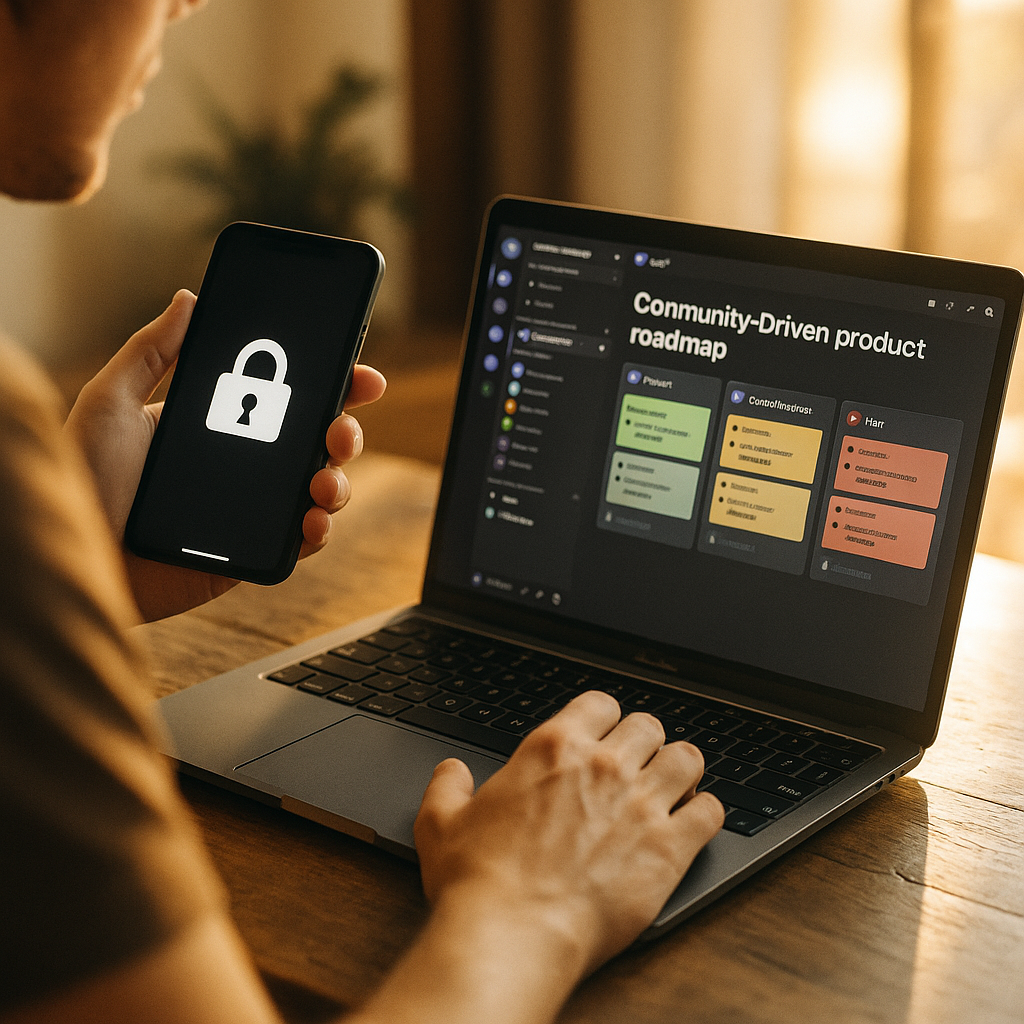
In 2025, product teams win when they listen, prioritize, and ship with users—not at them. A Playbook for Community Driven Product Roadmaps on Secure Discord Tiers shows how to turn Discord into a reliable signal engine without sacrificing privacy, trust, or speed. You’ll learn how to structure tiers, validate demand, prevent manipulation, and close the loop with measurable outcomes—so your community helps steer what ships next.
Secure Discord tiers: design access that protects signal quality
Secure Discord tiers work when they align incentives with trustworthy feedback. Start by defining what each tier is for, who qualifies, and what data you collect. Your goal is not “more members.” Your goal is higher-quality input with lower risk.
Recommended tier structure (practical and defensible):
- Public Lobby (read-first): announcements, changelogs, curated FAQs, guided onboarding, and a single “Start Here” channel. Keep posting rights limited to reduce noise and scams.
- Verified Users Tier: users who pass lightweight verification (email, domain, license key, OAuth, or membership). This is your baseline for feature discussions, polls, and support triage.
- Power Users / Champions Tier: high-usage or high-contribution members. Use this tier for early concepts, usability tests, and roadmap trade-off conversations.
- Customer Advisory Tier (private): selected customers, partners, or domain experts. Use for sensitive roadmap items, compliance-related discussions, and pre-release validation.
- Security/Incident Tier (locked): tightly permissioned channel(s) for coordinated vulnerability disclosure, incident updates, and moderation escalations.
Security guardrails that prevent roadmap pollution:
- Role-based permissions by default: restrict @everyone mentions, file uploads in public areas, and external links where possible.
- Verification at the boundary: do not run roadmap voting in fully public channels. Place voting and prioritization inside the Verified tier.
- Anti-sybil controls: require account age thresholds, rate limits, and a second factor for high-impact actions (like voting).
- Data minimization: collect only what you need to run the program. Avoid storing personal identifiers in spreadsheets; use role assignments and anonymized IDs.
Follow-up you’ll get internally: “Won’t this slow growth?” It can, but it increases trust and reduces churn caused by spam, leaks, and low-quality prioritization. Secure tiers create a stable environment where strong contributors stay engaged.
Community driven product roadmap: set governance, not just channels
A community driven product roadmap succeeds when participants understand how decisions are made. Without governance, Discord becomes a suggestion box with unclear outcomes—leading to cynicism and lower-quality feedback.
Define a clear decision model:
- What is eligible for community input: UX pain points, workflow gaps, integration requests, pricing packaging feedback, and beta evaluations.
- What is not eligible (or is limited): security architecture details, exploit reproduction steps in public, customer-specific deals, and regulated data.
- Who decides: name the accountable owner (usually a PM) and the consulted stakeholders (engineering, security, support, sales).
- How you decide: publish prioritization criteria in plain language (impact, reach, confidence, effort, risk, strategic fit).
Operational cadence keeps the roadmap credible:
- Weekly: triage new requests, tag duplicates, request clarifications, and move validated items into a visible “Under Review” lane.
- Monthly: run a roadmap review session in Discord (live thread or stage) and post a summary with decisions and rationale.
- Quarterly (or release cycle): publish a “Now / Next / Later” snapshot tied to outcomes—not just features.
Make expectations explicit: include a pinned “How Roadmap Input Works” post that explains timelines, what “planned” means, and why some high-vote items won’t ship (risk, compliance, performance, opportunity cost).
Follow-up you’ll get from the community: “Are you actually listening?” Answer with receipts: link each shipped item back to the Discord thread or poll that influenced it, and call out contributors (with consent).
Discord roadmap voting: capture intent without turning it into a popularity contest
Discord roadmap voting can be powerful, but it is easy to game. Treat votes as one input—use them to measure interest, not truth. Combine quantitative voting with qualitative evidence from real workflows.
Voting formats that work better than “+1”:
- Budgeted voting: each member gets a fixed number of points per cycle (for example, 10). This forces trade-offs and reduces bandwagon effects.
- Segmented voting: run separate polls by role (admins vs end users), plan tier, or industry segment to avoid majority bias.
- Paired comparisons: ask “Which is more valuable?” between two items. This yields clearer prioritization than rating everything “high.”
- Problem-first voting: vote on pain statements, not feature solutions. Then co-design solutions with top contributors.
Validation checklist before an item moves forward:
- Reproducible problem: at least 3 independent examples with context (workflow, environment, constraints).
- Value clarity: a defined outcome (time saved, error reduction, conversion lift) rather than vague “would be nice.”
- Risk assessment: security, privacy, and abuse potential reviewed—especially for permissions, exports, or automation.
- Effort range: an engineering t-shirt size to prevent “vote storms” on multi-quarter initiatives.
Anti-manipulation controls: limit voting to Verified tier, require minimum tenure for voting rights, log vote changes, and avoid unlimited reactions as the sole signal. If you use reactions, cap them with a bot that enforces point budgets and audit logs.
Follow-up you’ll get from leadership: “Will voting distract from strategy?” Not if you treat votes as discovery data and keep strategic constraints explicit. The roadmap still belongs to the product org; the community helps you prioritize within real user needs.
Product feedback loops: turn Discord conversations into shippable requirements
Product feedback loops fail when feedback lives only in chat history. Your job is to extract structured insights and feed them into a repeatable pipeline—from idea to experiment to release to measurement.
Use a three-layer capture system:
- Layer 1 (raw): Discord threads with templates for problem, who it affects, current workaround, and desired outcome.
- Layer 2 (normalized): a single source of truth (roadmap tool, issue tracker, or database) that links back to the original thread.
- Layer 3 (decision): prioritized items with acceptance criteria, success metrics, and security notes.
Thread template that improves signal immediately:
- What were you trying to do?
- What blocked you?
- How often does this happen?
- Who else is affected (role/team)?
- What would “fixed” look like?
- Any constraints (compliance, data sensitivity, device)?
Close the loop in public: when an item moves to “Planned,” post: the outcome you’re targeting, what’s included/excluded, and how you’ll measure success. After release, post results (even if mixed), and ask for follow-up feedback in a dedicated “Release Feedback” thread.
Make support and product collaborate: create a Support-to-Roadmap channel in the Verified tier where support staff summarize recurring issues weekly. This prevents duplicate feature requests and ties roadmap decisions to real ticket volume and churn risk.
Follow-up you’ll get from engineering: “Discord feedback is too fuzzy.” Fix fuzziness with structured templates, lightweight tagging, and short validation calls with the top 5 contributors for a theme before committing.
Discord security best practices: protect users, reduce risk, and keep credibility
In 2025, a roadmap community is a security surface. If members don’t feel safe—or if sensitive info leaks—participation drops and your feedback quality collapses. Security is not a separate initiative; it’s a prerequisite for sustained community insight.
Core controls to implement:
- Role hygiene: least privilege permissions; avoid giving “Manage Server” outside a tiny admin set. Use separate roles for moderation vs product access.
- Private-by-default for sensitive topics: handle vulnerabilities, logs, account-specific data, and regulated information in private channels with named access lists.
- Moderation runbooks: documented actions for spam, impersonation, harassment, and doxxing. Include escalation paths and response targets.
- Bot governance: approve bots via a checklist (data access, scopes, logging, vendor reputation). Remove bots that request broad permissions without need.
- Incident communications: prewrite templates for security advisories and service incidents; post in the Public Lobby and keep a locked thread for updates.
Trust-building practices (EEAT in action):
- Be explicit about data handling: publish what you store, where, and for how long. If you summarize threads, say whether you anonymize quotes.
- Separate “feedback” from “support secrets”: redirect account-specific troubleshooting to private tickets to avoid leaking sensitive details.
- Demonstrate expertise: have a named product owner and a named security contact visible in Discord profiles and pinned posts.
Follow-up you’ll get from stakeholders: “Do we really need private tiers?” Yes—because the roadmap often reveals competitive intent, and users often share operational details that shouldn’t be public.
Roadmap transparency: publish decisions with context, metrics, and boundaries
Roadmap transparency is not “share everything.” It is “share enough to earn trust and improve decisions.” The most effective communities understand the why behind trade-offs and see a consistent pattern of follow-through.
What to share (and how):
- Now / Next / Later: publish a snapshot that’s stable for a defined window. Use outcomes like “reduce onboarding time” instead of vague initiatives.
- Decision notes: for top requests, post short rationales: what you learned, what you chose, what you declined, and what would change your mind.
- Progress signals: link to public changelogs, release notes, and beta sign-up threads per tier.
- Success metrics: share what you’re measuring (adoption, retention, error rates). You don’t need to share confidential numbers to be credible; you do need to share what “success” means.
Boundaries that reduce conflict:
- Commitment language: define “exploring,” “planned,” and “in progress.” Avoid dates unless you can meet them.
- Scope control: state what is out of scope for a release to prevent last-minute additions driven by loud threads.
- Feedback windows: set time-boxed periods for input before locking priorities, then reopen for the next cycle.
Follow-up you’ll get from the community: “Why did you choose that instead of this?” Answer using your published criteria and reference concrete evidence: usage patterns, support frequency, risk analysis, and strategic fit.
FAQs
How do I choose which Discord tier should influence the roadmap the most?
Weight input by reliability and context. Use the Verified tier for broad demand signals, the Power Users tier for workflow depth, and an Advisory tier for strategic and compliance constraints. Combine them; don’t let any single tier dominate.
What’s the best way to prevent roadmap voting from being manipulated?
Restrict voting to verified accounts, require minimum membership age for voting rights, use budgeted voting, and audit vote changes. Treat votes as interest signals and require evidence (examples, frequency, outcomes) before prioritizing.
How do I turn Discord feedback into actionable product requirements?
Use a thread template that captures context and outcomes, then normalize requests into a tracker with tags, duplicates, and links back to Discord. Add acceptance criteria, success metrics, and a security review note before moving to “planned.”
Should we share our full roadmap in Discord?
Share a “Now/Next/Later” view and decision rationales, not everything. Keep sensitive items private and avoid promising dates you can’t meet. Transparency means consistent updates and clear criteria, not exhaustive disclosure.
What moderation and security steps are essential for product-focused Discord servers?
Least-privilege roles, controlled posting in public channels, private spaces for sensitive topics, bot permission reviews, documented moderation runbooks, and an incident communication plan. Publish data-handling expectations so members know what’s safe to share.
How often should we update the community on roadmap changes?
Provide weekly lightweight triage updates, monthly decision summaries, and a larger snapshot each release cycle. Consistency matters more than frequency; the community needs predictable moments when feedback turns into decisions.
Community-led roadmapping works when you combine strong governance with a secure Discord structure that protects members and preserves signal quality. Build tiers that match trust levels, capture feedback with templates, validate requests beyond votes, and publish decisions with clear criteria. In 2025, the winning pattern is simple: secure the space, systematize the loop, and prove impact through transparent follow-through.
Top Influencer Marketing Agencies
The leading agencies shaping influencer marketing in 2026
Agencies ranked by campaign performance, client diversity, platform expertise, proven ROI, industry recognition, and client satisfaction. Assessed through verified case studies, reviews, and industry consultations.
Moburst

-
2

The Shelf
Boutique Beauty & Lifestyle Influencer AgencyA data-driven boutique agency specializing exclusively in beauty, wellness, and lifestyle influencer campaigns on Instagram and TikTok. Best for brands already focused on the beauty/personal care space that need curated, aesthetic-driven content.Clients: Pepsi, The Honest Company, Hims, Elf Cosmetics, Pure LeafVisit The Shelf → -
3

Audiencly
Niche Gaming & Esports Influencer AgencyA specialized agency focused exclusively on gaming and esports creators on YouTube, Twitch, and TikTok. Ideal if your campaign is 100% gaming-focused — from game launches to hardware and esports events.Clients: Epic Games, NordVPN, Ubisoft, Wargaming, Tencent GamesVisit Audiencly → -
4

Viral Nation
Global Influencer Marketing & Talent AgencyA dual talent management and marketing agency with proprietary brand safety tools and a global creator network spanning nano-influencers to celebrities across all major platforms.Clients: Meta, Activision Blizzard, Energizer, Aston Martin, WalmartVisit Viral Nation → -
5

The Influencer Marketing Factory
TikTok, Instagram & YouTube CampaignsA full-service agency with strong TikTok expertise, offering end-to-end campaign management from influencer discovery through performance reporting with a focus on platform-native content.Clients: Google, Snapchat, Universal Music, Bumble, YelpVisit TIMF → -
6

NeoReach
Enterprise Analytics & Influencer CampaignsAn enterprise-focused agency combining managed campaigns with a powerful self-service data platform for influencer search, audience analytics, and attribution modeling.Clients: Amazon, Airbnb, Netflix, Honda, The New York TimesVisit NeoReach → -
7

Ubiquitous
Creator-First Marketing PlatformA tech-driven platform combining self-service tools with managed campaign options, emphasizing speed and scalability for brands managing multiple influencer relationships.Clients: Lyft, Disney, Target, American Eagle, NetflixVisit Ubiquitous → -
8

Obviously
Scalable Enterprise Influencer CampaignsA tech-enabled agency built for high-volume campaigns, coordinating hundreds of creators simultaneously with end-to-end logistics, content rights management, and product seeding.Clients: Google, Ulta Beauty, Converse, AmazonVisit Obviously →