


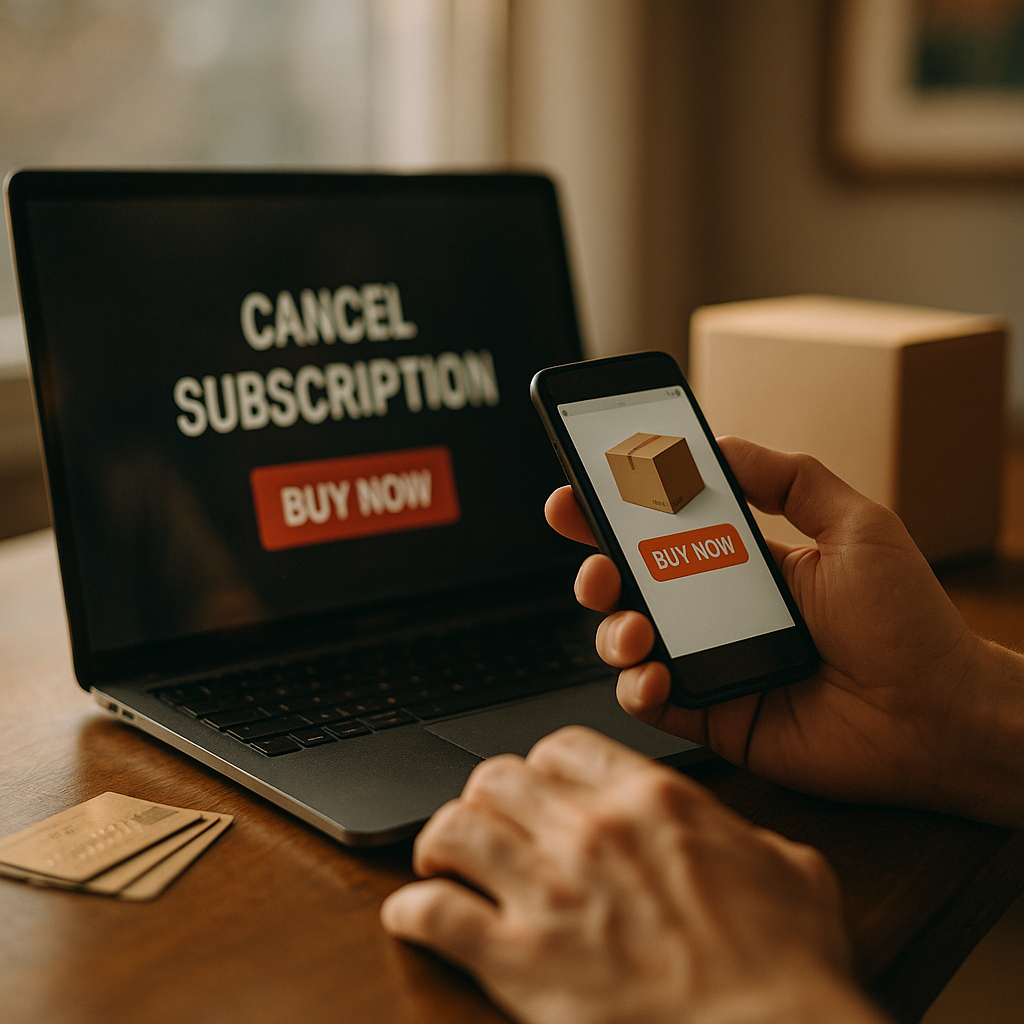
In 2025, subscription fatigue is reshaping how people pay for software, entertainment, fitness, and everyday essentials. Consumers are questioning endless monthly charges, while businesses face higher churn and tougher retention. At the same time, one-time purchases are returning with modern twists like lifetime access, paid upgrades, and transparent maintenance fees. What’s driving this shift—and who wins next?
Subscription fatigue: why the model is wearing thin
Subscriptions used to feel convenient: a predictable monthly fee and instant access. Now many households and teams manage dozens of recurring charges across streaming, productivity tools, cloud storage, meal kits, newsletters, and niche apps. The friction isn’t the concept of paying over time—it’s the accumulation.
The most common causes of subscription fatigue in 2025 include:
- Budget overload: Recurring fees spread across categories make it hard to see total spend until a bill spikes.
- “Set-and-forget” waste: People keep paying for services they rarely use because canceling takes effort or risks losing data and settings.
- Price creep: Many platforms introduce tiering, ads, or “premium” gates that push users upward over time.
- Subscription stacking: One subscription rarely replaces another; it adds to it.
- Value mismatch: Users often need a tool occasionally, not continuously, and resent paying when they’re inactive.
For businesses, fatigue shows up as higher churn, shorter customer lifetimes, and greater pressure to discount. Acquisition costs remain high, so every cancellation hurts more. That forces companies to ask a hard question: Are we offering ongoing value every month, or did we choose a subscription because it improved cash flow?
Readers often wonder whether subscriptions are “dying.” They aren’t. Subscriptions still work when the customer receives ongoing, frequently refreshed value—think utilities, core collaboration tools, security updates, or content libraries with continuous releases. The shift is that customers now demand clearer proof of value and simpler control over renewals.
Recurring payments: the hidden costs customers now notice
Recurring payments create more than a monthly line item. They create decision fatigue, admin work, and anxiety about being locked in. These non-monetary costs matter because they influence whether customers perceive a product as fair—even when the price is modest.
What customers increasingly factor into “cost”:
- Cancelation friction: If it’s difficult to cancel, customers interpret the business as relying on inertia rather than value.
- Account risk: People worry that canceling means losing access to files, history, playlists, or personalization.
- Plan confusion: Multiple tiers, add-ons, and bundles can make comparison impossible, especially for families and small businesses.
- Renewal surprises: Annual renewals and trial-to-paid conversions create distrust when reminders are unclear.
- Fragmented billing: Separate subscriptions across teams lead to duplicate licenses and shadow IT.
In response, customers are adopting coping behaviors: bundling where possible, rotating streaming services month-to-month, downgrading to ad-supported tiers, and consolidating tools. Small businesses, in particular, are auditing SaaS spend more aggressively and demanding monthly reporting from department leads.
If you sell a subscription, the follow-up question is: How do you reduce the hidden costs? Offer transparent renewals, a one-click cancel flow, pro-rated downgrades, usage-based options for light users, and “pause” features that keep data intact. When customers feel in control, they are more willing to stay.
One-time purchase software: why “own it” is back
One-time purchase software is returning because it solves the emotional and practical problem subscriptions created: users want closure. Paying once feels decisive, and it eliminates the fear of endless billing. But “one-time buy” in 2025 rarely means “no ongoing costs exist.” It usually means the customer chooses when to pay again.
Common modern one-time-buy patterns:
- Perpetual license + paid major upgrades: You keep what you bought; you pay to move to the next major version.
- Lifetime access with defined scope: Access to a course, app version, or feature set, sometimes with optional add-ons.
- One-time fee + maintenance: A clear, separate line item for support or security updates.
- Buy-to-use + optional cloud: Local functionality is owned; syncing, hosting, or AI features are subscription-based.
Customers like these models because they map payment to value moments: purchase when they need the product, upgrade when improvements justify it. That also answers a frequent concern: “Will I be stuck with outdated software?” Not if the upgrade policy is clear. The key is honest messaging about what is included: bug fixes, security patches, compatibility updates, and how long those are provided.
Businesses benefit too, when executed well. A one-time buy can widen the top of the funnel, reduce resistance at checkout, and build goodwill. It can also lower support burden if customers self-select into a version that matches their needs, rather than paying for a tier they don’t use.
Consumer spending trends: what’s changing in 2025
Consumer spending trends in 2025 show a sharper preference for flexibility, transparency, and control. People still pay subscriptions for “always-on” needs, but they are increasingly selective. The growth is in hybrid models that offer choice rather than forcing a single payment philosophy.
What consumers now expect before committing:
- Clear total cost: Monthly and annual pricing displayed side by side, including taxes and add-ons where possible.
- Feature truth: A plain-language comparison of tiers that avoids burying limits in footnotes.
- Exit safety: Data export, offline access, or a grace period after cancelation.
- Fair trials: Trials that don’t require payment details or that provide strong reminders before conversion.
Where one-time buys are gaining ground:
- Productivity and creative tools for individuals who don’t need constant collaboration features.
- Mobile apps where users prefer “pay once to remove ads” rather than manage another subscription.
- Education products where people want access to a defined curriculum without recurring charges.
- Specialized utilities (PDF tools, file converters, niche workflows) used occasionally.
Where subscriptions remain strong: services with ongoing costs to deliver value—cloud hosting, continuous content libraries, security monitoring, and enterprise collaboration. If a service’s cost base is truly recurring (servers, licensing, moderation, support), subscriptions can still be the most honest model. The difference is that customers want that reality explained upfront, not disguised as “just $X/month.”
EEAT note: Pricing perceptions are influenced by regulatory and platform changes, but the practical signal is consistent across markets: lower tolerance for forced renewals, higher trust for transparent billing and easy exits. If you publish pricing advice, cite your sources and update policy references regularly.
Pricing strategy: how brands can offer both without confusion
A strong pricing strategy in 2025 recognizes that different customers value different types of certainty. Some want a low monthly fee; others want ownership. Offering both can increase revenue and reduce churn—if you avoid a messy plan matrix.
Practical ways to offer choice while staying simple:
- Good / Better / Best with a clear anchor: One-time buy (Good), subscription (Better), business plan (Best). Keep differences obvious.
- Subscription as “membership,” not hostage: Include ongoing benefits like new features, cloud services, templates, or priority support.
- Perpetual license with time-boxed updates: For example, include updates for a defined period, then offer optional maintenance.
- Upgrade credit: Apply a portion of past payments toward a one-time license or lifetime plan.
- Usage-based add-ons: Charge recurring only for variable-cost components like storage, seats, or AI processing.
How to prevent customer regret:
- Make switching easy: Let users move between one-time and subscription plans without losing data.
- Explain who each plan is for: Use real scenarios: “Occasional use,” “Daily work,” “Team collaboration.”
- Publish an upgrade policy: State how long security fixes are provided and what triggers paid upgrades.
- Respect trust signals: Simple cancelation, clear receipts, renewal reminders, and transparent invoices.
Readers often ask: “Won’t offering a one-time option reduce recurring revenue?” It can, if the subscription offers no ongoing value beyond access. But if your subscription genuinely bundles continuing benefits—cloud services, frequent feature releases, support, or compliance—many customers will still choose it. Meanwhile, the one-time option can capture buyers who would otherwise churn quickly or never convert.
EEAT note: If you recommend plan structures publicly, disclose assumptions (industry, customer type, product costs) and avoid universal claims. What works for a local-first utility differs from a cloud-first collaboration platform.
Digital ownership: what buyers should look for before choosing
Digital ownership is often misunderstood. Buying “lifetime access” doesn’t automatically guarantee lifetime updates, compatibility, or hosting. Before choosing a one-time buy or subscription, customers should evaluate what they’re actually receiving and what risks they’re taking on.
Checklist for buyers (personal or business):
- Data portability: Can you export your files in standard formats? Can you migrate to another tool?
- Offline access: Does the product work without an active subscription or internet connection?
- Update policy: Are security patches included? For how long? Are major upgrades paid?
- Service dependency: Does the app rely on cloud servers, AI processing, or third-party APIs that have ongoing costs?
- Total cost over time: Compare a realistic period of use to avoid overpaying for either model.
- Support expectations: Is support included, time-limited, or sold separately?
Rule of thumb: Choose a one-time buy when your need is stable and occasional, when local functionality matters, or when you want predictable lifetime access to a defined feature set. Choose a subscription when the value is continuous—fresh content, real-time collaboration, security monitoring, or cloud-based services you rely on every day.
For businesses, add two more checks: vendor stability (financial health, roadmap clarity) and compliance needs (audit logs, data retention, admin controls). Those factors often justify subscriptions, but only when the vendor’s ongoing service truly reduces your operational burden.
FAQs
What is subscription fatigue?
Subscription fatigue is the growing frustration consumers and businesses feel from managing too many recurring payments, dealing with price increases, and paying for services they don’t consistently use. It often leads to cancellations, plan downgrades, and tighter scrutiny of value.
Are one-time purchases really coming back, or is it just marketing?
They are coming back in practical forms: perpetual licenses, lifetime access with defined scope, and one-time fees paired with optional maintenance. The shift is driven by demand for control and clearer value exchange, not nostalgia.
Which industries are most affected by subscription fatigue?
Streaming media, consumer apps, SaaS tools for small businesses, digital news, and fitness platforms feel it strongly because customers can rotate services, switch providers quickly, or decide they don’t need constant access.
Is a lifetime deal a good idea in 2025?
It can be, if the product’s costs are mostly up-front and the deal clearly defines what “lifetime” includes. Check whether hosting, AI features, or premium integrations are excluded, and confirm data export options if the company changes direction.
How can companies reduce churn without lowering prices?
Improve transparency and control: simpler tiers, straightforward cancelation, pause options, proactive renewal reminders, and clear documentation of what’s included. Pair that with ongoing value that customers can feel monthly, such as meaningful feature releases or reliable service improvements.
Should I choose a subscription or a one-time buy for my team?
If your team needs collaboration, admin controls, and continuous security updates, subscriptions often fit better. If the tool is used occasionally, is largely local, and doesn’t rely heavily on cloud services, a one-time buy with paid upgrades can be more cost-effective.
Subscription fatigue is forcing a reset in 2025: customers no longer accept recurring billing without obvious, ongoing value. As a result, one-time purchases and hybrid pricing are reappearing as credible, modern options—not relics. The best choice depends on how often you use the product and whether it requires continuous service to function. Control, clarity, and portability are the real differentiators.
Top Influencer Marketing Agencies
The leading agencies shaping influencer marketing in 2026
Agencies ranked by campaign performance, client diversity, platform expertise, proven ROI, industry recognition, and client satisfaction. Assessed through verified case studies, reviews, and industry consultations.
Moburst

-
2

The Shelf
Boutique Beauty & Lifestyle Influencer AgencyA data-driven boutique agency specializing exclusively in beauty, wellness, and lifestyle influencer campaigns on Instagram and TikTok. Best for brands already focused on the beauty/personal care space that need curated, aesthetic-driven content.Clients: Pepsi, The Honest Company, Hims, Elf Cosmetics, Pure LeafVisit The Shelf → -
3

Audiencly
Niche Gaming & Esports Influencer AgencyA specialized agency focused exclusively on gaming and esports creators on YouTube, Twitch, and TikTok. Ideal if your campaign is 100% gaming-focused — from game launches to hardware and esports events.Clients: Epic Games, NordVPN, Ubisoft, Wargaming, Tencent GamesVisit Audiencly → -
4

Viral Nation
Global Influencer Marketing & Talent AgencyA dual talent management and marketing agency with proprietary brand safety tools and a global creator network spanning nano-influencers to celebrities across all major platforms.Clients: Meta, Activision Blizzard, Energizer, Aston Martin, WalmartVisit Viral Nation → -
5

The Influencer Marketing Factory
TikTok, Instagram & YouTube CampaignsA full-service agency with strong TikTok expertise, offering end-to-end campaign management from influencer discovery through performance reporting with a focus on platform-native content.Clients: Google, Snapchat, Universal Music, Bumble, YelpVisit TIMF → -
6

NeoReach
Enterprise Analytics & Influencer CampaignsAn enterprise-focused agency combining managed campaigns with a powerful self-service data platform for influencer search, audience analytics, and attribution modeling.Clients: Amazon, Airbnb, Netflix, Honda, The New York TimesVisit NeoReach → -
7

Ubiquitous
Creator-First Marketing PlatformA tech-driven platform combining self-service tools with managed campaign options, emphasizing speed and scalability for brands managing multiple influencer relationships.Clients: Lyft, Disney, Target, American Eagle, NetflixVisit Ubiquitous → -
8

Obviously
Scalable Enterprise Influencer CampaignsA tech-enabled agency built for high-volume campaigns, coordinating hundreds of creators simultaneously with end-to-end logistics, content rights management, and product seeding.Clients: Google, Ulta Beauty, Converse, AmazonVisit Obviously →