


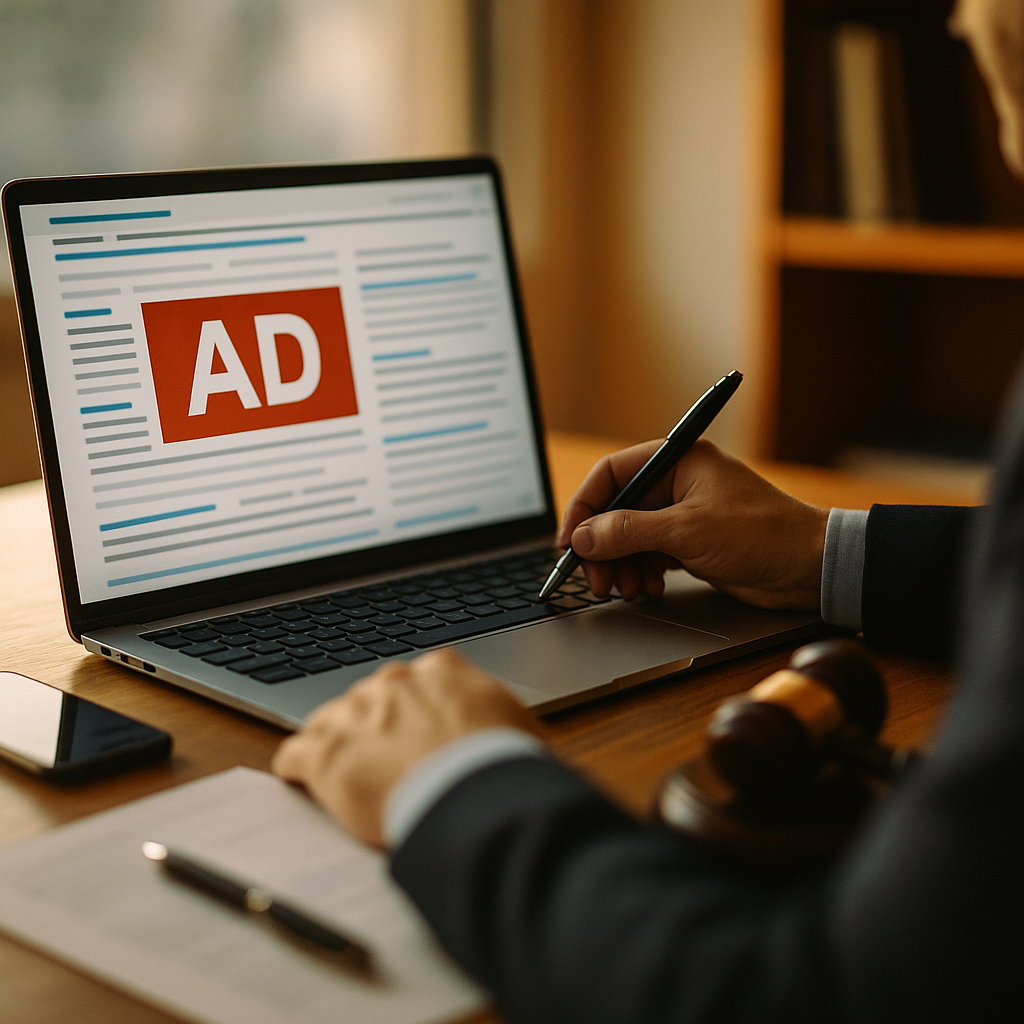
In 2025, brands buy media at machine speed, but reputations still break at human speed. Algorithmic liability for automated brand ad placements sits at the intersection of advertising technology, consumer protection, and emerging AI governance. This guide explains what liability means, who can be responsible, and how to reduce risk without sacrificing performance. The next placement could help growth—or trigger headlines.
Key concept: algorithmic liability in programmatic advertising
Automated brand ad placements usually happen through programmatic advertising: software systems bid on impressions, choose audiences, and decide where an ad appears across websites, apps, video, and connected TV. “Algorithmic liability” describes the legal and practical responsibility that can arise when those automated decisions cause harm. In ad tech, that harm often looks like:
- Brand safety failures (ads appearing next to extremist, violent, or misleading content)
- Consumer harm (misleading targeting, discriminatory delivery, or predatory ad placement around sensitive content)
- Contract and regulatory breaches (violations of platform policies, privacy obligations, or industry standards)
- Reputational and financial loss (boycotts, press scrutiny, wasted spend, partner termination)
Liability does not require that a brand personally picked the exact page or channel. Regulators, courts, partners, and the public often focus on whether the brand and its agents exercised reasonable care in selecting vendors, setting controls, monitoring outcomes, and responding to incidents. If you rely on automation, you still own governance.
Secondary keyword: brand safety compliance and governance
Brand safety used to be treated as a settings checklist. In 2025, it is better understood as brand safety compliance and governance: a documented system of controls that shows you anticipated foreseeable risks and put guardrails in place.
To align with common expectations across advertisers, agencies, and many regulatory frameworks, prioritize these governance moves:
- Define “unsafe” and “unsuitable” content in writing. Unsafe might include illegal, hateful, extremist, or exploitative content. Unsuitable may include tragedy news, political controversy, or graphic language depending on brand values.
- Establish decision ownership. Assign a senior owner for brand safety and a cross-functional escalation path (marketing, legal, compliance, PR, customer support).
- Require transparent inventory controls. Prefer supply paths that provide domain/app transparency, seller verification, and meaningful reporting rather than aggregated “black box” placements.
- Use layered controls. Combine inclusion lists, exclusion lists, contextual category controls, keyword logic, and independent verification.
- Document your monitoring cadence. Continuous monitoring for high-volume campaigns; at minimum, weekly audits for lower-volume buys.
Readers often ask: “If we use a well-known DSP, aren’t we covered?” Not automatically. Major platforms provide tools, but you are responsible for configuring them, validating that they work for your risk tolerance, and proving you acted promptly when issues surfaced.
Secondary keyword: programmatic advertising risk management
Effective programmatic advertising risk management treats automated placements like any other operational risk: identify threats, assess likelihood and impact, implement controls, and verify performance. The unique challenge is that the system changes constantly—content updates, inventory shifts, and models retrain.
Build your risk management approach around the following practical steps:
- Map the ad supply chain. Know your DSP, SSPs, exchanges, publishers, resellers, and verification partners. The more intermediaries, the harder it is to pinpoint fault and remediate.
- Segment campaigns by risk level. Brand campaigns, children-adjacent products, health/finance products, and public-facing launches merit stricter controls and narrower inventory.
- Adopt contextual safeguards over pure keyword blocking. Keyword-only blocks can over-block quality journalism and under-block harmful content that avoids obvious terms. Contextual classification typically reduces false positives and improves suitability control.
- Validate targeting for sensitive attributes. Even when you do not intend discriminatory outcomes, automated delivery can concentrate exposure. Audit audience definitions and placement patterns for fairness risks.
- Run pre-launch “red team” checks. Test where ads could appear, how the system behaves under different bids, and what happens when content changes rapidly (breaking news, crises, or trending misinformation).
Follow-up question: “Isn’t this overkill for small brands?” Not if you scale through automation. Even modest budgets can generate thousands of placements per day. The minimum standard is to understand where you appear, set controls aligned to your category, and review reports with enough detail to take action.
Secondary keyword: AI accountability in ad tech
AI accountability in ad tech is about proving that automated decisions are controlled, explainable enough for business needs, and aligned with legal and ethical obligations. Automated placement decisions often depend on machine learning: predicting viewability, conversion likelihood, and inventory value. Accountability means you can answer:
- What data influenced delivery? (first-party segments, contextual signals, location, device, time-of-day)
- What constraints were applied? (blocked categories, excluded publishers, geo restrictions, age gating)
- How do we detect failure? (alerts, third-party verification, anomaly detection, human review)
- Who can override automation? (pause campaigns, remove domains/apps, adjust bids, change targeting)
Accountability also includes internal competence. Under Google’s EEAT expectations for helpful content, teams should demonstrate experience and expertise by operating repeatable processes, not one-off reactions. That means training, documented playbooks, and ongoing measurement.
Practical accountability measures that stand up under scrutiny:
- Model and vendor documentation: request plain-language explanations of optimization goals and known failure modes.
- Human-in-the-loop review: for high-risk categories, review placement reports daily during launch windows.
- Explainability for stakeholders: maintain a short internal brief that explains why your system could place ads next to certain content and how controls prevent it.
Readers often worry: “Can we be liable if the platform won’t fully disclose its algorithm?” You can still be held responsible for outcomes if you ignored foreseeable risks. When full transparency is unavailable, mitigate by narrowing inventory, using independent verification, and adding contractual protections.
Secondary keyword: advertiser due diligence and vendor contracts
Advertiser due diligence and vendor contracts are where liability often becomes real. When something goes wrong, the question shifts from “Who is morally at fault?” to “Who had the duty and the ability to prevent or correct it?” Contracts, insertion orders, and platform terms define responsibilities, but enforcement often depends on the clarity of your requirements and your evidence.
Strengthen due diligence before spend goes live:
- Vendor selection checklist: transparency of inventory, fraud controls, brand safety tooling, data governance, incident response, and audit rights.
- Verification alignment: confirm how your DSP, verification provider, and publisher define categories (hate speech, adult content, violence, tragedy). Mismatched taxonomies create gaps.
- Supply path optimization (SPO): reduce unnecessary intermediaries to improve transparency and reduce spoofing risk.
Contract terms to consider (tailor with counsel):
- Brand safety and suitability definitions tied to measurable controls and reporting obligations.
- Make-goods, refunds, and credits for violations, including time-bound remediation.
- Data protection and lawful basis for targeting and measurement, including restrictions on sensitive data.
- Incident notification timelines and cooperation duties (logs, placement details, root-cause analysis).
- Indemnities and limitation of liability structured realistically for the risk and spend level.
Follow-up question: “Can we just rely on standard platform terms?” Standard terms often limit platform liability and place operational burden on the advertiser. Use your buying power where possible, and when you cannot negotiate, adapt by lowering exposure: use whitelists, private marketplaces, or direct publisher deals for sensitive campaigns.
Secondary keyword: ad placement audit and incident response
When an automated placement causes harm, speed and evidence matter. A disciplined ad placement audit and incident response process reduces legal exposure and reputational damage, and it improves future performance.
Build an incident playbook that includes:
- Immediate containment: pause affected campaigns, block the domain/app/channel, and disable risky targeting segments.
- Evidence capture: screenshots, URLs, timestamps, placement IDs, exchange paths, and verification logs. Preserve records before they rotate out.
- Root-cause analysis: determine whether the failure came from taxonomy gaps, misconfiguration, vendor misclassification, spoofed inventory, or a sudden content change.
- Stakeholder communication: internal brief to legal/PR, partner notifications where required, and clear messaging if public statements are necessary.
- Corrective actions: update blocklists/inclusion lists, tighten contextual controls, adjust SPO, add pre-bid filters, or switch to curated supply.
Auditing should not happen only after a crisis. Proactive audits help you show reasonable care and improve efficiency:
- Placement sampling: review a statistically meaningful sample of URLs/apps for each major campaign and each new supply partner.
- Suitability scoring: create a brand-specific scorecard (for example: news adjacency tolerance, user-generated content tolerance, mature themes).
- Fraud and MFA monitoring: watch for anomalies such as sudden spikes in low-quality inventory or suspicious engagement patterns.
Readers often ask: “What if a publisher changes content after the ad runs?” That is common, especially with user-generated content and news pages. Reduce exposure by preferring contextual signals evaluated at impression time, limiting risky environments, and setting verification to log and alert quickly.
FAQs
What is the biggest driver of algorithmic liability in automated ad placements?
The biggest driver is a mismatch between automated scale and insufficient governance: unclear suitability rules, weak monitoring, limited transparency in the supply chain, and slow incident response. Liability risk rises when harm was foreseeable and controls were available but not used.
Are brands legally responsible for where programmatic ads appear?
Often, yes in practice, even if platforms and intermediaries contributed. Responsibility depends on applicable laws, contracts, and the facts of what controls the brand set and how it monitored results. Many disputes hinge on whether the brand exercised reasonable care and enforced its standards.
How can we reduce risk without killing campaign performance?
Use a layered approach: curated supply paths, contextual targeting, verified inventory, and campaign segmentation by risk level. Many brands find performance improves when they remove low-quality inventory and focus on transparent placements with reliable measurement.
Do we need third-party verification if the DSP offers brand safety tools?
Independent verification strengthens oversight, uncovers taxonomy gaps, and provides evidence during disputes. For high-risk categories or high-visibility campaigns, third-party verification is a strong control. For smaller budgets, at least use detailed placement reporting and routine audits.
What should we ask vendors about their algorithms?
Ask what the optimization goal is, what inputs influence delivery, what controls you can enforce, how often models update, what known failure modes exist, and what logs and reporting you can access for audits and incidents. Also ask how they detect and handle spoofing, MFA, and misclassification.
What is a reasonable incident response timeline?
For high-visibility campaigns, aim to detect and contain issues within hours, not days. Set alerting for high-risk categories and require vendors to provide prompt placement details. Document actions taken, because evidence of swift remediation can materially reduce reputational and legal fallout.
Algorithmic liability for automated brand ad placements is manageable when you treat automation as a governed system, not a set-and-forget channel. Define suitability, limit opaque supply, document due diligence, and audit placements continuously. When incidents occur, contain quickly and preserve evidence. In 2025, brands that pair performance goals with accountable controls earn both efficient media and durable trust—before the next bid is placed.
Top Influencer Marketing Agencies
The leading agencies shaping influencer marketing in 2026
Agencies ranked by campaign performance, client diversity, platform expertise, proven ROI, industry recognition, and client satisfaction. Assessed through verified case studies, reviews, and industry consultations.
Moburst

-
2

The Shelf
Boutique Beauty & Lifestyle Influencer AgencyA data-driven boutique agency specializing exclusively in beauty, wellness, and lifestyle influencer campaigns on Instagram and TikTok. Best for brands already focused on the beauty/personal care space that need curated, aesthetic-driven content.Clients: Pepsi, The Honest Company, Hims, Elf Cosmetics, Pure LeafVisit The Shelf → -
3

Audiencly
Niche Gaming & Esports Influencer AgencyA specialized agency focused exclusively on gaming and esports creators on YouTube, Twitch, and TikTok. Ideal if your campaign is 100% gaming-focused — from game launches to hardware and esports events.Clients: Epic Games, NordVPN, Ubisoft, Wargaming, Tencent GamesVisit Audiencly → -
4

Viral Nation
Global Influencer Marketing & Talent AgencyA dual talent management and marketing agency with proprietary brand safety tools and a global creator network spanning nano-influencers to celebrities across all major platforms.Clients: Meta, Activision Blizzard, Energizer, Aston Martin, WalmartVisit Viral Nation → -
5

The Influencer Marketing Factory
TikTok, Instagram & YouTube CampaignsA full-service agency with strong TikTok expertise, offering end-to-end campaign management from influencer discovery through performance reporting with a focus on platform-native content.Clients: Google, Snapchat, Universal Music, Bumble, YelpVisit TIMF → -
6

NeoReach
Enterprise Analytics & Influencer CampaignsAn enterprise-focused agency combining managed campaigns with a powerful self-service data platform for influencer search, audience analytics, and attribution modeling.Clients: Amazon, Airbnb, Netflix, Honda, The New York TimesVisit NeoReach → -
7

Ubiquitous
Creator-First Marketing PlatformA tech-driven platform combining self-service tools with managed campaign options, emphasizing speed and scalability for brands managing multiple influencer relationships.Clients: Lyft, Disney, Target, American Eagle, NetflixVisit Ubiquitous → -
8

Obviously
Scalable Enterprise Influencer CampaignsA tech-enabled agency built for high-volume campaigns, coordinating hundreds of creators simultaneously with end-to-end logistics, content rights management, and product seeding.Clients: Google, Ulta Beauty, Converse, AmazonVisit Obviously →