


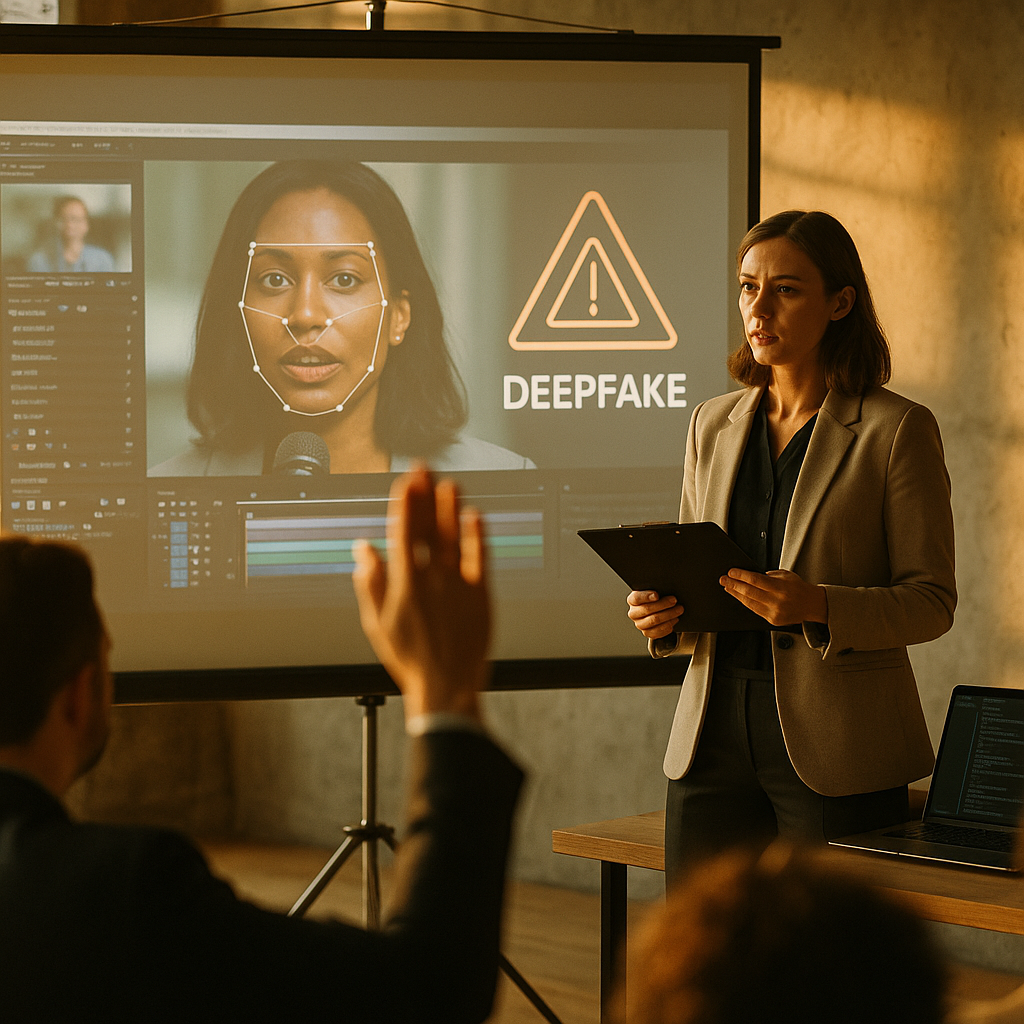
In 2025, advocacy teams use synthetic media to gain attention, explain complex issues, and personalize stories at scale. But credibility collapses when audiences feel misled. Compliance Rules for Deepfake Disclosure in Global Advocacy Campaigns now shape how NGOs, coalitions, and social-impact brands create and distribute AI-generated audio, images, and video. This guide clarifies practical disclosure steps, cross-border obligations, and governance essentials—so your next campaign persuades without risking trust.
Deepfake disclosure laws and platform policies
Global advocacy campaigns rarely stay inside one legal border. A short video can be posted in one country, hosted in another, and targeted to viewers in dozens more. That reality makes “disclosure” both a legal requirement in some jurisdictions and a trust requirement everywhere. In 2025, the safest approach is to treat disclosure as a baseline standard rather than a local exception.
Start with a working definition. For compliance purposes, treat a “deepfake” as synthetic or materially altered media that depicts a real person saying or doing something they did not say or do, or that creates a realistic but fabricated scene likely to be mistaken as authentic. Many rules also cover AI-generated voice clones, face swaps, and photorealistic AI imagery used as “evidence” in advocacy.
Expect overlapping regimes:
- Election-related and political communication rules: Many jurisdictions impose stricter disclosure obligations when content could influence public opinion on candidates, referenda, or government policy. Advocacy organizations should assume heightened scrutiny during election periods even when they are not supporting a candidate.
- Consumer protection and deceptive practices: If synthetic media could mislead a reasonable viewer, regulators may treat it as deceptive—even when the underlying cause is charitable or educational.
- Defamation, personality rights, and passing-off: Using a real person’s likeness or voice without authorization can trigger claims, even with a disclosure, particularly if the portrayal is harmful or implies endorsement.
- Platform rules: Major social and video platforms increasingly require labels for manipulated media, restrict deceptive synthetic political content, and may down-rank or remove non-labeled deepfakes. Treat platform labeling tools as mandatory compliance controls, not optional features.
Practical takeaway: Build a disclosure standard that meets the strictest likely requirements across your target markets, then localize only where needed. This prevents last-minute edits, removals, or ad-account flags when the campaign goes live globally.
Global advocacy compliance: defining when disclosure is mandatory
Advocacy organizations often ask, “Do we need to disclose if it’s obvious?” or “What if it’s just an illustrative reenactment?” In global advocacy compliance, the decisive question is whether a typical viewer could reasonably believe the media depicts an authentic recording or a real person’s real words.
Disclose as mandatory when any of the following apply:
- A real person is depicted or sounds present: face swaps, voice cloning, synthetic “speaking head” video, or AI-generated statements in their style.
- The scene looks documentary: photorealistic war-zone footage, “leaked call” style audio, security-camera aesthetics, or realistic screenshots designed to look like news coverage.
- The content supports factual claims: synthetic visuals used as proof of harm, wrongdoing, or events that viewers may treat as evidence.
- The content is targeted to vulnerable audiences: children, crisis-affected communities, or audiences with lower digital literacy. Ethical and reputational risk is higher, and regulators may weigh vulnerability in enforcement.
Disclose even when not strictly required if: the advocacy message could polarize, incite hostility, or spark harassment; the synthetic portrayal could be clipped and reposted without context; or partners and funders require higher integrity standards.
Edge cases that still need careful handling:
- Composite or “AI-enhanced” edits: If you altered timing, facial expression, or the meaning of speech (not just color correction or stabilization), treat it as manipulated media and label it.
- Dramatizations: If you stage a reenactment, clearly mark it as a dramatization. If you use AI to make it look like real footage, add an explicit synthetic media disclosure, not just “reenactment.”
- Satire: Satire can still mislead when redistributed. Use prominent disclosures and avoid realistic impersonation of private individuals.
Operational rule: If your legal team has to debate whether viewers might be confused, assume they might be. Disclose.
Synthetic media transparency: how to disclose clearly and consistently
Disclosure works only if people notice it, understand it, and can access it wherever the content travels. In 2025, best practice is multi-layer disclosure: in-content, in-caption, and in-metadata where supported. This approach also improves resilience when clips are shared without the original text.
1) Use plain language that matches the risk. Avoid vague phrasing like “AI-assisted.” Prefer direct statements such as:
- “AI-generated video.”
- “This audio is a synthetic voice.”
- “This scene is digitally created and did not occur as shown.”
- “Dramatization using AI-generated imagery.”
2) Make it prominent and persistent.
- Video: Put the disclosure on-screen at the beginning and near any key claims. Keep it visible long enough to read. If the video is long, repeat it after major transitions.
- Audio-only: Use a spoken disclosure at the start and before the call-to-action. If the audio is short, a single clear spoken disclosure may be sufficient.
- Images: Place a visible label on the image itself, not only in the caption, because images frequently travel without text.
3) Disclose who created it and why (when feasible). Trust improves when viewers know intent and accountability. For advocacy, add a short explanation in the post text or landing page:
- Creator attribution: the organization and production partner.
- Purpose: e.g., “illustrating a scenario based on documented reports.”
- Source basis: link to underlying evidence, reports, or interviews that informed the depiction.
4) Keep disclosures consistent across languages. Mis-translation creates compliance gaps. Use a controlled glossary for “AI-generated,” “synthetic,” “digitally altered,” and “dramatization,” and have native reviewers confirm meaning and tone.
5) Don’t bury the disclosure behind clicks. A “learn more” link can add detail, but it should not be the only notice. If the audience must click to discover the content is synthetic, the disclosure has failed.
AI political advertising regulations: extra rules for advocacy targeting
Many advocacy campaigns look like political messaging even when they are issue-based. If you buy ads, use influencer partnerships, or micro-target audiences, assume your content may be assessed under AI political advertising regulations and related transparency rules.
Apply “political-grade” controls when your campaign:
- Mentions government officials, parties, candidates, or voting.
- Urges policy outcomes (contact representatives, support a bill, oppose a measure).
- Runs during sensitive civic periods and is targeted by location or demographics.
Key compliance actions for paid distribution:
- Ad disclosures and disclaimers: Ensure required “paid for by” or sponsor statements appear in the format required by each channel. Where platforms offer a synthetic media toggle or label, use it.
- Creative approval workflow: Lock final creatives and preserve an audit trail showing what was labeled, where, and when. This is vital if content is challenged as deceptive.
- Targeting and fairness checks: Avoid targeting that could be interpreted as manipulating vulnerable populations with synthetic content. Document your rationale for audience selection, especially for sensitive topics.
- Influencer and partner contracts: Require partners to keep labels intact, not crop them out, and to include disclosure language in their captions. Add takedown and correction obligations.
Common failure mode: A compliant master video gets edited into short vertical clips by local partners, and the label disappears. Prevent this by supplying pre-labeled versions for every aspect ratio and by contractually banning “label removal edits.”
Cross-border data protection and consent for deepfake content
Disclosure is necessary, but it is not a substitute for lawful processing of personal data. When synthetic media uses a real person’s face, voice, or other identifiers, you may be processing biometric or uniquely identifying data. In cross-border campaigns, consent, lawful basis, and transfer controls can become as important as the disclosure label.
1) Consent and releases: get the right permissions.
- Real individuals: Obtain written consent that explicitly covers AI generation, voice cloning, face replication, and the intended distribution channels and geographies.
- Public figures: Legal exposure can still be high. Ensure the portrayal does not imply endorsement and is not defamatory. Consider legal review for right-of-publicity and local personality-rights constraints.
- Children and protected groups: Use stricter safeguards, including guardian consent and risk assessment. Avoid synthetic replication that could enable future misuse.
2) Data minimization: don’t collect more training material than needed. If you are creating a voice model, store only what is required, limit access, and define retention. Do not reuse the model for unrelated campaigns without renewed permission.
3) Secure storage and vendor controls. Many advocacy teams outsource production. Require vendors to document:
- Where data is stored and processed, and who can access it.
- Whether any training data is used to improve third-party models.
- Deletion timelines and verifiable deletion on request.
- Incident response steps for leaks or unauthorized reuse.
4) Transfer and hosting considerations. If your campaign is global, hosting and analytics often involve cross-border transfers. Align your privacy notices with the reality of where data goes, and keep a clear record of processing activities tied to the synthetic media pipeline.
Practical takeaway: Treat “deepfake compliance” as a combined discipline: disclosure + consent + security + governance. If one pillar fails, the whole campaign becomes risky.
Deepfake risk management: governance, audits, and crisis response
EEAT is not just about what you publish; it’s about demonstrating reliability through process. Deepfake risk management turns disclosure from a one-off label into an organizational capability that can withstand scrutiny from regulators, journalists, funders, and the public.
1) Create a synthetic media policy that is usable. A two-page internal standard often beats a long document nobody follows. Include:
- Definitions and risk tiers (low, medium, high) by use case.
- Mandatory disclosure formats and approved wording.
- Approval roles (comms lead, legal, privacy, regional lead).
- Red lines (no impersonation of private individuals; no synthetic “evidence”; no medical or emergency instructions in synthetic voices without safeguards).
2) Maintain provenance and an audit trail. Keep records for each asset:
- Original source materials and permissions.
- Tools used, prompts or edit logs (at least at a high level), and vendor statements.
- Disclosure placements (screenshots/timecodes) and platform label settings.
- Distribution list (channels, partners, ad accounts) and versions by language.
3) Pre-brief stakeholders. Advocacy campaigns often involve coalitions. Provide partners with a short “synthetic media disclosure kit” including:
- Required labels and translations.
- Do-not-edit rules.
- FAQ language for community managers.
- Escalation contacts for misinformation incidents.
4) Prepare a correction and takedown playbook. Even with strong disclosures, synthetic content can be weaponized by opponents. Your playbook should include:
- How you will respond if a clip is reposted without the label.
- How to publish the “context card” quickly (what is synthetic, what is factual, and what sources support the message).
- Who contacts platforms, and what evidence you provide to request relabeling or removal.
- How you notify affected individuals if their likeness or voice was used.
5) Measure comprehension, not just reach. When feasible, test whether audiences actually understand the disclosure. A simple pre-launch review with diverse participants can reveal whether your label is too subtle or too technical.
FAQs
Do we need to disclose AI use if the content is only “AI-enhanced”?
If the enhancement changes meaning or realism in a way that could mislead—such as altering speech, facial movements, or creating realistic scenes—disclose it. Basic technical edits (color, cropping, noise reduction) usually do not require a synthetic media label, but document your decision.
What is the safest wording for a deepfake disclosure in an advocacy video?
Use direct language that a non-expert understands: “AI-generated video” or “Synthetic audio”. Add a short clarifier when needed: “This scene is digitally created for illustration and did not occur as shown.”
Is a disclaimer in the caption enough?
Often no. Captions are frequently stripped when content is shared. Place a visible on-screen label in videos and a visible label on images, then repeat the disclosure in the caption and on the landing page for completeness.
Can we use a public figure’s likeness with a disclosure?
Disclosure reduces deception risk but does not eliminate legal exposure. You still need to address defamation, personality rights, implied endorsement, and platform rules. Seek jurisdiction-specific legal review for high-risk uses.
How do we handle partners who repost our content without the label?
Provide pre-labeled versions sized for each platform, require label retention in contracts, and monitor reposts. If a label is removed, issue a correction request immediately and publish a public context note linking to the labeled original.
What records should we keep to prove compliance?
Keep permissions/releases, tool and vendor documentation, final labeled creatives, timecoded disclosure placements, platform label settings, and a distribution log showing where each version ran. This audit trail supports regulator inquiries and media questions.
Deepfake disclosure compliance in 2025 is less about a single label and more about a defensible system: transparent creative choices, clear audience-facing notices, consent-backed production, and documented controls across partners and platforms. When your campaign crosses borders, design disclosures for maximum portability and minimum confusion. The takeaway is simple: disclose prominently, prove permission, and preserve provenance—so your advocacy remains persuasive, lawful, and trusted.
Top Influencer Marketing Agencies
The leading agencies shaping influencer marketing in 2026
Agencies ranked by campaign performance, client diversity, platform expertise, proven ROI, industry recognition, and client satisfaction. Assessed through verified case studies, reviews, and industry consultations.
Moburst

-
2

The Shelf
Boutique Beauty & Lifestyle Influencer AgencyA data-driven boutique agency specializing exclusively in beauty, wellness, and lifestyle influencer campaigns on Instagram and TikTok. Best for brands already focused on the beauty/personal care space that need curated, aesthetic-driven content.Clients: Pepsi, The Honest Company, Hims, Elf Cosmetics, Pure LeafVisit The Shelf → -
3

Audiencly
Niche Gaming & Esports Influencer AgencyA specialized agency focused exclusively on gaming and esports creators on YouTube, Twitch, and TikTok. Ideal if your campaign is 100% gaming-focused — from game launches to hardware and esports events.Clients: Epic Games, NordVPN, Ubisoft, Wargaming, Tencent GamesVisit Audiencly → -
4

Viral Nation
Global Influencer Marketing & Talent AgencyA dual talent management and marketing agency with proprietary brand safety tools and a global creator network spanning nano-influencers to celebrities across all major platforms.Clients: Meta, Activision Blizzard, Energizer, Aston Martin, WalmartVisit Viral Nation → -
5

The Influencer Marketing Factory
TikTok, Instagram & YouTube CampaignsA full-service agency with strong TikTok expertise, offering end-to-end campaign management from influencer discovery through performance reporting with a focus on platform-native content.Clients: Google, Snapchat, Universal Music, Bumble, YelpVisit TIMF → -
6

NeoReach
Enterprise Analytics & Influencer CampaignsAn enterprise-focused agency combining managed campaigns with a powerful self-service data platform for influencer search, audience analytics, and attribution modeling.Clients: Amazon, Airbnb, Netflix, Honda, The New York TimesVisit NeoReach → -
7

Ubiquitous
Creator-First Marketing PlatformA tech-driven platform combining self-service tools with managed campaign options, emphasizing speed and scalability for brands managing multiple influencer relationships.Clients: Lyft, Disney, Target, American Eagle, NetflixVisit Ubiquitous → -
8

Obviously
Scalable Enterprise Influencer CampaignsA tech-enabled agency built for high-volume campaigns, coordinating hundreds of creators simultaneously with end-to-end logistics, content rights management, and product seeding.Clients: Google, Ulta Beauty, Converse, AmazonVisit Obviously →