


In 2025, brands compete in crowded feeds where attention is scarce and trust is earned. Haptic marketing adds a missing sense to digital experiences by using touch, vibration, and force feedback to deepen understanding and emotion. As devices, standards, and creators mature, touch becomes content, not a gimmick. The question now is simple: what will you let customers feel?
What Is Haptic Marketing: Defining the Touchpoint
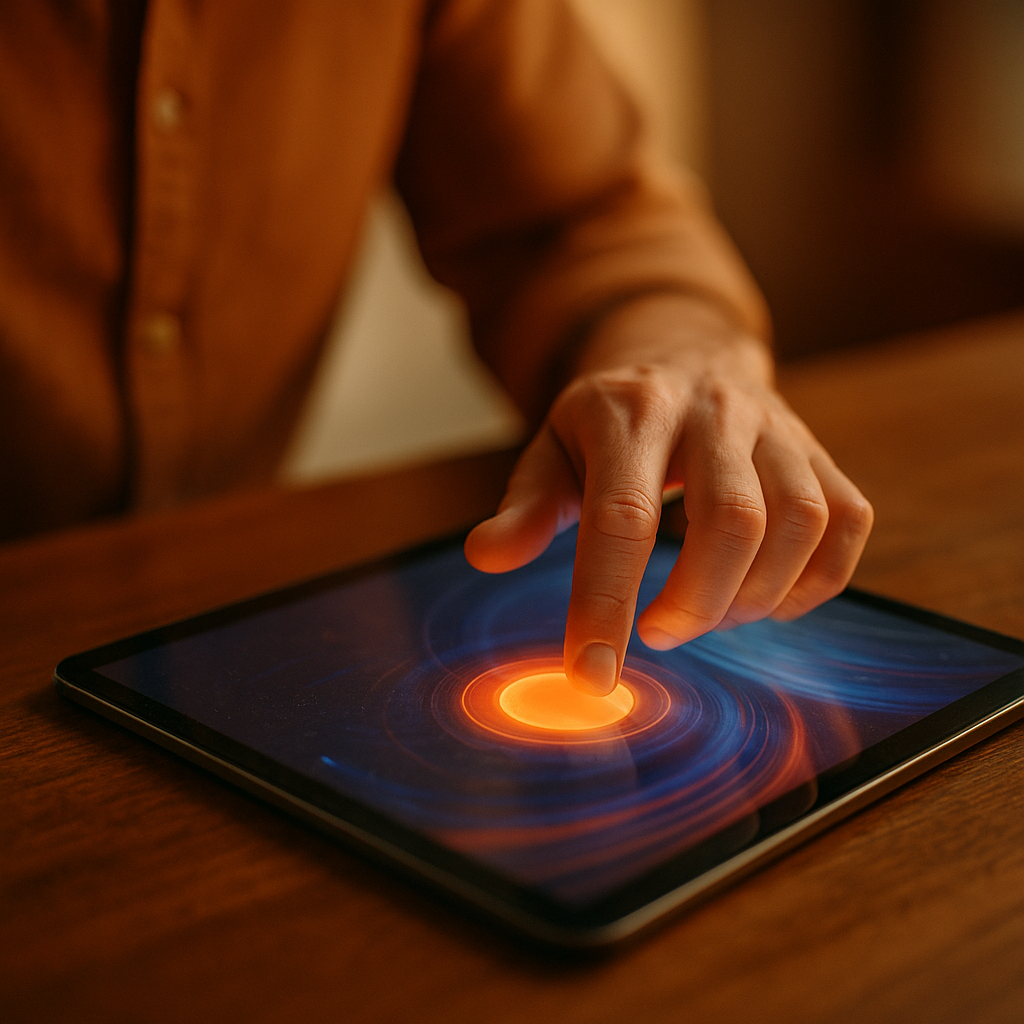
Haptic marketing uses tactile feedback to influence perception, comprehension, and decision-making. It spans everything from a phone’s vibration pattern that confirms an action to advanced wearables that simulate texture, pressure, or movement. Unlike visuals and audio, touch creates a direct bodily signal, which can strengthen memory and reduce uncertainty when shoppers can’t physically examine a product.
In practice, haptics typically fall into three categories:
- Vibrotactile feedback: vibrations that communicate confirmation, urgency, rhythm, or brand identity.
- Force feedback: resistance and motion cues, common in gaming controllers, steering wheels, and some XR peripherals.
- Thermal and texture simulation: emerging techniques that mimic warmth/coolness or surface feel, more common in pilots and high-end devices.
Readers usually ask, “Does touch really change outcomes?” Touch can reduce hesitation by making interactions feel more predictable. For example, a subtle haptic “click” can reassure users that a payment button pressed successfully, lowering repeat taps and accidental actions. The marketing impact comes from clarity and confidence, not just novelty.
Digital Touchpoints: Where Tactile UX Fits in 2025
Most haptic experiences today live where consumers already spend time: smartphones, wearables, game controllers, kiosks, cars, and XR devices. The opportunity in 2025 is to treat tactile patterns as part of the content system, similar to typography or sound design.
Key digital touchpoints and what haptics can do well:
- Mobile apps and mobile web: provide micro-confirmations for key actions (add to cart, apply discount, biometric login) and guide attention through discreet cues.
- Retail and out-of-home displays: enable tactile confirmation on kiosks, reducing mis-taps and improving accessibility for users who benefit from non-visual cues.
- Connected TV and gaming ecosystems: align tactile feedback with interactive ads, product demos, and “try before you buy” experiences that feel responsive.
- Automotive interfaces: support eyes-free interactions by pairing haptic cues with safety-critical actions and navigation prompts.
- Wearables: deliver private, glance-free signals for offers, loyalty updates, event reminders, and guided experiences.
To integrate touch into content, focus on “moments of uncertainty.” Anywhere a user might wonder, “Did that work?” or “What should I do next?” is a prime place for tactile UX. Haptics are most effective when they reduce friction, improve comprehension, or make a brand interaction feel intentionally crafted.
Practical follow-up: If you already have a design system, add a haptic layer. Define when haptics are allowed (and when they are not), how strong they should be, and how patterns map to interaction types. This prevents random vibration and builds consistency across teams and platforms.
Multisensory Branding: Turning Vibration Into Identity
Brands have long used sound logos and visual signatures. In 2025, multisensory branding extends identity to touch through repeatable, recognizable haptic patterns. A haptic signature might be a brief two-pulse “confirmation,” a longer soft ramp for “loading,” or a distinctive rhythm for “loyalty unlocked.” The goal is not to make users notice the vibration; it is to make the experience feel coherent, premium, and trustworthy.
How to design a brand-safe haptic identity:
- Start with meaning: assign tactile patterns to user intents (confirm, warn, error, reward), not to marketing slogans.
- Keep it subtle: haptics should support the task; excessive intensity feels intrusive and can increase opt-outs.
- Ensure cross-device resilience: patterns should remain recognizable across different motors and operating systems.
- Pair touch with visual and audio cues: redundancy improves accessibility and reduces misinterpretation.
Marketers often wonder, “Can we measure brand lift from haptics?” You can, but attribute carefully. Use controlled experiments: hold copy, visuals, and offer constant, and vary only the haptic layer. Track completion rate, time-to-complete, error rate, refunds/returns, and customer support contacts. Haptics frequently show value in fewer mistakes and higher confidence, which can be as important as clicks.
XR and Wearable Haptics: Immersive Commerce and Experiential Content
XR haptics expand content beyond screens by adding tactile cues to 3D interactions. Product exploration becomes more intuitive when users feel a “snap” as parts align, a pulse when a size selection is confirmed, or resistance when turning a virtual dial. For experiential marketing, wearables can deliver synchronized touch cues during live events, guided tours, fitness partnerships, and interactive storytelling.
Where XR and wearables deliver the most marketing value:
- Guided product demos: tactile cues can lead users through features without heavy on-screen instructions.
- Fit and configuration journeys: haptics confirm steps and reduce errors in complex flows (bundles, custom builds, subscription setup).
- Training and onboarding: tactile feedback improves procedural learning for tools, equipment, and safety steps.
- Live, synchronized experiences: wearables can deliver private cues for interactive moments without disrupting the environment.
One likely question is, “Do consumers need special devices?” Not always. Many experiences can start with phones and mainstream controllers. XR and advanced wearables can be a premium layer for high-consideration categories (automotive, travel, luxury, complex electronics) where confidence and memorability justify investment.
Execution tip: Build haptic moments as modular “tactile clips” that align to content beats (reveal, compare, confirm, reward). This makes haptics easier to A/B test and reuse across campaigns.
Accessibility and Consent: Ethical Haptics and Inclusive Design
Haptic accessibility matters because touch can support users who prefer or require non-visual feedback, but it can also overwhelm users with sensory sensitivities. Ethical haptic marketing prioritizes consent, clarity, and user control. In 2025, this is also a trust issue: people expect brands to respect attention and bodily autonomy.
Best practices for ethical, inclusive haptics:
- Opt-in and easy controls: allow users to enable/disable haptics and adjust intensity. Respect system-level settings.
- Avoid dark patterns: don’t use haptics to create false urgency, anxiety, or confusion.
- Use consistent semantics: a warning pulse should not also be used for rewards.
- Design for assistive contexts: pair haptics with clear visual labels and optional audio cues to support different needs.
- Minimize surprise: unexpected strong vibration can feel intrusive, especially in quiet or professional settings.
Teams also ask, “Is personalization appropriate?” It can be, but treat tactile preferences as sensitive experience data. If you personalize haptics, explain what changes and why, and provide a simple way to revert to defaults. The safest path is user-driven personalization (they choose intensity and patterns) rather than invisible optimization.
Measurement and Implementation: Haptic Content Strategy for Marketers
A strong haptic program connects creative, UX, engineering, and analytics. Start small, prove value, then expand. The fastest wins typically come from improving interaction confidence, reducing friction in checkout, and making loyalty moments feel tangible.
A practical implementation roadmap:
- 1) Choose high-impact journeys: checkout, onboarding, product comparison, customer support flows, loyalty rewards.
- 2) Define a haptic taxonomy: confirm, warn, error, progress, reward. Document patterns and intensity levels.
- 3) Prototype quickly: test on real devices, not just simulators. Validate that patterns feel distinct.
- 4) Instrument analytics: log haptic-enabled events and correlate with completion rate, drop-off, mis-taps, and time-on-task.
- 5) Run controlled experiments: A/B test haptics against identical experiences without touch cues.
- 6) Establish governance: add haptic guidelines to your design system and QA checklist.
What to measure beyond clicks:
- Task success rate and time-to-complete for key actions
- Error rate (mis-taps, backtracks, failed submissions)
- Customer support contacts related to confusion or failed flows
- Return/refund rate for products where confidence is critical
- User sentiment via short in-app surveys about clarity and comfort
If you’re concerned about cost and complexity, treat haptics as a layered enhancement. A well-designed vibration pattern can deliver meaningful improvement without new hardware or heavy production. The strategic shift is recognizing touch as content: planned, consistent, measurable, and aligned with user value.
FAQs About Haptic Marketing and Touch-Enabled Content
What industries benefit most from haptic marketing?
Retail, ecommerce, gaming, automotive, travel, fintech, and consumer electronics see strong results because haptics reduce uncertainty in complex decisions and improve confidence during key actions like payments, configuration, and navigation.
Do haptics work on mobile web, or only in apps?
Apps generally provide more consistent control, but mobile web can still support tactile experiences depending on device and browser capabilities. Many teams start in-app for reliability, then extend where feasible.
How do you prevent haptics from feeling annoying?
Use haptics sparingly, keep intensity low, reserve strong pulses for true warnings, and respect user settings. Tie every tactile cue to a clear purpose: confirm, guide, or protect from errors.
Can haptics improve conversion rates?
They can, especially by reducing friction and mistakes in checkout and form completion. The most defensible approach is controlled testing that isolates haptics as the only variable and tracks error reduction and task completion.
How do you create a “haptic brand signature”?
Define a small set of repeatable patterns mapped to interaction meanings, test them across devices, and document them in your design system. Consistency matters more than complexity.
Is haptic personalization safe and ethical?
Yes when it is user-controlled, transparent, and easy to disable. Avoid hidden manipulation or “attention hacks,” and do not override system accessibility preferences.
Touch is becoming a design material, not a novelty. In 2025, the brands that win with haptics will use it to clarify actions, reduce uncertainty, and make digital moments feel intentional. Build a small, consistent tactile language, measure it like any other UX change, and prioritize consent. When touch earns trust, it also earns attention, loyalty, and differentiation.
Top Influencer Marketing Agencies
The leading agencies shaping influencer marketing in 2026
Agencies ranked by campaign performance, client diversity, platform expertise, proven ROI, industry recognition, and client satisfaction. Assessed through verified case studies, reviews, and industry consultations.
Moburst

-
2

The Shelf
Boutique Beauty & Lifestyle Influencer AgencyA data-driven boutique agency specializing exclusively in beauty, wellness, and lifestyle influencer campaigns on Instagram and TikTok. Best for brands already focused on the beauty/personal care space that need curated, aesthetic-driven content.Clients: Pepsi, The Honest Company, Hims, Elf Cosmetics, Pure LeafVisit The Shelf → -
3

Audiencly
Niche Gaming & Esports Influencer AgencyA specialized agency focused exclusively on gaming and esports creators on YouTube, Twitch, and TikTok. Ideal if your campaign is 100% gaming-focused — from game launches to hardware and esports events.Clients: Epic Games, NordVPN, Ubisoft, Wargaming, Tencent GamesVisit Audiencly → -
4

Viral Nation
Global Influencer Marketing & Talent AgencyA dual talent management and marketing agency with proprietary brand safety tools and a global creator network spanning nano-influencers to celebrities across all major platforms.Clients: Meta, Activision Blizzard, Energizer, Aston Martin, WalmartVisit Viral Nation → -
5

The Influencer Marketing Factory
TikTok, Instagram & YouTube CampaignsA full-service agency with strong TikTok expertise, offering end-to-end campaign management from influencer discovery through performance reporting with a focus on platform-native content.Clients: Google, Snapchat, Universal Music, Bumble, YelpVisit TIMF → -
6

NeoReach
Enterprise Analytics & Influencer CampaignsAn enterprise-focused agency combining managed campaigns with a powerful self-service data platform for influencer search, audience analytics, and attribution modeling.Clients: Amazon, Airbnb, Netflix, Honda, The New York TimesVisit NeoReach → -
7

Ubiquitous
Creator-First Marketing PlatformA tech-driven platform combining self-service tools with managed campaign options, emphasizing speed and scalability for brands managing multiple influencer relationships.Clients: Lyft, Disney, Target, American Eagle, NetflixVisit Ubiquitous → -
8

Obviously
Scalable Enterprise Influencer CampaignsA tech-enabled agency built for high-volume campaigns, coordinating hundreds of creators simultaneously with end-to-end logistics, content rights management, and product seeding.Clients: Google, Ulta Beauty, Converse, AmazonVisit Obviously →