


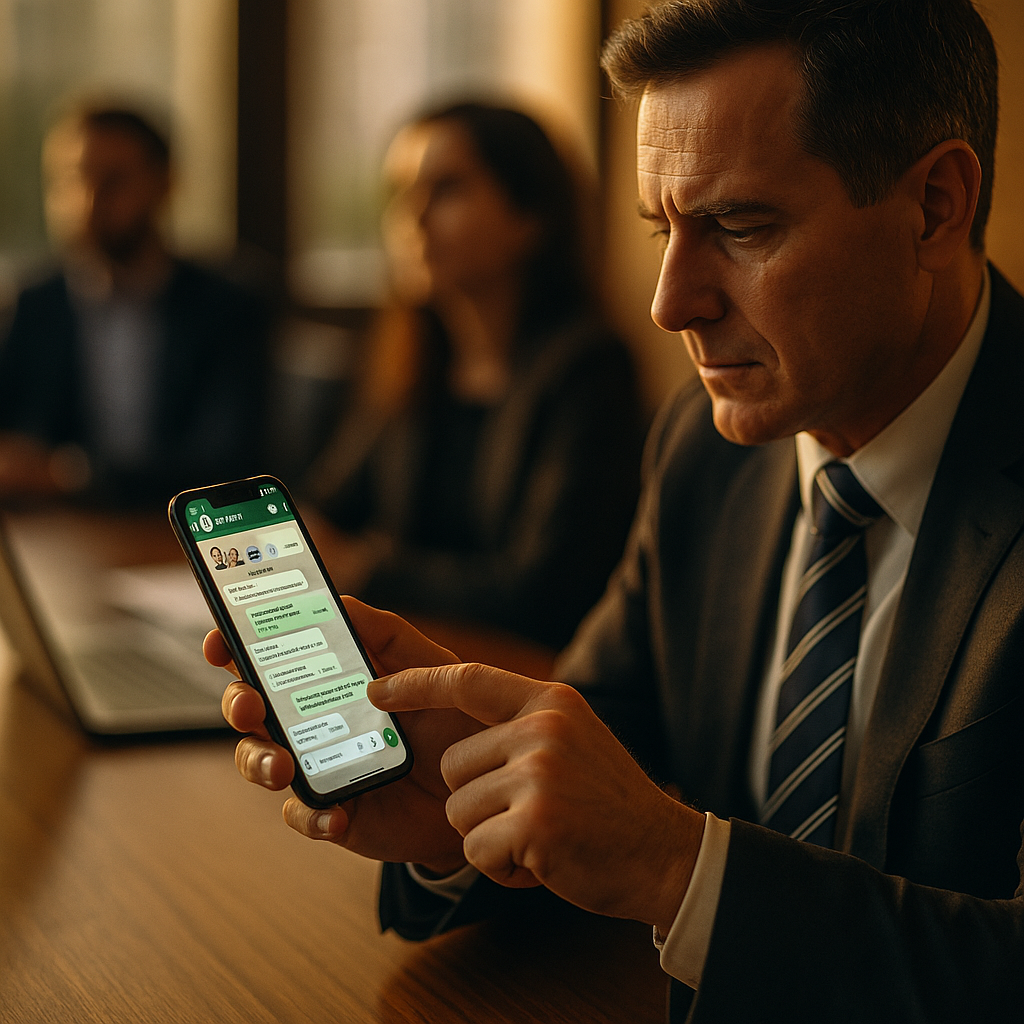
Reaching decision makers in professional WhatsApp groups can accelerate partnerships, sales conversations, hiring, and industry visibility when done with precision. In 2026, the opportunity is real, but so is the risk of being ignored, muted, or removed. The difference comes down to relevance, timing, and trust. Here is the playbook serious professionals use to stand out without sounding promotional.
WhatsApp outreach strategy: understand how decision makers behave in groups
Before you post, pitch, or message anyone, understand the environment. Professional WhatsApp groups are not open social feeds. They are trust-based micro-communities built around shared roles, sectors, events, alumni networks, vendor ecosystems, and executive peer circles. Decision makers in these spaces usually scan quickly, respond selectively, and protect their attention.
That means your success depends less on volume and more on context. A CFO, founder, procurement lead, or VP is not evaluating you only by what you sell. They are evaluating whether you understand the group’s purpose, whether you respect boundaries, and whether your contribution lowers effort for them.
In practice, decision makers tend to engage with three kinds of content:
- Useful insights that solve a timely business problem
- Credible recommendations from known group members
- Clear opportunities that are relevant to their role, market, or current priorities
They tend to ignore broad self-promotion, vague introductions, and cold asks that force them to do the work of figuring out why the message matters. If your post makes them think too hard, they move on.
An effective WhatsApp outreach strategy starts with observation. Spend several days reviewing how the group communicates. Note the cadence, response style, acceptable topics, admin rules, and who gets attention. Is the group transactional or discussion-based? Do members prefer short updates, voice notes, files, or direct referrals? Are admins strict about promotional posts? Those details tell you how to participate without friction.
Experience matters here. Professionals who consistently reach decision makers do not treat the group as a lead list. They treat it as a live room where reputation compounds with every message.
Professional WhatsApp groups: choose the right communities before you engage
Not all groups are worth your time. A smaller group with the right members and strong moderation often outperforms a large, noisy one. The goal is not maximum reach. The goal is concentrated relevance.
Prioritize professional WhatsApp groups using these filters:
- Member quality: Are actual decision makers present, or mostly junior participants and service providers?
- Group purpose: Does the group discuss problems your expertise can solve?
- Activity level: Is there healthy engagement, not just forwarded links and spam?
- Admin standards: Strong moderation usually signals higher trust.
- Relationship adjacency: Are you entering through a credible connection, community, event, or association?
It is also smart to classify groups by intent. Some are for peer learning. Others are for networking, partnerships, recruiting, procurement, or local business exchange. Your approach should change accordingly. A peer-learning group welcomes thoughtful analysis. A referral-heavy group may respond better to concise capability statements backed by proof. A founder group may favor directness and speed.
One common mistake is joining too many groups and posting the same message everywhere. That weakens credibility fast. If your message appears copied, members assume your offer is generic too. Instead, choose fewer groups and tailor your contributions to each audience.
Another overlooked point: access quality matters. If you can join through a respected member or admin, do it. A warm introduction immediately reduces skepticism. Even a simple note such as, “Thanks to Priya for inviting me. I work with B2B SaaS teams on reducing churn and happy to share benchmarks if useful” positions you differently from an unknown entrant making a hard pitch.
Decision maker networking: build trust before making any ask
The fastest route to a decision maker is rarely a direct sales message. It is credibility built in public, inside the group, before you ever move to a private chat. Decision maker networking on WhatsApp works when your presence signals judgment, not urgency.
Start with a low-friction introduction. Keep it short, specific, and tied to the group’s purpose. Mention who you help, what problem you solve, and what kind of value you can share. Avoid inflated claims, jargon, and long bios.
For example, instead of saying, “We are a leading end-to-end solutions provider helping businesses unlock transformational growth,” say, “I help logistics companies reduce failed delivery costs through route optimization and driver analytics. Happy to share a simple audit checklist if useful.”
Then contribute without asking for anything. Effective trust-building actions include:
- Answering questions clearly when members ask about your area of expertise
- Sharing practical frameworks that can be applied immediately
- Posting short, original observations tied to current market shifts
- Making introductions when you can genuinely help two members connect
- Following group etiquette on timing, format, and frequency
Authority on WhatsApp is built through evidence, not adjectives. Mention relevant outcomes when appropriate, but keep them precise. For example: “We recently helped a mid-market HR platform shorten demo-to-close time by simplifying stakeholder materials. Happy to share the checklist we used.” This is more trustworthy than broad claims of excellence.
Also be transparent about intent. If you are exploring partnerships, say so. If you are hiring, say so. If you are offering a limited pilot, explain who it fits and who it does not. Clear boundaries make you look more credible, not less.
Most importantly, do not rush private outreach. If a decision maker reacts to your post, asks a question, or thanks you for a resource, that is your opening. Move from public value to private conversation only when there is a signal of relevance.
B2B WhatsApp marketing: craft messages that earn replies, not resistance
B2B WhatsApp marketing in professional groups is highly message-sensitive. The same offer can either start a conversation or damage your reputation depending on phrasing. Your goal is not to sound impressive. Your goal is to make the next step feel easy and worthwhile.
Use this simple structure for group posts and private follow-ups:
- Context: Show that you understand the problem or trigger
- Relevance: Explain who the message is for
- Proof: Add one credible signal or example
- Offer: Present one clear next step
- Friction control: Keep the ask small
Here is a strong group-friendly example:
“Several fintech teams here mentioned onboarding drop-off. We recently mapped five messaging fixes that improved activation quality for regulated products. If a product or growth lead wants the checklist, I can share it in the group.”
Why does this work? It is tied to a visible problem, targeted to a specific audience, supported by practical experience, and offers value before asking for a meeting.
Now compare that with a weak message:
“Hi everyone, we provide digital solutions for all kinds of businesses. Book a call to learn more.”
It fails because it is broad, self-centered, and gives no reason to respond.
When moving to direct messages, keep the transition natural. Reference the group interaction. Be respectful and concise. For example:
“Hi Ana, you asked about distributor onboarding in the group. I have a one-page framework that may help your team compare options faster. If useful, I can send it here.”
This approach works because it is permission-based. It does not assume interest. It invites it.
A few tactical rules matter:
- Do not send long paragraphs. Use short blocks for readability.
- Do not overuse voice notes unless the group clearly prefers them.
- Do not attach large decks immediately. Offer a concise resource first.
- Do not chase non-responses aggressively. One polite follow-up is usually enough.
- Do personalize based on role, use case, and prior interaction.
Good B2B WhatsApp marketing is closer to executive communication than ad copy. It is specific, calm, useful, and easy to answer.
WhatsApp lead generation: convert group visibility into qualified conversations
Visibility is not the same as pipeline. WhatsApp lead generation becomes effective only when you build a deliberate path from group interaction to qualified opportunity. That path should feel natural to the recipient and measurable for you.
Think in stages:
- Presence: You show up consistently and credibly in the group
- Engagement: Members react, reply, or request resources
- Permission: You move relevant conversations into direct messages
- Qualification: You confirm fit, need, urgency, and stakeholder access
- Conversion: You propose a call, pilot, referral, or next business step
Each stage needs a different metric. Track more than replies. Watch for saves, introductions, inbound questions, and requests for materials. Those are often stronger buying signals than emoji reactions.
A simple operating system helps:
- Create a contact log with role, company, group source, interest area, and last interaction
- Tag by intent: partner, buyer, advisor, recruiter, media, or referrer
- Note trigger events such as funding, expansion, hiring, regulation, product launch, or cost pressure
- Prepare three assets: a checklist, a short case summary, and a one-page offer explanation
This is where experience and expertise separate serious operators from spammers. If you know the buyer journey in your category, you can anticipate what a decision maker needs next. A procurement head may need a concise scope and implementation risk summary. A founder may want expected upside and speed to value. A marketing VP may care about benchmarks, channel fit, and execution burden.
Do not treat every decision maker the same. Tailor your follow-up to their role and likely objections. The more your message reduces uncertainty, the easier it is for them to continue the conversation.
And remember: some of your best outcomes will not be direct sales. You may earn introductions to the real buyer, invitations to private communities, event speaking opportunities, or referrals months later. In professional WhatsApp ecosystems, trust often monetizes indirectly before it monetizes directly.
Group engagement tips: avoid mistakes that damage credibility
Many professionals fail in WhatsApp groups not because they lack expertise, but because they mishandle the medium. Group engagement tips matter because WhatsApp is intimate. Missteps feel more intrusive here than on email or LinkedIn.
The most damaging mistakes include:
- Posting promotional messages too early
- Ignoring group rules about links, frequency, or self-promotion
- Sending unsolicited private pitches right after joining
- Using generic claims without proof
- Overposting and dominating the conversation
- Arguing publicly in ways that create reputational risk
A better approach is to follow a simple ratio: contribute far more value than promotion. In many professional groups, that means several useful interactions before any commercial ask. The exact ratio depends on the group, but the principle holds across industries.
Timing also affects response rates. Posts tied to active discussions or visible business shifts perform better than disconnected announcements. If the group is discussing retention, compliance, pricing pressure, AI workflows, or channel performance, contribute to that thread with a practical perspective. Relevance beats reach.
It is also wise to protect confidentiality. If you mention client outcomes, remove identifying details unless you have clear permission. Responsible communication builds trust. So does intellectual honesty. If you do not know the answer, say so and point members toward a useful resource or expert. That kind of restraint enhances authority.
Finally, learn when to exit a thread. If interest is low, let it go. If a discussion becomes detailed, suggest moving to a private chat. If a member declines, respect it immediately. Professionalism is often defined by what you choose not to push.
FAQs about reaching decision makers in professional WhatsApp groups
How do I introduce myself in a professional WhatsApp group?
Keep it brief and relevant. Mention your name, role, who you help, and one practical area where you can contribute. Avoid long bios and sales language. Tie your introduction to the group’s purpose and, if possible, acknowledge the person who invited you.
Is it okay to pitch in a professional WhatsApp group?
Only if the group rules allow it and your message is clearly relevant. Lead with value, not a hard sell. A resource, checklist, benchmark, or short insight usually performs better than a direct promotional post. Build trust first whenever possible.
When should I move from the group to a direct message?
Move to a direct message when there is a clear signal: a reply, question, reaction, referral, or request for more detail. Reference the group interaction and ask permission before sending large files or proposing a call.
What type of content gets decision makers to respond?
Decision makers respond to content that is specific, timely, and role-relevant. Examples include concise frameworks, problem-specific checklists, short case summaries, and observations tied to current business priorities such as efficiency, growth, compliance, or implementation speed.
How often should I post in a professional WhatsApp group?
There is no universal number, but moderation matters. Post often enough to be useful and recognizable, not so often that you dominate the feed. In most groups, quality and timing matter more than frequency.
Can WhatsApp groups generate real B2B leads?
Yes, if you focus on relevance and permission-based outreach. Strong results usually come from targeted groups, useful contributions, and disciplined follow-up. The best opportunities often start as discussions, referrals, or resource requests before turning into formal sales conversations.
What should I do if an admin warns me about promotion?
Acknowledge it quickly, adjust your approach, and avoid defensiveness. Ask what type of contribution is welcome. Respecting the admin protects your reputation and keeps the door open for future participation.
Should I use voice notes to reach executives on WhatsApp?
Only if the group culture supports them or the individual prefers them. Many decision makers appreciate speed, but others prefer text they can scan silently. Default to concise text unless you know voice notes are welcome.
Professional WhatsApp groups reward relevance, restraint, and real expertise. If you want access to decision makers, stop treating the channel like a broadcast list. Choose the right groups, contribute useful insight, earn permission, and follow up with precision. The clearest takeaway is simple: trust is the real conversion mechanism, and every message either builds it or weakens it.
Top Influencer Marketing Agencies
The leading agencies shaping influencer marketing in 2026
Agencies ranked by campaign performance, client diversity, platform expertise, proven ROI, industry recognition, and client satisfaction. Assessed through verified case studies, reviews, and industry consultations.
Moburst

-
2

The Shelf
Boutique Beauty & Lifestyle Influencer AgencyA data-driven boutique agency specializing exclusively in beauty, wellness, and lifestyle influencer campaigns on Instagram and TikTok. Best for brands already focused on the beauty/personal care space that need curated, aesthetic-driven content.Clients: Pepsi, The Honest Company, Hims, Elf Cosmetics, Pure LeafVisit The Shelf → -
3

Audiencly
Niche Gaming & Esports Influencer AgencyA specialized agency focused exclusively on gaming and esports creators on YouTube, Twitch, and TikTok. Ideal if your campaign is 100% gaming-focused — from game launches to hardware and esports events.Clients: Epic Games, NordVPN, Ubisoft, Wargaming, Tencent GamesVisit Audiencly → -
4

Viral Nation
Global Influencer Marketing & Talent AgencyA dual talent management and marketing agency with proprietary brand safety tools and a global creator network spanning nano-influencers to celebrities across all major platforms.Clients: Meta, Activision Blizzard, Energizer, Aston Martin, WalmartVisit Viral Nation → -
5

The Influencer Marketing Factory
TikTok, Instagram & YouTube CampaignsA full-service agency with strong TikTok expertise, offering end-to-end campaign management from influencer discovery through performance reporting with a focus on platform-native content.Clients: Google, Snapchat, Universal Music, Bumble, YelpVisit TIMF → -
6

NeoReach
Enterprise Analytics & Influencer CampaignsAn enterprise-focused agency combining managed campaigns with a powerful self-service data platform for influencer search, audience analytics, and attribution modeling.Clients: Amazon, Airbnb, Netflix, Honda, The New York TimesVisit NeoReach → -
7

Ubiquitous
Creator-First Marketing PlatformA tech-driven platform combining self-service tools with managed campaign options, emphasizing speed and scalability for brands managing multiple influencer relationships.Clients: Lyft, Disney, Target, American Eagle, NetflixVisit Ubiquitous → -
8

Obviously
Scalable Enterprise Influencer CampaignsA tech-enabled agency built for high-volume campaigns, coordinating hundreds of creators simultaneously with end-to-end logistics, content rights management, and product seeding.Clients: Google, Ulta Beauty, Converse, AmazonVisit Obviously →