


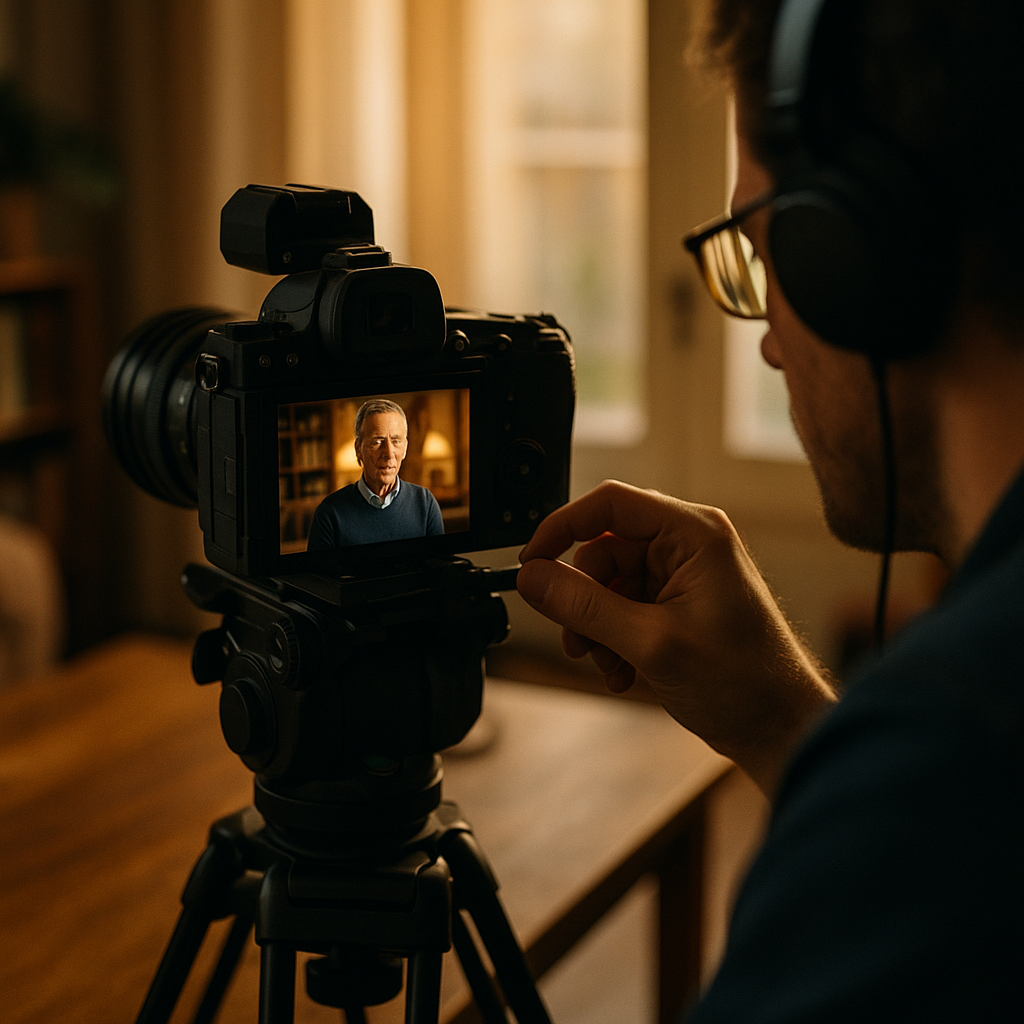
Serialized documentary content has become one of the smartest ways for brands to earn attention, trust, and lasting relevance in 2026. Instead of chasing short spikes in reach, this format builds a narrative audiences choose to follow over time. When executed with editorial discipline and strategic intent, it turns brand storytelling into a durable growth asset. Why does that matter so much now?
Why brand storytelling strategy works better in a serialized format
Most branded content fails for one simple reason: it asks for attention before it earns credibility. A serialized documentary approach flips that pattern. It gives audiences a reason to come back because each installment deepens the story, reveals new stakes, and reinforces a clear point of view.
For long-term brand building, this matters because memory is built through repetition with variation. A single brand film can make an impression, but a series creates familiarity. Viewers begin to associate the brand with expertise, consistency, and cultural relevance. That is a stronger foundation than a one-off campaign.
Serialized documentaries also align well with how audiences consume media in 2026. People move fluidly between long-form video, clips, podcasts, articles, and social recaps. A documentary series can anchor that ecosystem. One core narrative can be repurposed into trailers, episode highlights, behind-the-scenes assets, executive commentary, email content, and community discussions without feeling repetitive.
From an EEAT perspective, a documentary format is especially valuable because it allows brands to demonstrate experience and expertise rather than merely claim them. Real people, real processes, field reporting, expert interviews, and transparent challenges create proof. That proof builds authoritativeness over time. If the series is accurate, well-produced, and ethically sourced, it also supports trustworthiness.
The key is to think like a publisher, not an advertiser. Each episode should deliver standalone value while contributing to a larger narrative arc. If the audience can enjoy the content even if they never buy immediately, the brand is doing the right kind of long-term work.
How documentary marketing builds trust and authority over time
Trust is not created by polished claims. It is built by showing evidence, context, and human reality. Documentary marketing gives brands a practical framework for that process.
Start with authentic access. If a company wants to be seen as innovative, the series should show how decisions are made, what problems teams are solving, and where trade-offs happen. If a brand wants to be associated with impact, the content should feature customers, operators, researchers, or community partners with direct experience. Surface-level storytelling weakens authority. Ground-level storytelling strengthens it.
Trust also increases when brands are specific. Vague inspiration does not hold attention for long. Strong serialized documentaries answer concrete questions:
- What problem is being explored?
- Why does it matter now?
- Who is affected?
- What does the brand actually know or do in this space?
- What evidence supports the story?
That specificity helps audiences assess whether the brand deserves credibility. It also improves content quality for search visibility because the series naturally addresses real user intent and related follow-up questions.
Another trust advantage is continuity. When a brand publishes one thoughtful documentary episode, audiences may be impressed. When it publishes six, with a coherent editorial standard, expert sourcing, and consistent insight, audiences begin to view the brand as a reliable voice. Authority compounds.
To support EEAT, include credible contributors and disclose their relevance clearly. Subject matter experts, independent analysts, frontline staff, customers, and community voices all improve editorial depth. Accuracy matters as much as emotional impact. Fact-check claims, avoid selective framing, and make sure every episode reflects the standards of responsible journalism, even when the goal is brand building.
Creating a content series strategy that supports long-term brand equity
A serialized documentary should not begin with the question, “What would look impressive?” It should begin with, “What long-term association do we want our brand to own?” That answer shapes the series theme, cast, and editorial lens.
Strong long-term brand equity usually rests on a few durable associations: innovation, trust, mission, cultural insight, craftsmanship, leadership, resilience, or customer obsession. A series should focus on one or two of these, not all of them at once.
Build the strategy in five layers:
- Brand role: Define the brand’s legitimate place in the story. Are you the guide, the investigator, the enabler, or the participant?
- Audience relevance: Identify what your core audience genuinely wants to understand, not just what your brand wants to say.
- Editorial thesis: Create a central argument or perspective that can sustain multiple episodes.
- Narrative architecture: Map episode-level arcs and a season-level arc.
- Distribution system: Decide where the full episodes live and how supporting assets will drive discovery.
For example, a B2B technology company might build a series around how operational decisions affect resilience in high-pressure industries. A consumer brand might document the hidden craftsmanship and supply chain choices behind product quality. A healthcare company might spotlight patient journeys, clinician expertise, and care innovation, with appropriate privacy and compliance safeguards.
What matters most is fit. Audiences can detect when a brand enters a topic only because it is trending. The strongest documentary series emerge from areas where the organization has real access, real knowledge, and real responsibility. That is how content supports both search performance and reputation.
Practical planning also matters. Define season length, release cadence, budget range, legal review process, and internal owners early. Serialization works best when consistency is operationally realistic. A shorter, sustainable season is better than an ambitious concept that stalls after two episodes.
Production choices in video content branding that shape perception
Production quality influences how audiences judge the brand, but quality should not be confused with gloss. In documentary work, perceived honesty often matters more than cinematic excess. The right production standard is the one that matches the subject and audience expectations while preserving clarity and credibility.
Several production choices have a direct effect on brand perception:
- Interview design: Ask questions that invite reflection and specificity, not rehearsed talking points.
- Visual evidence: Show environments, workflows, products, or communities in context.
- Pacing: Give stories enough room to breathe, but edit tightly enough to respect time.
- Sound and accessibility: Clear audio, captions, and transcripts increase trust and usability.
- Editorial restraint: Let facts and human experience carry the story instead of overexplaining every message.
Brands often ask how visible they should be in the series. The answer depends on the story. In some cases, the brand should be central because the audience wants access to its people and decisions. In others, the brand is best positioned as the sponsor of an important conversation. If the branding interrupts the integrity of the piece, it weakens the entire effort.
To improve helpfulness and discoverability, support each episode with surrounding content: transcripts, summary articles, key takeaways, expert quotes, topic pages, and FAQ material. These assets make the documentary more useful for viewers and more understandable for search engines. They also create multiple entry points for audiences who may not begin with the full video.
One overlooked production factor is documentation. Keep records of sources, approvals, rights, fact checks, and contributor credentials. This is good risk management, but it also supports trust internally and externally. In an era of growing skepticism toward digital media, brands benefit from being able to substantiate how a story was built.
Using audience engagement metrics to measure long-term brand building
The biggest mistake in serialized documentary programs is evaluating them like short-term performance ads. If success is measured only by immediate conversions, the brand will underinvest in the very signals that matter most for durable growth.
Instead, measurement should combine brand, audience, and business indicators. Useful metrics include:
- Return viewership: Are people coming back for later episodes?
- Completion rate: Are viewers staying with the story?
- Watch time by segment: Which moments sustain attention?
- Branded search lift: Is awareness translating into active interest?
- Direct traffic and newsletter growth: Are owned audiences increasing?
- Earned mentions and backlinks: Is the series generating external authority?
- Qualitative feedback: What are customers, prospects, recruits, and partners saying?
- Sales influence: Does the content appear in assisted conversion paths or deal narratives?
For long-term brand building, trend lines matter more than isolated spikes. A documentary series may not produce an immediate surge in revenue after episode one, but it can increase trust, shorten future sales conversations, improve talent attraction, and strengthen category authority over months.
Use audience questions as a measurement tool too. If each episode triggers thoughtful comments, follow-up searches, internal discussion, or requests for more detail, the content is doing strategic work. It means the brand has moved from interruption to relevance.
To make optimization easier, create a feedback loop between editorial, analytics, search, social, and sales teams. Analytics can reveal which themes resonate. Search data can show emerging intent patterns. Sales teams can report whether prospects mention the series. This cross-functional view helps refine future episodes without sacrificing editorial integrity.
Scaling evergreen content marketing without losing authenticity
A successful serialized documentary often creates pressure to scale quickly. More episodes, more channels, more formats. That expansion can work, but only if authenticity remains intact.
The best way to scale is through systems, not shortcuts. Develop editorial guidelines for sourcing, tone, verification, and narrative structure. Build reusable workflows for pre-production, legal review, transcription, metadata, social cutdowns, and publication. Create a clear process for identifying stories that genuinely deserve an episode.
Evergreen value should stay central. Ask whether each documentary topic will still be useful and meaningful months from now. Timely elements are fine, but the series should be anchored in issues with staying power. That is what makes the content continue attracting viewers, links, and trust after launch.
Repurposing should add utility, not just volume. A strong episode can become:
- An article that expands on the research behind the story
- A podcast discussion with expert commentary
- Short clips focused on one insight or quote
- A sales enablement asset that demonstrates expertise credibly
- An internal culture piece that aligns teams around brand values
Protect authenticity by maintaining editorial independence within the brand context. Not every tension needs to be polished away. Responsible honesty is more persuasive than perfect messaging. When audiences sense that a brand is willing to show complexity, they are more likely to believe the larger narrative.
In 2026, the brands that win attention over time are not necessarily the loudest. They are the clearest, most credible, and most consistent. Serialized documentary content gives companies a way to prove who they are across time, not just announce who they want to be.
FAQs about serialized documentary content
What is serialized documentary content in brand marketing?
It is a multi-episode nonfiction storytelling format created or sponsored by a brand. Each episode stands alone but also contributes to a broader narrative that supports trust, authority, and long-term brand identity.
Why is serialized content better than a single branded film?
A series creates repeated exposure, deeper audience familiarity, and more opportunities to demonstrate expertise. It also provides more assets for distribution, search visibility, and audience engagement across channels.
How long should a branded documentary series be?
There is no universal length. The right format depends on audience intent, subject complexity, and distribution goals. Many brands succeed with short seasons of three to six episodes because they are easier to sustain and evaluate.
Does serialized documentary content help SEO?
Yes, when supported by transcripts, topic pages, summaries, expert commentary, and internal linking. The series can expand topical authority, address multiple search intents, and attract backlinks if the content is genuinely useful and original.
What industries benefit most from this format?
Industries with complex decisions, strong human stories, visible expertise, or trust-sensitive audiences tend to benefit most. That includes technology, healthcare, finance, education, sustainability, consumer goods, manufacturing, and professional services.
How do brands keep documentary content from feeling like an ad?
By prioritizing real questions, credible voices, factual accuracy, and meaningful context. The brand should earn relevance through access and insight rather than dominate the story with promotional messaging.
What should brands measure first?
Start with return viewership, watch time, completion rate, qualitative feedback, branded search lift, and earned mentions. Then connect the series to broader outcomes such as sales influence, recruitment, partnerships, and category authority.
Is this format only for large brands with big budgets?
No. Smaller brands can produce strong documentary series if they focus on subjects where they have genuine access and expertise. Clear editorial thinking and authenticity matter more than extravagant production.
Serialized documentary content gives brands a rare advantage: the chance to build memory, trust, and authority through sustained proof. When the series is rooted in real experience, structured around audience value, and measured with long-term discipline, it becomes more than content. It becomes a strategic brand asset that keeps working long after publication. The takeaway is simple: tell true stories consistently, and credibility compounds.
Top Influencer Marketing Agencies
The leading agencies shaping influencer marketing in 2026
Agencies ranked by campaign performance, client diversity, platform expertise, proven ROI, industry recognition, and client satisfaction. Assessed through verified case studies, reviews, and industry consultations.
Moburst

-
2

The Shelf
Boutique Beauty & Lifestyle Influencer AgencyA data-driven boutique agency specializing exclusively in beauty, wellness, and lifestyle influencer campaigns on Instagram and TikTok. Best for brands already focused on the beauty/personal care space that need curated, aesthetic-driven content.Clients: Pepsi, The Honest Company, Hims, Elf Cosmetics, Pure LeafVisit The Shelf → -
3

Audiencly
Niche Gaming & Esports Influencer AgencyA specialized agency focused exclusively on gaming and esports creators on YouTube, Twitch, and TikTok. Ideal if your campaign is 100% gaming-focused — from game launches to hardware and esports events.Clients: Epic Games, NordVPN, Ubisoft, Wargaming, Tencent GamesVisit Audiencly → -
4

Viral Nation
Global Influencer Marketing & Talent AgencyA dual talent management and marketing agency with proprietary brand safety tools and a global creator network spanning nano-influencers to celebrities across all major platforms.Clients: Meta, Activision Blizzard, Energizer, Aston Martin, WalmartVisit Viral Nation → -
5

The Influencer Marketing Factory
TikTok, Instagram & YouTube CampaignsA full-service agency with strong TikTok expertise, offering end-to-end campaign management from influencer discovery through performance reporting with a focus on platform-native content.Clients: Google, Snapchat, Universal Music, Bumble, YelpVisit TIMF → -
6

NeoReach
Enterprise Analytics & Influencer CampaignsAn enterprise-focused agency combining managed campaigns with a powerful self-service data platform for influencer search, audience analytics, and attribution modeling.Clients: Amazon, Airbnb, Netflix, Honda, The New York TimesVisit NeoReach → -
7

Ubiquitous
Creator-First Marketing PlatformA tech-driven platform combining self-service tools with managed campaign options, emphasizing speed and scalability for brands managing multiple influencer relationships.Clients: Lyft, Disney, Target, American Eagle, NetflixVisit Ubiquitous → -
8

Obviously
Scalable Enterprise Influencer CampaignsA tech-enabled agency built for high-volume campaigns, coordinating hundreds of creators simultaneously with end-to-end logistics, content rights management, and product seeding.Clients: Google, Ulta Beauty, Converse, AmazonVisit Obviously →