


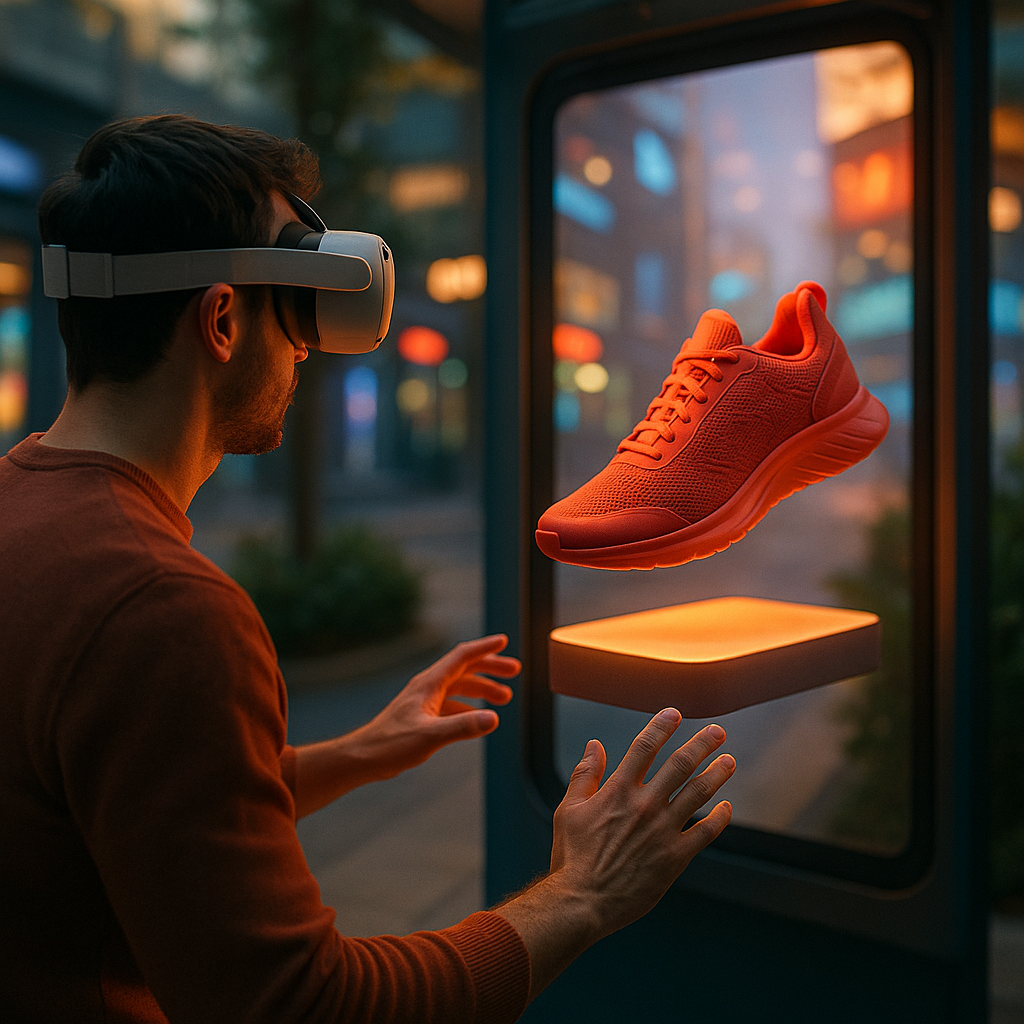
In 2026, brands compete inside increasingly interactive environments where attention shifts in milliseconds. The science of visual anchoring in 3D immersive brand advertisements explains how specific visual cues guide perception, memory, and action without overwhelming users. When done well, anchoring turns novelty into clarity, helping audiences orient themselves and respond. So what makes an anchor actually work?
Visual attention in immersive advertising
Visual anchoring refers to the deliberate placement of cues that help viewers understand where to look, what matters most, and how to interpret a branded experience. In immersive advertising, that challenge becomes more complex because users are not scanning a flat page. They are navigating depth, motion, interaction, sound, and often real-time spatial feedback.
From a perception science standpoint, anchors reduce cognitive load. The brain constantly filters information, especially in environments with layered stimuli. A strong visual anchor acts as a stable reference point. It can be a product silhouette, a glowing focal object, a branded motion path, a contrast-rich callout, or a familiar environmental cue that pulls attention naturally.
Research in human-computer interaction and spatial cognition consistently shows that users orient faster when key information is visually prioritized. That matters because immersive environments can quickly become disorienting if every element competes for attention. Strong anchors create hierarchy. They tell the viewer, start here, then move there.
For brand teams, this is not just a design choice. It directly affects performance metrics such as:
- Attention duration
- Brand recall
- Message comprehension
- Interaction rate
- Click-through or action completion
- Emotional association with the brand
The practical takeaway is simple: 3D experiences need visual structure as much as visual spectacle. Without that structure, novelty alone rarely drives results.
3D brand storytelling and spatial orientation
3D brand storytelling works best when users know where they are, what to explore, and why it matters. Visual anchoring supports all three. In immersive ads, spatial orientation is essential because users can rotate perspective, move through layered scenes, or interact with floating objects. If navigation feels unclear, message retention drops.
Anchors support storytelling by creating a sequence. A user may first notice a hero object, then a contextual element, then a product benefit, and finally a branded action prompt. That order is not accidental. It mirrors how people build understanding in real spaces. They identify landmarks first, then scan details.
Effective immersive storytelling often uses several anchor types:
- Primary anchors: the main focal point, usually tied to the product or central brand symbol
- Directional anchors: arrows, lighting shifts, motion trails, or environmental lines that guide the eye
- Context anchors: familiar objects or scenes that make the environment instantly legible
- Interactive anchors: elements that signal touch, hover, gaze, or movement opportunities
- Emotional anchors: color, scale, sound synchronization, or symbolic imagery that reinforces mood
A beauty brand, for example, might place a floating product bottle at the center of an immersive scene, use radiant particle paths to draw the eye toward ingredient stories, and then reveal a try-on interaction through subtle pulsing cues. Each anchor supports progression without forcing the user through a rigid experience.
This matters for trust as well. Well-structured 3D ads feel intentional and intuitive. Poorly structured ones feel manipulative or chaotic. Audiences notice the difference quickly.
Neuroscience of brand recall in 3D ads
The neuroscience of brand recall helps explain why visual anchoring improves advertising effectiveness. Human attention is selective, and memory formation depends heavily on salience, repetition, and emotional relevance. In 3D environments, anchors increase salience by making one element easier to distinguish from competing stimuli.
Several mechanisms are at work:
- Contrast sensitivity: The visual system detects differences in brightness, color, size, and motion faster than subtle changes.
- Object permanence and stability: When a branded element remains visually stable in a changing scene, users treat it as important.
- Attentional capture: Controlled movement and spatial prominence can pull focus toward a message or object.
- Chunking: Clear anchors help viewers group complex information into manageable units.
- Encoding strength: A focal object linked to emotion or action is more likely to move into memory.
In practice, this means that a brand logo tossed into the corner of an immersive environment will rarely outperform a logo integrated into the primary visual anchor. People remember what they attend to, and they attend to what the environment tells them is meaningful.
Brands should also avoid a common mistake: adding too many “important” visual elements. If every component glows, rotates, or demands interaction, nothing is anchored. The result is attentional fragmentation. A better strategy is to create one dominant focal anchor and support it with secondary cues.
Another critical factor is congruence. Visual anchors must align with the brand message. If a luxury brand uses aggressive, game-like directional cues that clash with its premium identity, the ad may gain attention but weaken brand coherence. Memory is not just about recall. It is about recalling the right meaning.
User experience design for visual hierarchy
Strong user experience design is what transforms visual anchoring from theory into measurable performance. Immersive ad environments need hierarchy, pacing, and accessibility. The goal is not to make users work harder. It is to help them understand quickly and engage confidently.
The most effective visual hierarchy systems in 3D ads usually rely on a few core principles:
- Scale first: Larger elements naturally draw attention, especially when isolated in space.
- Depth cues: Foreground placement, occlusion, and focus blur can emphasize what matters now.
- Motion discipline: Controlled movement is powerful, but excessive motion creates fatigue.
- Color contrast: High contrast can identify priority elements, while softer palettes keep secondary objects in the background.
- Temporal sequencing: Revealing information in stages improves comprehension.
- Interaction clarity: Users should instantly recognize what is tappable, gaze-responsive, or draggable.
Accessibility deserves special attention in 2026. Not all users perceive depth, contrast, or movement the same way. Helpful immersive ad design considers motion sensitivity, color perception differences, legible text placement, and cue redundancy. For example, a call to action should not rely only on color. It should also use shape, placement, or motion logic.
Design teams should test key questions early:
- Can users identify the focal point within the first few seconds?
- Do they know what action is available?
- Can they retell the brand message after the experience?
- Which objects are remembered incorrectly or ignored?
- Where does confusion appear in the journey?
These are practical user-centered checkpoints that align with Google’s helpful content principles. They prioritize actual user needs over visual excess.
Augmented reality marketing measurement strategies
For brands investing in augmented reality marketing and other immersive formats, visual anchoring must be measured, not assumed. Creative teams often know when an experience looks impressive. That does not mean it guides attention effectively or drives action.
Measurement should combine behavioral, perceptual, and business metrics. Useful indicators include:
- Time to first focal fixation: how quickly users notice the intended anchor
- Interaction initiation rate: how many users engage with the main object or cue
- Completion rate: how many users follow the intended story path
- Recall testing: whether users remember the product, value proposition, and brand
- Drop-off mapping: where users abandon the experience
- Post-experience action: clicks, saves, shares, purchases, or sign-ups
Eye-tracking and spatial analytics can be especially valuable when available, but they are not always necessary. Even session recordings, interaction heatmaps, and quick-response surveys can reveal whether anchors are doing their job.
One of the best ways to improve performance is controlled experimentation. Test one anchoring variable at a time:
- Change the size of the hero object
- Adjust lighting around the focal point
- Reduce secondary motion elements
- Move the call to action closer to the central anchor
- Swap abstract backgrounds for recognizable contextual landmarks
This creates a clearer understanding of cause and effect. Teams that skip structured testing often mistake creative preference for user response.
It is also important to align measurement with the stage of the funnel. If the campaign goal is awareness, brand recall and dwell time may matter more than immediate conversion. If the goal is product exploration or trial, then interaction quality and completion become stronger indicators. Anchoring strategy should reflect that objective from the start.
Consumer psychology in spatial computing ads
Consumer psychology plays a decisive role in how people interpret and trust 3D brand experiences. Immersive ads feel closer to lived environments than traditional banners or video spots. Because of that, users respond not only to what they see but to how the experience makes them feel in space.
Visual anchoring influences several psychological drivers:
- Fluency: Experiences that are easy to understand feel more credible and appealing.
- Control: Users engage more when they feel guided, not trapped.
- Presence: A strong anchor can make the experience feel coherent and real.
- Trust: Clear visual priorities reduce confusion and skepticism.
- Motivation: Anchors can frame rewards, urgency, or curiosity without clutter.
There is also a delicate balance between persuasion and overload. Spatial computing ads can become intrusive if anchors are too aggressive, too persistent, or too detached from user intent. Helpful advertising respects attention. It invites exploration instead of forcing it.
That is where EEAT principles matter. Brand content should demonstrate experience with immersive formats, expertise in design and user behavior, authoritative use of data, and trustworthiness in how interactions are framed. In practical terms, that means:
- Using claims that can be supported
- Designing experiences that match brand promises
- Being transparent about interactive functions
- Protecting user comfort and privacy in data collection
- Testing for comprehension rather than assuming novelty equals impact
The strongest immersive campaigns in 2026 are not the loudest ones. They are the ones that guide users through a meaningful visual journey, connect that journey to a relevant brand message, and make action feel natural.
FAQs about visual anchoring in 3D immersive ads
What is visual anchoring in 3D immersive brand advertisements?
Visual anchoring is the use of focal visual cues that help users know where to look, what to understand first, and how to navigate an immersive ad. It improves attention, comprehension, and brand recall.
Why is visual anchoring important in immersive advertising?
Immersive experiences contain more sensory information than traditional ads. Without anchors, users can become distracted or confused. Anchors create hierarchy and make the brand message easier to absorb.
What are examples of visual anchors?
Examples include a centrally placed product, strong lighting around a key object, directional motion paths, pulsing interactive buttons, contrast-rich text callouts, and familiar environmental landmarks.
How does visual anchoring affect brand recall?
It improves recall by making branded elements more salient and easier to encode into memory. Users are more likely to remember what they focus on first and what stays visually stable throughout the experience.
Can too many anchors reduce performance?
Yes. If too many elements compete for attention, users lose a clear focal point. Effective anchoring depends on prioritization, not quantity.
How can brands test whether anchoring works?
They can measure time to first interaction, completion rates, recall scores, heatmaps, session recordings, and post-experience actions. A/B testing focal placement, motion, contrast, and sequencing also helps.
Is visual anchoring only relevant for AR and VR?
No. It is relevant across all 3D and interactive ad formats, including web-based 3D product demos, spatial commerce experiences, mixed reality activations, and gamified branded environments.
What is the biggest mistake brands make with immersive visual design?
The most common mistake is prioritizing spectacle over clarity. A visually impressive experience can still fail if users do not know where to look, what to do, or what brand message to retain.
Visual anchoring gives 3D immersive brand advertisements their structure, meaning, and persuasive power. It helps users orient themselves, reduces cognitive strain, and strengthens recall by guiding attention with purpose. The clearest takeaway is this: immersive ads perform best when brands design for human perception first, then layer creativity on top. In 2026, clarity is the real competitive advantage.
Top Influencer Marketing Agencies
The leading agencies shaping influencer marketing in 2026
Agencies ranked by campaign performance, client diversity, platform expertise, proven ROI, industry recognition, and client satisfaction. Assessed through verified case studies, reviews, and industry consultations.
Moburst

-
2

The Shelf
Boutique Beauty & Lifestyle Influencer AgencyA data-driven boutique agency specializing exclusively in beauty, wellness, and lifestyle influencer campaigns on Instagram and TikTok. Best for brands already focused on the beauty/personal care space that need curated, aesthetic-driven content.Clients: Pepsi, The Honest Company, Hims, Elf Cosmetics, Pure LeafVisit The Shelf → -
3

Audiencly
Niche Gaming & Esports Influencer AgencyA specialized agency focused exclusively on gaming and esports creators on YouTube, Twitch, and TikTok. Ideal if your campaign is 100% gaming-focused — from game launches to hardware and esports events.Clients: Epic Games, NordVPN, Ubisoft, Wargaming, Tencent GamesVisit Audiencly → -
4

Viral Nation
Global Influencer Marketing & Talent AgencyA dual talent management and marketing agency with proprietary brand safety tools and a global creator network spanning nano-influencers to celebrities across all major platforms.Clients: Meta, Activision Blizzard, Energizer, Aston Martin, WalmartVisit Viral Nation → -
5

The Influencer Marketing Factory
TikTok, Instagram & YouTube CampaignsA full-service agency with strong TikTok expertise, offering end-to-end campaign management from influencer discovery through performance reporting with a focus on platform-native content.Clients: Google, Snapchat, Universal Music, Bumble, YelpVisit TIMF → -
6

NeoReach
Enterprise Analytics & Influencer CampaignsAn enterprise-focused agency combining managed campaigns with a powerful self-service data platform for influencer search, audience analytics, and attribution modeling.Clients: Amazon, Airbnb, Netflix, Honda, The New York TimesVisit NeoReach → -
7

Ubiquitous
Creator-First Marketing PlatformA tech-driven platform combining self-service tools with managed campaign options, emphasizing speed and scalability for brands managing multiple influencer relationships.Clients: Lyft, Disney, Target, American Eagle, NetflixVisit Ubiquitous → -
8

Obviously
Scalable Enterprise Influencer CampaignsA tech-enabled agency built for high-volume campaigns, coordinating hundreds of creators simultaneously with end-to-end logistics, content rights management, and product seeding.Clients: Google, Ulta Beauty, Converse, AmazonVisit Obviously →